Welcome back to Wall Power. I’m Marion Maneker.
Tonight,
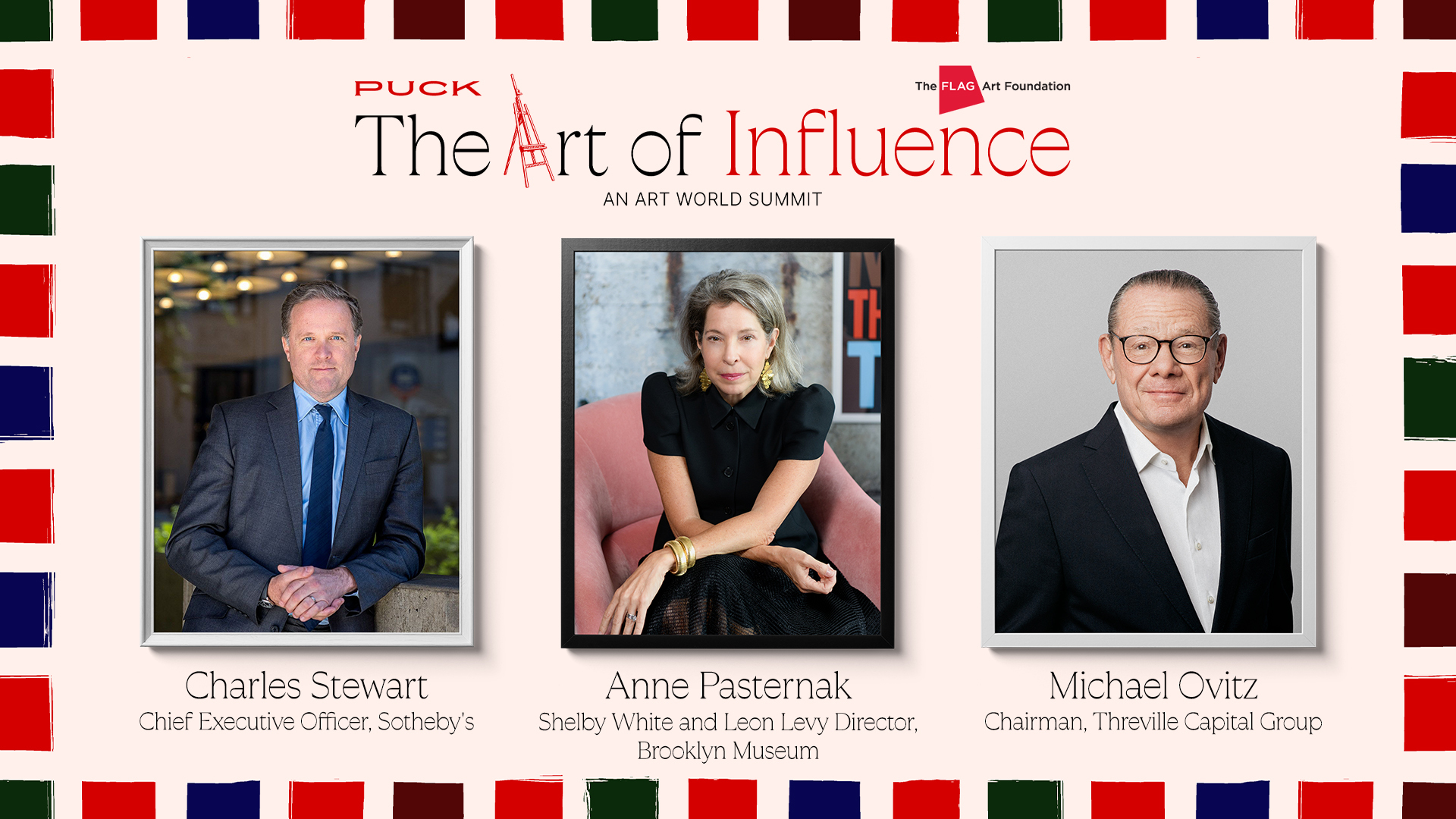
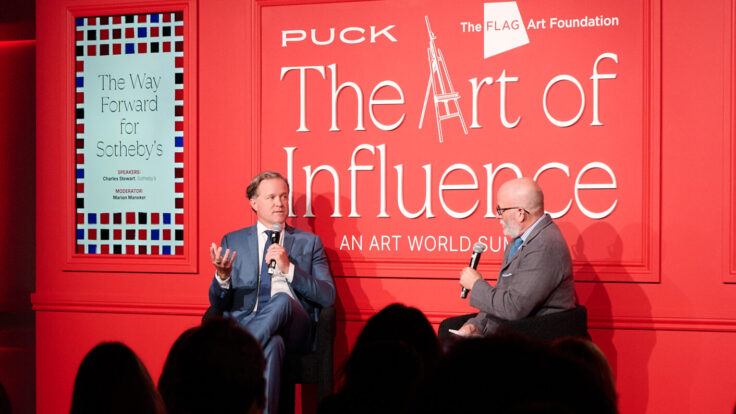
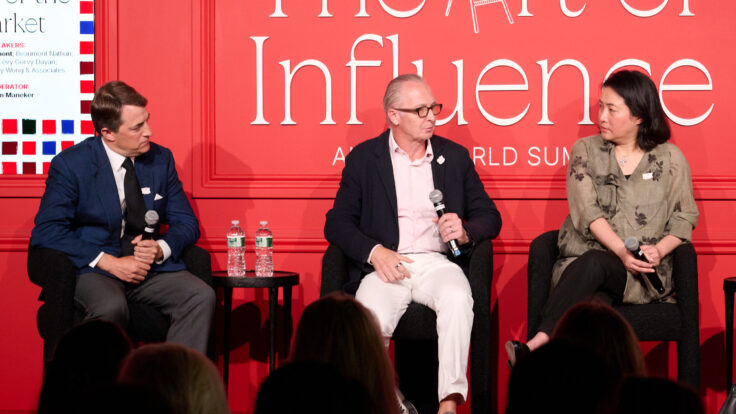
Julie Davich is following up on that big $10 million Birkin prototype sale with a look at the secondary market for handbags, mostly from Hermès. Meanwhile, a quick reminder about The Art of Influence, Puck’s one-day summit about the art market in partnership with the FLAG Art Foundation at SECOND in Chelsea on September 15. |
The gathering will offer a candid discussion about the current state of the art market
and all its key constituencies: artists, collectors, dealers, auction houses, museums, and art advisors. Joining us will be Sotheby’s C.E.O. Charles Stewart, collectors Michael Ovitz and J. Tomilson Hill, and the director of the Brooklyn Museum, Anne Pasternak.
We’ve previously announced that Larry Gagosian, Nicolas Party, Dasha Zhukova, and Glenn
Fuhrman will appear at the event, and we’re not done announcing names yet. More to come next week. Get your tickets while they are still available. We’re keeping the summit small so the conversation stays intimate and forthright. I hope you’ll join us. |
|
|
A MESSAGE FROM OUR SPONSOR |
ALWAYS CONTEMPORARY
With a bold silhouette that conveys movement even at standstill, the Range
Rover Sport is striking from every angle.
EXPLORE |
|
|
- Santa Fe’s International Folk Art Market returns to pre-Covid attendance: This summer, SITE Santa Fe is hosting its International exhibition, curated by Cecilia Alemani. But that’s only one of Santa Fe’s art destinations. High summer also brings an influx of buyers attracted to the city’s long history as a trading ground for traditional Spanish and Native American arts, with artisans from each tradition converging there for weekends in late July and mid-August,
respectively.
For the past 21 years, those markets have taken place alongside the International Folk Art Market, which brings 150 artisans and collectives from 57 countries to Santa Fe to sell their handiwork. Many of these groups will bring much-needed funds back to their villages through the sales, and the market does all it can to help maximize their returns. This year, the IFAM finally returned
to its pre-Covid traffic levels, with more than 20,000 attendees at the three-day event. Sales reached a record $3.88 million, according to the Los Alamos Daily Post website.
|
|
|
News and notes on the aftershocks from the $10.1 million Birkin
prototype sale at Sotheby’s Paris and the state of the secondary “quota” bag market. |
|
|
Whether it was the adjacency to newlywed Lauren Sánchez Bezos or the
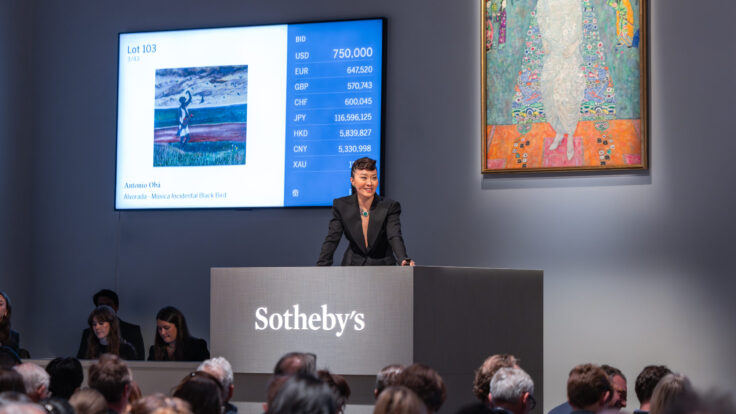
$10.1 million price tag, with fees—or even the enduring legend of the namesake, herself—the recent sale of Jane Birkin’s original Birkin bag at Sotheby’s Paris to the Japanese luxury resale conglomerate Valuance ushered in its own pop culture news cycle. And while the sale set a record for a handbag at auction, the secondary luxury handbag market has been experiencing exponential growth over the past 15 years—particularly in Hermès Birkins and Kellys, both known as
quota bags because clients are limited in the number they’re permitted to purchase each year (assuming, of course, they qualify to buy one in the first place).
The managed scarcity of these quota bags ensures that they will hold, if not increase, their value over time. Each bag is, after all, handmade by a single artisan from start to finish. Each saddle stitch is hand-threaded; each nail is hand-pearled. A Kelly bag, the hardest to make, takes about 20 hours. And then there are
the years-long waiting lists, and the discourse around the amount you need to spend at Hermès to even get on those lists. Not even top-tier fashion sourcers have reliable access to them, as Puck’s retail correspondent, Sarah Shapiro, has noted. That leaves the secondary market as the only option for most, especially if they
are seeking a specific color and size combination that’s not black or tan—sorry, I mean fauve. |
|
|
A MESSAGE FROM OUR SPONSOR |
ALWAYS CONTEMPORARY
With a bold silhouette that conveys movement even at standstill, the Range
Rover Sport is striking from every angle.
EXPLORE |
|
|
Some resellers, like Sotheby’s and Fashionphile, offer in-person retail experiences
for Hermès bags—where consumers can compare multiple options of sizes, colors, and materials—that can’t be had in Hermès stores. Or just click to add a Birkin to your cart and check out on sites like 1stDibs, Fashionphile, TheRealReal, or Sotheby’s online “Buy Now” marketplace, where the most expensive offering is a 30cm Matte Niloticus Crocodile Birkin in Himalaya, from 2020, for $220,000—a sum that presumably has the auction house’s buyer’s premium built in. Fashionphile and TheRealReal have
the exact same bag, among their many Birkin and Kelly offerings, but a year newer, for only $175,000 and $155,000, respectively. Christie’s has 20 Birkins on its site available for private sale—no prices listed.
As it happens, the Birkin sale to a Japanese conglomerate represented something of a homecoming. The secondary handbag market first matured during the 1990s in Japan—where there was already a strong retail fashion market, as well as a focus on authenticity and a cultural
commitment to sustainability—before spreading to China and Hong Kong during the years of hypergrowth, and on to the United States in the early 2000s. |
The Rubinger Handbag
Machine
|
One key moment in the rise of the U.S. secondary market occurred when a high-school
student named Matt Rubinger, now an executive at 1stDibs, bought his mother a handbag on eBay and quickly figured out he could resell it for a profit. From there, he started buying and selling handbags online, and joined Heritage in 2010 after college to start its handbag division. The following May, his first dedicated Handbags and Luxury Accessories sale in New York totaled $850,000, with the top lot, a 40cm alligator Birkin in Bleu de Malte, selling for
$71,700. Later that year, Christie’s held the historic sale of Elizabeth Taylor’s collection. Among the offerings were 130 purses, including five mini Kellys. The marketing team re-created her handbag closet in a small upstairs gallery, one of the highlights for the tens of thousands of people who lined up outside to see the preview.
But Rubinger told me it was Heritage’s sale of a $125,000 one-of-a-kind “Kelly Bag With Feet” in December 2013 that made Christie’s realize
they needed to be in the handbag business. They soon approached Rubinger, along with two of his colleagues, to start their handbag division. (This resulted in years of litigation between the two houses; they eventually settled.) Rubinger opted to move to Hong Kong to launch the department in Asia. Over time, the handbag market matured and became just a “normal category,” he said. Last year, Christie’s sold $36.6 million in handbags globally, its highest total ever.
Sotheby’s, meanwhile,
started its own global handbag department in 2021 under the leadership of Morgane Halimi, based first in Hong Kong and now in Zurich. “In Asia you see people wearing those bags everywhere,” she told me. “If you go to a party, you will see one or two Kelly Dolls.” Halimi, who orchestrated the sale of the original Birkin with Paris-based specialist Aurélie Vassy, helped Sotheby’s sell $32.3 million in the category last year, up 60 percent from 2021. |
|
|
Current trends differ across geographic regions. According to Halimi, buyers in the
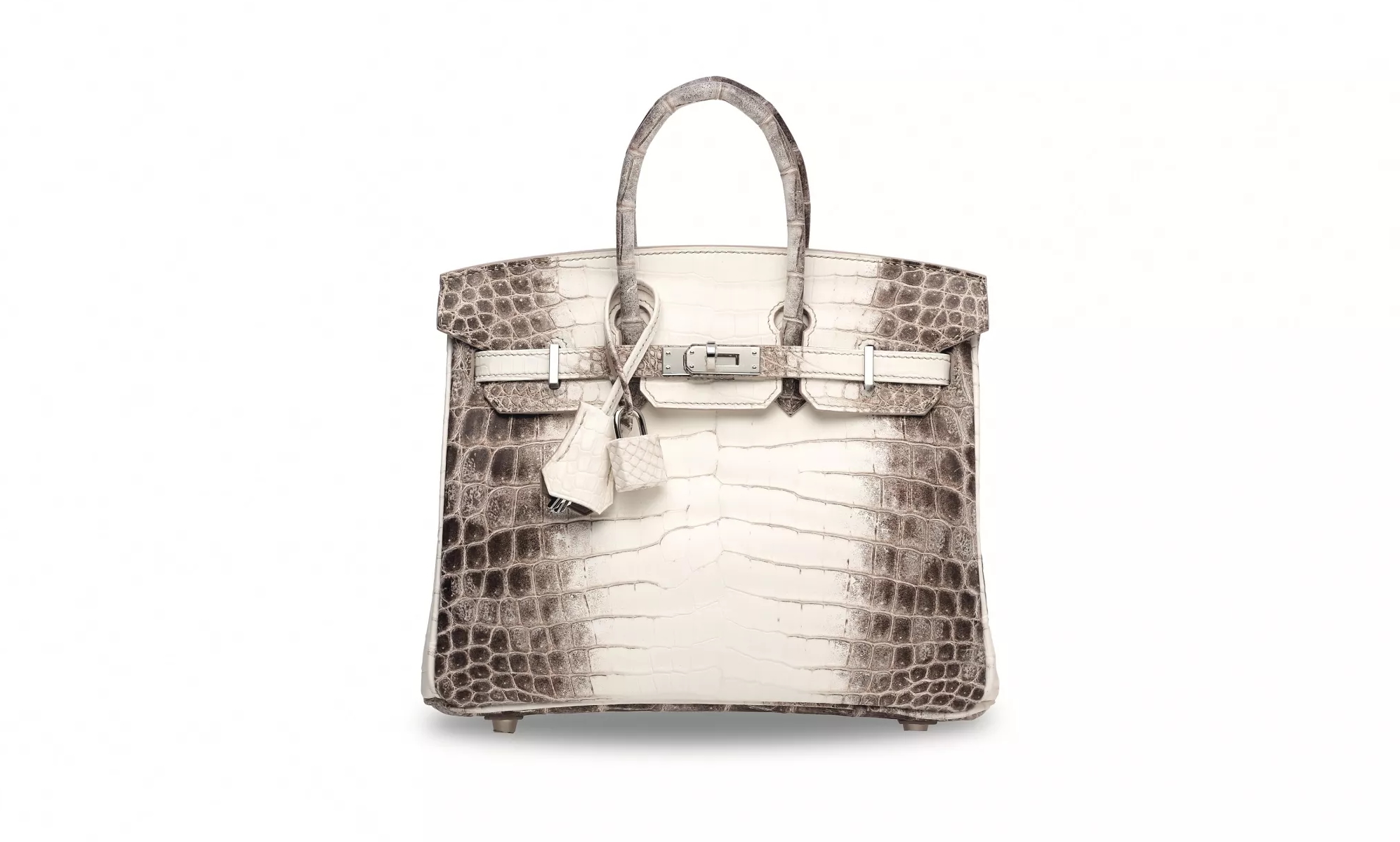
Middle East are drawn to brighter colors, like reds and deep greens, whereas Europeans prefer more classic, timeless colors, like greys and earthy tones, in goat or calf leather. In Asia, the “exotics” are prized—ostrich, lizard, crocodile, and alligator, in either matte or shiny. As for size, demand right now is highest for smaller bags, especially mini Kellys. Christie’s set the world auction record for a Kelly bag in 2021 when a 28cm Niloticus Crocodile Diamond bag, from the same year, sold
for HK$4 million ($513,000). They set the record for a Kelly Doll just this past May when a rare custom Bougainvillier Alligator and Malachite Swift Leather bag, from 2018, sold for HK$2.52 million ($324,000). (The whimsical Kelly Doll, with its smiling face, arms, and feet, was designed to celebrate the new millennium by Jean-Louis Dumas, then chairman of Hermès.) |
Hermès, Matte White Himalaya Niloticus Crocodile Diamond Retourné Kelly 28 with 18K
white gold and diamond hardware (2021). Photo: Courtesy of Christie’s Images Ltd. |
But smaller bags weren’t always in vogue. Back in the early days, the bag was
the 35cm Birkin—the size that Carolyn Bessette-Kennedy carried—and Hermès didn’t even launch the 25cm size until 2007. Rubinger told me investors are buying up the 35cm bags now at relatively low prices, betting that their market will return. (Jane Birkin’s original had the depth of a 40cm and the height and width of a 35cm.)
But supply may soon not be quite so constricted as Hermès staffs up to meet demand. In 2022, the company celebrated the first graduates from its
apprentice training school, Écoles Hermès des savoir‑faire, which is now in 10 regions, with about 700 students each year, and a goal to eventually launch an École in all of its regional leather goods divisions. Hermès also opened its 23rd leather goods workshop, in Riom, last fall, and is expecting to have 27 by 2028. In the first quarter, Hermès posted 10 percent growth year over year in leather goods and saddlery.
The auction houses tout impressive statistics of
attracting new and younger buyers via the handbags category, but they don’t say whether those buyers go on to buy fine art. And my understanding is that they don’t really, though they do convert to transacting in other luxury categories, like jewelry. In 2024, global handbag sales at Christie’s comprised only 0.9 percent of their total auction sales of $4.2 billion. Last year at Sotheby’s, they accounted for 0.7 percent of their total auction sales of $4.6 billion. Anecdotally,
I’ve heard of more fine art collectors who have been turned off from transacting at the global houses because they dabble in handbags than I’ve heard handbag collectors turned on to fine art. It makes you wonder if Birkinmania at the auction houses is a fad fit to fade. |
Thanks, Julie.
The Wall Street Journal published a long, poignant
multimedia story on Friday about the gardens at Claude Monet’s house in Giverny, which attract more than 800,000 people a year. Monet’s interest in horticulture preceded his fascination in later years with the nymphéas (Français pour “water lilies”) that he grew on the
property. Although the house and gardens are now an important tourist attraction, the staff struggles to maintain a garden that accurately reflects what Monet saw and painted. Climate change, evolving tastes in the cultivation and breeding of varietals, and the need to satisfy visitors’ hopes to experience the garden in perpetual full bloom have all taken their toll.
That’s it for today. See you in the Inner Circle tomorrow.
M |
|
|
Finally, a media podcast about what’s actually happening in the media—not the oversanitized,
legal-and-standards-approved version you read online. Join Dylan Byers, Puck’s veteran media reporter, as he sits down with TV personalities, moguls, pundits, and industry executives for raw, honest, sometimes salacious conversations about the business of media and its biggest egos. New episodes publish every Tuesday and Friday. |
|
|
The industry’s go-to source for unflinching reporting on the trillion-dollar business of artificial intelligence -
perhaps the single most important technology of our time. Ian Krietzberg, the powerhouse journalist behind The Deep View, delivers twice-weekly insights into the latest dealmaking and breakthroughs in A.I., and how the intersecting worlds of finance, entertainment, media, and politics are being transformed in its wake. |
|
|
Need help? Review our FAQ page or contact us for assistance. For brand partnerships, email ads@puck.news. You received this email because you signed up to receive emails from Puck, or as part of your Puck account associated with {{customer.email}}. To stop receiving this newsletter and/or manage all your email preferences, click here. |
Puck is published by Heat Media LLC. 107 Greenwich St, New York, NY 10006
|
|
|
|