Hi, and welcome back to Line Sheet. I spent Tuesday night watching Working Girl and
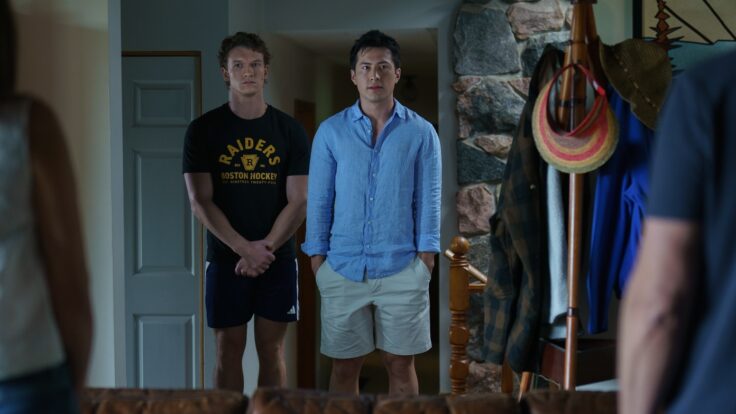
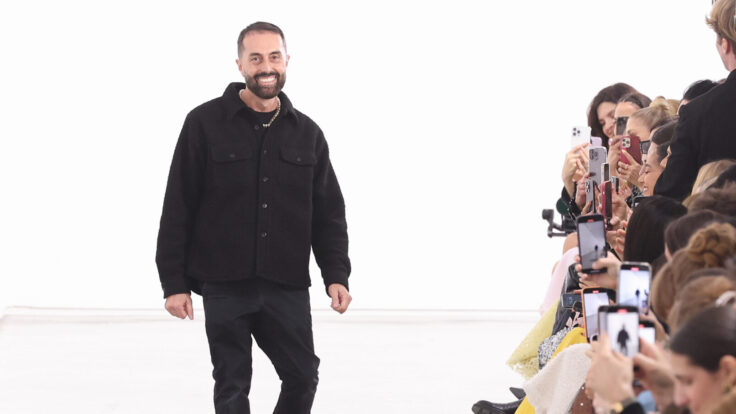
figuring out why a buzz-cut Christian Bale was at the Dolce & Gabbana Alta Moda show in Rome. (The long and the short of it: friendship.)
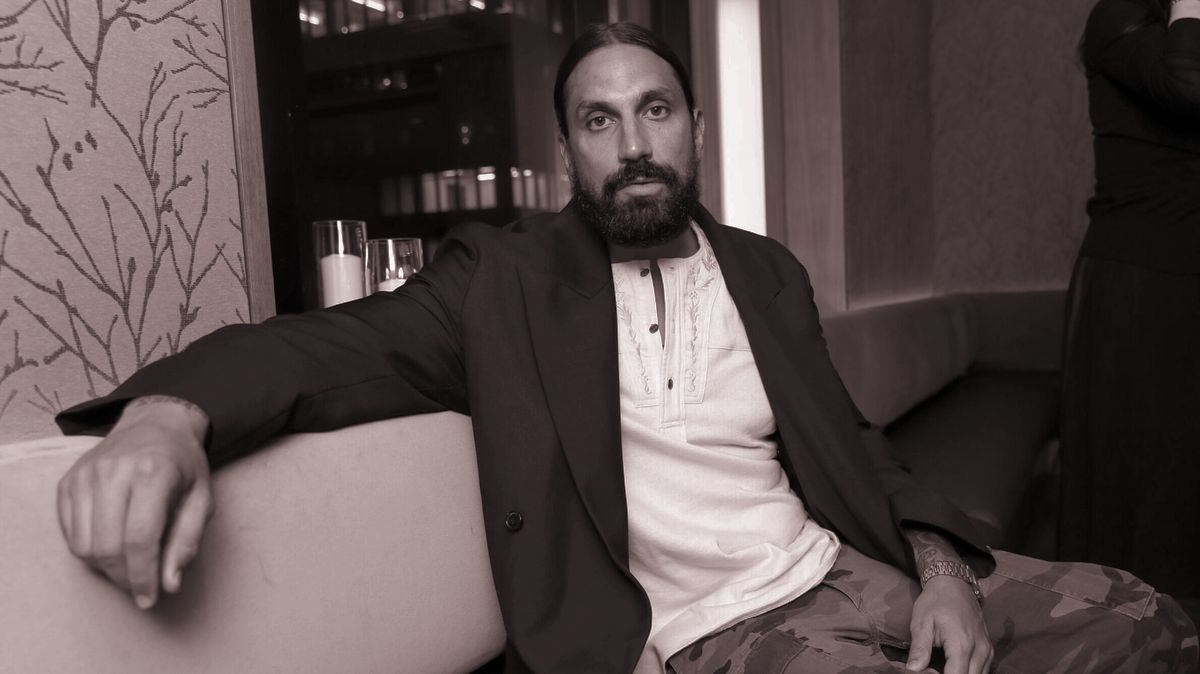
In today’s issue, Rachel Strugatz is here to discuss the true beauty brand of the decade: Byredo. Founder Ben Gorham, a 6’5” Swedish ex-basketball player, single-handedly created the niche fragrance category as we know it—from the
typeface and bottle shape to the very scents themselves. Gorham recently left Byredo after riding out his contract at Puig, which bought the company for over $1 billion in 2022. Rachel has the details on what Byredo’s post-Gorham era means for the future of the category.
Up top, details about another Kering exec who joined the diaspora. Plus, Sarah Shapiro checks in to see whether the Birkin auction inspired more secondhand sales. And I know we’re all reveling
in this week’s Empire of the Elite release—have fun at 4 Times Square tonight!—but there is more ’90s nostalgia to come. This September marks the publication of Gene Pressman’s They All Came to Barneys: A Personal History of the World’s Greatest Store. Today, though, Puck
art correspondent Julie Davich (sign up for Wall Power here) has an update on the fine jewelry-, couture-, and art-filled estate of the Pressman family—patriarch and matriarch Barney and Bertha Pressman founded Barneys New York in 1923.
Programming note: Today on
The Powers That Be, I join guest host Julia Alexander to discuss Anna Wintour succession plans, and what the Birkin auction says about the state of the world. Listen here and
here.
Mentioned in this issue: Byredo, Ben Gorham, Puig, Tiffany Masterson, Holly Thaggard, Balenciaga, Ludivine Pont, Demna, Kering, Charlie Smith, Jonathan Anderson, Jane Birkin, Dior, Hermès, Gab
Waller, the Pesenti family, Barneys, and many, many more… |
|
|
A MESSAGE FROM OUR SPONSOR |
The Cost-Cutting Playbook for Modern Brands Global commerce is only getting more complex—and inefficiency is getting more expensive. Swap’s Unified Commerce Report breaks down how forward-thinking brands are cutting costs and reclaiming margin by streamlining their operations from the inside out. Inside, you’ll find the 5 C’s of
Connected Commerce, plus real examples from brands like Zara, Nike, and Glossier. From fulfillment to compliance to inventory accuracy—it’s the growth-minded playbook your tech stack needs in 2025. 👉Get the full report and start scaling smarter:
Download Now |
|
|
Three Things You
Should Know…
|
- More
changes at Balenciaga: Ludivine Pont, Balenciaga’s chief marketing officer, has landed the C.E.O. gig at Santa Maria Novella, the 804-year-old Florence perfumery owned by Italmobiliare, the holdco of the billionaire Pesenti family, which bought it five years ago and has since opened several new stores and more than doubled sales. The market for niche fragrances has exploded over the past decade, and pristine heritage brands like Santa Maria
Novella are well-positioned to capitalize. It’s a big opportunity for Pont.
Pont joined Balenciaga from Moncler in 2021, but less than a year into the job, she became part of a close-knit team that managed le scandale that threatened to define Demna’s tenure at the Kering-owned house. And yet, as
the designer closed out his decade with a final couture show and exhibition at the Kering headquarters, that all seemed like a distant memory. Pont, of course, is exiting a changed Kering, one destined to transform further in the coming months.
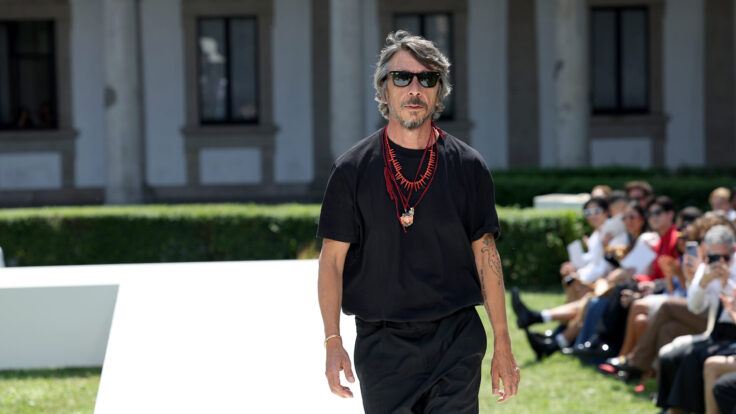
As for who might replace Pont? I’d bet Kering is eyeing Charlie Smith, Loewe’s well-liked C.M.O., who many thought would follow Jonathan Anderson to Dior. While Pierpaolo Piccioli
is surely bringing plenty of his own people into Balenciaga, my understanding is that he is deeply focused on design, and open to ideas for shaping the image.
|
|
|

| Sarah Shapiro
|
|
- The Birkin auction
aftershocks: After Jane Birkin’s namesake Hermès bag sold for a staggering and record-breaking €8.6 million ($10.1 million) with fees at Sotheby’s last week, it unleashed a surge in demand on the secondary market. The RealReal saw a 35 percent pop in searches for Birkins that same day, their highest traffic this month. Many now see Birkins as a real investment, even at the opening
price point of $12,500.
Of course, the increased demand only underscores the brutal reality of the Hermès quota system, wherein customers are invited to purchase the bag only if they’ve crossed a spending threshold. (There’s no official guidance, but it’s generally assumed that a customer needs to spend the equivalent amount on other Hermès items to get on a waiting list.) I spoke with a few top-tier
sourcers like Gab Waller, who told me that their relationships are often strong enough to secure a Constance bag and other Hermès items, but they rarely, if ever, have the ability to secure quota bags like Birkins or Kellys. This scarcity has created a secondary market, and also some lively retail theater: TikTok
is filled with appointment videos, where customers at Hermès are led to private rooms, and orange boxes are ceremoniously opened. It’s one of the true surprise-and-delight shopping moments remaining.
|
|
|

| Julie Brener Davich
|
|
- A piece of Barneys history
(sort of): The auction house Freeman’s Hindman announced that it will be selling the collection of former Barneys New York proprietors Phyllis and Fred Pressman across five sales this fall. The collection was pulled from Phyllis’s three homes—a Manhattan penthouse, Southampton beach house, and Palm Beach condo—and includes jewelry, couture, fine art, and decorative art. Fred, who died almost 30 years ago, was the former C.E.O. and son of Barneys’ founders,
Barney and Bertha Pressman. As I’m sure is well-documented in their grandson Gene’s forthcoming memoir, They All Came to Barneys: A Personal History of the World’s Greatest Store, in the ’60s, Fred transformed Barneys from a discount men’s suit shop into the fashion emporium upon which all others are still judged today. (They were the first to get Armani in the States in the ’70s, but also the first
to carry Proenza Schouler in the 2000s.)
Phyllis and Fred had four children. When the company filed for bankruptcy in 1996, brothers Gene and Bob each blamed the other, and the
sisters later sued Bob for allegedly mishandling the family trust; he then countersued. The family exited the company in 1998, and sold their remaining stake in 2004. Anyway, Freeman’s Hindman did not divulge which heir is overseeing the consignment.
The jewelry includes pieces by Bulgari, Harry Winston, and Van Cleef & Arpels. The American art collection features paintings by Frederick Carl Frieseke, Edward Henry Potthast, and William Merritt
Chase. The auction house is debuting select items from the collection at an event in Southampton on July 25, alongside highlights from their Hamptons Design Edit sale in August.
|
|
|
When you pay a billion dollars for a niche, founder-led fragrance brand, as Puig did with
Ben Gorham’s Byredo in 2022, you kind of want the founder to stick around. In this case, however, are the enigmatic Swede and the Spanish conglomerate better off apart? |
|
|
While the fashion world spends a great deal of time obsessing about the comings and goings of top designers
and executives, the beauty industry is seemingly less worried about succession. And yet, in recent months, the business has experienced a series of generational shocks: Tiffany Masterson, who essentially created the “clean beauty” category at Drunk Elephant, exited the brand she founded. So did Supergoop’s Holly Thaggard, who elevated sunblock from the drugstore aisle and popularized the notion of “unseen” sunscreen. Most recently, of course, Byredo founder
Ben Gorham stepped down, three years after Puig took a majority stake in the fragrance company for more than $1 billion.
Even Puig executives have some trepidation about Byredo’s identity without its visionary founder. “Ben is Ben,” one Puig executive told me, noting how Gorham put his stamp on the brand’s iconic typography and its cohesive portfolio of fragrances. “We keep thinking about the products and that there’s no need for a figurehead, but what if there
is? Especially for a brand that’s as founder-centric as this one.” |
|
|
A MESSAGE FROM OUR SPONSOR |
5 Steps to Winning in Q4 The
holiday rush is coming—but the smartest commerce brands are already preparing. Swap’s new guide lays out five essential strategies to get ahead of peak season chaos. From cross-border fulfillment to tax compliance and returns, it’s your blueprint for a smoother Q4—and stronger margins. Inside, you’ll find: 🎯 The key ops moves to make in July—not October 🌍 How to go global with zero surprises at checkout 📦 How leading brands are turning returns into retention This is the growth-minded playbook your ops team needs to win Q4. Download the full guide |
|
|
Gorham is indeed something of a legend in the fragrance industry—an enigmatic, 48-year-old former Swedish
basketball player who created a veritable lifestyle brand expressed through $200+ fragrances with names like Mojave Ghost, Gypsy Water, and Rose of No Man’s Land. The messaging was elusive and impressionistic—I once walked away from an interview with him having no idea what the perfume he was about to launch was actually supposed to smell like. But the business, fueled by a 2013 majority investment from taste-driven, Fisher-family-backed Manzanita Capital, was real. In 2022,
Puig paid over $1 billion for a majority stake in Byredo, which was said to be doing about $200 million in revenue at the time via retail and e-commerce. |
In the past two decades, many of Puig’s brands have become formidable players in the designer fragrance
space. Carolina Herrera has steadily climbed up the female fragrance rankings, with Good Girl finally dethroning Chanel last year as the bestselling perfume brand in the U.S. Puig’s number one brand, Rabanne, does more than $1 billion in revenue, due largely to the ongoing success of the 1 Million franchise.
But Puig’s niche and indie sector has seen meaningful growth, too, especially since Covid. In Byredo, Puig acquired an influential player in the independent fragrance category, whose
branding and aesthetic was widely copied. (The number of brands that have replicated Gorham’s white label and black sans-serif logo is too high to count at this point.) “It’s the one that’s leading double-digit growth in niche at Puig,” said a person close to the brand. Byredo is certainly an outlier at Puig, whose blockbuster labels trend toward the affordable and mass designer variety. Gorham, himself, may also not have exactly fit with the family-owned Spanish company and its longtime
executives who were fluent in travel retail—but so far, the fragrance brand he founded is finding its footing as it integrates into a multibillion-dollar publicly traded company.
Still, some worry that Byredo is getting lost in a larger division of niche brands, which includes Penhaligon’s, L’Artisan Parfumeur, Dries Van Noten, and Christian Louboutin, most of which “aren’t as cool or as globally known as Byredo,” as one executive put it. Others believe that the brand opened too many
stores (there are currently 75), some of which don’t drive enough meaningful revenue, and that its expanded categories ($3,500 handbags?) have come at the expense of its core offerings.
Then there’s Gorham, who may’ve had one foot out the door before he even arrived at Puig. Such is the case with many founders biding their time until their contracts expire, after which they can free themselves of their corporate parentco to start something new. I don’t know the specific details of his
contract, but I have heard that 5 percent of Gorham’s stake was tied up in performance-based earn-outs and remaining at the brand for three years. And the founder’s restlessness began to show even before his exit. For months before he left, he had the “open to work” setting visible on his LinkedIn profile. Whether it was a deliberate snub or just an oddly cheeky form of rebellion, it’s
still there, for anyone to see. |
Byredo’s North American business may be the most challenged, I’m told. The brand is in the process of closing
multiple doors, including in San Francisco and Silver Lake. An insider said that “everything in the U.S. is off its peak,” noting that the brand’s top-performing SoHo store is down about 20 percent, and that Byredo’s fleet of U.S. stores are down by double digits on average. However, the person familiar with the business said that Puig is actively searching for new retail opportunities in the U.S. market, and plans to add more than 10 new stores this year, in addition to recently opened
locations in Tokyo and Barcelona. Another person added: “The U.S. market, which is very significant for the brand, is not in the negatives.” |
|
|
Indeed, despite whatever’s happening in North America, insiders insist that the brand is growing
overall. As of May, I’m told, Byredo’s wholesale business was up 8 percent year-to-date in the U.S. A person with knowledge of Byredo’s business posited that any challenges in North America may just be “growing and transition pains that took longer than necessary.” (Byredo, after all, has a newish leadership team in place.) But it’s also true that the brand’s profile—luxury fragrance with a significant D.T.C. business—is not really its parentco’s core competency.
Puig is
mostly a wholesaler, not a retailer, and it’s more difficult to get buyers to pick up a $250 perfume in-store than it is to sell $100 fragrances tied to fashion houses with massive ad campaigns. “The people running Byredo now are the kinds of leaders who are used to scaling Carolina Herrera or Rabanne in travel retail or Macy’s,” explained a person close to Puig’s various businesses. “Which is great, but Byredo had a certain air and coolness. How do you hold on to that and keep scaling with a
different group of people?”
Historically, Puig has done really well with other entrepreneurs and founder-led brands, like Dries Van Noten and Charlotte Tilbury. (Tilbury herself recently signed a new contract and joined the board.) But there are other, brand-specific factors that made these ventures work, none of which apply to Gorham and Byredo. An insider suggested that Gorham’s value depreciated much quicker than that of Van Noten or Tilbury. “Ben was a [talented]
brander, and able to name these amazing fragrances that evoke some sort of emotion,” this person said. “But as a product, does it stand on its own the way Diptyque does?” (Manzanita also owns Diptyque, which it purchased in 2005.)
Alas, Byredo likely would’ve faced many of these same issues even if it had stayed independent. When Gorham founded Byredo in 2006, having a collection where every single bottle looked exactly the same was, itself, a point of differentiation.
But trends and culture change, and Gorham would’ve eventually had to figure out what Byredo is, beyond a minimalist typeface with spherical caps. Now, that’s Puig’s problem. |
The Virgil Abloh Archive™️, run by the late designer’s wife, Shannon Abloh, and his former
assistant turned archivist, Athiththan Selvendran, is staging an exhibition devoted to his work at the Grand Palais this fall. [Vogue]
L.L.Bean is looking for a new C.E.O. [Retail
Dive]
Simone Bellotti’s first imagery for Jil Sander is here, complete with a custom Bochum Welt score. We are ready for seaglass shirting! [Vogue]
Thom Browne opened two stores on the Upper East Side, the only
real neighborhood left in New York City. [WWD]
Richemont’s first-quarter sales are out, and jewelry sales were good (up 11 percent), while watches were down 7 percent and “other”—Chloé, Alaïa, etcetera—were basically flat. Reading between the lines: Alaïa and Peter Millar, Matt Belloni’s
favorite brand, are still growing (or have “momentum,” as the presentation says); Chloé hasn’t quite caught on yet, but there is hope (a.k.a. “encouraging signs”). [Here’s a Useful Deck Where They Employ the Font “Hey Insomnia”] |
Until Wednesday,
Lauren
P.S.: We are using affiliate links because we are a business. We
may make a couple bucks off them. |
|
|
Puck fashion correspondent Lauren Sherman and a rotating cast of industry insiders take you deep behind the scenes of this
multitrillion-dollar biz, from creative director switcheroos to M&A drama, D.T.C. downfalls, and magazine mishaps. Fashion People is an extension of Line Sheet, Lauren’s private email for Puck, where she tracks what’s happening beyond the press releases in fashion, beauty, and media. New episodes publish every Tuesday and Friday. |
|
|
The industry's go-to source for unflinching reporting on the trillion-dollar business of artificial intelligence - perhaps the
single most important technology of our time. Ian Krietzberg, the powerhouse journalist behind The Deep View, delivers twice-weekly insights into the latest dealmaking and breakthroughs in A.I., and how the intersecting worlds of finance, entertainment, media, and politics are being transformed in its wake. |
|
|
Need help? Review our FAQ page or contact us for assistance. For brand partnerships, email ads@puck.news. You received this email because you signed up to receive emails from Puck, or as part of your Puck account associated with {{customer.email}}. To stop receiving this newsletter and/or manage all your email preferences, click here. |
Puck is published by Heat Media LLC. 107 Greenwich St, New York, NY 10006 |
|
|
|