Hi, and welcome back to Line Sheet. I’m also back! Happy LuxExperience Day. To honor the occasion, I’ve got my first Met Gala scoop of the season, a Vanity Fair update, a note on the Kering earnings, and some news about the Saks sitch. And of course, Rachel “ Rachel@puck.news” Strugatz is here with the details on the post-“Liberation Day” aftershocks in the beauty industry.
Never forget: Rachel’s unbeatable reporting is available to Puck subscribers only. Pony up here, or I’m going to start writing about GLP-1s on the regular again. (Well, there’s a chance that’ll happen no matter what, so… do it either way!)
Mentioned in this issue: Liberation Day, Trump, Boy Smells, Mario Badescu, Morris Cabasso, Martha Stewart, Kering, Estée Lauder Companies, Gwyneth Paltrow, Pat McGrath Labs, Will Welch, Anna Wintour, Kamala Harris, Saks Global, Gary Wassner, and many more…
|
|
|
|
A MESSAGE FROM OUR SPONSOR
|
GET NOTICED
Every detail of the Range Rover Sport has been engineered for exhilarating driving dynamics and spirited performance.
EXPLORE
|
|
|
Four Things You Should Know…
|
- A Kering bummer and the LVMH defense: I’ll have more on what’s happening in luxury land tomorrow—other than a total meltdown—but for now, you should know that Kering missed Q1 analyst expectations. (Saint Laurent performed better than expected, but Gucci sales were down 25 percent rather than the expected 23 percent. Bottega Veneta is growing, but not as much as hoped.) Of course, no one expected things to start getting better until the end of 2025, but things are obviously worse because of all the macro issues. Speaking of, Louis Vuitton has raised handbag prices in the U.S. by 3.6 percent, according to Bernstein’s Luca Solca, in response to the tariff threats. Not too bad, given everything. (And good for LVMH, since Louis Vuitton is still selling.) “A price increase of +3.6 percent seems more than enough to cover even the worst case scenario of 20 percent tariffs on EU exports to the US,” Luca wrote in a recent note.
- It will not be Will: On the day Radhika Jones announced that she was stepping down from her editorship at Vanity Fair, I reported that Will Welch wasn’t going to bother with the job. Despite speculation otherwise—presumably fueled by Welch enthusiasts and folks who know that he met with Condé chief content officer Anna Wintour in the days following Jones’s announcement—Welch is not going for it: never was, never will. As I mentioned all those weeks ago, Welch has enough on his plate—including managing the GQ China situation. (It seems that they are circumnavigating the licensing holdup by launching GQ Hong Kong. I’ll report more on that soon.)But there’s something I missed in my original analysis that’s important to point out: Given Vanity Fair’s diminished position in the culture and the anorexic print product (the Gwyneth Paltrow issue is so thin I had to look away), the brand needs an editor who can revive the title with total focus and clarity—someone who can stand shoulder-to-shoulder with celebrities on Oscar night and singularly represent the brand. Welch is perhaps too closely associated with GQ at this point to convincingly switch teams. Sam Hine will have to wait his turn a while longer.
- Kamala at the Gala?: Just in time to stir further speculation that she might be running for governor of California, Kamala Harris is rumored to be attending the Met Gala—lest we forget, a fundraiser for the Costume Institute—on May 5. My educated guess is that there is an 85 percent chance she’ll make it to her table. Harris is slated to be in New York on that day, but perhaps, even if she is already getting her dress fitted, she’ll decide not to walk the steps at the last minute.If she ends up going, the reasons are clear: Fashion liberals raised a ton of money for Harris during her presidential campaign, led by Gala co-chair Anna Wintour; this year’s exhibition (Superfine: Tailoring Black Style) has a social message; and Harris has a level of fashion literacy far beyond pretty much any other public figure. Of course, there’s also a risk that her attendance could reinforce the narrative that she is an out-of-touch elite. But maybe Harris is choosing to lean into her true self: a cool woman who lives in Los Angeles and wears Irene Neuwirth earrings—an authenticity that was absent during her brief campaign. Perhaps the solution is to skip the steps and go in through the side door. She’ll still make headlines, but in a less showy way.
- The factor factor: On Tuesday, the same day Saks Global announced the elimination of 550 jobs (as reported by me previously and in more detail earlier this week by WWD), Gary Wassner, the C.E.O. of Hilldun, a factoring firm that services many of the brands that sell to Saks Global, sent an email to clients noting that Hilldun would be adding an additional 3.5 percent surcharge to any Saks Global invoices on top of normal fees.Factoring companies are basically retail loan vendors. They buy invoices at a discount, assume a slight risk, and provide upfront liquidity to a brand—sort of, if not exactly, like a bridge loan. A brand that is owed, say, $75,000 by Saks Global might sell that invoice to Hilldun at a slight discount, and then Saks will settle up with Hilldun, which makes money on the spread.
Why is Gary adding a surcharge to Hilldun’s fee structure? As my guy Bill Cohan explained so eloquently in Sunday’s issue of his must-read Puck private email, Dry Powder, it all comes down to the Saks Global bonds. “The costs to us have risen exponentially, commensurate with the risk profile,” Gary wrote. “The pressure on the bond markets, due to our government’s policies and statements, has pushed Saks Global’s bond price very low, and the yield on it very high.”
For what it’s worth, Hilldun increasing or adding a surcharge is not an uncommon practice—many retailers are subject to them, especially right now—and Gary’s email was downright peaceful in tone, given everything that’s happening. He noted that “Saks Global is paying us regularly, and their weekly payments have increased recently.” Regardless, it’s another blow to the brands. They’re already taking a giant hit on their margins with all this tariff rigmarole and plummeting consumer confidence.
|
|
|
|
Nearly every beauty brand is exposed to China, adding to the anxiety that’s keeping industry executives up at night. But smaller and mid-market brands are feeling the tariff squeeze most of all.
|
|
|
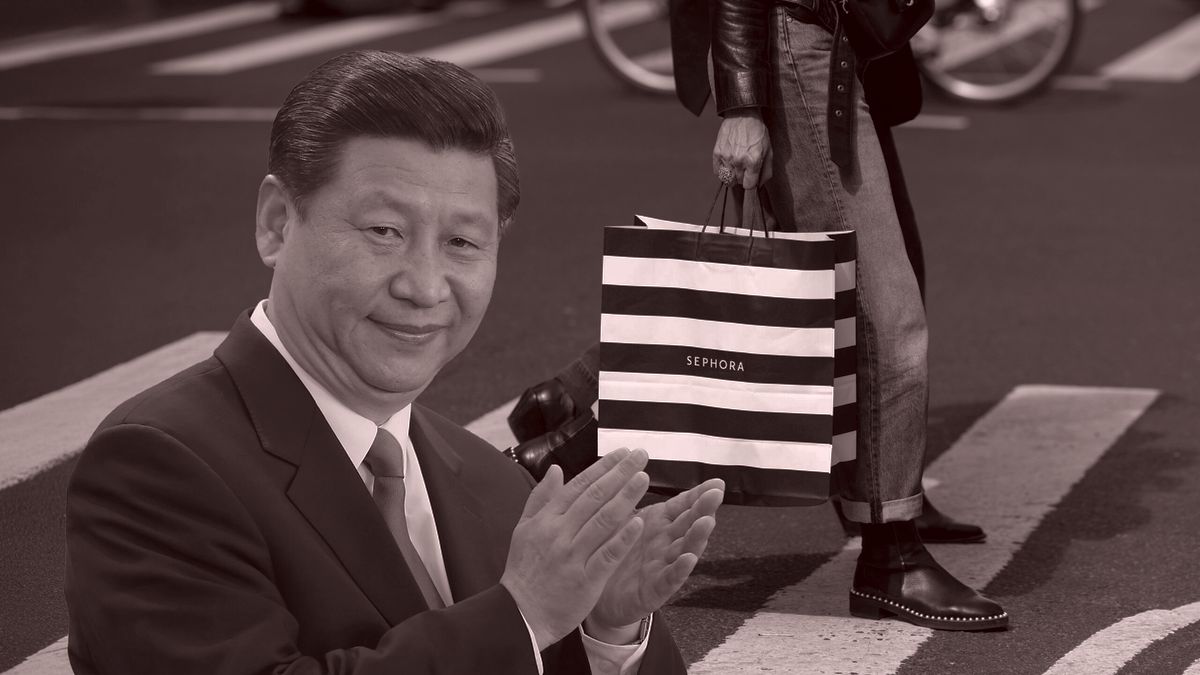
There are basically two camps in the beauty business right now: companies facing an existential threat from tariffs on account of manufacturing in China, and everyone else—mostly large, multinational conglomerates and independent brands with more diversified supply chains (an infinitesimal percentage of beauty brands manufacture end-to-end in the U.S.). But even companies with less tariff exposure aren’t out of the woods, given the impossibility of forecasting where import tax rates will have settled by the end of Trump’s 90-day “pause.” Last week, the tariff on most goods made in China was 145 percent. Yesterday, Trump said the U.S. would drop tariffs “substantially, but not zero,” whatever that means. Today, an unnamed White House official told the Journal they would likely be reduced to between 50 percent and 65 percent.
Trump is unpredictable, clearly, and no executive team wants to go through the ordeal of upending manufacturing—finding new factories, working with new governments, training new workforces, significant capex costs, etcetera—if this turns out to be a game of economic chicken. At a time when beauty companies would normally be finalizing plans for the all-important holiday season, they are being forced to play a global guessing game that’s leaving them paralyzed. I’m hearing that until the ink is dry on any new trade deals or there’s visibility into what tariffs will actually look like come July, manufacturing decisions are more or less at a standstill.
|
|
|
|
A MESSAGE FROM OUR SPONSOR
|
GET NOTICED
Every detail of the Range Rover Sport has been engineered for exhilarating driving dynamics and spirited performance.
EXPLORE
|
|
|
|
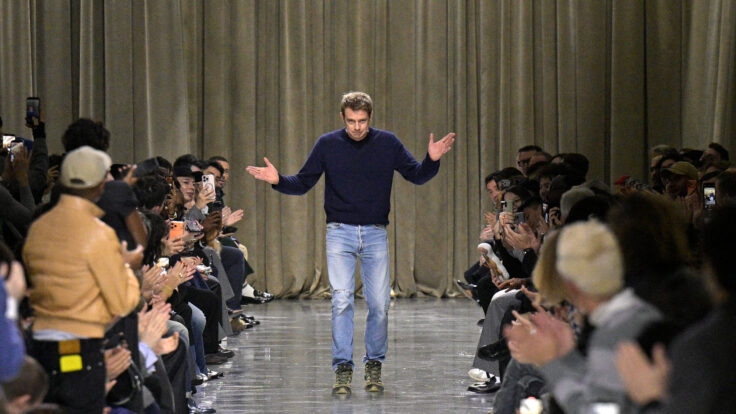
C.P.G. giants with sizable beauty and personal care businesses—from P&G to Unilever, and even Clorox, which owns Burt’s Bees—are relatively insulated from astronomical Chinese tariffs because, even though they’ll pay more for packaging, they do have U.S.-based manufacturing facilities. Even the Estée Lauder Companies has built a number of plants globally to diversify manufacturing in the past several years, including a very costly R&D center in Tokyo and a manufacturing plant in nearby Sakura, plus a massive new facility in Canada to support all of the makeup brands (primarily MAC Cosmetics), and additional facilities in the U.K., U.S., and the Netherlands.
“[Former E.L.C. C.E.O.] Fabrizio [Freda] made a case that Japan would cut shipping time and it would look good for skincare to be made in Japan, but it wasn’t needed from a production capability,” explained a person with knowledge of the situation, noting that Japan could also be a risk because of its increasingly tense relationship with China. My understanding is that Lauder never would have manufactured its products in China because even Chinese consumers don’t want brands—especially luxury brands—that are made in China.
The beauty retail giants likewise have the tools and the scale they need to weather the storm. “It’s not going to mess up Sephora, or even Target, today,” a high-level beauty executive told me. The smaller players, of course, are exponentially more vulnerable. One founder told me that more than 75 percent of their brand’s manufacturing (products, packaging, etcetera) is China-based, and others say around 10 percent of their total cost of goods, or COGS, comes from China—mostly packaging, not surprisingly. In many cases, freighters laden with custom displays and cardboard boxes had already set sail from China well before Liberation Day, meaning those brands will likely owe millions of dollars no one originally accounted for. “We went from thinking we were going to make $20 million this year to potentially losing millions,” one beauty executive told me. “That’s quite the swing.”
One founder of an independent beauty brand, which does about $100 million in revenue, told me that thin-margin items––like kits and samples made in China––will go “out of stock” or disappear altogether in the near term. “It’s not worth going through the sourcing exercise for every product when there are higher-margin products [typically 80 percent and up] that need attention,” this person said. Their brand may have to use “lower-quality componentry,” or stock packaging from the U.S. Another issue, according to this person, is that larger manufacturers are buying up all the “globally sourced” ingredients, and in some cases, the packaging, too. “Their procurement strategies are way more upstream and in much bigger volumes.”
|
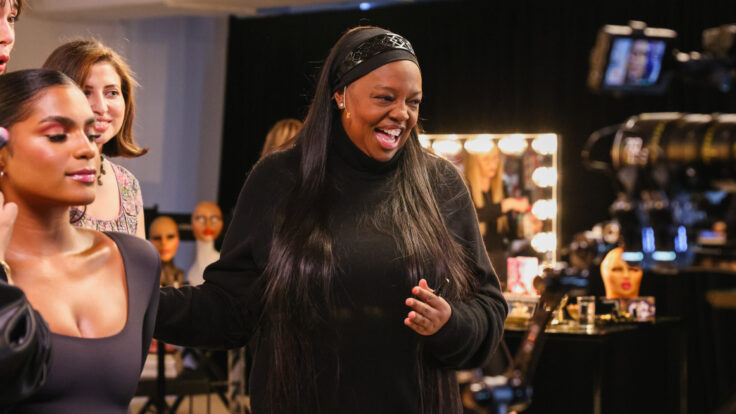
Indeed, the mid-market beauty companies are really getting sandwiched by the tariffs: They’re too small or too new to develop their own local manufacturing plants or have yet to be acquired by a big conglomerate that owns such facilities. And they typically don’t have the lobbying muscle to get a meeting with the president’s economic advisors, or even the president himself, as the C.E.O.s of Target, Walmart, and Home Depot did this week. The damage could be devastating for even healthy businesses, let alone those that are undercapitalized, over-leveraged, don’t have great credit, or aren’t profitable to begin with. If profitable brands seeing double-digit growth have to take a loss this year, I can’t begin to imagine what this will do to the companies like Goop, Pat McGrath Labs, etcetera.
Also, this couldn’t be a more consequential time on the calendar. The end of spring is when beauty brands begin holiday production—a five-to-six-month process that includes manufacturing, shipping by freighter, moving product into a third-party logistics center (or 3PL), and finally, shipping finished product to retailers. Many brands do the bulk of their business during the fourth quarter, which includes a lot of holiday sets and bundles. (It was the grim image of barren holiday shelves, as painted by the C.E.O.s of Target, Walmart, and Home Depot, that apparently swayed President Trump to soften his rhetoric.)
Ulta and Sephora’s holiday kits and sets, despite being immensely popular with shoppers, are notoriously low-margin items. One executive hypothesized that they will be one of the first things to disappear. “Even though these items aren’t the most profitable, brands make them because they’re good for their customers, but a lot of those things are going to either be downsized or more expensive this year, which is a problem because 75 percent of Americans operate off a fixed budget for the holidays. There’s not the ability to necessarily just absorb that.”
|
|
So far, brands do seem to be treading lightly with immediate price increases, including Dieux, which recently broke down the costs of its skincare products on Instagram. In the near term, though, you can expect brands to cut down on nonessential, non-fixed costs, like in-store displays, whether those are endcaps or Sephora “gondolas.”
|
|
|
|
It is in such uncertain times that new playbooks emerge, though. Just look at Covid, when brands were forced to quickly optimize their supply chains and set up manufacturing in multiple markets to offset potential closures or delays in any one region. Indie lines were naturally able to do this much more quickly than legacy companies, but eventually even Estée Lauder Companies was able to diversify by opening several global facilities.
Mario Badescu, a skincare line and spa frequented by Martha Stewart that manufactures everything in-house at its 160,000-square-foot facility in
Edison, N.J., may be at the forefront of post-Liberation Day innovation. I hear they’re going to let beauty lines that manufacture in China use their facility to fill packaging, the final stage in the process. I chatted with Morris Cabasso, Mario Badescu’s vice president of business development, who confirmed the above, and shared that the company plans to charge a similar rate to what brands were paying in China, plus “a few cents” to cover labor and machinery costs. (This is also the same brand that hasn’t raised the price of its $65 facials at its midtown flagship since the early 1980s.)
Of course, because supply chains are global and complex in nature, we still don’t yet know how those costs will be impacted. There are a number of instances where a Chinese manufacturer is importing raw materials from the U.S., and vice versa, or when brands fill Chinese-made tubes in a Florida facility that may also be importing their raw materials from Vietnam or China. Basically, no one has reliable information on how these trade deals will shake out, if or how quickly co-manufacturers can find other suppliers of materials either domestically or from less-impacted countries, and then, how those costs will be passed on. As in most periods of uncertainty, the real winners here will be the lawyers and accountants who quickly interpret laws and find ways around them.
|
What I Was Reading… and Thinking About… and Listening To… When I Was Out of the Office
|
I totally forgot that I had heard Kendrick Lamar was doing a campaign for Chanel all the way back in June 2024. A lifetime ago. My source didn’t have all the details right—nor could I confirm them—but the Kendrick part… that was on the money. [ Line Sheet]
On vacation, I obsessively followed the Sinners discourse, and this podcast explains what’s happening, and why it matters to Hollywood and beyond, clearly and with feeling. (There is polite yelling...) [ The Town]
This story on the rise of Raf’s as a meeting spot for fashion people—fashion people, I said, not cool fashion people—fails to mention that PR Consulting not only does the publicity for Raf’s, but also for i-D magazine, which threw a dinner at the restaurant during which the Times reporter interviewed various subjects. (Many of the photos were also from the dinner.) I feel like this story should have actually been about PRC’s ability to do good P.R.? I mean, PRC is the main reason I’ve eaten at Raf’s! [ NYT]
The retail reporter job at The New York Times is open, again. (The fabulous Jordyn Holman recently moved off the beat to relaunch the Corner Office column. Fine.) That retail gig is cursed. My understanding is that it tends to serve as a way into the Times, but then there is not a lot of room for growth, and people get bored and move elsewhere. But you should still apply. Miss you, Sapna! [ Talking Biz News]
|
And finally… Big birthday week in these parts! Happy 50th to Imran and Lucien. I love you both and am also much younger.
Until tomorrow,
Lauren
|
|
|
|
Puck fashion correspondent Lauren Sherman and a rotating cast of industry insiders take you deep behind the scenes of this multitrillion-dollar biz, from creative director switcheroos to M&A drama, D.T.C. downfalls, and magazine mishaps. Fashion People is an extension of Line Sheet, Lauren’s private email for Puck, where she tracks what’s happening beyond the press releases in fashion, beauty, and media. New episodes publish every Tuesday and Friday.
|
|
|
|
Puck’s daily art market email, anchored by industry expert Marion Maneker, offers unparalleled access to the mega-auctions and galleries, elite buyers and sellers, and the power players who run this opaque world. Wall Power also features Julie Brener Davich, a veteran of Christie’s and Sotheby’s, who provides unique insights into how the business really works.
|
|
|
Need help? Review our FAQ page or contact us for assistance. For brand partnerships, email ads@puck.news.
You received this email because you signed up to receive emails from Puck, or as part of your Puck account associated with . To stop receiving this newsletter and/or manage all your email preferences, click here.
|
|
Puck is published by Heat Media LLC. 107 Greenwich St, New York, NY 10006
|
|
|
|