 |
 |
|
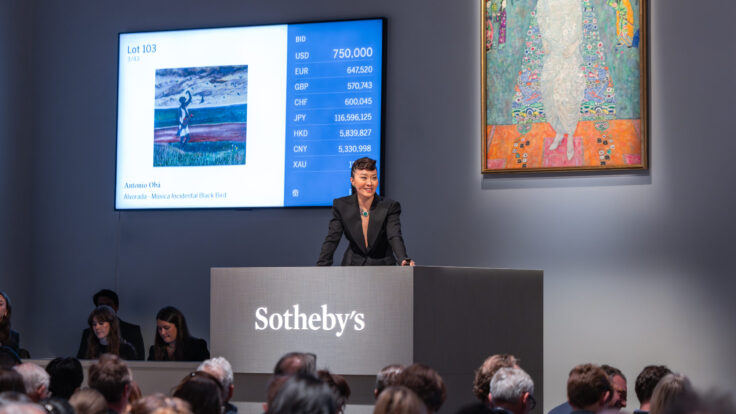
Welcome back to Wall Power, where we’re still chuckling over Art Basel’s decision to reverse itself and rename its October fair Art Basel Paris. (Maybe they thought Paris+ sounded like a streaming service.) Of course, while the Basel brand has plenty of prestige, the worst-kept secret in the art world is that most collectors would prefer to go to Paris in October over a trip to sleepy Basel in June. Except that’s the last thing Art Basel wants them to do.
Tonight, my thoughts on how Jean-Michel Basquiat’s art became a dominant force in the art market. Plus, a quick look at what happened in Hong Kong last week. The market is still bottoming—but there are encouraging signs that we’re almost done.
But first…
|
|
A MESSAGE FROM OUR SPONSOR
|

|
|
Great Art Collections Deserve Great Planning
While many collectors dream of passing their art on to the next generation, tax implications, differing tastes and the costs of maintaining a collection can complicate a well-intentioned — and sometimes emotionally charged — gift. Explore our guide for valuing, appraising and transferring your collection to ensure the pieces you spent decades collecting live on as you intended.
Art (left to right): Anna Kunz, Mock Orange, acrylic on canvas, 2024; Gwen Yen Chiu, Ink Stroke No. 3, darkened and welded stainless steel, 2024; Michael Hedges, High Tide, oil on canvas, 2024. Courtesy of McCormick Gallery
Explore our guide
|
|
|
| Lot Watch: Jawlensky & Sanyu Edition |
|
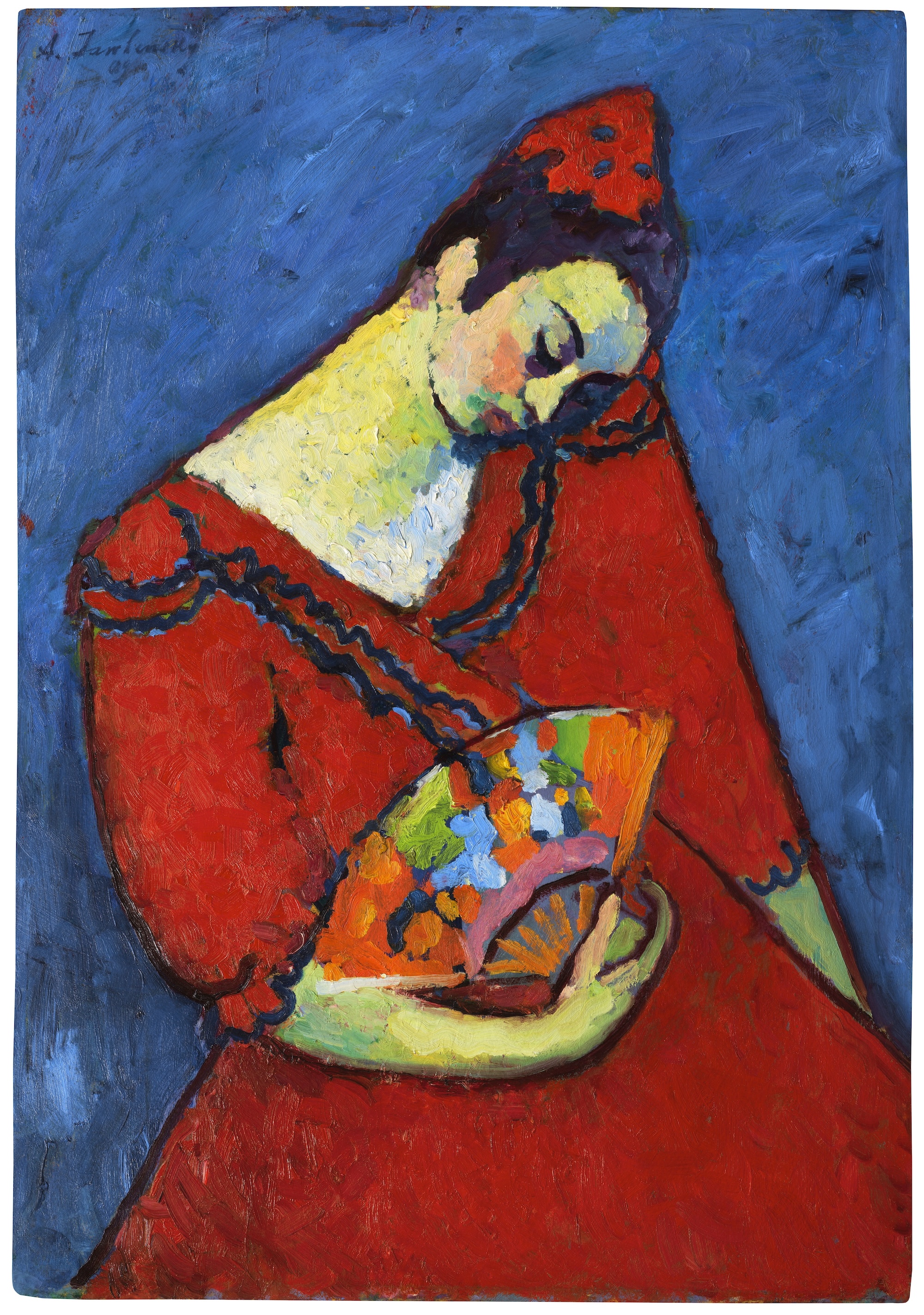
| This Friday, the Munich-based Ketterer Kunst auction house is putting up for sale a major Alexej von Jawlensky painting from 1909, which has been held in the same family for 90 years. The work is similar to the artist’s Schokko (1910), which sold for $18.5 million in 2008. In the last two years, important examples from this period, not nearly of the quality of this Spanish Dancer, have sold above $6 million. Ketterer has priced the work at €7 million ($7.6 million). |
|
|
Alexej von Jawlensky, Spanish Dancer (1909), estimated at €7 million
|
|
|
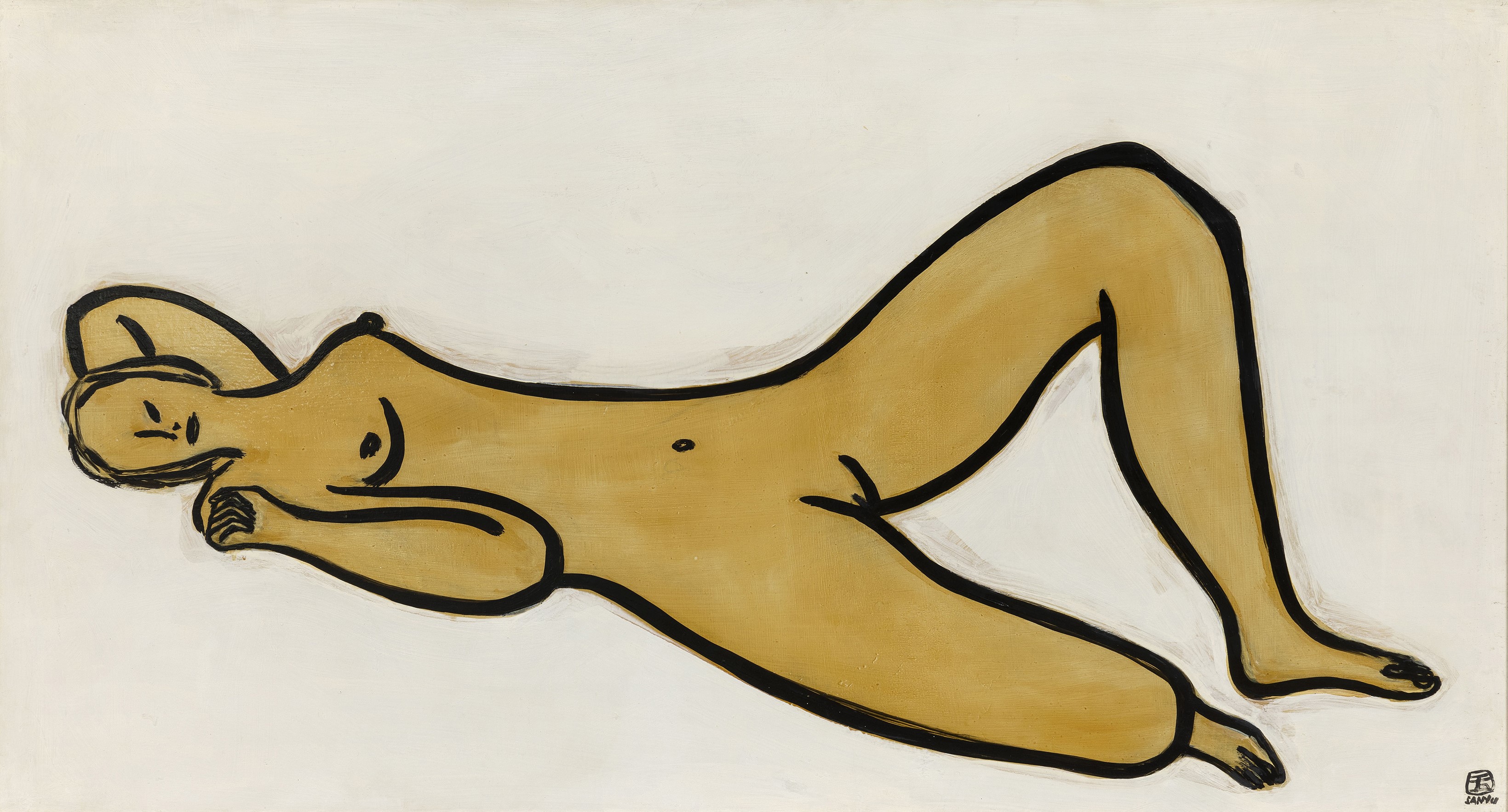
| Meanwhile, in Hong Kong last week, Phillips announced their star lot for November, Reclining Nude, with Knee Raised II, a rare Sanyu nude from the collection of Dr. Eric Edwards, an important collector of the Chinese-French painter’s work. Edwards previously sold the late artist’s record-setting work Five Nudes (1950), which made $38 million five years ago. Phillips says this is one of the last of Sanyu’s large nudes that still hasn’t sold to Asia. Similar, slightly larger works have sold for $21 million and $25 million. Phillips is offering this work with the estimate upon request, but the whisper number is HK$70 million—or just under $9 million. |
|
|
Sanyu, Reclining nude, with Raised Knee II, (1950s/1960s), estimate in the region of HKD 70 million
|
|
|
| And speaking of China… |
|
|
| Last week, Phillips and Christie’s gave us a taste of what’s to come in Hong Kong next year when all three houses begin to align their sales. With the two houses sharing the same sale week, Hong Kong saw nearly $189 million spent across Contemporary, Modern, and Classical Chinese painting styles. The average price of a lot was $300,000, with the top 10 lots accounting for 35 percent of the auction value.
The sales statistics were still flashing red, suggesting the market remains overpriced and that estimates need to come down farther before momentum resumes. The overall hammer ratio—which is the aggregate estimate for all lots divided by the hammer price for all lots—was a weak .95. The houses also withdrew a combined 20 lots, with a total estimated value of $11.5 million, or 7 percent of the presale value (the hammer ratio would have been .88 had those lots remained.) Digging deeper, of the 534 lots that did sell in Hong Kong, 184 (34 percent) made prices above the estimate range and another 225 (42 percent) went for prices within the estimate range. Only 125 lots (23 percent) were sacrificed at prices below seller expectations. |
|
A MESSAGE FROM OUR SPONSOR
|
|
|
Great Art Collections Deserve Great Planning
While many collectors dream of passing their art on to the next generation, tax implications, differing tastes and the costs of maintaining a collection can complicate a well-intentioned — and sometimes emotionally charged — gift. Explore our guide for valuing, appraising and transferring your collection to ensure the pieces you spent decades collecting live on as you intended.
Art (left to right): Anna Kunz, Mock Orange, acrylic on canvas, 2024; Gwen Yen Chiu, Ink Stroke No. 3, darkened and welded stainless steel, 2024; Michael Hedges, High Tide, oil on canvas, 2024. Courtesy of McCormick Gallery
Explore our guide
|
|
|
| Assuming these results will be incorporated into negotiations with consignors for future sales, this should get us close to the market bottom. Looked at another way, however, it’s clear that the most valuable lots are overpriced. Only eight of the top 50 works were bid above the estimate range—they sold for prices ranging from $775,000 to nearly $13 million—and 19 of them sold at prices below the estimates. There was a lot more action among lots 100 to 150, where the buyers paid between $180,000 and $327,000, itself a sign that buyers are looking for value at lower price points, a common theme in all the major auction centers for the last 18 months.
Interestingly, from the bidding data, it appears that collectors are competing more aggressively for historical art rather than the Contemporary art that has dominated the last five or six years. Marc Chagall had eight works among the top 50 works by hammer ratio, and total sales for 10 works netted $3.9 million. In terms of market share, Yayoi Kusama dominated the Hong Kong sales with $25 million spent for 13 works, accounting for more than 13 percent of the total sale. Seven of those works sold for prices within the estimates; five sold for compromise prices below the estimate. Zao Wou-Ki, the prolific Chinese painter who immigrated to France, sold nearly $22 million worth of work, or 11.5 percent of the sale. Zao’s eight works (out of 10 offered) made a total of nearly $22 million, at an average price of $2.7 million. All of the sold Zaos but one—which saw healthy bidding—went at prices within the estimate range. |
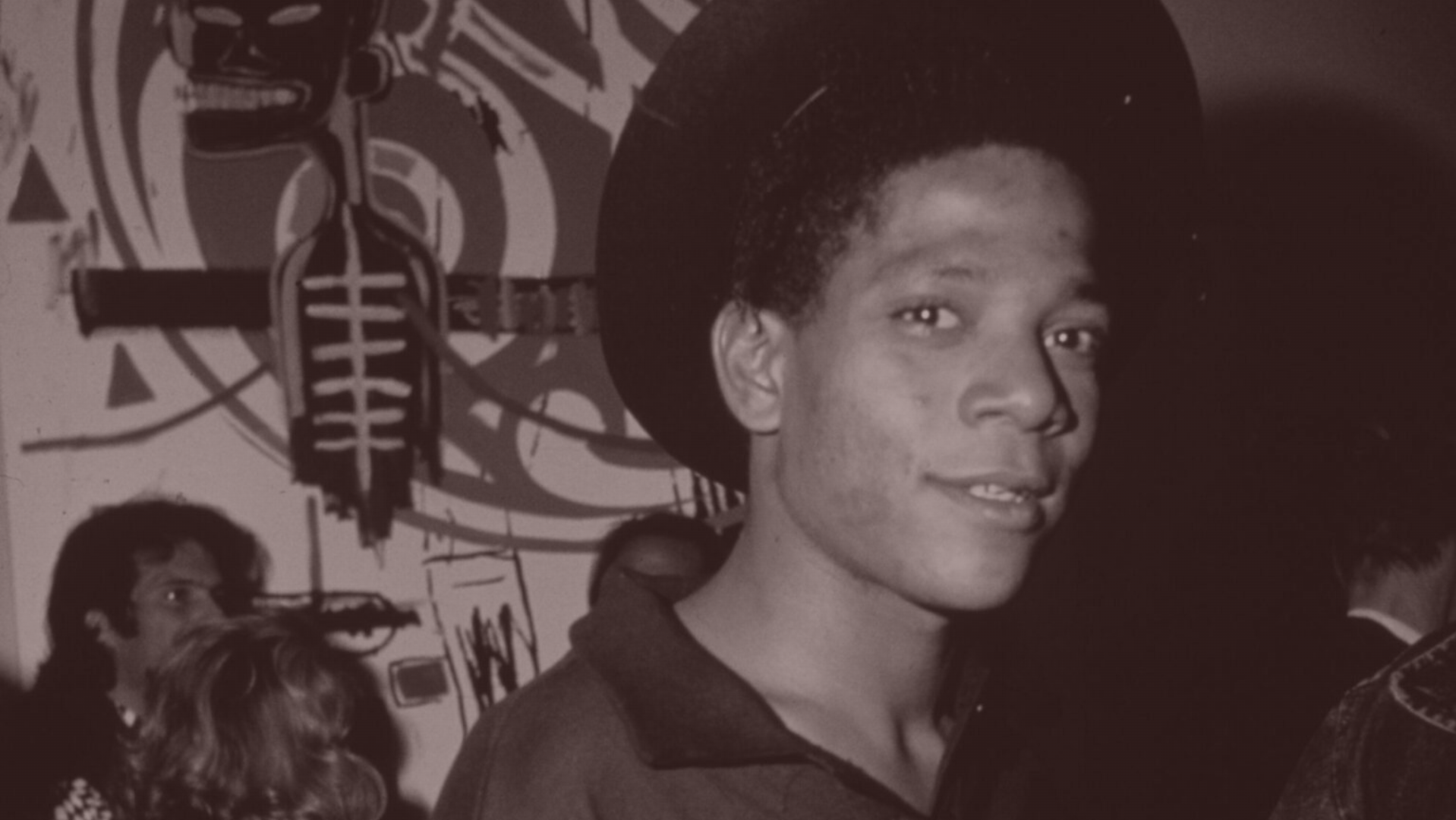 |
| Is Basquiat the New Picasso? |
| In both New York and Hong Kong last month, Jean-Michel displaced the Spanish master as the new benchmark for the art world. For years, the artist’s market—driven via headline-inducing purchases by the likes of Ken Griffin and Jho Low—seemed to have exceeded real collector demand. Now that’s all changing. |
|
|
|
| In May, nearly $125 million of Jean-Michel Basquiat’s art sold at auction, putting the late artist on pace to sell more than $200 million at auction this year. Over the past four years, works by Basquiat have racked up over a billion dollars in auction sales, representing a rise of about 21 percent over the previous four years. In the process, he appears to have posthumously turned an invisible corner. “He’s the new Picasso,” Phillips’ Contemporary art guru Jean-Paul Engelen told me. In other words, Basquiat has become the benchmark artist.
That’s partly because, while the Picasso market is supply constrained, Basquiat demand is building momentum. Sure, it’s unlikely that 2024 will approach previous banner years—$345 million was spent on his work in 2017, and $439 million in 2021—but Basquiat auction sales have achieved their highest average price since 2021, and the second-highest of any year for Basquiat.
A distinguishing feature of the Basquiat market is that, until recently, the artist’s fame always exceeded real collector demand. Basquiat died of a heroin overdose in 1988 at 27 years old, with an artistic career that barely spanned a decade. It wasn’t until 2002, when Metallica drummer Lars Ulrich sold Profit 1 (1982) for $5.5 million at Christie’s, that Basquiat had any real market clout. Two years later, the untitled large-scale work known as Devil sold at auction to Adam Lindemann for $4.4 million, followed by a $5.16 million auction sale for the 1983 work El Gran Espectaculo (The Nile). When one of Basquiat’s untitled figures sold for $14.6 million in 2007, the artist was suddenly worth serious money. Even in November 2008, during the disastrous auctions at the beginning of the financial crisis, Ulrich was able to sell the 1982 piece untitled (Boxer) for $13.5 million.
Given Basquiat’s fame, it’s actually surprising that it has taken so long for his work to become so valuable. One reason may be the very limited institutional support for Basquiat. The artist’s work just isn’t included in many museum collections, and the recent surge in values makes it unlikely that many of these works will be donated any time soon. They’re simply too valuable.
Another oddity of the Basquiat market is that many of the paintings that trade publicly have also done so in the past, running counter to the art market axiom that bidders like work that is “fresh to the market”—meaning it hasn’t been sold at auction recently. In most artists’ markets, recently auctioned works are discounted, based simply on familiarity and the sense that the pieces might not be so meaningful if owners don’t want to hold on to them for a lifetime.
The Basquiat market turns that logic on its head. Perhaps because of the lack of institutional support, market validation takes on an outsize role. It’s noteworthy that one of the most widely seen exhibitions of the artist’s work was not a museum exhibit but the for-profit King Pleasure show mounted in New York and Los Angeles by Basquiat’s heirs starting in 2022. Whatever the cause, the untitled (Boxer) sale unleashed half a dozen other Basquiat sales in the neighborhood of eight figures. |
|
|
| Market Jitters & Griffin’s Jet Fuel |
|
| Basquiat’s work really took off after the financial crisis. In 2012, there was a flurry of buying that re-established rising prices. The untitled figure that sold for $14.6 million in 2007 was traded again at auction for Basquiat’s first price above $20 million. Just a year later, Dustheads set an astonishing new public price record of $48 million in a sale, alas, to Jho Low, who had not yet been exposed as the alleged mastermind of the 1MDB sovereign wealth fraud. Another half-dozen auction sales followed Dustheads—which is now owned by hedge fund billionaire Daniel Sundheim. But the run of prices in the $20 million-$30 million range ended after 2015 when the Mugrabi family bid upon a large $37 million work that, according to a lawsuit filed by Christie’s, they wouldn’t pay for. Seeing their invisible hand in the market certainly didn’t help inspire other buyers.
Most artists’ markets couldn’t have withstood the dual shocks of Jho Low and the Mugrabis, and it looked for a moment like Basquiat’s work would have to go into hibernation. But then Christie’s Brett Gorvy doubled down by offering Lindemann a guarantee for his large-scale Devil, which sold for a surprising $57 million to Japanese billionaire Yusaku Maezawa in 2016. A year later, Maezawa set another top price for Basquiat by paying $110 million for the untitled head. The underbidders were well known to the market and only further validated the price.
For more than a year after the record $110 million sale, art fair booths were festooned with Basquiats big and small. But few sold; there were not enough buyers to make a deep market. Yes, there were half a dozen sales at auction above $20 million in the next few years—David Geffen paid $45 million for Flexible (1984) from the artist’s estate—but the market was remarkably choosy. Between 2018 and 2021, there were no major auction sales for Basquiat. Nothing traded publicly for more than $15 million, which was no longer spectacular money.
But talk started circulating that in 2020, Citadel’s Ken Griffin had paid over $100 million for Boy and Dog in a Johnnypump (1982) in a private sale from newsprint manufacturing mogul and Warhol benefactor Peter Brant. (Recently there was a rumor that Griffin bought the untitled $110 million head from Maezawa for $200 million, but market makers who know the players doubt that happened.)
In any case, Griffin’s purchase of Boy and Dog might have been the nudge the Basquiat market needed. And when Valentino’s longtime partner Giancarlo Giammetti sold In This Case (1983) for $93 million in 2021 after aggressive bidding, the prices paid by Maezawa and Griffin for striking, large-scale Basquiats didn’t seem so crazy. Which made it easier for Phillips’s Engelen to engineer the sale of the devil painting for $85 million a year later. El Gran Espectaculo (The Nile) followed the next year at $67 million. Another half-dozen prices above $25 million have been achieved at auction in the last two years as well.
Of course, there’s no telling what will happen next in the art market. Engelen says this economic activity is driven by buyers who are new to the Basquiat market. Some come from collecting Modern art but have skipped over Warhol and gone straight to Basquiat. One of the curious details in Phillips’ sales of three Basquiat paintings from the estate of Francesco Pellizzi is that although the works came to market with third-party guarantees, they were bought by bidders willing to push the hammer price just a little bit higher. Engelen sees this as evidence that buyers are very disciplined in their spending these days, but also a sign of the times. There are bidders for Basquia,t but the field, at these prices, may not be as deep as sellers hope. “He’s sort of bulletproof,” Engelen said of Basquiat’s status in the market. “But there are a limited number of bullets.” |
|
|
|
| FOUR STORIES WE’RE TALKING ABOUT |
|
|
|
|
|
 |
|
|
|
Need help? Review our FAQs
page or contact
us for assistance. For brand partnerships, email ads@puck.news.
|
|
You received this email because you signed up to receive emails from Puck, or as part of your Puck account associated with . To stop receiving this newsletter and/or manage all your email preferences, click here.
|
|
Puck is published by Heat Media LLC. 227 W 17th St New York, NY 10011.
|
|
|
|