|
Welcome back to Wall Power. I’m Marion Maneker.
We’ve almost finished the first semester of the art year. Everyone who is going to Art Basel should be there by now, and the dinners, exhibitions, and dealmaking are already in full swing. If you’re there and want to share your thoughts on the Vija Celmins show that opened at the Fondation Beyeler on Sunday, or the Medardo Rosso show at Basel’s Kunstmuseum, or even the Trois Rois’s Herzog & de Meuron renovation, I’m all ears on WhatsApp, SMS, and Signal (+1.917.825.1931). Also let me know what you overhear in the bar or the cigar lounge.
|
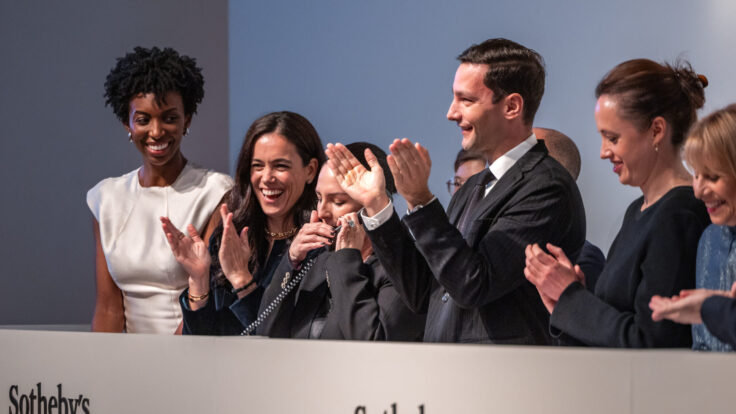
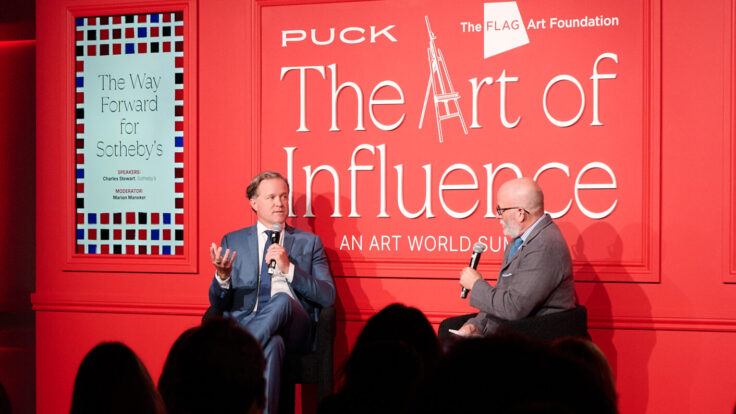
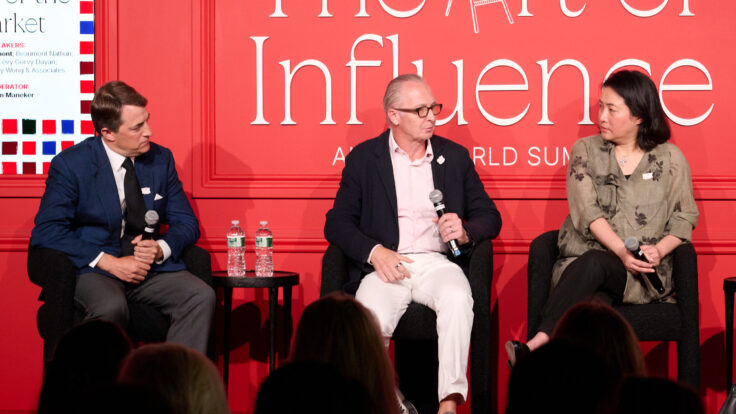
I’m very excited to share that Puck and the FLAG Art Foundation have announced our first summit, The Art of Influence. It will take place on September 15 in New York at SECOND, a Midtown event space.
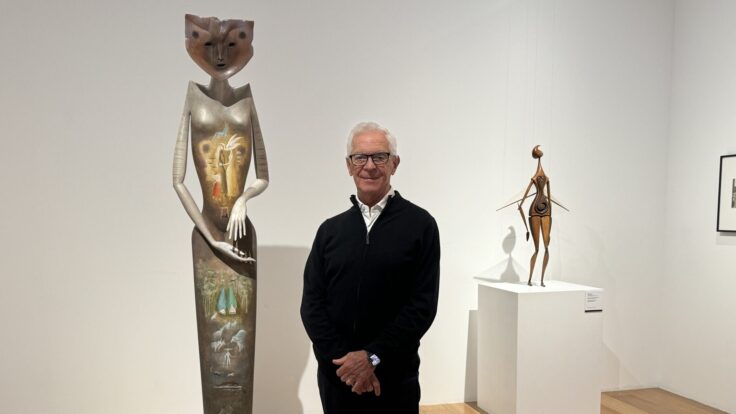
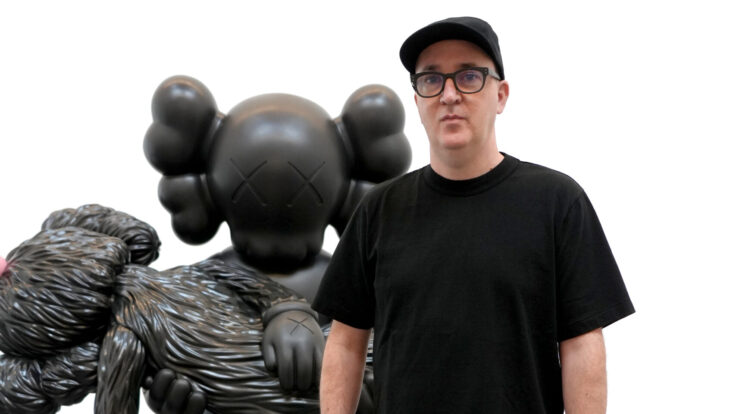
I want to extend a personal invitation for you to join us for a day of frank conversation and unparalleled access in an intimate setting. We’re keeping this event small and exclusive—spots won’t last. Our first featured guest is a singular force in the art market, Larry Gagosian, who will appear along with noted collector Glenn Fuhrman, in conversation with artist Nicolas Party. Dasha Zhukova, the founder of Ray, has agreed to join us, too. We’ll unveil the next group of featured guests and programming as we move through the summer.
This one-day event will take place from 10 a.m. to 4 p.m., leaving you plenty of time to get work done. Our goal is to focus on the most pressing issues and opportunities in the global art world. That means looking at museums, auction houses, galleries, advisors, and more. If you’d like to join me and Glenn, you can buy your tickets here. (Pro tip: Inner Circle members get access to the event at a discount. You can upgrade your subscription here—then purchase tickets here.)
First up…
|
- Leonard Lauder dies at 92: News started filtering out on Sunday morning of the death of cosmetics and skincare visionary Leonard Lauder at the satisfying age of 92. As befits a man who built upon his mother’s company, a behemoth valued at $134 billion just three years ago and now worth $26 billion, pre-written obituaries started to go live as early as 3 p.m. that day. But the beauty industry is not the only one that will feel Lauder’s loss. Deep in the night, David C. Breslin was the first to post an encomium on Instagram, and why not? Not only did Lauder endow Breslin’s position at the Met—his somewhat unwieldy job title is Leonard A. Lauder Curator in Charge of the Department of Modern and Contemporary Art—but he also almost single-handedly transformed the Met’s standing in modern art.After all, Lauder assembled a collection of 78 cubist paintings that he donated to the Met a dozen years ago, then added another 12 paintings. The obituaries all value this collection at $1 billion, but that number is fiction. Lauder did spend a lot of money buying these works, but there’s no telling what they cost him—and any nominal valuation from 2013, a peak year in the art market, has no bearing on works that are now part of a museum collection that presumably has restrictions on deaccessioning.
In many ways, Lauder was far more generous to the Whitney, where he donated many works of art and $131 million to the endowment, but also much of his time and attention. He was such a dominant figure at the museum that no one batted an eye when, in the winter of 2023, Scott Rothkopf was named director to replace the retiring Adam Weinberg without even the semblance of a search. Rothkopf was only a few hours behind Breslin posting his paean on Instagram, acknowledging that the Whitney was “‘his’ museum, and no one since our founder gave more generously to it. … I can think of no other arts patron who has been quite so selfless in his philanthropy.” Lauder himself didn’t quite see it that way. He told the Times only six months ago, “I rarely give money to an institution for their ideas. I create my own.”We’ll have to wait and see if Lauder made further provisions for the Whitney in his will. Meanwhile, the museum has been quietly planning an expansion as the city redevelops Gansevoort Square following the departure of the last meatpacking businesses from the neighborhood. Even as part of a mixed-use development, the museum will have to come up with some real money for its part of the construction and, of course, to cover the greater operating expenses.
|
|
|
|
A MESSAGE FROM OUR SPONSOR
|
The first steps towards a masterpiece starts with a dream. The all-electric BMW i7 – the evolution of brilliance. Learn more at
BMWUSA.com
|
|
|
- Philly’s American art jubilee: The nation’s 250th birthday is coming up next year, and Philadelphia will play an important role in any celebration. Today, the Pennsylvania Academy of the Fine Arts and the Philadelphia Museum of Art announced that they would mount A Nation of Artists, an historic show featuring 1,000 works of art, including 120 works from the Middleton family collection, by artists ranging from Charles Willson Peale and Horace Pippin to John Singer Sargent and Mary Cassatt, as well as contemporary names like Jaune Quick-to-See Smith, Rina Banerjee, and Mickalene Thomas. The PMA will be celebrating its 150th anniversary in 2026, and the Pennsylvania Academy will also unveil a new installation of the museum’s permanent collection. The collection of Phillies managing partner and principal owner John S. Middleton and his wife, Leigh, will play a key role in enhancing both institutions. Middleton’s son, a film producer, was recently involved in one of the more colorful dust-ups in recent memory.
|
|
|
 |
Julie Brener Davich |
|
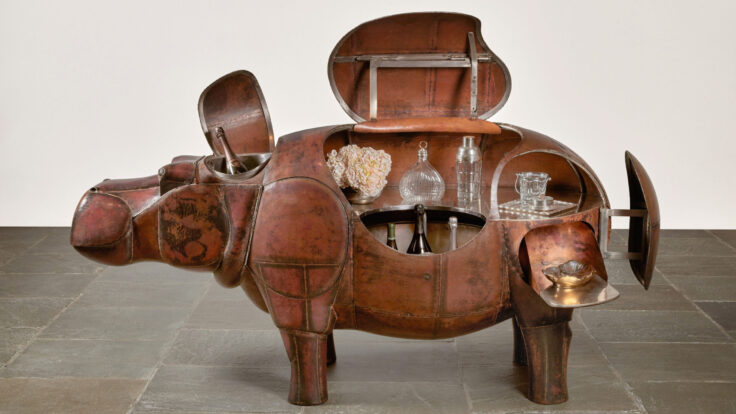
- Keeping Up With the Steinitzes: Over the years, there have been auctions dedicated to Bernard Steinitz, the patriarch of the legendary French antiques dealing family, and his son, Benjamin. Now it’s the family matriarch’s turn. This Thursday in Paris, Christie’s will hold an auction of 130 lots paying homage to the taste and vision of the late Madame Simone Steinitz. “She was the unsung hero of the gallery,” European furniture and decorative arts specialist Will Strafford, who has been with Christie’s for more than 20 years, told me.Benjamin, who runs Galerie Steinitz, is collaborating with Christie’s on the sale. Founded by his parents in 1968 and now housed in an hôtel particulier on Rue Royale in Paris, the gallery—which hosted the presale exhibition—specializes in decorative arts from the 17th to the late 19th century, with a particular focus on the 18th century, considered the golden age of French savoir-faire. Benjamin said that all the pieces in the auction, ranging from mounted vases to candelabras to consoles and seat furniture, were selected by his mother. Some of the greatest artists of the century are represented, such as Jean-Henri Riesener, Pierre-Philippe Thomire, and Georges Jacob, as well as some of the most prestigious provenances, including kings Louis XV and XVI and the fabled Rothschild family.
Benjamin called out, in particular, a pair of Louis XVI–era consoles by cabinetmaker Jean-François Leleu, in gilded oak and walnut with white marble tops, estimated at €100,000. He also highlighted a vase once belonging to the Rothschilds by bronzier Antoine-Philippe Pajot, also from the Louis XVI period. Estimated at €50,000, it’s made of powder blue enameled Chinese porcelain and mounted in chased and gilded bronze. About one-fifth of the items on sale are estimated at €10,000 or less, including a neoclassical cut-crystal ice bucket from the early 19th century, estimated at €1,000, which could be the star of your next cocktail party.The combined presale estimate is €3.3 million, and the auction arrives a month after the weeklong private selling exhibition of Steinitz treasures at Christie’s Hong Kong. This might seem like an unusual sale strategy, but Strafford told me the Hong Kong event was intended to reach Asian collectors, who have shown a taste for European decorative arts, and also to show the works in the contemporary context of the new Zaha Hadid–designed headquarters. The event also marked the launch of Christie’s private sales website for decorative arts. The Paris sale is a more traditional 18th century French context.
|
|
|
|
In recent years, Art Basel in Paris stole some of its thunder, but O.G. Basel is having a micro-resurgence. Early reports suggest that there’s money on the ground, but not a lot of urgency.
|
|
|
|
In the period leading up to Art Basel this year, I heard two contradictory narratives. The first was that many art world heavies, particularly Americans, were passing up the can’t-miss fair for serious collectors in favor of Art Basel in Paris, a city with more capacity for fun and entertainment, and more museums and local galleries to present more work by more artists. Yet as the fair approached, I began to hear rumblings from the opposite direction. One well-established collector, for instance, told me he was going to Basel this year to “reconnect” with the art world.
Then last week, I had coffee with a young advisor (she had matcha) who told me she was also unexpectedly making the trip because two of her clients—one from Asia, the other from the Middle East—had told her they would be there, and she could not pass up the chance for some face time. Plus, there would be lots of art to see and discuss—which, if you’re an art advisor, is the ideal way to interact with clients, as it allows for both gauging their interests and stress-testing their taste. Art fairs serve many purposes. Selling art is only one of them.
|
|
|
|
A MESSAGE FROM OUR SPONSOR
|
The first steps towards a masterpiece starts with a dream. The all-electric BMW i7 – the evolution of brilliance. Learn more at
BMWUSA.com
|
|
|
|
This all seemed relevant this morning when I spoke to Art Basel C.E.O. Noah Horowitz, a few hours after the opening of the main fair. In our conversation, I tried out my emerging pet theory that, despite the success of Art Basel in Paris, there were plenty of art market participants who preferred and would prioritize the original. Art Basel in Basel, while not the first art fair, has been the world’s most successful. And right now, as the art market seems to be adrift in the doldrums, the art world might be returning to first principles.
|
|
Basel’s unique appeal, Horowitz pointed out, is as a place where collectors both old and new can engage across “every touchpoint.” The city is adept at facilitating interaction among gallerists and collectors beyond the booths. The Fondation Beyeler and the Basel Kunstmuseum, the town’s two museums, take care to present shows of particular interest to the world’s most sophisticated collectors—this year the Beyeler has a Vija Celmins retrospective. (Before you say you saw that in San Francisco or New York, Horowitz points out there’s a whole new room of her recent work in the Basel show.) And the Medardo Rosso show at the Kunstmuseum was able to, in Horowitz’s words, “reposition an important and underappreciated turn-of-the-century artist” and place him “in vibrant dialogue with so many of the most important artists of today.” He pronounced it “truly one of the most special shows I’ve seen in some time.”
Those mashups are at the core of what Horowitz thinks collectors can only get at Basel. He pointed to the main floor: Gladstone gallery has a $1.2 million Robert Rauschenberg collage image (that it sold) featuring John F. Kennedy, only steps away from the Acquavella booth, where the former president appears in a Tom Wesselmann assemblage. This is the kind of information that doesn’t translate to PDFs or Instagram reels.
Also, a lot of different work gets done in a short amount of time in Basel because of all of the places—hotels, the tram, the museums, and even the Messeplatz—where everyone interacts. “There’s a real commitment to turning up,” Horowitz said. That’s not lost on the galleries that often select who among their collectors they will give prime works.
Horowitz wasn’t going to contradict my thesis—he admitted it was in his interest not to—but said he genuinely felt there was a return to Basel that emphasized the city’s unique role, and pointed out that American attendance at the fair, particularly from museum curators and trustees, was tracking in line with previous years. He suggested that Paris and Basel will balance themselves out and “learn to dance with each other.”
He also recognized that all of Art Basel’s fairs are becoming more regional in focus. After all, you can’t have five different art fairs around the calendar and across the globe and expect your audience to attend every one. But that doesn’t mean there are no global visitors. This year, there’s a strong contingent from Japan, Horowitz said, which tracks with what I’ve been hearing from other players in the art market about the growing interest in art collecting in that country.
|
|
Art Basel Unlimited opened on Monday, featuring the kinds of works that are just too big for the booths. Gagosian brought a $3 million Martin Kippenberger installation from 1997, METRO-Net Transportabler U-bahn Eingang, which debuted at Documenta X and was intended as a comment on the near-universal hope for a hyperconnected, globalized world. Today, it represents the frustrations and futility of all of that promised connectivity. Gagosian also has oversize works by Rick Lowe, Jeff Koons, and Piero Golia. Dealer Dennis Yares had brought a massive, $1.2 million painting by Larry Poons, as well as the 87-year-old painter himself, to generate interest in this still under-recognized figure.
|
|
Martin Kippenberger, METRO-Net Transportabler U-bahn Eingang (1997). Photo: Pauline Martinet/Courtesy of Gagosian
|
|
Other works at Unlimited include massive installations by Oscar Murillo and Katherine Bernhardt at David Zwirner, as well as Diane Arbus’s Box of 10; works by Arlene Shechet, Latifa Echakhch, and Robert Longo at Pace; Danh Võ’s In God We Trust, a massive, incomplete American flag assembled from firewood; Franz West’s T-shaped aluminum and lacquer sky blue sculpture Verkehrtes T at Galerie Eva Presenhuber; and Heinz Mack’s Mechanical Ballet, conceived in 1966 but only executed in 2015, which consists of seven rotating stainless steel pillars set within a mirrored room at Almine Rech. Hauser & Wirth mounted an example of Félix González-Torres’s “Untitled” (Go-Go Dancing Platform), from 1991, which involves a random five-minute performance by a young male go-go dancer clad in socks, sneakers, and silver lamé briefs—his music playing through headphones—upon a small, lightbulb-lined stage.
|
|
|
|
Today, Art Basel in Basel kicked off its super-select preview with a bold statement: The plaza in front of the Messeplatz was painted in broad magenta and white strokes by Katharina Grosse. (The fair formally opens to the public tomorrow.) This morning, I also spoke to dealer Mattia De Luca, who created that great Giorgio Morandi show in New York last autumn. His impression, based on his time in Basel and conversations with clients, was that buyers still had plenty of money. They just lacked a sense of urgency—unless they came across exactly the kind of work they had been looking for. Horowitz backed this up, saying some collectors were planning on coming to the fair on later days when the crowds had dissipated. (The fair floor was actually busier than expected in the first few hours, Horowitz observed.)
Both De Luca and Horowitz mentioned the fact that art sales had become a lot less time-bound. Like with the auctions, De Luca told me, there was a lot of presale dealmaking off of PDFs and images. And yet, Horowitz pointed out, the cadence of art sales has changed, with many taking place after in-person encounters at the fair.
At the booths, dealers had brought the kind of classic, high-value works that Basel is known for: Applicat-Prazan’s pair of Pierre Soulages paintings, one from 1955 and the other from 1956, each priced above €5 million; or Mennour, which is showing one of Jean Dubuffet’s first works from the l’Hourloupe series that has been so much in demand lately.
|
|
Mark Rothko, No. 6/Sienna, Orange on Wine (1962). Photo: Stefan Altenburger Photography/Courtesy of Art Basel
|
|
David Zwirner reported making 68 sales on the first day of the fair. Those include a Ruth Asawa sculpture with an asking price of $9.5 million, a Gerhard Richter square abstract painting priced at $6.8 million, two paintings by Dana Schutz priced at $1.2 million and $850,000, respectively, as well as an On Kawara diptych with a $1.3 million asking price. Zwirner also sold two Michaël Borremans paintings, including a new one priced at $850,000, and a Njideka Akunyili Crosby with a sticker price of $700,000.
Pace sold an Agnes Martin, Untitled #5, from 2002, for “over $4 million”; a Yoshitomo Nara painting; and a painting by Emily Kam Kngwarray, Anooralya—Yam Story, from 1994, for $450,000, ahead of her Tate retrospective in July.
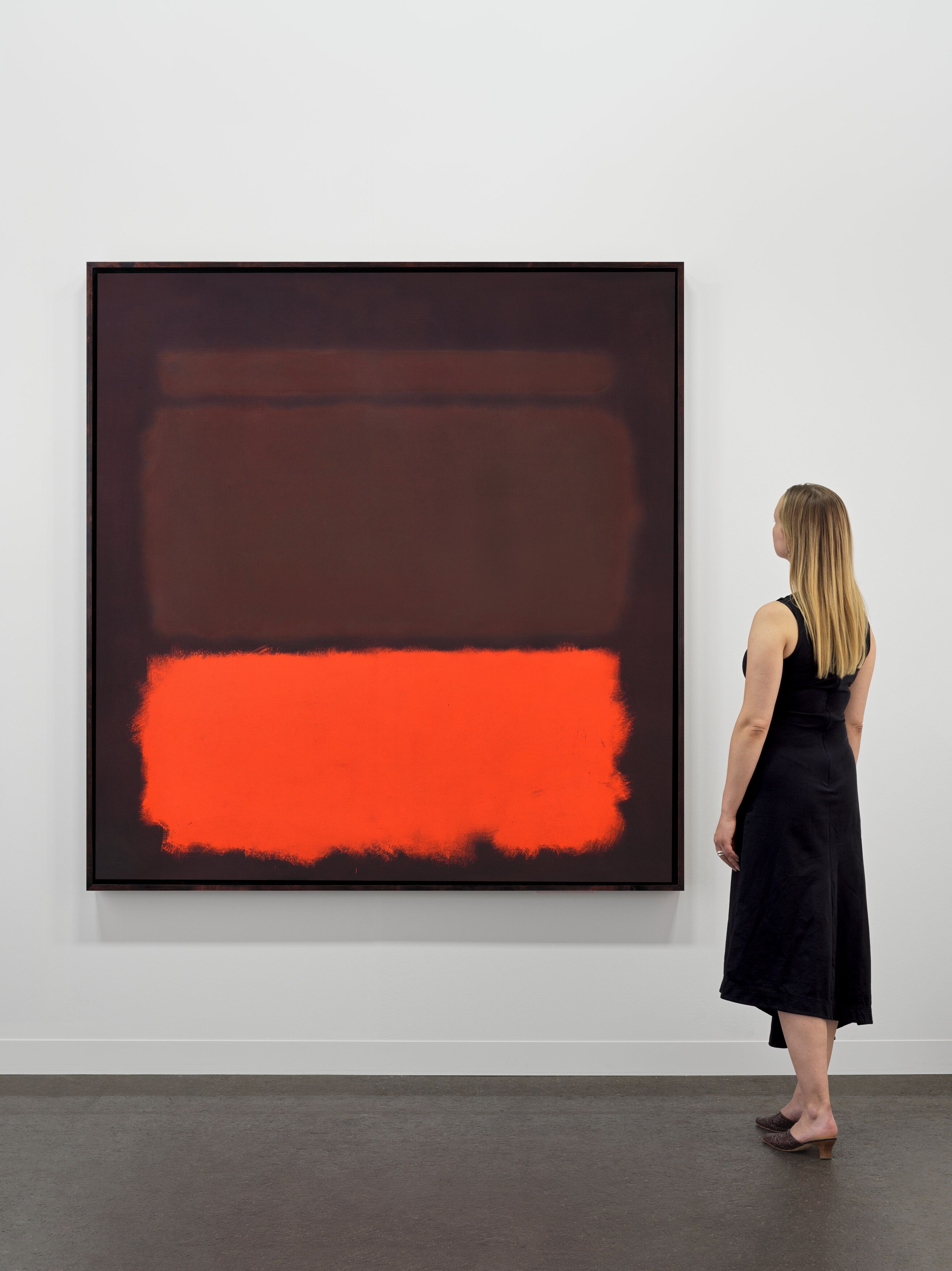
Hauser & Wirth surprised fair organizers and many attendees by bringing a 1962 Mark Rothko painting, No. 6/Sienna, Orange on Wine, and a Pablo Picasso Mousquetaire à la pipe, from 1968. The gallery says both works are on hold and that it had sold two Mark Bradford paintings for $3.5 million each; an unpriced work by Nicole Eisenman; and two by Jack Whitten, one of which had a $2 million asking price; a Louise Bourgeois with a $1.9 million asking price; and two George Condo paintings with $2.45 million asking prices.
|
|
There are many sales reports streaming in. I’ll include more in tomorrow’s Inner Circle newsletter and anything else I hear from Basel between now and then. If you have something you want to share, feel free to simply reply to this email.
Until then,
M
|
|
|
|
The ultimate fashion industry bible, offering incisive reportage on all aspects of the business and its biggest players. Anchored by preeminent fashion journalist Lauren Sherman, Line Sheet also features veteran reporter Rachel Strugatz, who delivers unparalleled intel on what’s happening in the beauty industry, and Sarah Shapiro, a longtime retail strategist who writes about e-commerce, brick-and-mortar, D.T.C., and more.
|
|
|
Need help? Review our FAQ page or contact us for assistance. For brand partnerships, email ads@puck.news.
You received this email because you signed up to receive emails from Puck, or as part of your Puck account associated with . To stop receiving this newsletter and/or manage all your email preferences, click here.
|
|
Puck is published by Heat Media LLC. 107 Greenwich St, New York, NY 10006
|
|
|
|