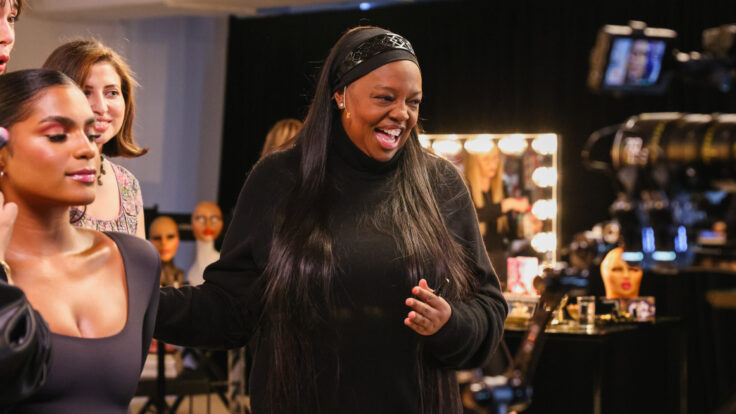
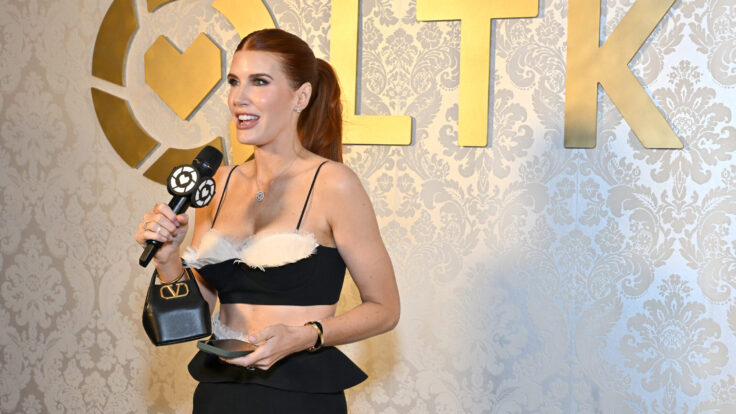
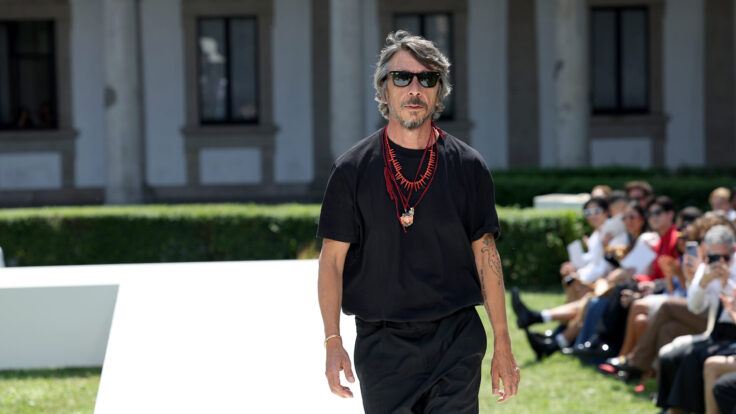
Hi, and welcome back to Line Sheet. Sarah “ SShapiro@puck.news” Shapiro is here today with an update on one of your favorite punching bags, Quince. Plus a sound, can’t-get-anywhere-else analysis of the Nordstrom take-private. Finally, I’m chiming in on the Chanel 2024 financial report, which I previewed yesterday for subscribers. (See, it pays to pay up, cheapskates!)
For the main event, Sarah has an interview with Jen Rubio and Jessica Schinazi, the respective outgoing and incoming C.E.O.s of Away. It’s remarkable how ubiquitous Away luggage is at airports, even if that $1.4 billion valuation, from 2019, feels like a relic from an ancient civilization. (Remember low interest rates?) Sarah gets into it all with Jen and Jessica.
Mentioned in this issue: Away, Jessica Schinazi, Jen Rubio, Steph Korey Goodwin, Quince, Jenni Kayne, Chanel, Coco, Matthieu Blazy, the Wertheimer family, the Nordstrom family, Liverpool, and many more…
|
|
|
|
A MESSAGE FROM OUR SPONSOR
|
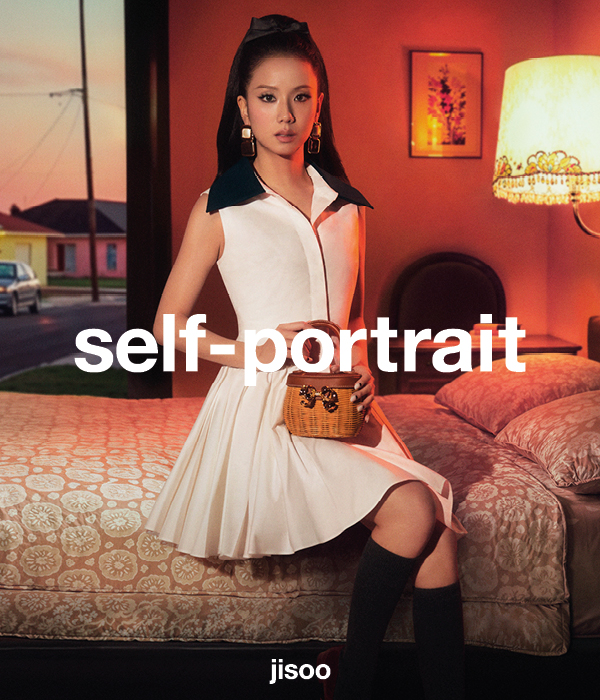
For over a decade, self-portrait have been redefining contemporary fashion, delivering elevated designs and exceptional quality at honest price points. Founded by Han Chong in London, the brand’s unique and bespoke approach to communication, manufacturing and infrastructure has enabled it to craft beautifully made pieces that are accessible. From intricate lace and knit separates, to denim and eveningwear, self-portrait is committed to creating collections that are designed to be lived in - timeless but always relevant. As the brand continues to grow, its focus remains on thoughtful designs that speak to communities globally.
EXPLORE MORE
|
|
|
Three Things You Should Know…
|
- The Chanel dip: The company’s 2024 financial results, which I previewed yesterday and last week, were officially released today. Sales, as I already told ya, were down 4 percent year over year, while operating profits dropped 30 percent. The company is mostly blaming softness in the leather goods category in China, where evolving consumer desire has become the greatest hindrance to a global luxury market rebound this year. (Executives underestimated the discernment of Chinese customers, and are now paying the consequences.) But Chanel also created its own headwinds by increasing handbag prices too much during the pandemic boom, limiting their pricing power now. Indeed, declining sales in 2024 were attributed to the leather goods category, while ready-to-wear, beauty, and fine jewelry and watches all grew.
The company also spent a lot of money—$1.8 billion—opening new standalone fragrance and beauty stores, including in China. Chanel has owned its retail business from the start—that’s how Gabrielle “Coco” Chanel got into business with the Wertheimer family in the first place—so it’s no surprise the company is betting on D.T.C. beauty stores in China earlier than many competitors, who continue to mostly rely on Sephora, Ulta, and other multibrand distributors.
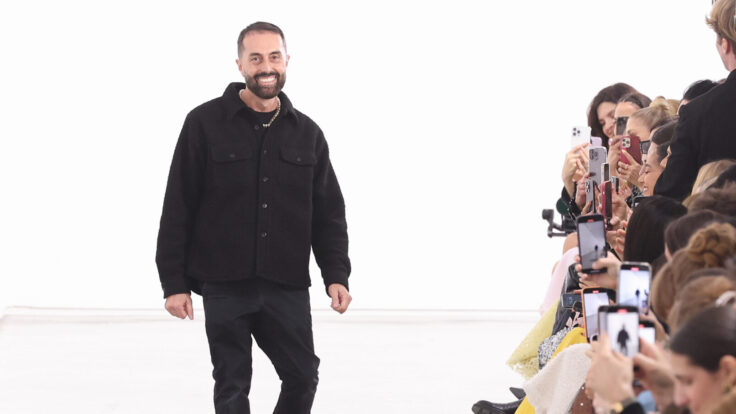
Anyway, the big takeaway from all of this is that Chanel is totally fine: It’s still an incredibly profitable business that consumers revere. As I said yesterday, the key will be for new designer Matthieu Blazy to inspire consumers to buy handbags and shoes, the real profit center of Chanel, with his runway creations.
|
|
|
 |
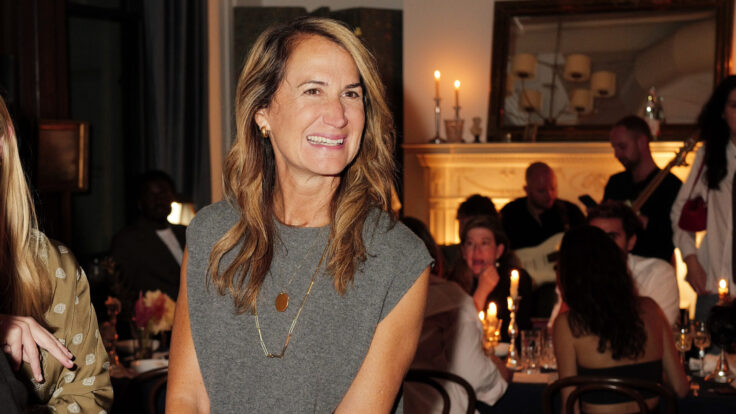
Sarah Shapiro |
|
- The dupe king of digital marketing: Quince, the direct-to-consumer destination for just-good-enough dupes of slightly more expensive brands—Jenni Kayne, Clare V., Everlane, Naadam, Freda Salvador, etcetera—has mastered the fine art of knocking off and supplanting their digital ads and search results, too. Search Google for a women’s fisherman crew, for example, and the top results are likely to be examples from Quince (short for “quintessentials”), selling for $39.90, next to seemingly identical offerings from Everlane, La Ligne, and Jenni Kayne for three to six times the price.
Of course, most brands have figured out how to optimize their search results, or pay Google for their products to appear next to competitors, or deploy even more-sophisticated tactics to ensure their ads find consumers who are in the market for similar items. But Quince has built an especially well-oiled machine. According to industry insiders, there are few brands doing a better job of gathering data on consumer trends, and then relentlessly undercutting the competition.It’s created a frustrating, now familiar dilemma for rival brands, who might win on quality but are nowhere close on price. One accessory brand C.E.O. lamented to me that her company witnessed a “clear, sharp decline” in their top-performing ad campaigns for their bestselling ballet flats precisely when Quince began featuring them in comparison marketing, while seemingly copying their meticulously tested ad creative. “Those are not things that you just all of a sudden turn back on and off. And so as a small female-founded business we have to then reinvest, reshoot, reinvest,” she said. “We shifted our marketing toward more founder messaging, to more handcrafted.”
These tactics have created a devastating cycle for D.T.C. brands that spend months honing their ad targeting, creative, and search optimization, only to have Quince run a lookalike playbook while landing higher search results. This creates a double whammy for smaller to midsize brands, which have to not only contend with Quince’s advertising spend, but also constantly recalibrate their marketing to score with the search algorithms. Rebuilding these customer acquisition channels typically takes a full business quarter. Yes, this is simply how the D.T.C. game is played these days, but for better or worse, there are few brands doing it better.
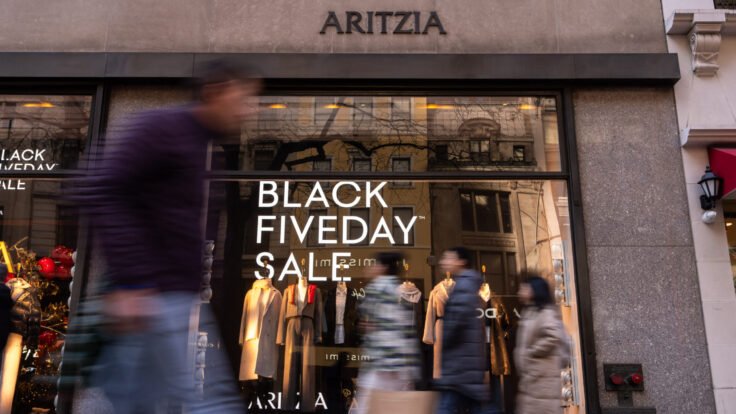
- Nordstrom’s $6.3B take-private: Last Friday, Nordstrom shareholders approved the company’s $6.3 billion plan to go private. The deal closed today, with the Nordstrom family taking a 50.1 percent controlling stake, and Mexican retailer Liverpool taking 49.9 percent.Nordstrom’s business has been struggling for some time, and the hope is that going private will allow the family to resize and refocus the business without the outside pressure from Wall Street to show quarterly growth and increasing margins. The macro business landscape has changed, too: The family previously tried to take Nordstrom private in 2018, at $50 per share, but the board rejected the deal. Seven years later, a deal is getting done at $24.25 per share—less than half the company’s earlier valuation.Of course, the company made mistakes along the way. Nordstrom expanded aggressively in the 2010s, opening large, high-profile stores—like the 320,000-square-foot space on 57th Street—that in hindsight weren’t necessary. Sure, they’re in better shape than the newly merged Saks Global, but Nordstrom faces many of the same fundamental challenges, namely declining foot traffic, online competition, and changing consumer habits. For Liverpool, this deal is a chance to finally plant a stake in the U.S., as the majority of their investments are in Latin America.Expect Nordstrom 2.0 to play to their strengths in customer service, which has always set them apart. Going private will also allow the company to test new approaches like surging investment to floor staff and expanding personal styling services (following their acquisition of Catherine Bloom from Neiman Marcus in Beverly Hills) to more locations. The path forward isn’t easy, but with family control and a patient investment partner, they at least have a fighting chance to preserve what’s left of the once-mighty department store model.
|
|
|
|
And now for the main event…
|
|
|
|
Steph and Jen’s direct-to-consumer luggage brand Away had competitors reaching for beta blockers when it first entered the space with built-in phone chargers and a unicorn valuation. Now, after surviving a travel-crushing pandemic, a new C.E.O. (yes, another one) is answering the call to re-differentiate the brand in a much more saturated market.
|
|
|
The D.T.C. boom of the mid-to-late 2010s was a heady time for retail brands, and few companies are more closely associated with the era than Away Travel. Co-founded by Steph Korey Goodwin and Jen Rubio to undercut a premium luggage market dominated by Tumi and Samsonite, Away’s multicolored, hard-shell rolling suitcases came equipped with a phone charger—enough of an innovation to win over upwardly mobile millennials and score a $1.4 billion valuation in 2019.
Of course, unicorn status came with new challenges and expectations for the business. Several months after the big fundraise, Goodwin left the company following allegations that she’d created a toxic work environment, then returned as co-C.E.O. a month later, and then left again, turning the job over to former Lululemon executive Stuart Haselden, who left a year later, handing the keys to Rubio. Anyway, it’s been a challenging few years, even as Away remains ubiquitous in airport terminals around North America. The business continues to face the D.T.C. curse of having raised capital at a sky-high valuation, trapping investors like Forerunner, Global Founders Capital, and Accel. Meanwhile, industry data suggests that sales have remained relatively flat since 2019; after recovering from the pandemic, Away has had a challenging few quarters amid declining consumer spending and rising competition.
|
|
|
|
A MESSAGE FROM OUR SPONSOR
|
The brand’s name was chosen to reflect the spirit of individuality and self-expression, creating pieces that empower customers to dress for themselves. This season, sharp tailoring, playful separates, and signature lacework embody that spirit, offering versatility and confidence for any occasion. The collection speaks to women who define their own style - uncompromising, expressive, and entirely their own.
DISCOVER THE COLLECTION
|
|
|
|
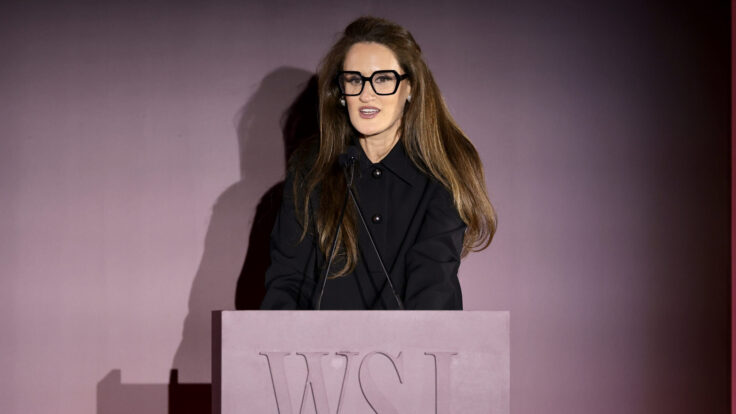
To guide Away through its next phase, Rubio moved up to executive chairman of the board and tapped Jessica Schinazi, a veteran of Richemont, LVMH, Amazon, and Dyson, as the company’s next C.E.O. Last week, I connected with Rubio and Schinazi to discuss Away’s growth strategy, the challenges of scaling a premium travel brand in a crowded marketplace, and whether there is an exit in sight. The following conversation has been lightly edited and condensed.
|
|
Sarah Shapiro: Why a new C.E.O., and why now?
Jen Rubio: Jessica Schinazi joined us late last year as president. She’d already been functioning as the operational leader of the business, so it felt like the right moment, given the momentum we’re seeing and the projects going live now, to formalize the role for her. Schinazi has the experience and the energy and a clear vision for what’s next, and it also seems timely for me. I founded the brand 10 years ago, so it’s a really nice transition point.
Let’s talk about the next steps with Nordstrom and Amazon. Away held out on doing wholesale for a long time, and now you’re launching with two very different and very big partners, each with a lot of competition. How are you planning to manage that?
Jessica Schinazi: For the past 10 years, Away has built the brand to a pretty massive level. It’s an incredible website with millions of visitors, super high conversion—one of the highest I’ve seen in consumer goods in my career, frankly—and a community of Away consumers, which you see every day when you travel. From what we’ve been hearing from our customers, and the love they have for the brand, we want to bring it to more people. So wholesale feels very much like an organic extension of our continued desire to talk to our customers, to engage with them with the right kind of products and assortments, and to bring them the convenience and ease of travel.
We’re announcing two launches—Amazon, which launched very recently, and Nordstrom, which is imminent—and they serve slightly different purposes. Amazon, first of all, is a huge opportunity in luggage. There’s over $1.2 billion in annual sales in luggage made on Amazon in the United States. We want to be where people shop, we want to be where they’re already shopping for Away. One interesting insight the Amazon team shared with us is that the number of U.S. customers on Amazon searching for Away is in the hundreds of thousands every year. So there’s already the appetite for the brand. We’re going through a marketplace model that allows us to control the inventory and the storytelling. So it’s really an extension of our website in that way.
And what about Nordstrom?
Schinazi: Nordstrom is slightly different. We’re launching in more than 60 stores at the end of this month. We’re going into physical locations where we don’t currently have stores. We have 17 stores, 15 of them in the U.S., and we’re trying to be thoughtful about bringing the brand and the product to locations where customers might not have experienced Away in real life. We want to be there for them with the very beautiful assortments and merchandizing that Nordstrom is able to offer. It’s a slightly different approach in how we’re thinking about those two partners, but the foundations stay true, which is thoughtful and controlled and measured.
|
|
Do you see opportunities for diversification in other product categories, either for product growth or acquisition? Is there something you would like to add to the Away travel experience?
Rubio: We’re continuing to engage in product diversification outside of core luggage—in the past two years we’ve launched bags and accessories, and that category is growing double digits here and there, so we’re really happy with the momentum we’re seeing. And those are very complimentary products to our core proposition of our carry-ons and check-in luggage. It’s a very natural extension to convince the customer to opt into that proposition, which is why I think we’re seeing so much traction there.
|
|
|
|
As far as other products—I don’t want to say never, but our core focus remains on luggage bags and accessories. We’re going to see where the brand takes us in the next couple of years. Back in the day, when we did talk a lot about apparel and consumer goods and other product extensions, it was pre-Covid, and I think that reset forced us to focus on our core business. That ties into the timing of Jess’s new role as C.E.O. There are a lot of things that have been percolating for many years, but it was important for me as the founder to get the company and the brand back on track. Now with Jess as C.E.O., there are a ton of levers to pull in the future.
Having been around for 10 years and with a $1.4 billion valuation, is there pressure from investors to move toward an exit?
Rubio: I’ll take this one, because this is such a big part of the conversation around bringing Schinazi on board. I think, obviously, all of our investors want to see a successful exit at some point. We’re very lucky that they’ve been very understanding of the kind of reset in the business a few years back, post-Covid, giving us the time to properly bounce back. With Schinazi coming on board, there’s huge support for her and giving her the time and space to take it to the next level. I think pursuing anything prematurely wouldn’t result in the best outcome for the team or the investors, and I think everyone understands that and is looking at a longer time horizon.
|
What We’re Reading… and Listening to…
|
I say: Let the kids play with makeup. There is an argument that it is good for creativity, confidence, and role-playing. I’m also all for teaching tweens about the marketing power that draws us in. [ The Atlantic]
The Good Buy is back, with Linda Evangelista on riding the Concorde 150 times, Karl Lagerfeld “giving her the keys to the store,” and her lifelong case of the Shoppies. [ The Good Buy]
You already knew this from Rachel’s reporting in Line Sheet, but now it’s official: Rhode is launching in Sephora. Hailey Bieber is also the Vogue Summer cover model. [ Instagram]
Levi’s has been looking to offload the Dockers brand, and now Authentic Brands Group is purchasing it for $311 million. [ Business of Fashion]
|
|
Until tomorrow,
Lauren
P.S.: We are using affiliate links because we are a business. We may make a couple bucks off them.
|
|
|
|
Puck fashion correspondent Lauren Sherman and a rotating cast of industry insiders take you deep behind the scenes of this multitrillion-dollar biz, from creative director switcheroos to M&A drama, D.T.C. downfalls, and magazine mishaps. Fashion People is an extension of Line Sheet, Lauren’s private email for Puck, where she tracks what’s happening beyond the press releases in fashion, beauty, and media. New episodes publish every Tuesday and Friday.
|
|
|
|
An essential, insider-friendly Hollywood tip sheet from Matthew Belloni, who spent 14 years in the trenches at The Hollywood Reporter and five before that practicing entertainment law. What I’m Hearing also features veteran Hollywood journalist Kim Masters, as well as a special companion email from Eriq Gardner, focused on entertainment law, and weekly box office analysis from Scott Mendelson.
|
|
|
Need help? Review our FAQ page or contact us for assistance. For brand partnerships, email ads@puck.news.
You received this email because you signed up to receive emails from Puck, or as part of your Puck account associated with . To stop receiving this newsletter and/or manage all your email preferences, click here.
|
|
Puck is published by Heat Media LLC. 107 Greenwich St, New York, NY 10006
|
|
|
|