|
Welcome back to Wall Power. I’m Marion Maneker.
I heard from a lot of you, mostly art advisors, who took exception with my Inner Circle email on Wednesday. Many of you believed I was denigrating the role of art advisors in the market today. Nothing could be further from the truth. In fact, I’ve been writing that art advisors have become the main characters of the art market in so many ways. I’ll share some of those responses below.
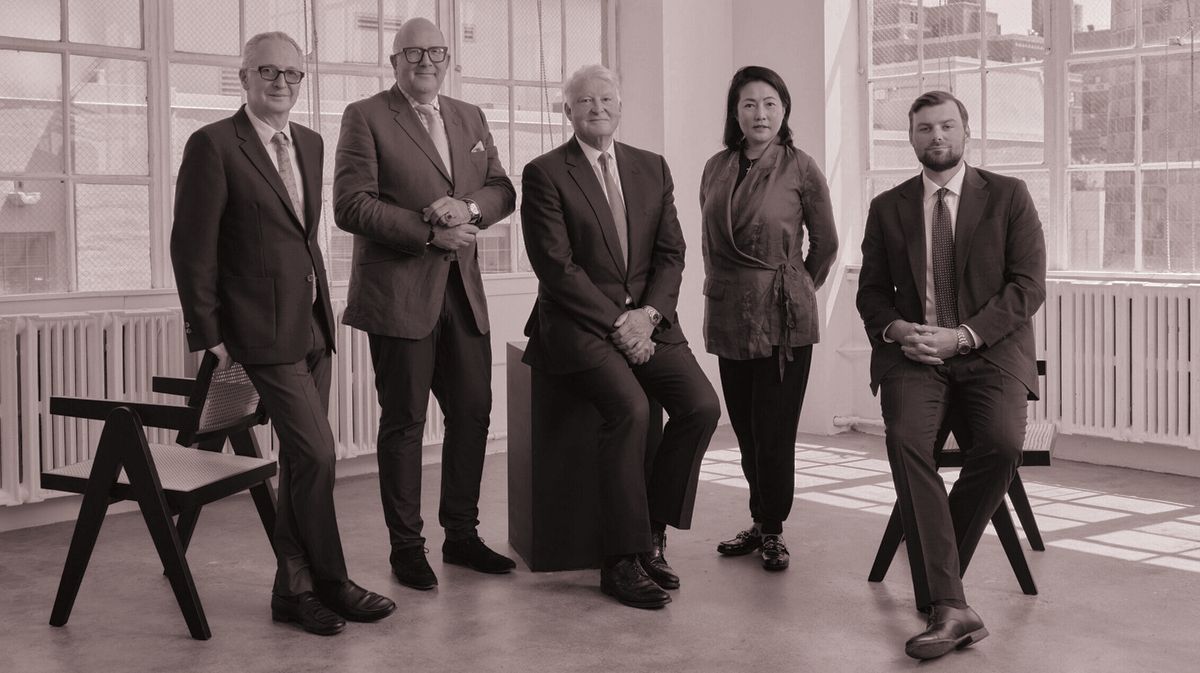
Tonight, I have more news about the advisory business as Ed and Alex Dolman, Patti Wong, Brett Gorvy, and Philip Hoffman announce a new project, New Perspectives Art Partners. Note the announcement is not that the five are leaving any of their current roles; instead, this super-friends venture is an attempt to bridge the gap between the capacities of individual art advisors and the needs of clients who operate at scale. I’ll explain it all below.
But first…
|
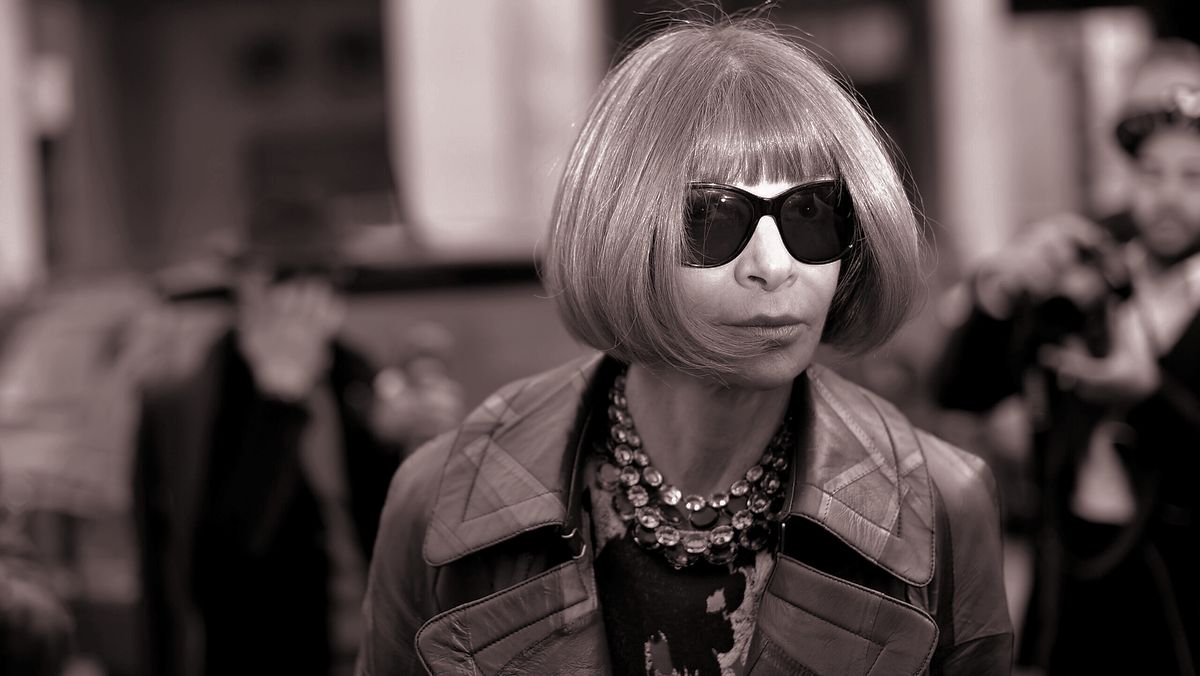
- Wolff buys out the Neuendorfs: American-investor-living-in-London Andrew Wolff has secured the Neuendorf family’s support in his effort to take Artnet private and delist it from the German stock exchange, a process that’s expected to take a few more months. In a series of transactions, Wolff’s Beowolff Capital bought 11 percent of Artnet’s shares from the family earlier this year. Now the firm has secured another 3 percent or so of Artnet’s stock for the delisting offer. In addition, the final 13 percent of Artnet’s shares now owned by Galerie Neuendorf, which holds the family’s entire stake, will be sold to Leonardo Art Holdings, an investment vehicle that will own Artnet going forward.The Neuendorfs will reinvest some of the sale’s proceeds back into Leonardo Art Holdings, a move the press release calls a “significant milestone in the transaction, following constructive talks between Beowolff Capital and Artnet’s key shareholders.” Wolff, himself, added in the release that the family’s “decision to support the offer demonstrates their conviction in our plans for the future of the company. We appreciate the trust they place in us to lead the company into its next phase of growth.”
|
|
|
|
A MESSAGE FROM OUR SPONSOR
|
|
|
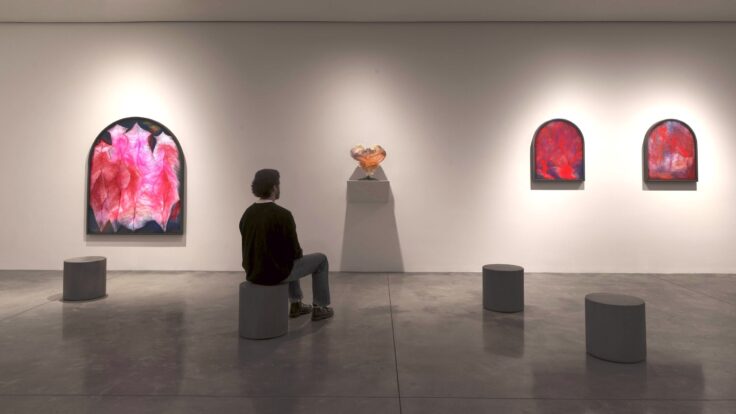
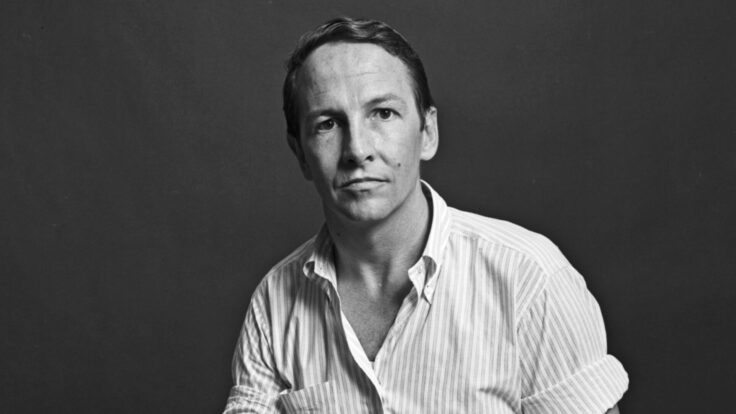
- Jacob King’s new Bruce Weber show: Art advisor Jacob King and photographer Heji Shin were talking about Bruce Weber at a party when they got the fanciful idea that they should put on an exhibition of the photographer’s work with Galerie Buchholz in Cologne. King and Shin were eventually introduced to Nathaniel Kilcer, Weber’s longtime art director, and the three began collaborating on a show of Weber’s early work from the 1970s. “Weber’s photographs from this period have a looseness about them—a sense of play and experimentation—that belies how shocking they must have been at a time when it was largely taboo to present men’s bodies as objects of sexual desire,” King wrote in his text explaining how the show came together.
Called Early Men, the show presents editorial work that has not been seen since it appeared in indie magazines like the SoHo Weekly News or After Dark. The show also includes a series of photographs combining a portrait of Hollywood director George Cukor, commissioned for GQ, with a later set of images featuring Jeff Aquilon, one of the athlete-models whom Weber had discovered, in Cukor’s pool.
|
|
|
|
As more and more art changes hands privately, a group of top advisors are forming a collective to help manage the global demands of larger collections. And they’re all keeping their day jobs.
|
|
|
|
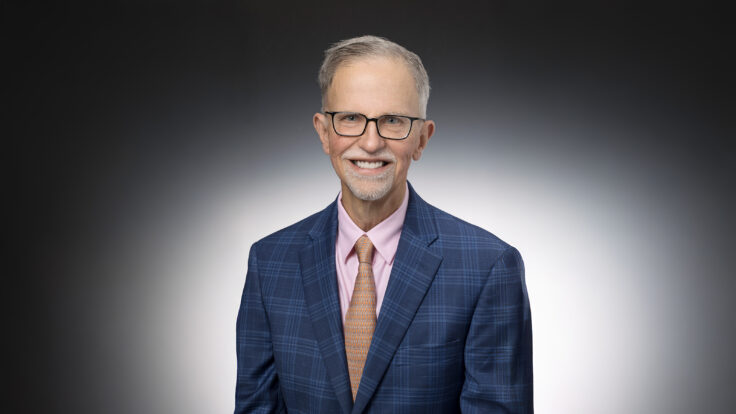
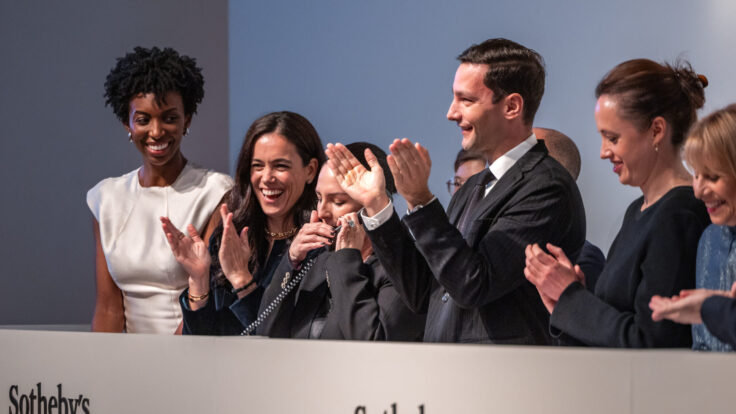
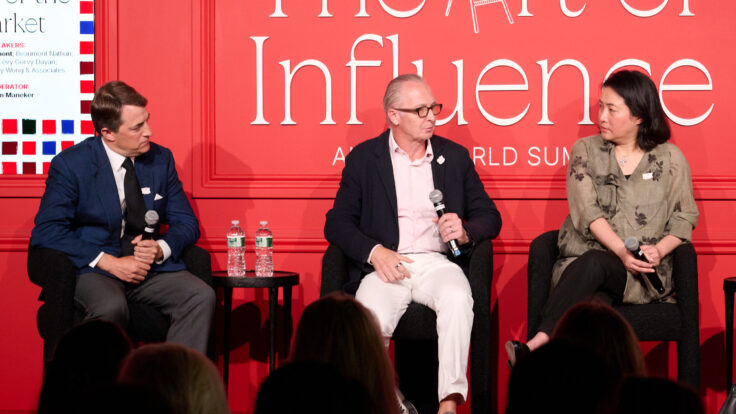
Pick just about any realm and you’ll find a supergroup. In rock, of course, there was Cream. In sports, the Dream Team of the 1992 Olympics. There are even supergroups of superheroes: the Justice League, the Avengers, and Super Friends. Now, it seems, art advising has a supergroup of its own. New Perspectives Art Partners brings together former auction house leaders with powerful reputations within the industry, all currently working as art advisors, to join forces on a speculative new firm that’s testing the waters for a large-scale advisory business.
Organized by Edward Dolman, the former C.E.O. of both Christie’s and Phillips, along with his son Alex, an advisor well established in the Gulf region, New Perspectives brings together advisors with long-standing personal and professional ties. Brett Gorvy is a principal at the dealership Lévy Gorvy Dayan, but he spent nearly two decades leading Christie’s contemporary art department, where he was appointed by Dolman himself. Philip Hoffman, who once worked for Dolman at Christie’s, has professional ties to Patti Wong and her advisory firm, which was built upon her long years leading Sotheby’s in Asia and deep connections to the region’s biggest collectors. Closing the circle, Wong and Gorvy have worked together as counterparties and advisors on many transactions since leaving the auction world for the private market.
|
|
|
|
A MESSAGE FROM OUR SPONSOR
|
|
|
|
The new venture’s goal is to bypass the auction houses—whose volumes have dropped and whose ranks of experienced leaders have thinned—to accommodate clients with large and complex holdings that require global solutions. “Whether it’s navigating an inconsistent market, or not being able to rely on the traditional platforms that historically served the market, clients are looking for a resource with a depth of experience and reach,” Dolman said in the press release.
It’s no secret that many very large, quasi-institutional art collections have been built in the past few decades, by both individuals and families. In the coming years, some of these collections will have to be updated with purchases and sales, while others will need to be dispersed. Private collections are growing beyond the capacity of a collector’s multiple homes; some collectors are dreaming of creating private museums or foundations to preserve their art legacies; and many families and heirs, having experienced the cost and managerial burdens of these projects, are making other plans that may necessitate selling. Meanwhile, in some areas of the world, ambitious new collecting projects are being launched.
Dolman, who has the unique perspective of having worked at the Qatar Museums Authority, sees strong potential for growth driven by demand from the Gulf states, where governments and individuals are competing to build public-private partnerships. (His son, Alex, also built his own advisory business in the Middle East.) “There is a continued commitment to the development of the arts and culture sector” in the Gulf, Dolman told me, noting the “unique partnership between the state and wealthy individuals in developing cultural hubs in their various states and kingdoms.”
“They are resolutely focused on delivering things they think are important to their societies,” Dolman continued, adding that there were a number of successful families in the region now putting together significant collections. Once you get a good understanding of what’s happening out there, he said, you realize it opens a different route to sales.
|
|
I’ve been cautioned a number of times not to mistake the current auction drought for a decline in interest in art. The New Perspectives team are not the only former senior auction house personnel who have moved into advising with the belief that the art market will primarily transact in private in the future. But New Perspectives is different in that the group tries to address one of the limitations of the current art advisory business: scale.
That’s not to say New Perspectives is the only advisory firm hoping to build out international reach. Sandy Heller has quietly expanded to include partners in Europe and Japan; Amy Cappellazzo and Yuki Terase’s Art Intelligence Global has offices in New York and Hong Kong, as does Ed Tang and Jonathan Cheung’s Art-Bureau. But New Perspectives offers international scale in a lightweight format that tests the value proposition without weighing down the firm with overhead costs. Each of the partners has and will keep a day job. When New Perspectives engages on large projects for fiduciaries, trustees, advisors, and family offices responsible for art collections within broader portfolios, the partners will convene.
|
|
|
The idea is that New Perspectives can use the infrastructure—legal, finance, and logistics—of Philip Hoffman’s Fine Art Group, which also supports Patti Wong’s advisory business. That will allow New Perspectives to come up with very competitive bespoke pricing for projects, while still offering clients wired-in knowledge of each of the three essential art-buying—and art-holding—regions.
For clients who have a lot of art to place, Brett, Patti, and the Dolmans would ideally be able to come up with structured and well-informed lists of targets and pricing. The same should be true of acquisitions. Currently, Dolman points out, dealers and advisors have their own ad hoc networks that provide this information. But those smaller firms rely more on informal channels—gossip and intuition, the sixth sense that something might be happening somewhere—than the systematic information-sharing of a firm with New Perspectives’ reach. Plus, Dolman confirmed my observation from this week’s Inner Circle about what’s driving the private market: “Clients,” he told me, “are desperate to be shown something that hasn’t been shopped around.”
Obviously, because no one is leaving their day jobs—or cutting their new partners in on their existing businesses—the New Perspectives announcement remains a tantalizing glimpse of the potential future for art advisors. And for all of the bright prospects Dolman outlines, the primary allegiance of each of the principals is to their own firms, not their new supergroup. Who knows what conflicts of interest between the partners and their primary roles might hinder growth or exclude clients? And if Dolman really wants to see information-sharing and cooperation on a global scale, he’s going to need to shift New Perspectives from being a fun side hustle to a firm with a significant client base and deal flow. At that point, wouldn’t it have to occupy the bulk of the principals’
time?
That’s a question for the individual participants. For the rest of us, New Perspectives is a test case for whether that market has room for a large international firm.
|
My Inner Circle email, about how Art Basel has become a venue more for advisors than collectors, really hit a nerve. (If you’re not an Inner Circle subscriber, you don’t have to miss out on the conversation— upgrade here.) In response, I heard from a number of you, including art advisors, auction people, and others. Here are some of the interesting things you said:
|
- “Some who attended the fair just came for the day, rather than have to book a minimum of three nights in hotels that have quadrupled their prices for the week. Not only was that easier on the wallet, but it was also easier on the liver.” —A European attendee who wondered whether all of the rooms at the Trois Rois were filled
- “Broadly I think the fairs and attendant events are in a tough spot as they no longer seem ‘sexy’ for the more casual collector/HNWI. Much of the
social attendance among a certain class—those looking for something to do between F1 and Paris Fashion Week and Wimbledon—is gone. Those types loved a dinner, and, while they were in town, might have picked up a middle-market picture or two to keep up appearances.” —A New York–based art advisor
- “I attended two delightful gallery dinners where conversations were lively and engaging. I had the pleasure of meeting some incredible young
international collectors. One reason collectors may be more hesitant to attend the fair is the lack of suitable accommodation in town, as dealers often occupy all the rooms at the best hotels. The commute from Zurich is quite cumbersome (read: boring).” —An American advisor
- “The advisor is protecting the client, as the gallery director would sell anything they could to them, especially today. There are many opportunities out there, and when directors get direct access, it isn’t about building, it’s about selling. Boo-hoo galleries.” —A Canadian advisor
|
|
As I’ve said many times, I really do want your feedback. I ran into a gallerist yesterday who said she had a bone to pick with me. Although we didn’t get to hash it out in person, I reminded her that I don’t mind being corrected, and I’m always happy to listen to other points of view. So, please, hit reply to any of these private emails or text me on +1 917.825.1391, a number that works on SMS, WhatsApp, and Signal.
Hope to hear from you soon,
M
|
|
|
|
The ultimate fashion industry bible, offering incisive reportage on all aspects of the business and its biggest players. Anchored by preeminent fashion journalist Lauren Sherman, Line Sheet also features veteran reporter Rachel Strugatz, who delivers unparalleled intel on what’s happening in the beauty industry, and Sarah Shapiro, a longtime retail strategist who writes about e-commerce, brick-and-mortar, D.T.C., and more.
|
|
|
|
Finally, a media podcast about what’s actually happening in the media—not the oversanitized, legal-and-standards-approved version you read online. Join Dylan Byers, Puck’s veteran media reporter, as he sits down with TV personalities, moguls, pundits, and industry executives for raw, honest, sometimes salacious conversations about the business of media and its biggest egos. New episodes publish every Tuesday and Friday.
|
|
|
Need help? Review our FAQ page or contact us for assistance. For brand partnerships, email ads@puck.news.
You received this email because you signed up to receive emails from Puck, or as part of your Puck account associated with . To stop receiving this newsletter and/or manage all your email preferences, click here.
|
|
Puck is published by Heat Media LLC. 107 Greenwich St, New York, NY 10006
|
|
|
|