 |
|
Hi! Welcome back to Line Sheet, your most trusted source for all the fashion industry news that’s too good to print elsewhere. Today, I’ve filled in some missing plot points on the Nadaam/Matt Scanlan storyline… there’s a twist involving the demise of Entireworld.
I also wanted to thank you for making these early weeks behind the paywall so rewarding—first of all, by signing up; and second, by sending me your deep thoughts and feelings! Keep it all coming my way at lauren@puck.news. And if this email was forwarded to you, do me a solid and expense a Puck subscription to your corporate card. They can afford it, I promise.
Mentioned in this issue: Bella + Canvas, Danny Harris and Marco DeGeorge, Rory Satran, Lagerfeld, Loewe, Jonathan Anderson, Dior, YSL, Matt Scanlan and Nadaam, Scott Sternberg, Josh Rowan and Marc Rowan, Silas Chou, Diederik Rijsemus, Entireworld, Arielle Charnas, Something Navy, Thakoon, Jean-Michel Basquiat, Veronica Chou, Loewe, Benjamin Huseby and Serhat Isik, Balenciaga, and more…
But first, here’s the story behind the story of Alo Yoga…
|
| About That Alo Yoga Baseball Cap |
|
| In one of my first notes here, I promised to answer the question, “Why is everyone on my flight wearing an Alo Yoga hat?” A recent Wall Street Journal report from columnist (and rumored WSJ. E.I.C. candidate) Rory Satran did a great job of explaining the appeal of Alo—the Lululemon and Nike alternative that has managed to amass significant market share, surpassing $1 billion in sales in 2022, almost doubling from a year earlier.
My feeling has always been that new entrants in activewear don’t need to steal customers from category leaders—it’s still a small-enough arena that there is room for dozens of labels to rise up. After all, do you only buy jeans from Levi’s? I doubt it. But few have managed to get as far as Alo. Its hanger appeal is pretty clear, encapsulating the sculpted, monochromatic look popularized by Kanye West (a noted fan) and the Kardashians at their pinnacle of sartorial influence. Alo fashionized activewear, offering matching sets in sturdy, matte fabrics and trendy colors that look polished enough to wear outside of pilates, but that still work inside the studio.
But how did Alo really do it? A billion dollars a year in sales is serious business, and the company has, itself, become pretty serious. (It has been headquartered for a couple years at the old CAA building, designed by I. M. Pei, in Beverly Hills.) Before building Alo, founders Danny Harris and Marco DeGeorge created Bella + Canvas, a “blanks” business that laid the groundwork for Alo. Blanks refer to the unadorned t-shirts that are used to make promotional “merch”—like a band t-shirt or my Puck baseball cap. (Upgrade to our Inner Circle membership to buy one for yourself.) Some blanks businesses, like Hanes, sell directly to the consumer as well—American Apparel is probably the most famous modern example of this sector. Bella + Canvas does, too, but for years it was an exclusively wholesale business.
I became obsessed with Bella + Canvas about 10 years ago when someone anonymously sent a sweatshirt to my house with “Cuervo no chaser” (a nod to a Beyonce lyric, I guess?) screen-printed across the front. (Thanks, whoever you are!) I am not really a person who wears clothing with words on them, but this was the best sweatshirt I had ever owned; soft, not too spongy. I wore it so much—on airplanes, to work retreats, around the house, pre-Zoom—that I couldn’t wear it anymore.
Years later, it all clicked when I found out that the Bella + Canvas guys were behind Alo Yoga. It’s not easy to make branded baseball caps that consumers are compelled to wear around town—and on just about every cross-country and international flight I’ve taken during the past year. I can’t confirm whether there’s something magical about the hat, unlike that “Cuervo no chaser” sweatshirt. But the fact that they already had a reliable, consistent business in Bella + Canvas—which I hear is also generating around $1 billion a year—to help fuel the growth of Alo certainly didn’t hurt.
Their experience certainly paid off, too. Successful fashion businesses, like most creative enterprises, often come down to spending money wisely. Outdoor Voices’s endlessly picked apart failure in its first iteration (the jury’s still out on the second) stemmed from a lack of operational expertise and proper cash management. Alo was able to scale up quickly without taking money from venture capitalists and other investors, who bring with them all different sorts of expectations, liquidation preferences, and views about success and scale. And they certainly could have accepted funding from their choice of investors, especially after the brand started gaining real traction with the Biebers of the world.
I have heard that Harris and DeGeorge sold a very small percentage, something like 2 percent, to a branch of the Qatari Royal Family—although it was not Mayhoola, which owns Valentino and Balmain. (A rep for Alo Yoga did not respond to a request for comment.) As for what the founders will do with Alo, who knows. Most brands that run a lot of retail stores eventually go public, or sell to private equity. But Alo’s bootstrapped financing gives the founders total optionality. The takeaway here, though, is that nothing comes from nothing.
And a little sidebar on a fashion crisis averted… |
| Solving the Loewe Handbag Puzzle |
|
| A Line Sheet reader recently wrote in to ask: “Do you have any insight into why LVMH is allegedly discontinuing the Loewe Puzzle? I find the Puzzle so beautiful and iconic, and the Puzzle Edge does not inspire the same feelings of awe from me.”
Great news for everyone involved: I’m told that this is absolutely not true, despite significant rumblings on the handbag message boards. The O.G. Puzzle bag is here to stay. However, there was some confusion in certain markets as the more recently introduced Edge, well, edged its way onto store shelves.
To be clear, the difference between the two styles is incredibly subtle. Both bags are a rectangle with a flat base, composed of patchworked leather that makes them look artfully misshapen. The Edge is slouchier, less structured, with the seams sealed up, while the original’s seams are open.
Brands can discontinue a product for a million reasons, running the gamut from underperformance to ubiquity. In the case of the Loewe Puzzle, neither scenario made sense. The Puzzle, which hit shelves in 2015, marked the first original shape launched by the Spanish house since the 1980s. It was a near-instant hit, cementing still-new creative director Jonathan Anderson’s status as not only a superior conceptual designer, but one with real commercial chops. This is a bag that Cathy Horyn carries—a pretty significant, if unintentional, endorsement. It is certainly a popular bag, but it is by no means an It bag on the level of Proenza Schouler’s PS1 or Mansur Gavriel’s bucket bag. It’s around, but not everywhere. And it helped turn Loewe from a speck on the LVMH maison map into an important player with around $1 billion a year in sales.
I can’t underscore enough how difficult it is to design a handbag with an original silhouette that people like. (Most handbags are just riffing on one Hermès style or another.) So the idea that Loewe would deliberately quit something like the Puzzle cold turkey seemed unlikely. And it was. Instead, Loewe is simply expanding the range to give obsessives a reason to buy yet another bag. Simple as that.
Now, for the aforementioned D.T.C. scandal… |
|
|
| There are endless threads to pull on this Nadaam-D.T.C. roll-up-gone-wrong story with Matt Scanlon, who, as I recently reported, is in hot water with several of his business partners. Here’s yet another twist, featuring the biggest so-called success story of the pandemic.
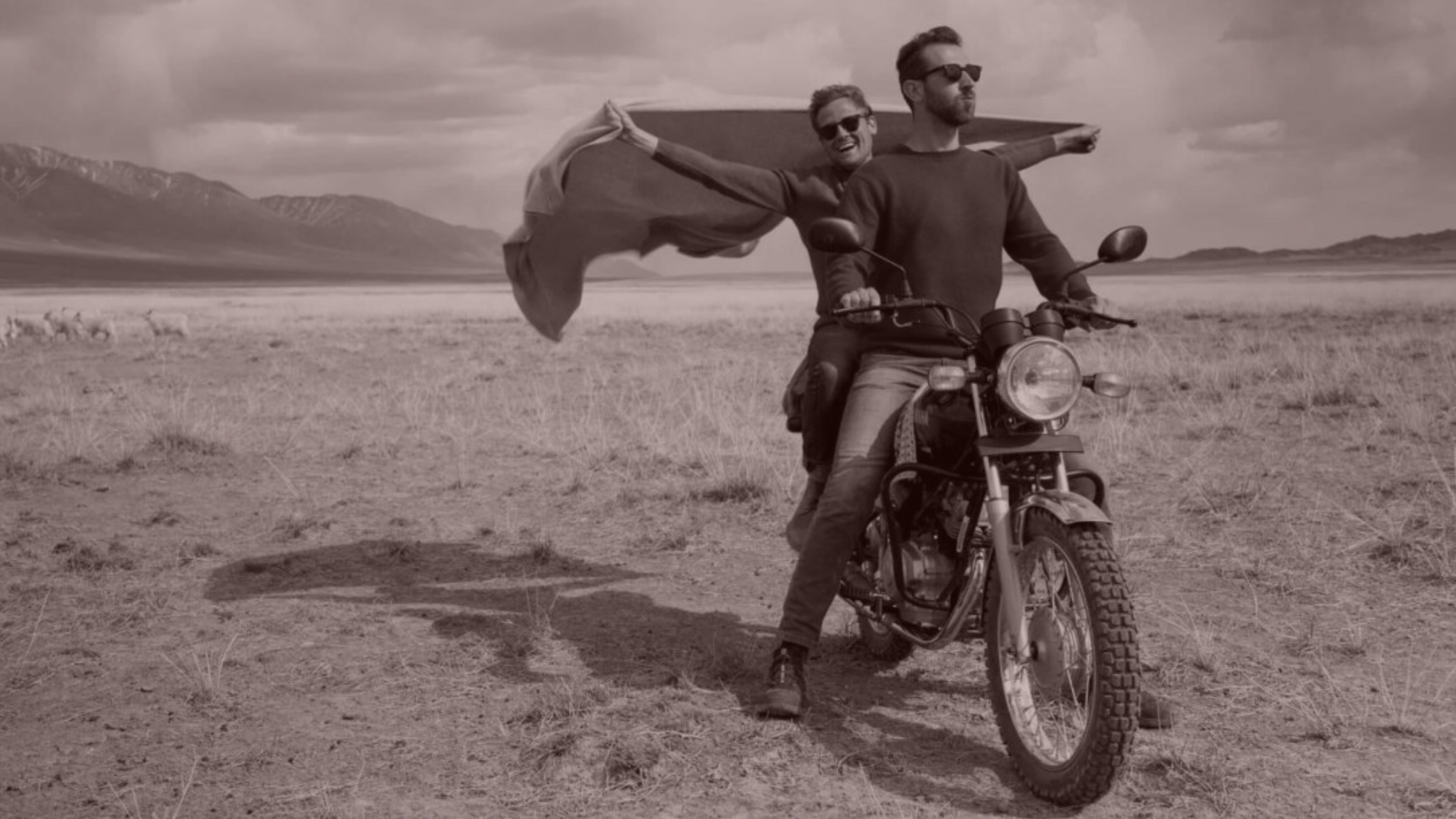
Scanlan, a serial fashion entrepreneur, is best known for launching Nadaam about a decade ago with his Dickinson College friend Diederik Rijsemus. Their mission was to sell cashmere to the masses, directly to the consumer at a fraction of the price of competitors. As the legend goes, Scanlan traveled to the Gobi Desert in 2015, with two plastic bags filled with $2 million in cash to pay suppliers. Of course, it was a perfect story for Scanlan, and perfect timing for Nadaam to raise money off the success of first-gen D.T.C. labels, like Warby Parker, Everlane, and Glossier. In 2018, Scanlan announced a $16 million Series A, with investors including Torch Capital (a fund backed by billionaire Silas Chou, of Tommy Hilfiger and Michael Kors fame), Vanterra Capital, and U-Start, a club for private investors.
Scanlan, who grew up in Westport and attended Pomfret, a second-tier boarding school a couple of hours away, was always a talented networker, with a knack for making the right friends, including Rijsmeus, the jet-setting Dutchman he met in college, and Bill Mitchell, a local clothing chain scion who provided their company with early help. Along the way, he was able to raise money not only from Chou (another fashion industry heir) but also Untitled, co-founded by JoshRowan (son of Apollo C.E.O. Marc Rowan), who is also an investor in French-preppy label Officine Générale.
Nadaam’s initial run of success owed to an avalanche of positive press (the Gobi Desert story helped), well-targeted performance marketing and, maybe most importantly, an under-the-radar deal with QVC, which sold “Soft by Nadaam,” an exclusive line. But at some point, Scanlan decided that the best path forward was a D.T.C. roll-up, a concept that started gaining popularity in the late 2010s as many venture-backed product businesses failed to demonstrate a path to profitability on their own. Through his connection to Chou and Chou’s daughter, Veronica, he pulled Thakoon and Something Navy into the mix and became acting C.E.O. for all three businesses. He heralded this tripod as the “next LVMH.” |
|
|
| As recently as 2021, Scanlan was raising money for his Next LVMH even as Thakoon shut down and Something Navy—once a promising upstart fueled by the star power of persuasive influencer Arielle Charnas—sputtered. According to multiple people, one of his targets was Entireworld, the second act from Los Angeles-based designer Scott Sternberg, who still has a rampant following from his first line, Band of Outsiders, which shut down around 2015. (It was revived for a minute by the investor who owns the I.P., but without Sternberg, and without success.)
Launched in 2018, Entireworld was Sternberg’s chance to do things right: he went the D.T.C. route, so popular at the time, and focused on signature basics (also popular at the time) that were better priced and, theoretically, more scalable. (Call it a less-pervy, more-retro homage to American Apparel.) The BOO obsessives picked up on Entireworld fast, and then the pandemic happened, positioning its matching sweatsuit as the uniform of the moment. In August 2020, Irina Aleksander’s piece for the New York Times Magazine, “Sweatpants Forever,” cemented its hall-of-fame status.
Alas, Sternberg couldn’t capitalize on that success. The basics business is even harder than the upscale designer business: the margins are fractional, and you need serious, Uniqlo-level scale to achieve profitability, which means serious, Uniqlo-level backing. By the time “Sweatpants Forever” was released, Sternberg was already running out of inventory—and while he had some investors in Asia who helped fund his manufacturing, it wasn’t enough to get a leg up. He did think about going the venture capital route, I’m told, but many of the funds he targeted were already invested in Everlane, a direct competitor, and others were wary of apparel as a scalable category. |
|
|
| At some point in 2021, Scanlan was connected to Sternberg via Untitled, which had been interested in investing in Entireworld but was instead supposedly putting money into the Nadaam roll-up. Scanlan pitched the same services he offered to Thakoon and Something Navy, despite the fact that those businesses were floundering behind the scenes. According to one vendor, Scanlan committed to sitting in on weekly check-in meetings with Sternberg and the vendor, although Scanlan only showed up twice over the course of several months, “stringing Scott along,” as one person described it. Entireworld owed this vendor money, and Scanlan committed to paying the vendor in installments, but never did. I reached out to Scanlan to discuss this, but have yet to hear back.
In the letter of intent to make an asset purchase of Entireworld, signed in June 202l, Nadaam put in a “no shop clause,” meaning that Sternberg could not speak to other potential investors or raise money elsewhere. Then, after months of stalling, Scanlan did deliver a final term sheet to Sternberg, which did not include a commitment of capital, meaning that there was no guarantee that Entireworld would be kept afloat.
At that point, Sternberg had already begun winding down Entireworld’s operations, and he never signed the term sheet. Instead, in October, he closed the brand and liquidated its assets, announcing the end of the project on Instagram. (Sternberg didn’t respond to a request for comment.)
Would Entireworld have survived under the Nadaam umbrella? Thakoon is gone and the future of Something Navy—which Charnas has distanced herself from entirely—is in flux, leaving Scanlan essentially where he started, plus a slew of angry vendors chasing receivables. Meanwhile, word is that Scanlan is back on the fundraising trail… |
| What I’m Reading (and Seeing)... |
|
| Balenciaga released its Spring 2024 collection, a mix of the label’s standards line (called Garde-Robe) and new ready-to-wear, with a clever little time-lapse video depicting the comings and goings at “Le Dix,” home of the brand’s flagship store and couture salon, set to the tune of Sous le Ciel de Paris by Edith Piaf (reworked by resident composer BFRND). An oft-melancholy, if effective, approach. (By the way: Regardless of whatever’s happening Stateside and in Europe, I hear the still-recovering brand is resonating in China.) [Balenciaga]
Apparently there’s too much BPA in some sports bras, leggings and running shorts. [Shape]
The Guardian is calling the upcoming rendition of Vogue World “London’s Answer to the Met Gala.” Perhaps a shaky metaphor, but I’m sure the event, set to take place in September at the Theatre Royal Drury Lane in Covent Garden, with the blessing of London mayor Sadiq Khan, will be fun and starry. [The Guardian]
Benjamin Huseby and Serhat Isik, the duo behind GmbH, who recently left their post at Trussardi, are nominated for this year’s ANDAM Prize. [WWD]
Bartender Colin Field, who made Bar Hemingway one of the greatest places to have a drink in Paris, quietly served his last Clean Dirty Martini on May 15. Dana Thomas with the scoop. [NY Times]
Someone should do a case study on how Loewe chooses its celebrity reps. The latest campaign features Dev Hynes, Aubrey Plaza, the artist Nairy Baghramian, Industry star Myha’la Herrold and a slew of other spikey famous people. [Hypebeast]
Thom Browne is showing his first-ever couture collection in Paris in July—few American brands have officially made it onto that calendar (s/o Ralph Rucci), so this is not insignificant. [Vogue]
This past weekend in Downtown Los Angeles, I cruised by a Jean-Michel Basquiat exhibit tucked inside a new Frank Gehry development, with the front of the building skinned in promotional images. The packaging of shows like King Pleasure, put on by the Basquiat estate, is something fashion brands should watch closely.
In a wide-ranging piece in the LA Times, Basquiat’s sister, Lisane, said the family wanted to “own the narrative,” around the more than 200 never-before and little-seen works on display. I wasn’t able to make it to King Pleasure that day, but I did note, while walking through the retail store overflowing with merch, that the Basquiat estate’s approach is not so different from what fashion brands are trying to do when they stage their own exhibitions. As I mentioned with the Karl Lagerfeld show at the Met, brand-backed projects can lack much-needed tension, or feel overly commercial. So much so that it might have the opposite effect from making you want to buy something. The good isn’t as good if it’s not the whole story.
See you Monday,
Lauren |
|
|
|
| FOUR STORIES WE’RE TALKING ABOUT |
 |
|
 |
| Orszag’s Shadow |
| Is the new C.E.O. of Lazard actually in charge? |
| WILLIAM D. COHAN |
|
 |
|
 |
| Yalta 2023 |
| Imagining the post-invasion contours of Russia and Ukraine. |
| JULIA IOFFE |
|
|
|
|
|
 |
|
|
|
Need help? Review our FAQs
page or contact
us for assistance. For brand partnerships, email ads@puck.news.
|
|
|
|
Puck is published by Heat Media LLC. 227 W 17th St New York, NY 10011.
|
|
|
|