{{ 'now' | timezone: 'America/New_York' | date: '%b %d, %Y' }}
|
|
|
Hi, and welcome back to Line Sheet. Rachel Strugatz returns today with a state of
the union at Estée Lauder Companies. After C.E.O. Stéphane de La Faverie ousted a longtime creative exec this week, many in the building(s) wondered who might be next. Rachel offers a preview.
Plus, I have more $$$ details on Kirsty Godso’s Vuori deal and Luca de Meo’s Kering signing bonus. Then, Sarah Shapiro lays out the reality of the tariffs now that the de minimis exemption is coming to an end. Finally,
Dylan checks in on Mark Guiducci and his Melania cover girl dreams over at Vanity Fair. (Sign up for his private email, In the Room, here.)
Mentioned in this issue: Stéphane de La Faverie, Estée Lauder Companies, Matthew Parr, Nicola Formichetti, MAC Cosmetics,
Fabrizio Freda, Jane Hudis, Lisa Sequino, Mark Guiducci, Vuori, Jack Draper, Kaia Gerber, Nike, Jjjjound, Marina and Ricardo Larroudé, and many, many more…
|
|
|
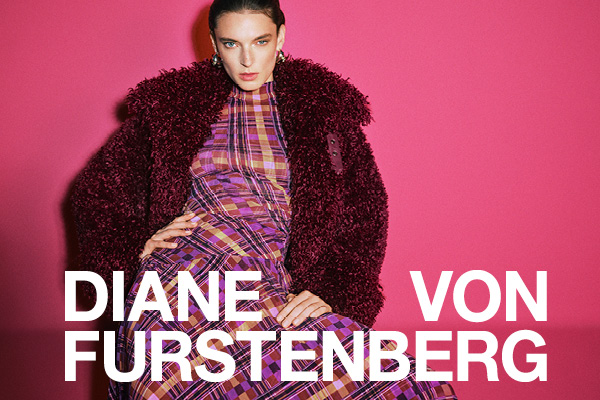
Diane von Furstenberg’s Fall Winter 2025 collection is a bold and complex celebration of modern femininity, inviting
the DVF woman to redefine allure on her own terms, leading with confidence, elegance, and strength.
Welcome to the new DVF, explore the Fall collection now at dvf.com
|
|
|
Three Things You Should Know…
|
- What
Kirsty Godso really got paid by Vuori: I’m sure you’re busy deciding whether Kaia Gerber’s “low-rise shorty” short for Vuori is too short (it is, and the navy is also wrong; too much purple), but let’s get to the far more fascinating ambassadorship deal at the company: the Vuori riches recently bestowed upon Gerber’s trainer (and former Nike evangelist), Kirsty Godso. In the past,
Vuori has bargained with ambassadors to offer lower rates (say, in the six figures) by tacking on some equity. Whether or not that equity is meaningful at this stage of the company’s fundraising journey probably depends on who did your negotiations.Days after Sarah Shapiro first reported on Godso’s new deal, a Vuori spokesperson did
finally respond to her multiple requests for comment, noting that Godso did not receive equity and that the deal was multiyear. More recently, I heard that Vuori did “back up the Brink’s truck,” as one person put it, for Godso, paying her more than $2 million over three years. (I followed up with the Vuori rep on this: They declined to comment on details.) The general sentiment around the deal is positive, especially since some people characterized her relationship with previous partner Nike as a
“bad boyfriend jerking her around.” Regardless, who knows how much Vuori’s paying Jack Draper, who withdrew from the U.S. Open today because, according to people who watch tennis, he came back too early post-injury and knew he would never make it that far.
|
|
|
 |
Sarah Shapiro |
|
- Tariffs finally make it
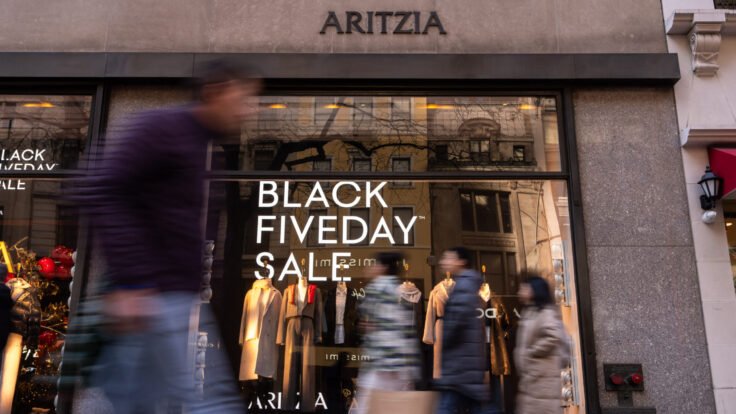
official: The tariff panic has suddenly become real. Unlike the posturing we saw around April’s Liberation Day, brands are facing the reality that implementation has arrived. Apparel retailers already operate on slim margins—4 to 13 percent net margins, according to Shopify data—and tariffs could wipe that out completely. According to a survey by Swap Commerce, 56 percent of companies plan to change to domestic supply channels, 55 percent plan to shift their pricing strategies, and 39
percent are passing the costs on to customers. (We’ll see how this goes: It’s easy to make t-shirts and jeans in the U.S., but everything else is challenging.)Of course, supply chain revisions are costly and laborious, and these sorts of logistical challenges take many quarters to pull off. Meanwhile, many companies are being forced to rely on commercial carriers for e-commerce, since numerous international mail service providers have
said they will not ship to the U.S. Jjjjound, the Montreal-based moodboard brand, is setting up a distribution center in the U.S. and has closed international shipping to the country until it is operational.I
spoke with Marina and Ricardo Larroudé, the founders and namesakes of the luxury shoe brand, who are feeling lucky that they have vertically integrated factories in Brazil, which has a 50 percent tariff. They are able to make small adjustments as needed and can deliver merchandise to their U.S. warehouse rather than directly to customers, which limits their pass-through costs. They don’t want to raise their pricing significantly, but there could be minimal price
increases over time. And, in this regard, they are just like everyone else: making adjustments while measuring the political environment… and probably asking their lobbyists to find a viable workaround.
|
|
|
 |
Dylan Byers |
|
- Grading Mark Guiducci: I
was amused to read new Vanity Fair editorial director Mark Guiducci float the names of some of his ideal hires on background in Semafor on Sunday night. Max Tani reported that Guiducci “has had conversations with Olivia Nuzzi,” “approached New York Times writer Jazmine Hughes and New York writer Allison P. Davis … met with the L.A. Times’ Amy Kaufman and
The Hollywood Reporter’s Chris Gardner … [and] wants the popular newsletter writers Emily Sundberg and Oliver Darcy to contribute, as well as … Chris Black.” (Yes, he also pinged my partner Matt Belloni.)Look, I’m genuinely rooting for VF, and as a media insider, I love the personnel gossip. But this
story just seemed like kinda icky journalistic name-dropping. It was almost as if Guiducci was trying to burnish his credentials by sharing the details of his Google calendar.Yes, we all know that we’re decades past the glory days, and that Vanity Fair has entered its
Kodak–Polaroid–Ottoman Empire phase, but even Radhika Jones would not have leaked the names of writers that she was having coffee with. It was all a little reminiscent of Ben Sherwood and Joanna Coles’s lusty proclamation, last September, that they would revitalize The Daily Beast with contributions from Samantha Bee and Kara Swisher. We all know how that worked out.
You sort of hope that someone
inside Condé Nast will hook Guiducci by the collar and explain that he might wish to avoid the same unforced error. Tina Brown was already a star when she arrived stateside at VF; Graydon Carter, himself, was an entrepreneur who had founded Spy and edited three publications before he began his tenure. Jones, too, had been a top editor at Time and held an upper-mid-management job at the Times. The knock on Guiducci was that he
was yet another Anna Wintour acolyte who got the job because it would be easier for her to manage him than bring in someone new. The best way to outrun this M.O., fair or not, would be to spend his first year with his head down reinventing the brand rather than talking about it—or worse, feeding these sorts of tidbits into the maw of the press in a no-touch manner.
Either way, as he’s quickly learning, he’s actually got a fairly unglamorous job. Earlier this week, the
Daily Mail published a thin story about Guiducci’s openness to platforming Melania Trump on the cover. Naturally, it was followed by a Daily Beast piece featuring the grievances of staffers—well, one staffer in particular. This whole affair seemed slightly overblown, but it’s probably a harbinger of what
may be around the corner if VF misses a quarter or undersells the Hollywood issue and trouble beckons. Anyway, here’s some free advice, Mark: Don’t make it harder than it has to be.
|
|
|
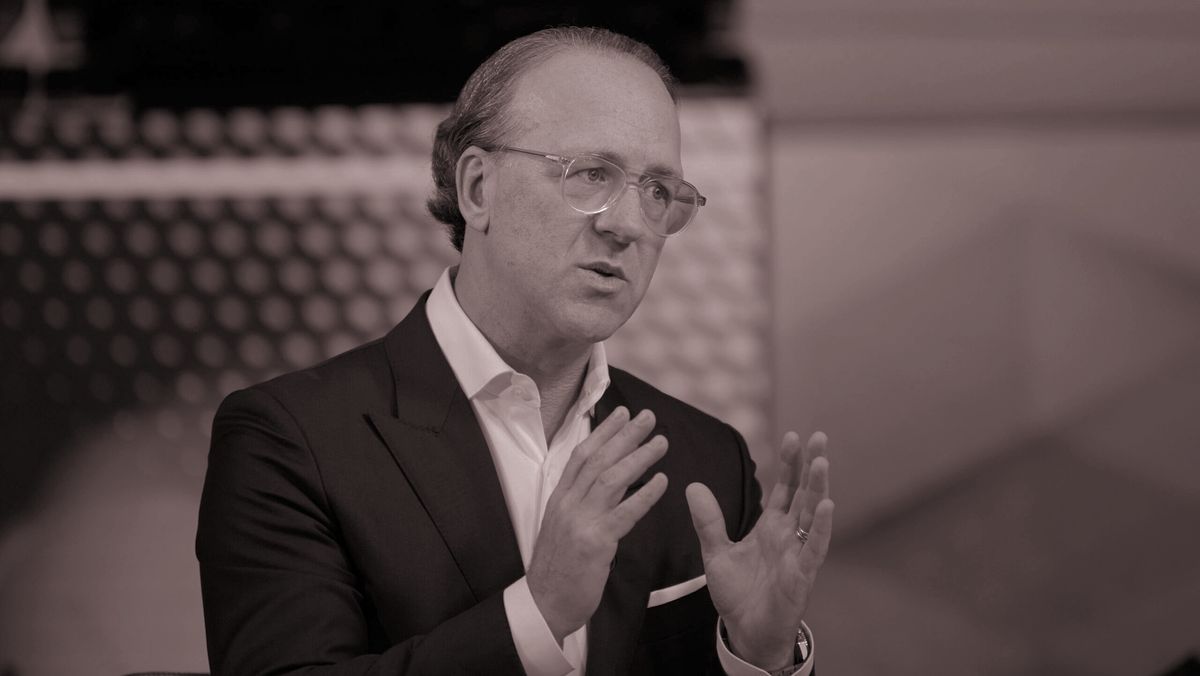
Amid his draconian Estée Lauder turnaround effort, C.E.O. Stéphane de La Faverie has laid
off thousands of employees. But no one thought he’d come for global creative director Matthew Parr, who was sent packing on Monday.
|
|
|
Eight months since Stéphane de La Faverie took over as C.E.O. of Estée Lauder Companies, the
business is finally showing signs of a rebound, with the company’s stock up close to 20 percent year to date. Sure, net sales were down by 12 percent for the quarter ending June 30, and earnings for the year are expected to take another $100 million hit owing to tariff-related costs, but there have been market share gains in China, Japan, and the U.S. to offset the losses. During E.L.C.’s recent earnings call, de La Faverie also shouted out the success of the company’s belated
integration with Amazon, which has launched 11 E.L.C. brands since March 2024. A person who follows the company closely remarked that “to achieve market share gains in the U.S. is a big deal.”
But the real investor excitement stems from de La Faverie’s Kafkaesque Profit Recovery and Growth Plan, a.k.a. “PRGP.” It’s my understanding that many of the PRGP’s planned layoffs, which could include as many as 7,000 employees, have already been executed. “Every penny is being scrutinized, and cuts are constantly coming,” said one
person familiar with the matter. They noted that no brands were given preferential treatment, but that the layoffs hit harder at the smaller brands, like Origins and Bumble & Bumble, where teams were already lean and budgets anemic.
|
|
|
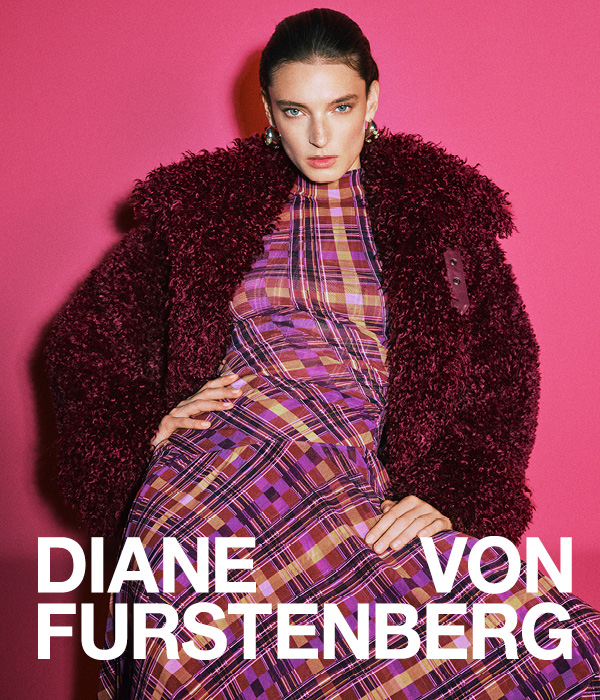
This season, Diane von Furstenberg embraces contrasts - softness and structure, romance and rebellion, sheerness and
opacity - celebrating a woman who is both timeless and of the moment.
Elevated, tactile fabrics are at the heart of this collection, and unexpected combinations of fabric and print are playfully explored.
Welcome to the new DVF, explore the Fall collection now at
dvf.com
|
|
|
And yet, many were shocked when Matthew Parr, senior vice president and global creative
director of Estée Lauder, was let go on Monday after close to a decade in the role. Parr worked for years under de La Faverie when the latter was Estée Lauder’s global brand president, from 2016 through 2022, and the two were said to have had an excellent rapport. It’s still not clear whether additional creative executives will lose their jobs, or if Parr’s exit was tied to the brand’s lackluster performance.
Parr’s reputation, by most accounts, is quite good. He was one of the
most senior creatives at the company, in addition to Nicola Formichetti, who was named MAC Cosmetics’ global creative director earlier this year following the departure of Drew Elliott. (In February, Elliott, who was credited with helping to reinvigorate MAC, resigned to take the chief brand officer role at Kiko Milano.) Before Estée Lauder, Parr worked as a vice president of global creative under James Gager, MAC Cosmetics’ legendary creative
director, who stepped down in 2017. “They’re going after the creatives,” said one insider, speculatively.
I’m told that Parr’s departure is part of the ongoing PRGP, but it’s also not that surprising that E.L.C. is shaking up creative leadership at its flagship brand. Estée Lauder remains one of the largest businesses in the portfolio, and its Double Wear foundation remains one of the bestselling makeup items in the world. But it continues to lag behind labels such as MAC, Clinique, and
La Mer. And its waning relevance doesn’t necessarily reflect well on whoever is leading the conglomerate’s flagship brand.
|
Transformation takes time, particularly at a company as large and Jurassic as Estée Lauder Companies—which,
by the way, still has 60,000 employees in 150 countries. The beauty giant operates about 30 brands, the health and prospects of which we’ll explore further next week. So far, though, the most striking difference between the de La Faverie era and the tenure of his predecessor, Fabrizio Freda, comes down to morale. People actually like de La Faverie. “Stéphane’s been peers with these brand leaders, and he treats them that way,” said a person with intimate knowledge of the
executive leadership team. “There’s a work together vibe that wasn’t there before. By all accounts, he’s open to hearing things, and he’s very collaborative. That sounds obvious, but coming from how it was, that’s just new.”
Freda’s era, as I’ve come to understand it, was more rigidly hierarchical. The former C.E.O.’s unflagging respect for the company’s topmost “layers”—specifically, former executive group president John Demsey and Jane
Hudis, who was an executive group president before being anointed Lauder’s first chief brand officer––didn’t allow other executives much access. Meanwhile, de La Faverie “has much more visibility and touchpoints with all brand leads,” the person with intimate knowledge of the business added. Of course, Lauder executives continue to fret about future job eliminations—and with good reason—but it’s undisputed that de La Faverie has made an effort to be more “approachable” than his
predecessor.
But current and former employees and executives share a common gripe: The re-org isn’t turning out to be much of a re-org after all. In fact, it’s just infusing more layers of management. “It just seems like they added layers back in, but are making cuts for the people actually doing the work,” said a person familiar with the changes. This person was mainly referring to the addition of the “clusters,” which groups brands by category—the sort of matrixed management that most
modern corporations deployed a generation ago. (The Ordinary, Tom Ford Beauty, and Balmain are still run separately.)
|
|
|
The newest addition to senior leadership is Lisa Sequino, the former C.E.O. of Supergoop and
the ill-conceived JLo Beauty, who returned to Lauder to run its makeup cluster. Employees still don’t quite know what Sequino’s role is (someone once described her as a “carrier messenger” between de La Faverie, Hudis, and the brands). I’ve heard that Sequino’s a perfectly decent person, but the overwhelming consensus is that she’s underqualified to oversee an operation the size of MAC. Besides, the leads who report to her—including Aïda Moudachirou-Rébois
and Somer Tejwani, global general manager of MAC and Too Faced, respectively––have more experience running makeup brands of this scale. Sequino’s qualifications may not even matter here; the question is whether this role is even necessary.
When de La Faverie first announced “Beauty Reimagined,” the evolution of the original PRGP, earlier this year, “a lot of things were coming together really fast,” said a person familiar with the situation, adding that
“there was a lot of flying the plane and fixing it at the same time.” Now, at least, the picture is becoming clearer and the market is responding. There’s still plenty of angst inside the GM Building, as executives brace for what might befall them, but there are some real signs that people are loosening up. To wit: I was told that even the way people dress around the GM Building has gotten less rigid in the last months.
|
Luca de Meo got a €20 million signing bonus in his deal with Kering, according to this
report. Not a crazy amount, but eyebrow-raising for some, given Kering’s current circumstances. People seem to be impressed with his negotiating skills. That said, shares of Kering are up significantly since the announcement of his appointment, so maybe it was already worth it for F.H.P. & Co.
[La Lettre]
I’ve been asked for my take on Travis Kelce’s collaboration with American Eagle. Actually, it’s a collab with his “sportswear and lifestyle brand,”
Tru Kolors, which seems to have been founded in 2019 but was relaunched today, with rugby shirts covered in motivational, after school special–style phrases and tees reminiscent of the pandemic-era Pangaia. The collection is very tacky and bad, but so is everything? However, I wasn’t aware that Tru Kolors existed, and that’s something. The name
Tru Kolors simultaneously reminds me of the Kardashians, the Cyndi Lauper song, Colors magazine ( it was cool), Cross Colours, and Color Me Badd. Finally, I know People is a safe space, but they should have placed this exclu with The New York Times.
[ People]
The new North American C.E.O. of Tiffany is Matthieu Garnier, who climbed the ranks at Cartier, its only real competitor, for 14 years before heading to Loro Piana, where he’s been stationed for half a decade. Garnier is replacing Christopher
Kilaniotis, who this article bizarrely positioned as being “elevated” into a global business development role—which doesn’t quite pass the smell test. The U.S. market is the most important for Tiffany, Kilaniotis was so unpopular with employees that Bloomberg was forced to write about it, and Garnier built a
very respectable, employee-friendly culture at Loro Piana’s U.S. offices. (People really like working there.) To me, the real story here is Garnier, who I suspect could become global C.E.O. of the business some day if he does a good job here.
[ WWD]
Trashtastic high street conglom Boohoo—renamed Debenhams after a British department store of another era—is considering the sale of one of its most terrible brands, Pretty Little Thing. Also, the group lost £264 million last year. What a disaster. Everything is a mess and we will witness it all. [ The Guardian]
|
Until tomorrow,
Lauren
P.S.: We use affiliate links because we are a business. We may make
a couple bucks off them.
|
|
|
Puck fashion correspondent Lauren Sherman and a rotating cast of industry insiders take you deep behind the scenes of this
multitrillion-dollar biz, from creative director switcheroos to M&A drama, D.T.C. downfalls, and magazine mishaps. Fashion People is an extension of Line Sheet, Lauren’s private email for Puck, where she tracks what’s happening beyond the press releases in fashion, beauty, and media. New episodes publish every Tuesday and Friday.
|
|
|
Puck’s daily art market email, anchored by industry expert Marion Maneker, offers unparalleled access to the mega-auctions and
galleries, elite buyers and sellers, and the power players who run this opaque world. Wall Power also features Julie Brener Davich, a veteran of Christie’s and Sotheby’s, who provides unique insights into how the business really works.
|
|
|
Need help? Review our FAQ page or contact us for assistance. For brand partnerships, email ads@puck.news.
You received this email because you signed up to receive emails from Puck, or as part of your Puck account associated with {{customer.email}}. To stop receiving this newsletter and/or manage all your email preferences, click here.
|
Puck is published by Heat Media LLC. 107 Greenwich St, New York, NY 10006
|
|
|
|