Welcome back to Wall Power. I’m Marion Maneker.
Before you start
your holiday weekend (if you haven’t already), I have a wrap-up of the rest of auction week. Since we last spoke, Christie’s has held two evening sales that landed pretty much as expected, and every house had day sales—Sotheby’s modern day sale on Wednesday, and simultaneous contemporary day sales at Christie’s, Phillips, and Bonhams on Thursday—which were as strong as they could possibly be. I’ll explain more below.
But first, a scheduling note: There will be no newsletter this Sunday.
I’m taking the weekend off because my editor deserves it.
Also mentioned in this newsletter: Donald Judd, Banksy, Josef Albers, Joan Mitchell, George Condo, Edward Hopper, Yoshitomo Nara, E.J. Hughes, Constantin Brancusi, Rudolf Stingel, René Magritte, Wayne Thiebaud,
David and Shoshanna Wingate, Diego Giacometti, Robert Mnuchin, and many more.
A few things before we get started… |
-
Heffel sells $22 million in Canadian art: Canadian auction house Heffel set a new record for E.J. Hughes when Coastal Boats Near Sidney, BC
sold for CAD 5.7 million ($4.13 million). The entire sale totaled
CAD 22 million ($15.94 million), with sales of work by Tom Thomson, Jean Paul Riopelle, Alex Colville, and the Group of Seven artists.
- Bonhams sells $28 million: Bonhams’s new headquarters in the Steinway Building has proved a good luck charm. The company held sales totaling $28.34 million, a 13 percent increase over last season, according to the company. The top lot was a Yoshitomo
Nara painting that sold for $5 million. René Magritte’s Le miroir vivant sold for more than $2 million. Constantin Brancusi’s La muse endormie II made more than $3 million. And an example of Banksy’s Girl with a Balloon sold for almost $1 million.
|
Now, let’s finish up this wild auction week… |
|
|
|
A timely look at the market themes, top lots, and various peculiarities of a
short, buoyant New York auction cycle that still seemed unusually long. |
|
|
|
Just as we were getting used to the entire semi-annual New York auction cycle getting
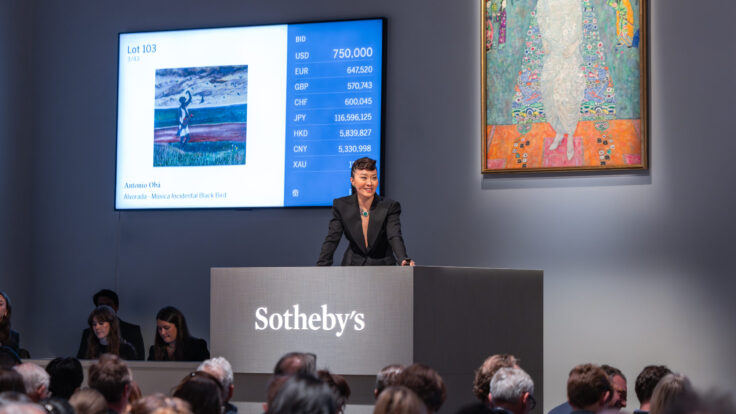
squeezed into a single week, this latest one—which required four nights and five days of auctions to be scheduled between the opening of the Venice Biennale and Memorial Day weekend—seemed to last much longer. Maybe it was the pace of the bidding, which was dragged out by chopped bids and long pauses, in which specialists coaxed clients into another bid after they swore they’d reached their limit. Or perhaps it was yesterday’s snafu, in which three contemporary art day sales were scheduled on
the same, final day of the auction cycle, causing advisors to step outside one saleroom and bid by phone in another, before stepping back into the first saleroom to chase another lot.
One thing no one likes to admit about the auction season is that there really isn’t anybody in charge. Each house tries to position itself advantageously, and sometimes that means sales overlap. One collector told me they had never seen a time when three houses held simultaneous sales in the same category.
(Crazier still, the pileup did not seem to have hurt the results.) Meanwhile, watching advisors scurry between so many lots gave me new insight into the difficulty of their job and why the auction dynamic plays out the way it does. Simply put, helping or orchestrating a client’s decision to buy something is only the beginning, and after a long process of research, due diligence, and strategizing, you can easily get outbid. What does the client do next?
Now imagine having to juggle
multiple auctions at once and sequencing your preferences and options. If the lot you really want comes up later in the day, should you bid on the lot you like, but don’t love, that comes up earlier in the day? What if the client goes home empty-handed? It’s a wonder anything gets done in the art world. |
A
$20M Richter & $12.8M Judd Stack
|
On Wednesday at Sotheby’s, the auction action began with the David and
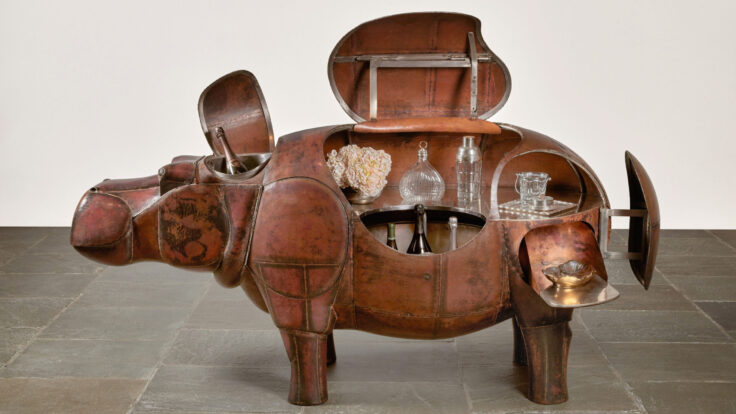
Shoshanna Wingate sale of 25 lots. The surprise top lot of that sale was an untitled brass-and-aluminum Donald Judd work, estimated at $600,000, which sold for twice that with fees. A Diego Giacometti cat sold for three times its $150,000
estimate to make almost $600,000, and an ostrich did pretty much the same to make nearly $400,000.
Design works continue to captivate collectors.
In the modern day auction at Sotheby’s, Edward Hopper’s Monhegan Lighthouse sold for more than $4.1 million against an estimate of only $1.2 million. Robert Mnuchin’s untitled Joan Miró gouache sold for nearly $2
million; its estimate was $800,000. Milton Avery’s Pink Meadow followed the same estimate-to-sale price trajectory. The sale opened with a run of works by Bridget
Tichenor, Anna Güntner, and Jane Graverol that all sold for many times their five-figure estimates. The entire modern day sale was more than 91 percent sold by lot and made $62 million, which was more than 13 percent above the low estimate. For a category that has long been out of fashion, that’s a strong showing.
The evening brought everyone back to Christie’s, where the deeply important but often difficult-to-sell category of minimalist art was
represented with the “Hank” McNeil collection from Philadelphia. The top lot was a sublime copper Donald Judd “stack” that ultimately sold for $12.8 million—the second-highest price for a work by the artist. But the most aggressive bidding was for a Carl Andre “corner” piece of carbon and polished copper cubes, which
sold for more than $1.1 million (the estimate was $300,000), and a Richard Artschwager furniture piece titled Two-Part Invention, which was estimated at $60,000 but achieved a premium price of
$635,000.
That sale totaled nearly $26 million, and rolled right into the 21st century evening sale at Christie’s, which made another nearly $137 million. Nowhere was the turn toward historical art more evident than in the contrast between the packed saleroom on Monday, which almost seemed to be a social event, and the decidedly professional audience at Christie’s on Wednesday.
The 21st century sale at Christie’s opened with a run of what the auction house titled “Marian’s
Richters,” a moniker that sold the works successfully. A 2-foot-tall abstract painting estimated at $3 million sold for nearly $9 million with fees, truly an astonishing price. The larger 2-meter abstract, titled Mohn, sold for $20
million. But somehow, the single candle painting, which was estimated at $35 million and sold for $30 million ($35 million with fees), drew more attention in some sale recaps. (Our friends at ARTDAI shared an internal pricing model, which predicted $35 million as the selling price based on Richter sales over the last few years.)
Indeed, Marian Goodman’s provenance was so strong that her Jean-Michel Basquiat work on paper,
Asbestos, sold for $6.5 million over a $3 million estimate. Non-Marian Goodman works in the sale by Cecily Brown, Keith Haring, and Richard Prince sold for decent prices at or just below the estimates. An untitled Christopher Wool work on paper
sold for more than $3.2 million, a very strong price. And the nearly $4.6 million paid for another painting to come out of Philadelphia, Barkley Hendricks’s Jules, was the artist’s third-highest auction price ever.
Several people attending Christie’s sale left early to make it a few blocks uptown to the
Tiffany store, where Loïc Gouzer was holding the latest of his traveling, live, single-lot sales from Fair Warning, his alternative auction platform. I had a drink with an art advisor earlier in the evening who said she was sorry to have to miss the event, if only because of the access to the Peter Marino–designed exclusive 10th-floor club, for Tiffany’s best customers. The apartment-like space did not disappoint. Neither did Gouzer’s sale of
Banksy’s Girl with Balloon on Found Landscape, from the artist’s Crude Oils series, which made a total of $18 million, the artist’s third-highest auction price.
Although the auction was “live,” all of the bidding was conducted by bidders on the phone with Fair Warning’s principals, and the lot went home with a client of Gouzer’s new partner, Saara Pritchard. Gouzer’s next challenge won’t be finding another star lot to sell—but
finding an even more exclusive location for next season after holding sales at Coco’s, the Clemente Bar, and this rarefied Tiffany’s space. |
Christie’s
Albers Shocker
|
Despite yesterday’s day sale traffic jam, results were strong. Phillips had a 91 percent
sell-through rate on 266 lots with a $30.5 million total. Christie’s sold 93 percent of its lots for a total of $102 million. (Bonhams doesn’t report its aggregate results.) Notably, the day sale number at Christie’s was almost exactly the same as Sotheby’s total seven days earlier. Whatever is going on in the art market right now, it’s not a phenomenon isolated to a particular auction house, period, or category of art. Previous ownership also does not seem to matter. There are simply a lot of
people out there buying art for decent but not enormous sums.
At Phillips, the top day sale lot came from the Loeb collection of Danish art: Harald Slott-Møller’s Summer Day, from 1888, which was estimated at $30,000 but sold for nearly $1.3 million with fees. Another Danish work by Edvard Eriksen was estimated at $12,000 but sold for more than $540,000. Works by Richard Prince, Roy Lichtenstein, and Robert Rauschenberg sold well but within the estimate range. An example of Robert Indiana’s LOVE, from 1966 but fabricated in 1998, was
estimated at $150,000 but sold for more than three times that to make $580,000 with fees. Works by Beatriz Milhazes, Olga de Amaral, and Lee Ufan also sold well. And Phillips set new record prices for Kikuo Saito and Woody De Othello, among others.
At Christie’s, the day sales had a number
of surprises. A new auction record was set for a Josef Albers. While Homage to the Square: Golden (never was an artwork better titled) had some condition issues, that didn’t seem to concern bidders, who ignored the $650,000 estimate and drove the price to $3.5 million. I’m told this is how much a large Albers homage painting will set you back if bought directly from the estate’s gallery. I understand that the warm orange and gold tones fit with the top prices for
red-hued homage paintings, but that record result was still a surprise to everyone I spoke to in the market.
Christie’s was able to sell all 27 of the George Condo works being offered by his former wife, Anna, for a total of more than $8 million—an impressive result, given that Condo’s market has cooled in recent years. It’s also worth mentioning that all of these works are at least a decade old, another sign that buyers are turning toward historical
works even within the oeuvre of a living artist.
Finally, Joan Mitchell’s untitled 1965 painting was the top lot at Christie’s day sale, making nearly $5.4 million. Wayne Thiebaud’s Banana Hands, estimated
at $900,000, made a premium price of more than $2.6 million. One of the bigger surprises of the day sale was that Rudolf Stingel’s gold-plated graffiti work sold for nearly $1.4 million. In another era, similar works have sold for prices in the $6 million range. Of course, Stingel’s market has been damaged by Inigo Philbrick’s trading in his works, but this price isn’t far from the $1.7 million the consignor paid for the work in Hong Kong in 2019, a few weeks
before Philbrick went on the lam and the extent of his fraudulent dealing became known. Christie’s had placed the work at the entrance to its lobby in a very visible but also unobtrusive spot. The tactic seems to have worked. |
I’m going to leave it there for now. I’ll have a more detailed analysis of these fascinating sales
in the Inner Circle in weeks to come. For now, enjoy the holiday weekend. Remember, there will be no newsletter on Sunday. Let’s talk again on Tuesday.
M |
|
|
|
Puck founding partner Matt Belloni takes you inside the business of Hollywood, using exclusive reporting and insight
to explain the backstories on everything from Marvel movies to the streaming wars. |
|
|
|
Unique and privileged insight into the private conversations taking place inside boardrooms and corner offices up and
down Wall Street, relayed by best-selling author, journalist, and former M&A senior banker William D. Cohan. |
|
|
|
Need help? Review our FAQ page or contact us for assistance. For brand partnerships, email ads@puck.news. You received this email because you
signed up to receive emails from Puck, or as part of your Puck account associated with {{customer.email}}. To stop receiving this newsletter and/or manage all your email preferences, click here. |
Puck is published by Heat Media LLC. 107 Greenwich St., New York, NY 10006 |
|
|
|
|