Welcome back to Wall Power. I’m Marion Maneker.
New York’s
galleries are in a transitional phase, between the winter shows and the influx of visitors who will arrive for spring auctions and art fairs. Until then, there’s plenty to see in Chelsea and around town.
Tonight, I’m going to take you through the shows I’ve seen recently that left an impression. And up top, notes on Acker’s sale of a bottle of wine for more than $800,000 (a new record price), how the Banco Santander Foundation stirred the fury of Mexico’s cultural elite, and a sale of
Warhol prints from a doctor who saved the artist’s life.
Also mentioned in this issue: Frida Kahlo, Jacques Gelman, Natasha Gelman, Cantinflas, Giuseppe Rossi, Leonor Fini, Arjan Martins, Ficre Ghebreyesus, William Turnbull, Domenico Gnoli, Édouard
Vuillard, Roy Lichtenstein, Paul Klee, Marc Jacobs, and many more…
Here we go… |
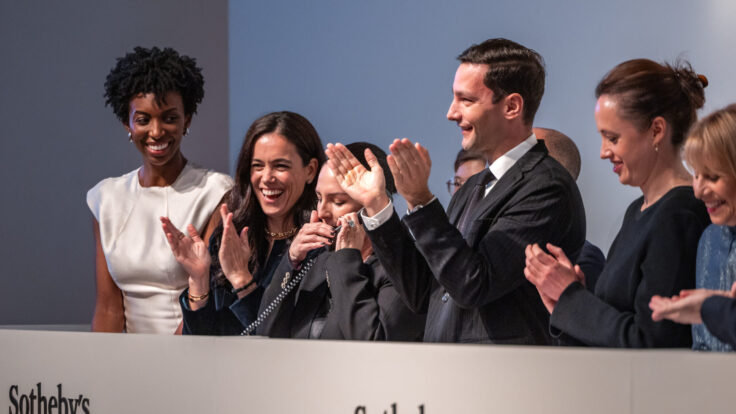
- Acker’s record wine price: A bottle of Domaine de la Romanée-Conti, from the much sought-after 1945 vintage, was sold at Acker last month for $812,500. That’s a record price for any bottle of wine. As I pointed out in Wednesday’s Inner Circle
email about the Asian art market, record-setting objects often retrade at new levels when markets are recalibrating. In this instance, the very same bottle had sold eight years earlier
at Sotheby’s for $558,000. That was a record price then, too. This recent sale represents a 46 percent rise over a relatively short holding period.
Like the art market, wine sales went through their own pandemic-era rise and fall, which took place in between those two record-setting sales. The rest of Acker’s sale in March made $25 million, another strong signal. That said—and also like the art market—the wine market is still gathering momentum.
|
|
|
|
CHANEL Connects, the flagship arts and culture
podcast, goes global for Season 6. From the Hamburger Bahnhof in Berlin to Tokyo’s Nexus Hall, tune in to a series of intimate conversations in iconic places. In this episode, recorded live at the Guggenheim Museum in New York City, celebrated artists Sarah Sze and Julie Mehretu connect with Yana Peel, President of Arts, Culture & Heritage at CHANEL. The conversation moves from the now to the next, exploring both artists’ ongoing commitment to their communities and abstraction as a launch pad
for radical invention. Listen Now. |
|
|
|
- Banco Santander’s Frida Kahlo problem: I had not been following the story of the Gelman collection—which contains a number of works of Mexican art, including 18 Frida Kahlo paintings—until I read this Financial Times story recapping the controversy surrounding its sale and
planned appearance at an exhibition in Spain this summer. Then, I started working my way back through this story in The Art Newspaper, which chronicles the cultural heritage issues that many other national institutions have raised. After reading both stories, I still had several lingering questions.
The
short version is that Natasha and Jacques Gelman, who produced movies for Cantinflas, the Mexican international comedic star, built two spectacular collections of art. The European art—works by Henri Matisse, Pablo Picasso, Georges Braque, Pierre Bonnard, Joan Miró, Salvador Dalí, and others—was donated to the
Met in New York in 1998, and became the backbone of that museum’s modernist holdings. The second collection of Mexican art remained in the estate of Natasha Gelman, under the executorship of Robert Littman.
Gelman had stipulated that the collection should stay in Mexico. Nevertheless, in January plans were
announced to move the collection to the Banco Santander Foundation’s new art museum in Spain, where it would be renamed the Gelman Santander collection. An uproar ensued. As Wellesley professor James Oles asked in the FT, why didn’t the
Gelmans or Littman donate at least one of these works, especially a Kahlo, to a Mexican museum?
In response to the outcry, the bank issued a statement two weeks ago saying the collection had been sold to the Zambrano family, the owners of cement giant Cemex. “It is crucial to clarify,” the statement read, in reference
to the revelation that the collection will be managed by the Banco Santander Foundation, “that this agreement implies, under no circumstances, either the acquisition of the Collection or its permanent removal from Mexico; ownership of the Collection remains with the Zambrano Family, who are Mexican collectors.”
There is a compelling subtext to this whole story: Why is a bank foundation involved in these cultural assets? And what is the financial arrangement that allows Santander to put
its name on this art collection and move it to Spain, at least for an extended period of time? If I dig up anything, I’ll let you know.
|
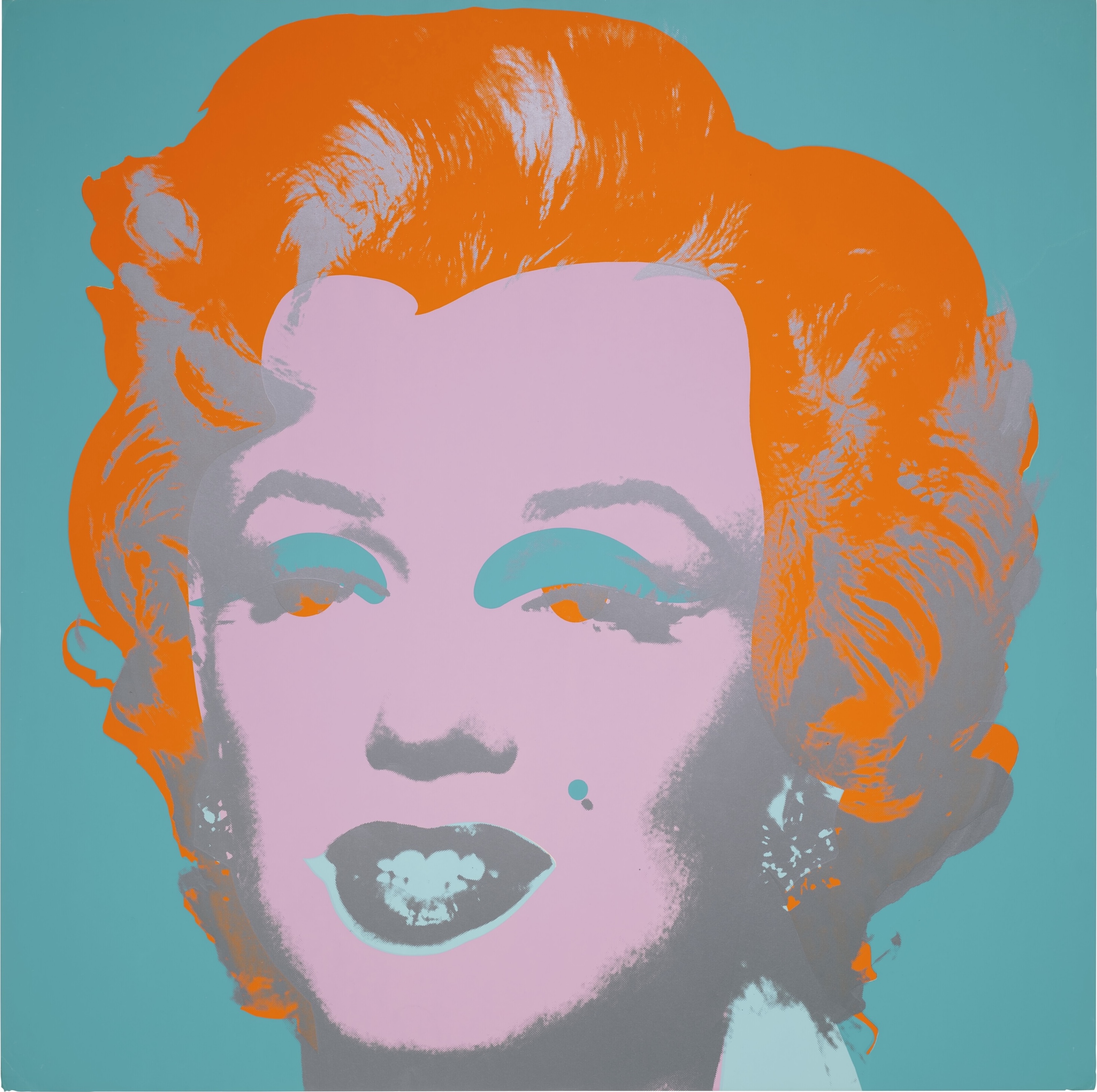
Andy Warhol, Marilyn Monroe (Marilyn) (1967). Photo: Courtesy of
Christie’s |
In 1968, Valerie Solanas walked into Andy Warhol’s
studio and shot the artist three times. The bullets penetrated his chest and stomach, ripping through his lungs, spleen, liver, and esophagus. When Warhol arrived at the emergency room, he had no discernible heartbeat and was pronounced dead. But Dr. Giuseppe Rossi, a vascular surgeon who cared for the patient without having any idea of his fame, did not give up. An expert on gunshot wounds, he spent nearly six hours removing the victim’s spleen and part of his lung, and in the
end, brought Warhol back to life.
In the months after his recovery, Warhol sent Rossi and his wife, Gemma, some prints—a full set of Campbell’s Soup cans and some Marilyns—that he made as a thank-you. But the Rossis were not art collectors, and they stored the works under Gemma’s bed for a number of years. Eventually, in the late ’70s, she started framing the prints and hanging them in her home.
The Campbell’s Soup prints were sold when Dr. Rossi died 10 years ago.
But now, Christie’s is offering six Marilyn prints in its April 14 and 15 sale of prints and multiples. The estimates range from $70,000 to $120,000 for the most-prized color combinations.
Now, let’s see what’s on view in New York’s galleries… |
|
|
|
While the New York galleries prepare for an influx of traffic around
the May sales, a number of surprising shows have popped up around town. |
|
|
|
Early spring is a strange time in New York’s gallery world. The winter shows are
coming to an end, and many venues are waiting until the influx of traffic around the May sales to mount their next big events. And yet on Thursday nights, there is almost always a round of shows debuting, attracting a seemingly endless stream of gallery goers. Sometimes you walk into a show you thought would be fascinating, and realize the art leaves you cold. But more often than not, a quick walk through Chelsea reveals unexpected and interesting new discoveries. Last night, for instance, I had
plans for dinner at Cookshop, which gave me the opportunity to stop in at Olney Gleason’s shows of Leonor Fini and Arjan Martins.
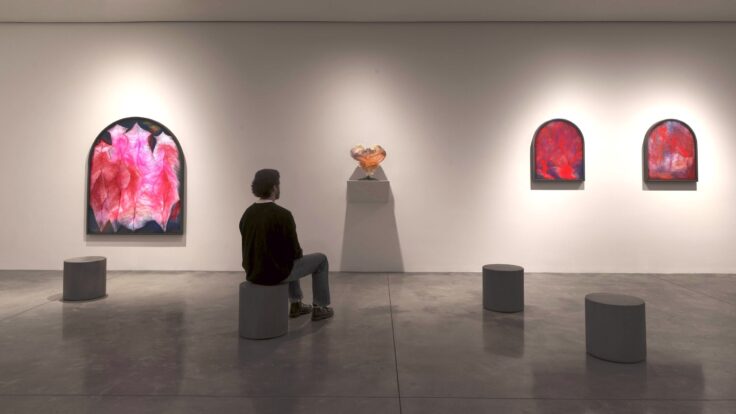
When you walk into the big, open room at Olney Gleason’s 27th Street gallery, you find yourself standing underneath an inverted lapstrake boat hanging from the ceiling. The boat symbolizes the “Black Atlantic,” or the long-standing connections between Africa, South America (especially Brazil), and the United States through
active maritime trade and exchange. The paintings by Arjan Martins, a 65-year-old Brazilian painter who is having his first solo exhibition in the United States, might seem vaguely familiar to anyone who has been following figurative painting of the African diaspora over the last few years. But Martins has an idiosyncratic visual vocabulary,
which includes a distinctive green paint that appears in many of the paintings in this show. The figure of Frederick Douglass and musical instruments also appear in various compositions. |
|
|
|
In this episode of CHANEL Connects, meet renowned
painter and critic David Salle. For more than five decades, the artist has been creating across disciplines: on the canvas, behind the camera, and now, in dialogue with artificial intelligence. He connects with Yana Peel, President of Arts, Culture & Heritage at CHANEL, for a live conversation recorded at LACMA in Los Angeles. Set against this backdrop, they discuss Salle’s formative years at the legendary art school founded by Walt Disney, his collaborations—from Martin Scorsese to AI
engineers—and the enduring power of human intention as the digital frontier evolves. Listen Now. |
|
|
|
Just down the street, Olney Gleason also has a
show of Leonor Fini’s paintings and drawings—part of its ongoing relationship with the artist’s estate, and a reminder of shows in Frankfurt later this year and at the Musée d’Art Moderne in Paris next year. This show features a group of classical and surrealist-inflected portraits that were the source of her success in Paris in the 1930s. There are also a number of
pen-and-ink drawings, some featuring a fascination with death and decay, and others erotic same-sex images. Fini’s personal life and romantic attachments are an integral part of her story, as is her connection to theater and costume design, which is also represented in the works.
As I headed south, I stopped by Karma to see Scottish artist
William Turnbull’s show. The artist was born in 1922, and lived until 2012. His key experience as an artist was in postwar Paris, when he spent time in the studio of Alberto Giacometti. You can see that in the works on display at Karma. Many of his bronzes, including a mobile of many bronze parts, bear the influence of the Swiss sculptor obviously but lightly. I had only previously encountered Turnbull’s work at the Getty Museum
in Los Angeles, where there is an arrowhead-like figurative work on display by the entrance. |
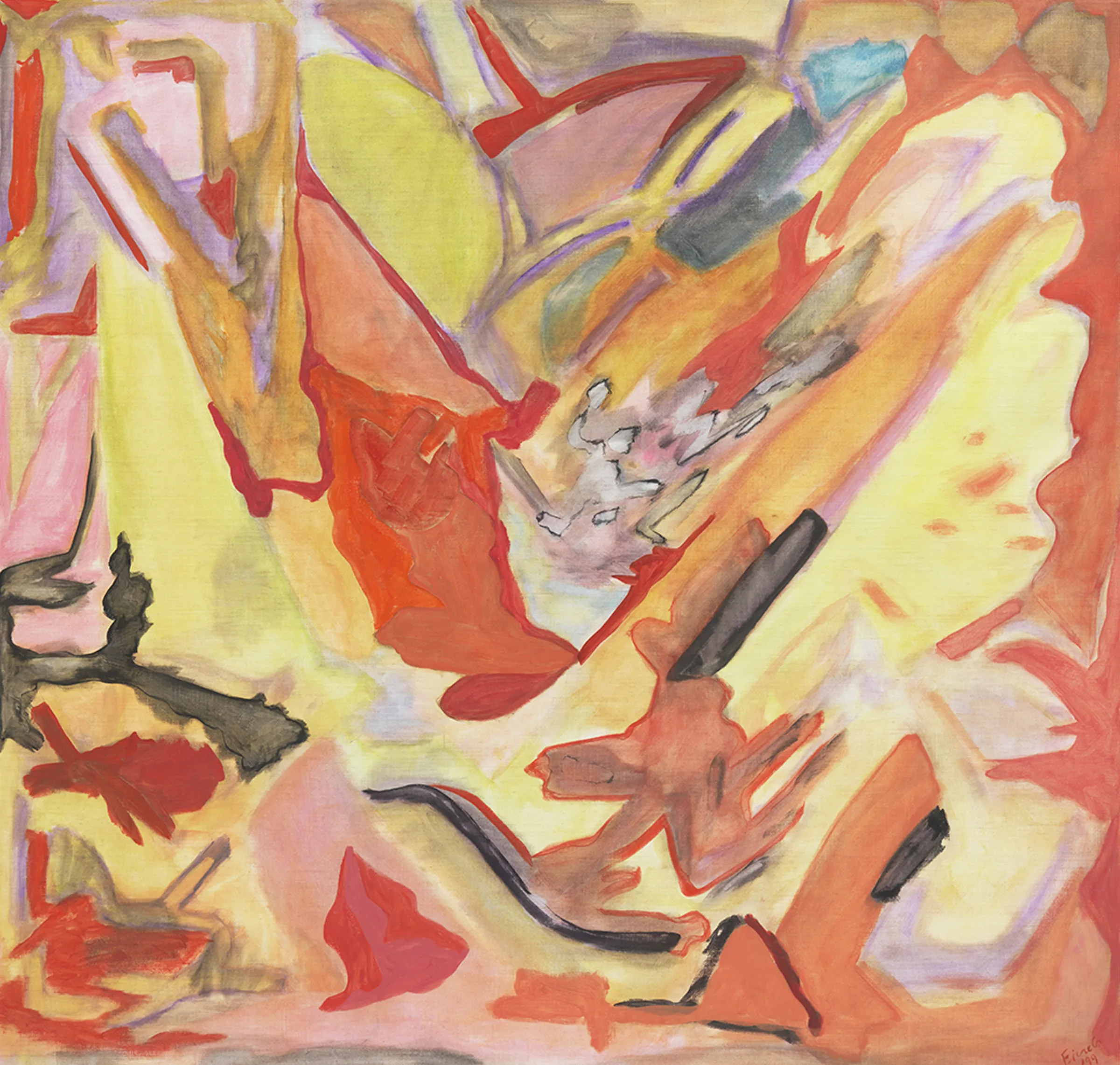
Ficre Ghebreyesus, Untitled (1999). Photo: © The Estate of Ficre
Ghebreyesus, Courtesy of Galerie Lelong |
As I left Karma, I could see crowds going into
Galerie Lelong. Ficre Ghebreyesus, a refugee from Eritrea, got an M.F.A. from Yale but never showed his work during his lifetime. Instead, he operated his family’s restaurant in New Haven and remained involved in Eritrea’s independence movement. He died in 2012 at the age of 50. Since then, his work has been shown at the
Venice Biennale and entered collections at museums ranging from MoMA to the Studio Museum in Harlem and Glenstone. These colorful paintings, some of which can bring to mind Paul Klee, are a mixture of abstract and figurative or landscape works. |
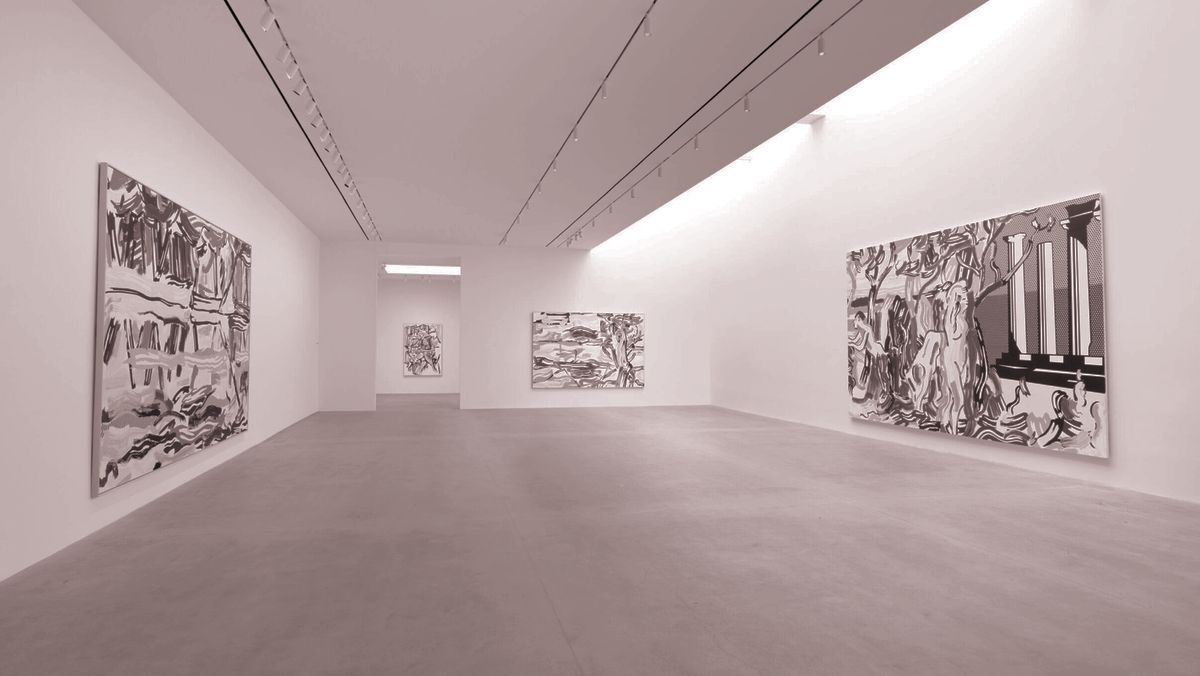
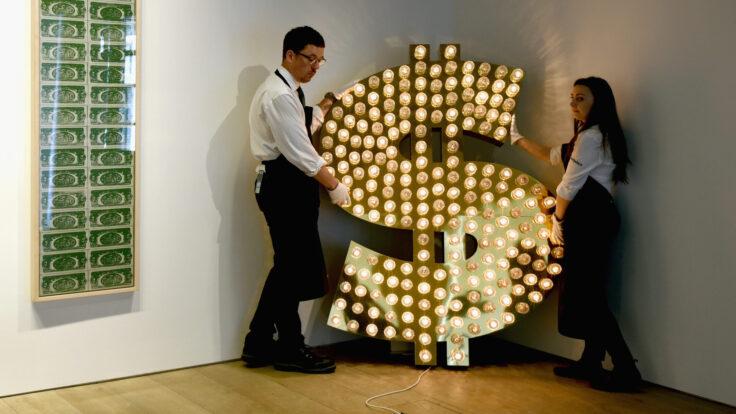
After more than $100 million in sales at auction from the heirs of Roy
and Dorothy Lichtenstein over the last two years, it’s hard to believe that there is still more high-quality material left in the estate. And yet, Gagosian is showing brushstroke 1970s and ’80s-era works from the family’s holdings. When Dorothy died two years ago, she donated a lot of work from the artist to the Whitney Museum, which smartly organized a major retrospective of his work for later this year. That exhibition will help the museum process all of the
material from the bequest, and Gagosian’s focused show will likely supplement it nicely.
Meanwhile, I’m still scratching my head over Skarstedt Gallery’s museum-quality monographic exploration of Édouard Vuillard’s interiors from the 15-year Nabi period, which spanned from 1890 to 1905. Of course, many artists
find variation and inspiration in close, unyielding quarters—Vuillard’s family apartment was also where his mother ran her business—and the work offers an interplay of pattern and light, which masks the emotional content of these intimate vignettes. Rather than wonder why this show exists, it’s better to simply go and enjoy it. You’re not likely to have easy access to a show like this again, and it runs until April 25.
Uptown, Lévy Gorvy Dayan has a
show of the quasi-surrealist, sometimes pop artist Domenico Gnoli, which the gallery is touting as the largest U.S. exhibition of his works in more than five decades. It follows a retrospective at the Fondazione Prada five years ago. Gnoli can seem like a remote-but-familiar artist, but that’s probably because his
close-cropped images depict clothing and body parts. The paintings can feel claustrophobic, but they are mostly playful and witty; a recurring theme is bodies under bedclothes. And, for what it’s worth, Marc Jacobs really liked this painting of a chair. The Gnoli show is on view for most of the next two months, and is likely to show up in your
Instagram feed often. |
That’s enough for today. It’s a big holiday weekend for those celebrating Passover and
Easter. So pace yourselves with the matzo or chocolate. I’ll check back in on Sunday.
Yours,
M |
|
|
|
Puck founding partner Matt Belloni takes you inside the business of Hollywood, using exclusive reporting and
insight to explain the backstories on everything from Marvel movies to the streaming wars. |
|
|
|
Ace media reporter Dylan Byers brings readers into the C-suite as he chronicles the biggest stories in the
industry: the future of cable news in the streaming era, the transformation of legacy publishers, the tech giants remaking the market, and all the egos involved. |
|
|
|
Need help? Review our
FAQ page or contact us for assistance. For brand partnerships, email ads@puck.news.
You received this email because you signed up to receive emails from Puck, or as part of your Puck account associated with {{customer.email}}. To stop receiving this newsletter and/or manage all your email preferences, click here. |
Puck is published by Heat Media LLC. 107 Greenwich St., New York, NY 10006 |
|
|
|
|