 |
| Aloha, and welcome back to Line Sheet, coming at you from Hawaii, of all places, where I’m speaking at a conference and recovering from wearing four-inch heels for the first time in more than a decade. (To the handful of readers who witnessed this… thank you for your support, emotional and physical!)
Last week in Los Angeles, I ate pizza with many New Yorkers, current and lapsed, during Chava Studio designer Olivia Villanti’s get-together at Ronan on Melrose. She was in town to promote her collaboration with Westside-based Laurel Pantin, late of newsletter-writing fame.
Olivia, a former editor who moved to Mexico City several years ago, now makes beautiful shirting and tuxedo pants and the like. Encouraged by unlimited margaritas and wine, several of the expat New Yorkers at the long table were contemplating whether they would ever move back—some were already on their way, others were planning years ahead—and while that’s very much a life decision, it’s also a business decision. New York is the epicenter of the North American fashion industry, and there are drawbacks to not being grounded there. But I’m not sure Olivia could have made Chava as good if she was in Brooklyn or Manhattan. The density of the city and extreme competition often lead to paranoia, which leads to risk-aversion, which leads to blandness. Which reminds me: I look forward to seeing you at New York Fashion Week very soon.
Before we get started: Were you one of those people who used to watch me live twice a week during the height of the pandemic? Do you miss my (still Botox-free) face? And zooming in on my bookshelf? (The Mike Ovitz autobiography is not mine, by the way.) If the answer to any of these questions even potentially approximates the affirmative, here’s a reminder to tune in on Thursday at 8 a.m. PT/11 a.m. ET/5 p.m. CET for a breakdown of Launchmetrics’ latest report about the brands and people that are dominating the social media conversation, and why. (Hint: it’s a lot about money, but not only about money.) Sign up here.
Mentioned in this issue: Jeff Bezos, Muge Erdirik Dogan, Salma Hayek Pinault, Style Capital, Roberta Benaglia, Richard Baker, Ben Mendelsohn as Christian Dior?, Roger Lynch, Miu Miu and L’Oreal chatter, Tommy Ton, Gwyneth Paltrow, Anna Wintour, Pharrell feedback, Ozempic backlash, Ye’s new shoe, and much, much more… |
|
|
- No designer boots are made for walking: As usual, nothing happened in Davos except for bad clothes, so here’s hoping Condé Nast C.E.O. Roger Lynch got back from Switzerland and thought-leadershipping in time for his union’s walkout on Tuesday. (Surprisingly, Lynch did not make a detour to GQ’s Paris Fashion Week party at L’Avenue, sponsored by Levi’s.)For those of you who have better things to do than relish in the occasional misadventures of your former (or current) employer, a refresher: The Condé Nast union is mad about the lack of a contract agreement, mad that management told them nobody from Pitchfork would be laid off—whoops!—mad that the 90 union members on the layoff list have been tortured for months knowing that they were not long for this world but must keep showing up for work. Tomorrow, they will picket outside One World Trade in two shifts, 10 to 2 and 1 to 5, with a rally during the hourlong overlap… in case you’re bored at work and want to go check it out.
|
- How badly do you want a Miu Miu lip gloss?: I hear that Miu Miu is teaming up with L’Oreal to develop beauty and fragrance. It’s no surprise, really: In 2019, Prada abandoned Puig for L’Oreal (despite grand efforts on Estée Lauder’s part to win the deal, I hear) and so it makes sense that Miu Miu, maker of the world’s most subversive miniskirts and cricket sweaters, would follow. The jury is still out on whether L’Oreal can develop products that do designer brands justice, but they’re trying.
- Fashion on TV: A friend messaged me the other day to ask if I wanted her Disney+ login. The only movie my kid has seen is Barbie and we already watched the Beatles doc, so no need for Disney in this household at present. Why, then, was she offering? The Cristóbal Balenciaga miniseries, of course, which The Guardian called “a classy drama.” There’s also Apple TV+’s The New Look on the horizon—starring Ben Mendelsohn as Christian Dior and Juliette Binoche as Coco Chanel—as well as that Arnault-inspired, Succession-esque show La Maison, a French production that wrapped up this summer, plus the next season of Emily in Paris, which is filming right now and (spoiler alert) takes place partially in Italy. And there’s more still in the too-early stages of development.What’s up with the deluge? For one, there is plenty of material. Fashion is pop culture, and yet its history hasn’t been mined with the same zeal as sports, music, literature, or [insert other popular biopic category here] until now. You can guess why.
Another factor: Brands are more integrated into the Hollywood machine than ever, and will typically play ball. Gucci, for instance, did not participate in publicity around the House of Gucci, but the Kering-owned brand did allow the costume designers access to the archive for research. The film also co-starred Salma Hayek Pinault, whose husband, of course, owns Gucci. The brand even hosted a screening of the film in Los Angeles.
Will I watch it all? Look, I loved the House of Gucci movie—it was totally insane in the best way—and truly loved the book on which it was based. If it’s entertaining and doesn’t feel like work, great.
|
- Farfetch debris: Italian private equity firm Style Capital (genius name) seems to be pretty serious about pursuing New Guards Group, and I don’t just think that because C.E.O. Roberta Benaglia said so in WWD. (I’ve chatted with people connected to NGG, and they believe there’s a good chance it’ll happen.) But does it even make sense at this point? None of the brands in NGG, except for Off-White, have managed to scale in a meaningful way.Off-White is an anomaly, one that LVMH owns. The Farfetch calamity aside, the state of NGG also speaks to a broader issue: Do so-called brand accelerators, of which there are several in Europe, actually work? I’m still a believer in shared services—young, independent brands can benefit from someone else managing their supply chain, logistics, marketing, and distribution. However, it can’t be a one-size-fits-all approach. The model needs refining.
As for the other Farfetch bits and bobs floating around? Violet Grey should be fairly easy to sell. It’s not that big, and it works. (I know that LVMH looked at Farfetch itself and passed, but putting Violet Grey under Sephora, which has a brand-curation problem, is not a bad idea.) Sneaker reseller Stadium Goods is also a strong biz, but even so, the secondhand market is hardly hot with investors at the moment. But these are smaller businesses, which makes them less appealing, and extracting them from a holding entity is complicated. The reluctance to save them shouldn’t be any real surprise.
|
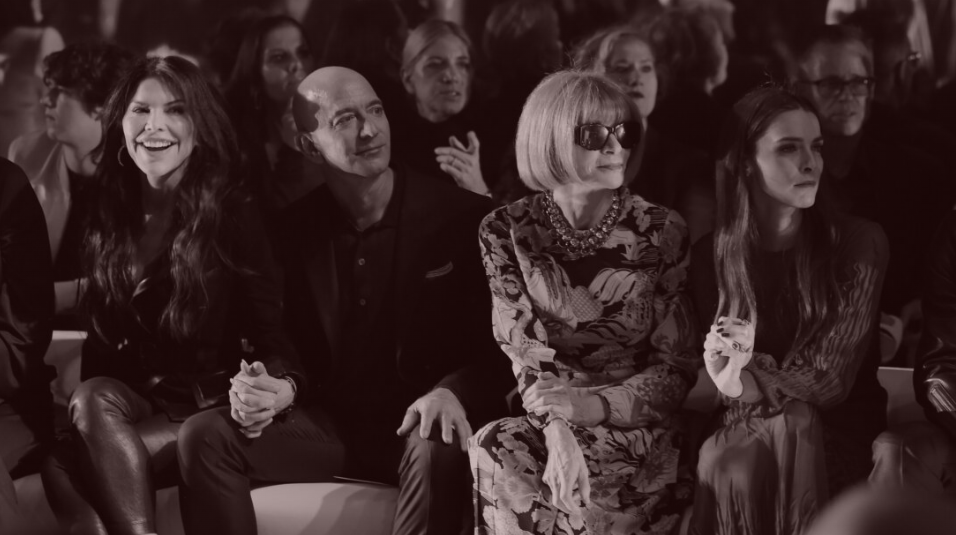 |
| Can Amazon Be the Amazon of Luxury? |
| For the past decade, I’ve been trying to understand why Amazon, the ultimate brandless brand, keeps investing in fashion. Could the potential for a deal with Saks solve Jeff Bezos’s luxury problem? |
|
|
|
| Last week, after Richemont washed its hands of Yoox Net-a-Porter Group and mentioned in an investor call that there were some people interested in buying it, I started asking around regarding who those people might be. Most everyone suggested looking outside the industry, understandably—perhaps a private equity firm, like Bain Capital, etcetera. I know that one of the investors in Neiman Marcus Group had looked at Farfetch—bound to be sold off for parts at this point—so maybe they’d peek at YNAP, too?My conversations yielded all sorts of things, but in the end I predict that Net-a-Porter and off-price offshoot The Outnet will be sold, and that Yoox, which sells designer inventory, often as old as the Tuscan hills, will shut down. As for Mr. Porter, already rumored to be closing? It’s a good brand. Not sure if it’s worth the work, though.
The most interesting intel to emerge from my conversations, however, had nothing to do with YNAP, or even Farfetch. It was something a source had heard about Richard Baker, the real estate zealot and chairman of HBC, owner of Saks, desirer of Neiman Marcus Group, and raiser of Saudi sovereign wealth funding. Apparently, Baker has been trying to convince Amazon—Amazon!—that he is their luxury solution. (A representative for Baker had no official comment.)
Of course, Baker runs a multibillion-dollar business group and presumably has conversations like this all the time—he recently met with online retailer Zalando, too—so nothing may come of it. But one Baker associate suggested that a potential deal might resemble what he tried to pull off with Lord & Taylor and Walmart, wherein Lord & Taylor was nestled into Walmart.com as a part of its marketplace. The experiment was a failure—Baker eventually sold Lord & Taylor, and then sold the Lord & Taylor building in Manhattan to WeWork in a brag-worthy, $850 million transaction—but that wouldn’t stop him.
And there is a clear logic for Amazon to pursue a deal with Saks. After all, Amazon will never be able to convince luxury brands to sell directly through its primary web portal, an “everything store” that sells toilet paper and dog food and knock-off Chinese phone chargers. But an integration with Saks could provide frictionless access to the luxury consumer—who spent €362 billion globally on “personal” luxury goods in 2023, according to Bain—without devaluing those high-end brands. |
|
|
| The looming question, I suppose, is why Amazon would want to be in luxury, and how badly? For the past decade, I’ve been trying to understand why Amazon, the ultimate brandless brand, keeps investing in fashion. It did not need to sponsor the Met Gala in 2012 to unseat Walmart as the largest seller of apparel in the U.S. And it certainly did not need to sponsor the 2023 CFDA Awards, or have (now former) Amazon Fashion president Muge Erdirik Dogan take photos with Gwyneth Paltrow, recipient of a made-up, Amazon-sponsored “innovation” prize, to sell whatever ends up being this year’s version of the Amazon coat.If the goal of these marketing ops was to sell clothes, they were unnecessary. If the goal was to get luxury brands to take Amazon seriously, they were futile. Fashion and apparel are different things. The site’s own Luxury Stores experiment, launched in 2020 with a nice article in Vogue, has been an unequivocal failure. (Few brands agreed to sign up, and the ones that did saw virtually zero return.) And yet, Amazon persists. I suppose the answer may be as simple as this: Luxury goods are a high-margin business, and understanding what compels someone to buy a handbag, or a cashmere coat, is valuable data.
Amazon does have options other than a tie-up with Saks. Remember, it tried to buy Net-a-Porter years ago, before it was owned by Richemont. Now may be the right time to reconsider, given that it will be a bargain and the Biden anti-trust crusaders might be inclined to approve a combination given how dire the alternative looks for the distressed luxury retailer. Net-a-Porter’s fundamental flaws—shitty website, poor logistics—can be fixed by Amazon. And it has something that Amazon will never have on its own: access to luxury goods.
Would brands back away if Net-a-Porter were suddenly an Amazon shingle? Again, it’s a matter of timing. This year is going to be incredibly challenging for luxury, especially for the brands that still rely on multi-brand retail to drive a significant portion of their sales. If NAP remained independent in the same vein as Shopbop and Zappos, I suspect, the brands wouldn’t care because most consumers would never know, or care, about the relationship. You could liken the opportunity to Amazon’s acquisition of Whole Foods, which allowed the company to access premium customers in a different channel and maintained the integrity of the brand.
But Amazon also bought Whole Foods because it was the only national chain cheap enough to buy. The fact that it was high end was not the main consideration—it was about the physical retail footprint, the ability to use stores as logistics hubs, and the potential to gather data about how to sell food more efficiently.
And yet, I’m resigned to the notion that nothing will come of any of this—that Amazon will continue to try and fail in getting luxury brands to succumb, and that Net-a-Porter will climb into the private equity cave. Saks will be Saks. It’s a frustrating outcome, whereas a consummation of the will-they-or-won’t-they Amazon and Net-a-Porter relationship would offer some satisfaction, at least temporarily. It wouldn’t solve all the industry’s problems, and would certainly create new ones, but at least it would be a change of pace. |
|
|
| It always comes back to Anna Wintour: “Putting a pin in it that Anna is aiming to hang on at Condé another three more years (four tops) to cement her historic legacy as the longest-ever serving editor of American Vogue blah blah (and besting Edna Woolman Chase, who was in the role 38 years and who gets no love). Only then will she step away...” —A comms strategistOn Gucci and Louis Vuitton: “I loved what Pharrell did so much more than what De Sarno did. It did not feel like Ralph; it was packed with great work, lots of detail, luxe, cool, fun. (Ralph might wish he delivered that kind of swagger and bling and beautiful clothes.) And it’s going to sell. Male fashion industry friends of mine were gobsmacked by Gucci, however, and wanted so many pieces, so what do I know? Pharrell might have more chops than Virgil in the cultural zeitgeisting… Is it just commercial enough to ring registers? —A C.E.O.-type
On my Ozempic bullishness: “From prescription cocaine in the 1930s to Phen-Phen in the 1990s, there has never been a pharmaceutical weight loss regime that didn’t end in unforeseen damages to health and massive lawsuits. Ozempic will be no different. Just like all the pharma weight loss products in the past—there just hasn't been enough research into the side effects, making the actual use of the drug at scale the true experiment. No one knew that coke was that addictive, that Phen-Phen was going to destroy heart valves, etc. There is so much long-term concern about the entire class of Ozempic-like drugs that the Danish government took Novo Nordisk (owner of Ozempic and others) out of Denmark’s national GDP planning because when the crash comes, it will destabilize that entire country’s economy.” —A marketing exec
On Orslow men’s jeans: “Currently wearing my 105s. Got them from a friend who owns a denim shop… He says without fail it is the go-to jeans for guys who want good denim but aren’t denim heads. In the Blamo Slack, Orslow is regularly mentioned when someone posts asking for recs. I own two pairs, and will be ordering the other washes when they come in.” —A showroom owner who doesn’t sell Orslow |
| What I’m Reading… and Seeing… |
|
| Happy Couture, everyone! One last beat on men’s: I loved the Loewe show. It’s fashion, it’s art, it’s Hollywood. As Tommy Ton noted recently, “Every single aspect, from the staging to the soundtrack, is well thought-out and considered, but it’s the roster of talent that attends this show in particular that has every attendee keeping their eyes wide open.” My celebrity expert friend Amanda was impressed that they managed to wrangle Enzo Vogrincic from Society of the Snow. [Instagram]Silver Lake Management, the private equity firm that’s about to take Endeavor Holdings private, is going to sell off certain parts of the company. (WME, the talent representation arm, will stay.) Just a reminder, Endeavor owns WME Fashion, which includes IMG (model representation), The Wall Group (stylists, makeup artists), Art + Commerce (photographers, art directors), and New York Fashion Week. [Bloomberg]
Macy’s has rejected a $5.8 billion takeover bid that would have valued it at a 20 percent premium, but was unsavory in other ways. I suspect we’re heading toward a leveraged buyout regardless. [NYT]
Arnault heir update: Dad has nominated Alexandre and Frédéric to the board of directors, joining elder siblings Delphine and Antoine. [Financial Times]
Marc Jacobs is a big reason I wanted to be a fashion journalist when I grew up. Happy 40 years in biz!!! [Instagram]
Kering recently acquired 715-717 Fifth Avenue, near Rockefeller Plaza, for $963 million. [Inbox]
Kim Kardashian is now Balenciaga’s brand ambassador. [Inbox]
Everyone’s talking about Ye’s titanium teeth, but check out this new shoe design. [Instagram]
Birkenstock’s profits will likely shrink in 2024. [Reuters]
Rory Satran on E. Jean Carroll’s courtroom attire. [Wall Street Journal]
This article about the correlation between American fashion and the country’s class system isn’t necessarily incorrect, but it lacks a peg (like Pharrell at LV) to make it germane at this moment. [Financial Times]
And finally… there might be nothing I hate more than a Sundance portrait gallery.
Until Thursday,
Lauren |
|
|
|
| FOUR STORIES WE’RE TALKING ABOUT |
 |
| Goldman’s Inside Man |
| Notes on the hottest topics swirling among the Maidstone crowd. |
| WILLIAM D. COHAN |
|
 |
|
 |
|
 |
|
|
|
|
|
 |
|
|
| Need help? Review our FAQs
page or contact
us for assistance. For brand partnerships, email ads@puck.news. |
| You received this email because you signed up to receive emails from Puck, or as part of your Puck account associated with . To stop receiving this newsletter and/or manage all your email preferences, click here. |
| Puck is published by Heat Media LLC. 227 W 17th St New York, NY 10011. |
|
|
|