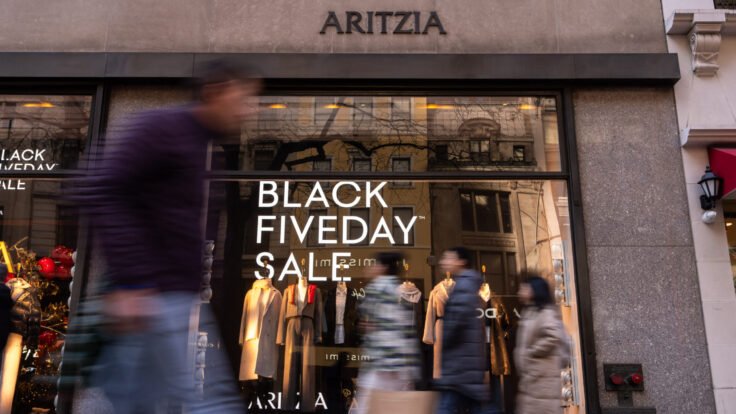
Hi, welcome back to Line Sheet. And to Q2! Today also marks my three-year Puckversary. We decline
to acknowledge April Fools’ Day in these parts, and I encourage you to do the same. It’s truly awful.
The number one rule of business journalism? Follow the money. And boy, does Rachel “Rachel@puck.news” Strugatz have a money story for you today. Everyone’s talking about Alix Earle’s beauty launch, which was backed by Nick
Brown and Natalie Massenet’s Imaginary Ventures, but only Rachel has the numbers. This is a big story on a lot of levels. I can’t wait for you to dig in.
Up top, Rachel also offers the definitive analysis on the merits of Kering’s decision to off-load its beauty division to L’Oréal; Malique Morris reads between the lines of Nike’s recent earnings; and we’ve got some data on fashion’s favorite villain, Quince, courtesy of
The New Consumer’s Dan Frommer (who happens to be my husband). I’ll be back tomorrow with a super-fun Inner Circle issue. Upgrade now to avoid missing out.
Also mentioned in this issue: Luca de Meo, Mikayla
Nogueira, A$AP Rocky, the University of Miami, Justin Bieber, Artemis Patrick, Heattech, Derek Blasberg, the Fondation Louis Vuitton, Ashley Dupré, Elliott Hill, Kanye West, Hailey Bieber, and more… |
|
|
|
A MESSAGE FROM OUR SPONSOR |
Introducing the first agentic storefront
Swap built the first agentic Storefront that replaces
your traditional static website with an immersive agent-led commerce experience, guiding shoppers through product discovery, to virtual-try on, to checkout in a single experience.
Learn More |
|
|
|
Three Things You
Should Know…
|
- A
micro Q&A on the wisdom of Luca de Meo: It’s been six months since Kering announced it would sell its beauty division to L’Oréal for $4.7 billion. The deal finally closed yesterday, so I asked Rachel to weigh in on the criticism I’ve been hearing over in Europe. Herewith…
Lauren: When I was in Milan for fashion week, there were a lot of people saying that Kering was shortsighted to abandon owned beauty. Do you agree?
Rachel: I don’t. Sure,
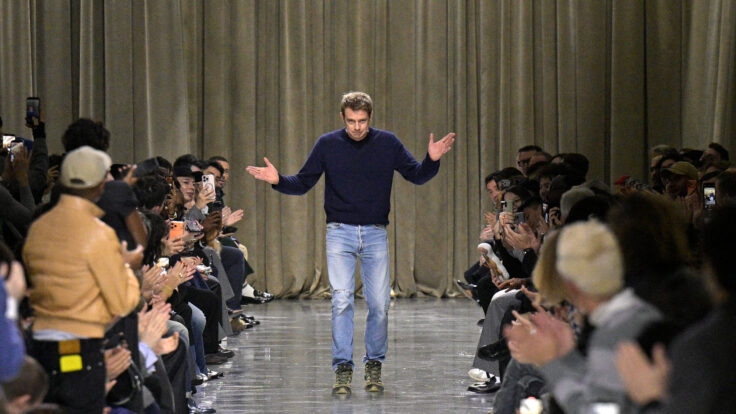
it’s theoretically better to own your beauty businesses outright––just look at Chanel, LVMH and Dior, Puig with Carolina Herrera and Rabanne, not to mention L’Oréal––but it can take decades to establish the necessary infrastructure and expertise (product development, innovation, marketing, travel retail, global distribution networks, etcetera) required to compete. Unfortunately, Kering didn’t have the luxury of time, and the L’Oréal deal offered the best way for Kering’s beauty
properties to achieve scale while also lifting the parent company’s core business in the shortest amount of time.
|
|
|
|

| Malique Morris
|
|
- Nike earnings real talk:
On Tuesday’s analyst call, Nike C.E.O. Elliott Hill repeatedly acknowledged that the sneaker giant’s turnaround was taking longer than anticipated. When you look at the numbers, you can see why he might have been feeling defensive: In the most recent quarter, the group’s revenues (including Converse) were flat year over year at $11.3 billion, while net profits dipped 35 percent. Meanwhile, revenues this quarter are expected to dip between 2 and 4 percent, and the stock is down
35 percent overall since Hill returned.
Of course, the business is still recovering from a miscalculated push into D.T.C. and the attendant retreat from retail partners, such as Foot Locker, which was supposed to boost margins but instead kneecapped growth. To put it mildly, the rightsizing has been lopsided. Wholesale revenues for the Nike brand jumped 5 percent last quarter, but Hill noted that the channel is marred by low sell-through and rampant online discounting. At the
same time, their renewed offensive in the running category—where challengers like On and Hoka have mopped Nike over the last few years—hasn’t gained meaningful traction, and a 1 percent inventory decrease, some of which Hill attributed to removing “unhealthy inventory of our classic footwear franchises,” dampened growth.
And yet, Converse was the biggest drag on performance. Revenues at the brand, which has lost plenty of cultural cachet in recent years, fell by 35 percent. (More than two
decades after the fact, plenty of folks are still skeptical about the deal.) On Tuesday, Bloomberg reported that Authentic Brands Group has its eye on the brand if Nike ever puts it up for sale—although Hill insisted on the call that “Converse will remain an important part of the Nike Inc. family, and we are excited about its long-term prospects.” I guess we’ll see what happens if the brand continues to post double-digit sales declines.
|
|
|
|
A MESSAGE FROM OUR SPONSOR |
Introducing the first agentic storefront
Swap built the first agentic Storefront that replaces
your traditional static website with an immersive agent-led commerce experience, guiding shoppers through product discovery, to virtual-try on, to checkout in a single experience.
Learn More |
|
|
|
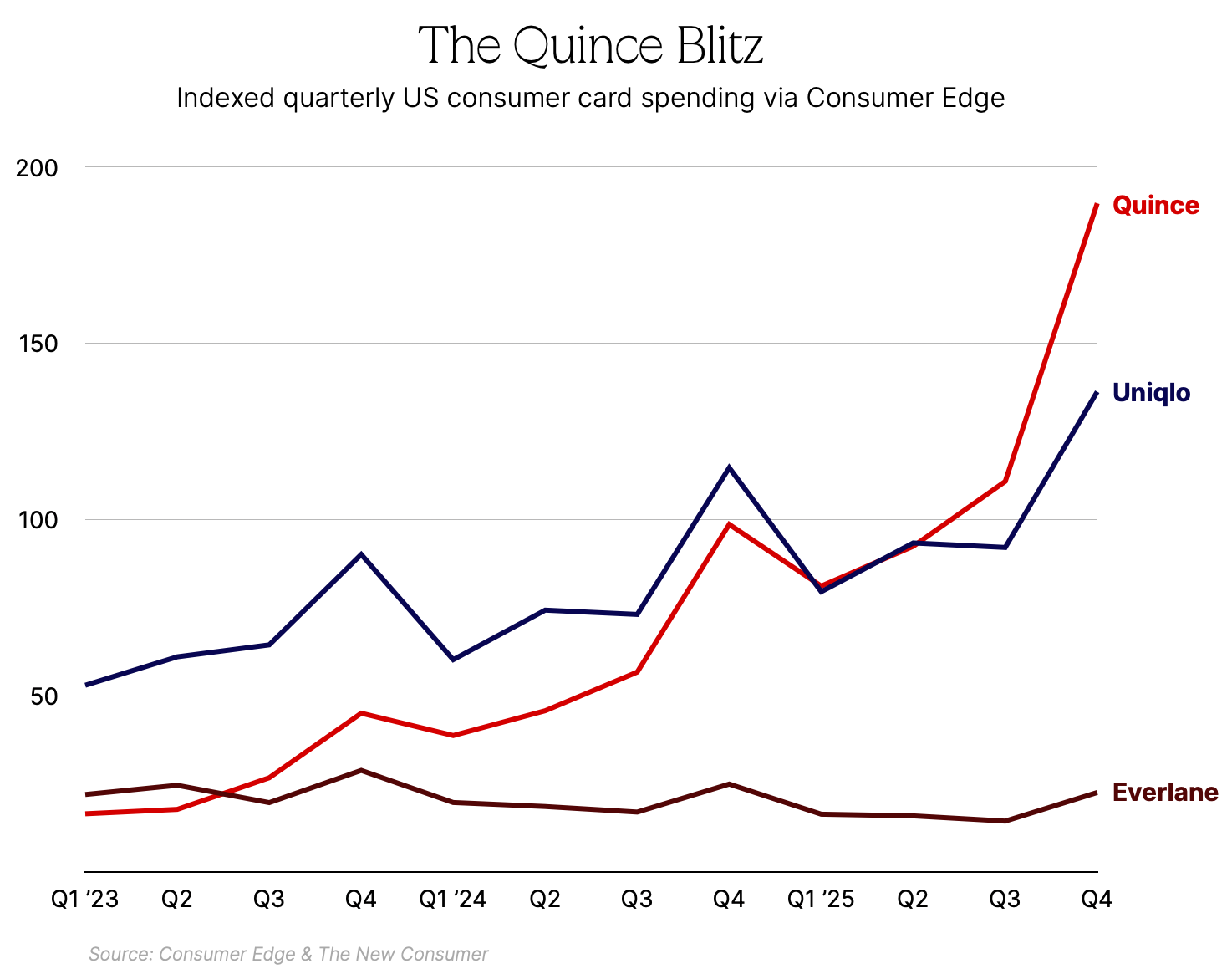
- Quince vs. Uniqlo: The
fashion industry’s favorite villain, Quince, roughly doubled in size last year, according to U.S. consumer credit and debit card transaction data provided by Consumer Edge. The even scarier
thing for all you snobs who love Heattech? In the fourth quarter, the company even overtook Uniqlo in the U.S., and long ago zipped past Everlane, which, as Lauren recently reported, isn’t faring too well these days.
|
-
From the beginning, Quince has relied on a “manufacturer-to-consumer” model, which involves moving inventory and product design closer to the factory floor while stripping out the corporate middlemen. The company, obviously, is deeply polarizing and considered uncool among those who brag about wearing Uniqlo under their Phoebe or Auralee (including my wife). But the products are good enough to win praise from
Wirecutter and The Strategist, and I imagine the affiliate action is also strong, leading to pieces
like this from Who What Wear. Its investors, including Iconiq, love to gush about the company, which is currently
valued at $10 billion.
So why all the hate? Well, one reason is that Quince doesn’t have a real story or any attachment to culture. Unlike the brand worlds built by Uniqlo (collaborations with designers; the Japan connection) or even Costco’s in-house dad brand Kirkland, Quince feels like a spreadsheet and
data-mining operation instead of something crafted by designers or merchants. And yes, Quince is starting to do more “brand” things—putting its name and logo on supplements and fragrances, collaborating with A$AP Rocky, and hiring its first head of brand strategy—but it might not matter. After
all, the market for middlebrow basics will always be huge if you can nail the unit economics. —Dan Frommer (Subscribe to The New Consumer here.)
|
|
|
|
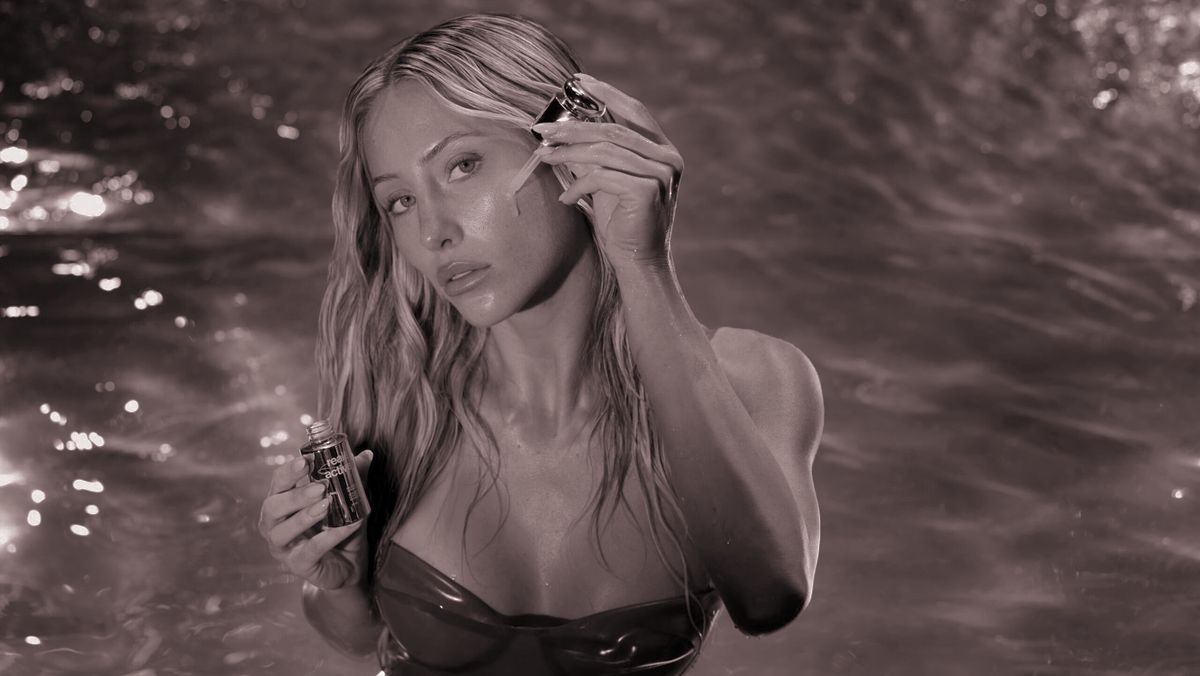
The debut of Alix Earle’s new acne-focused skincare line, Reale Actives, is already one of
the most successful celebrity beauty launches in history. What happens next? |
|
|
|
Yesterday marked the bonkers direct-to-consumer launch of Reale Actives, Alix Earle’s new
acne-focused, Imaginary Ventures–backed skincare line. I’m told that it took less than five minutes for the brand to hit $1 million in sales, which is more than most beauty businesses make in their first year. By mid-afternoon, the line had apparently crossed the $5 million mark. By around 4 p.m., all product had sold out—with a restock in the works for next month. Already, this is shaping up to be one of the most successful celebrity beauty launches in history. (Spokespeople for Reale
Actives and Imaginary Ventures didn’t comment.)
The debut has thrust Earle into an elite class of celebrity founders, somewhere in the realm of Hailey Bieber and the first days of Rhode—which, for context, took 11 days to do $10 million in sales in June 2022. Earle also pulled it off without having a pop-culturally dominant significant other. (Kanye West famously set the blueprint for Skims, and being married to Justin
Bieber never hurts.) And, for what it’s worth, Reale Actives marks the latest crescendo in a stunning ascent, even by the standards of modern-day influencer fame. Four years ago, Earle started posting her “get ready with me” videos on TikTok at the University of Miami. Now she’s attending Vanity Fair’s Oscar party and appearing in Sports Illustrated swimsuit issues; there’s even a Kardashian-esque Netflix show in the works about her blended
family, which includes stepmother Ashley Dupré. Yes, that Ashley Dupré. |
|
|
|
Perhaps it was inevitable that Earle would launch her own brand. After all, her ability to move product was
clear from the early days. (She was basically responsible for Drunk Elephant’s popularity among young shoppers a few years ago.) I’m told she first pitched the Reale Actives concept two years ago to Natalie Massenet and Nick Brown at Imaginary, which owns about a 30 percent stake in the company and is its sole backer. The structure is similar to their deal with Point of View, the skincare and makeup line from beauty influencer
Mikayla Nogueira that Imaginary also helped build from the ground up. These are big bets for Nick and Natalie, who historically have gotten involved later or acquired a smaller stake. I’m sure we’ll see their next celebrity venture about a year from now. |
Over the last week, I read every imaginable “hot take,” analysis, critique, and breakdown of Earle’s
go-to-market strategy. In the process, I realized that this was one of the best-executed celebrity beauty brand rollouts I’ve ever seen. Ironically, Reale Actives might have more credibility, in some ways, than a skincare line founded by an aesthetician or more serious “expert” (dermatologists excluded, of course). An industry leader initially found it incongruous to sell skincare given that Earle is almost always in full glam, but she’s been candid about her acne struggles for years.
Plus, she’s an excellent marketer who knows it’d be weird to suddenly go makeup-free to promote her brand. The imagery on Reale Actives’ site strikes a nice balance: Earle’s look is incredibly pared down, but she’s still essentially naked.
Another critique suggested that the brand is
too focused on Earle. But she’s obviously the entire reason the brand has gotten so much traction to date. Yes, every celebrity or influencer venture comes with key man risk, since a scandal can take down the entire brand—you know, the Martha Stewart parable. (Just ask Morphe about James Charles…) But Earle has a real chance here. I suspect that her most significant vulnerability would merely be a loss of focus. Customers sense when something becomes an
afterthought––just look at nearly every other celebrity beauty brand that’s flopped.
Anyway, Earle is still at the very beginning of this entrepreneurial journey. I’m told that the Reale Actives team has yet to even meet with Sephora about a potential retail partnership, which would massively increase the brand’s distribution. But given the success of the launch, and the sluggishness of Sephora’s skincare category, I’m sure Earle will sit down with top executives
(Artemis, Cindy, etcetera) imminently. Rhode, a single brand, lifted Sephora’s skincare business by over 20 percent for the second half of 2025. Imagine what the combination of Rhode, Point of View (slated for later this summer), and Reale Actives could do for the category.
There’s a pretty decent chance that we’ll see Reale Actives in Sephora by next February (or the August 2027 launch window at the latest), but Earle may be able to leverage her
prowess into a different kind of deal. One notable investor recently mentioned that he’s increasingly encouraging his portfolio brands to be more open about distribution. “Because of how powerful Amazon has become and how difficult Sephora has gotten with Amazon, you’ll see more and more founders launch digitally, then at Amazon, and then at Sephora,” the investor said. This sounds like wishful thinking, but Earle might actually be able to pull it off. If not, there’s always Ulta, which
smartly partnered with TikTok Shop instead of banning its brands from selling on the platform altogether. |
What We’re Reading…
and Looking At…
|
Apparently, having strong butt muscles is the key to longevity. Sigh.
[N.Y. Times]
Peeps are desperate to further mine the Saks Global bankruptcy story. This time, someone listed out all the legal fees. Honestly, $32.2 million to a law firm doesn’t sound like much when you remember that Saks was more than $4 billion in debt.
[WWD]
Derek Blasberg’s concierge doctor actually sounds pretty smart!
[And Another
Thing]
Calvin Klein sales rose amid the Love Story frenzy. I cannot believe that the best thing about that show ended up being the clothes! [Bloomberg]
Calder at the Fondation Louis Vuitton! Yes!
[Tickets] |
Until tomorrow,
Lauren
P.S.: We use affiliate links because we are a business. We may make
a couple bucks off them. |
|
|
|
Puck fashion correspondent Lauren Sherman and a rotating cast of industry insiders take you deep behind the scenes of this
multitrillion-dollar biz, from creative director switcheroos to M&A drama, D.T.C. downfalls, and magazine mishaps. Fashion People is an extension of Line Sheet, Lauren’s private email for Puck, where she tracks what’s happening beyond the press releases in fashion, beauty, and media. New episodes publish every Tuesday and Friday. |
|
|
|
An essential, insider-friendly Hollywood tip sheet from Matthew Belloni, who spent 14 years in the trenches at The
Hollywood Reporter and five before that practicing entertainment law. What I’m Hearing also features veteran Hollywood journalist Kim Masters, as well as a special companion email from Eriq Gardner, focused on entertainment law, and weekly box office analysis from Scott Mendelson. |
|
|
|
Need help? Review our
FAQ page or contact us for assistance. For brand partnerships, email ads@puck.news.
You received this email because you signed up to receive emails from Puck, or as part of your Puck account associated with {{customer.email}}. To stop receiving this newsletter and/or manage all your email preferences, click here. |
Puck is published by Heat Media LLC. 107 Greenwich St., New York, NY 10006 |
|
|
|
|


_01KMR6FGPE9SGV090DJE88XJH7.png "Swap Commerce")
_01KMR6FH5863WFKFZHF2Z0B8FT.png "Swap Commerce")