 |
 |
|
Hi, and welcome back to Line Sheet. Happy Father’s Day to those who celebrated in the U.S. on Sunday. I’m writing to you from a minibreak in Scandinavia, where the wood is bleached and the coffee beans are naturally processed. It’s a world away from West Hollywood and the upholstered-all-over Bird Streets Club, where one of my favorite wearers of The Row, Morgan Stewart McGraw, hosted friends on Thursday night. We then drove east to the Boy Smells + Interview party at Plaza Night Club on La Brea, another place I’ve obviously never been before. Wow, what a fun party, Mel Ottenberg, Themjeans, Karolyn Pho, and Emily Oberg were there—so was Esther Song!—everything Boy Smelled. (The line is mostly made up of scented candles.)
🚨🚨Programming note: My bud Jacob Gallagher is back on Fashion People tomorrow with a reaction to the surprise Alessandro Michele-Valentino lookbook drop (!), a readout from the men’s shows and much, much more. I know, I’m happy, too. Subscribe here. And keep those DMs and voice memos coming.
Today, along with a very special legacy media report (inside the Jane magazine reunion), I bring you my conversation with Reformation C.E.O. Hali Borenstein. Reformation is an anomaly: an affordable, trend-led brand with legit C.S.R. cred—that also happens to be owned by a private equity firm and is thriving (i.e., profitable). I hear so many majority-stake-gone-wrong stories in fashion, and of course, we can’t know how this one will end. But for now, it seems that Permira—which we know well from their dalliances with Hugo Boss, Valentino, and Proenza Schouler—made the right bet on Reformation. (And vice versa.) I hope you enjoy it.
Mentioned in this issue: Reformation, Hali Borenstein, Alessandro Michele, Valentino, Jane magazine, Shake Shack, Gucci, Sabato de Sarno, Lincoln Park After Dark, Hedi Slimane, Jane Pratt, Yael Aflalo, Permira, Abercrombie, Skims, Oscar de la Renta, Ozempic, Laura Kim, Fernando Garcia, Tim Blanks, Jose Criales Unzueta, Benetint, and many more.
|
|
|
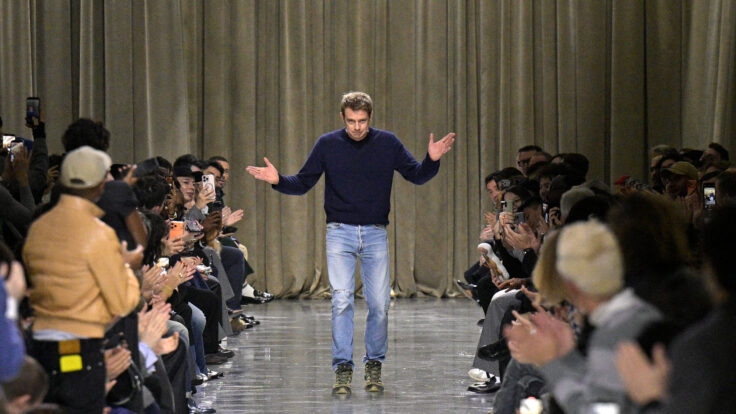
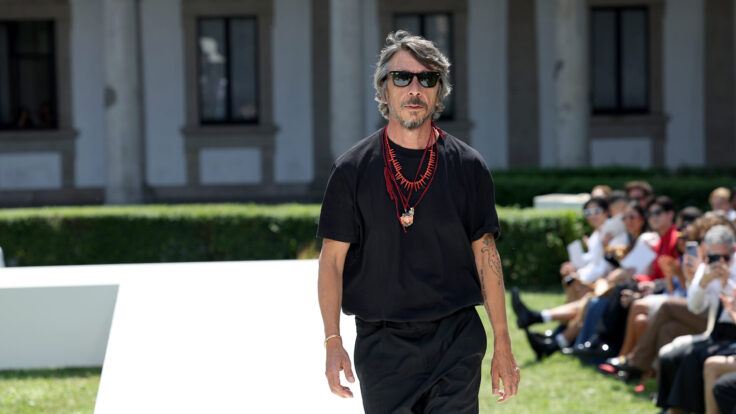
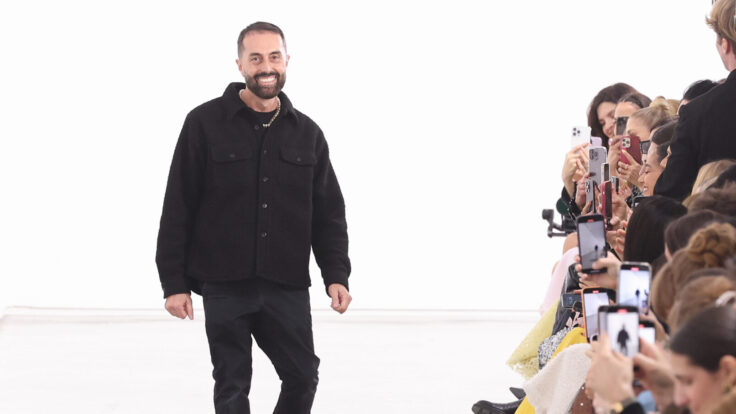
- A tale of two Guccis: There’s always something. Alessandro Michele’s release of 171 ready-to-wear looks and 93 accessories close-ups—created just two months into his tenure at Valentino—certainly overshadowed the rest of Men’s Fashion Week in Milan, including Sabato de Sarno’s Gucci show. My initial reaction: Yes, it looks like Alessandro. And yes, it looks like Gucci. Because just as Hedi Slimane was Saint Laurent, Alessandro Michele was Gucci. People said the same thing about Slimane’s first Celine: It was too Saint Laurent.
But then Slimane moved on. I’d argue that Michele has already moved on. His new Valentino collection is also very pretty (not a word I would use to describe his Gucci), which is very Valentino. The ruffles, the robe jackets, the little skirt suits, the lightness: It’s exactly what I imagined his Valentino would be, in the best way possible. As for the accessories, I thought the shoes (dainty little bowed heels and Mary Janes) were particularly good, and so were the metal hair pieces. (The carpet-bag box bag will be a hit, too.) The funny thing about this collection is that, despite its abundance, he clearly used the few recurring motifs in the Valentino archives (femininity, flounce, a certain conservatism). Will it get old fast? I don’t know. But it’s still new now.
As for the new-new Gucci, De Sarno is committed to his cause, with short shorts, split-hem trousers, and neon chokers. Could his customer and Michele’s customer be the same customer? Surely, people who devour fashion are often very pansexual about it. While there are plenty of references to Prada and Raf Simons and the old Valentino in De Sarno’s work (he was a top designer there, after all), I can’t help but think of Dries Van Noten, whose last men’s show ever is this Saturday in Paris. (After De Sarno’s last women’s show, a friend brought up Dries in the context of the new Gucci.) Dries has an ease in his work that De Sarno seems to be chasing here. Perhaps he’ll eventually achieve it, but again, it doesn’t really matter what I think if the clothes sell. Let’s talk when Q2 results come in… and definitely after Q3.
|
|
A MESSAGE FROM OUR SPONSOR
|
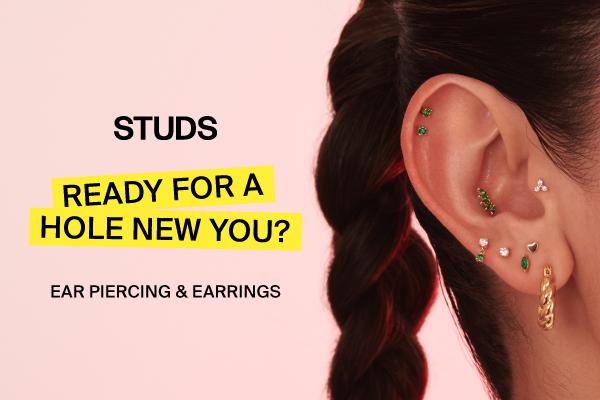 |
| Meet Studs – the brand revolutionizing the ear piercing experience. We've coined the term Earscaping® to describe the art and science of curating ear piercings and earring stacks tailored to your unique anatomy and style. At Studs, we make ear piercing fun, personalized, and stress-free. Our expert piercers use only single-use, sterilized needles (never piercing guns!) to ensure better precision, safety, and healing. With 25+ studios nationwide and a wide selection of high-quality, durable earrings, you’ll always find options that are both stylish and safe for sensitive ears. Every Studs piercing includes a complimentary consultation, where our experts guide you on the best piercings and earrings for your unique ear anatomy. Visit studs.com/pierce to book your appointment today, or drop by a Studs Studio near you! |
|
|
- Inside the Jane magazine reunion: I was always a little sad I never got to work at Jane, the oh-so-modern women’s magazine founded by the arguably coolest editor ever, Jane Pratt. Reports from Thursday night’s reunion—atop the Culture House Dispensary’s astroturfed Manhattan roof, right around the corner from the magazine’s original offices in the old Fairchild Publishing building near Herald Square—confirm I missed out.
Pratt herself made an appearance, as did staffers from every era of the magazine, which was published for exactly 10 years before then-owner Condé Nast folded it in 2007. (Brandon Holley, who took over for Jane after she resigned in 2005, wasn’t there. Brandon, where are you? Call me!) Unsurprisingly, “There was a lot of talk about the state of media—and honestly, how good everyone looked,” one editor told me. “Shockingly, everyone looked exactly the same!”
Most impressively, Jane senior editor Annemarie Conte (now deputy editor at Wirecutter) made a super-masthead featuring every person who’d ever worked at the magazine—including interns, apparently?—and the date of their first byline. Associate fashion and beauty editor Celia Ellenberg (who went on to become Vogue’s beauty director and now runs her own consulting firm) loaded up the beauty giveaway table with Benetint, Clinique Black Honey lipstick, Biore nose strips, and OPI Lincoln Park After Dark nail polish. There were stacks of back issues available for the taking, and people were signing and swapping copies. They served Shake Shack and Brooklyn Lager, and former associate fashion editor Erica Blumenthal, who went on to write the Browsing column for The New York Times before co-founding the spectacularly successful Yes Way Rosé, provided bottles of her pink wine, which is more famous than the magazine itself at this point.
Anyway, to Stephanie Trong and Gigi Guerra and Esther Haynes, and everyone who reads this who worked at Jane: I’m still very envious and continue to idolize you. “It was such a cool time to work in magazines,” Ellenberg told me. “Certainly nice to be reminded that it happened!”
|
 |
| The Great Reformation |
| A candid conversation with Reformation C.E.O. Hali Borenstein about private equity realities, expansion, sustainability, and those I.P.O. rumors… |
|
|
|
| We’re at a moment in fashion when there are a lot of brands owned by investors who would very much like an exit and may never get one. When I talk to investors and operators about who might actually succeed, they often mention Reformation, which started selling deadstock vintage cashmere in Los Angeles in 2009 and now, thanks to its famously high-slit wedding-guest dresses and great-fitting jeans, generates upward of $350 million a year in sales—more than 90 percent of which are through its own channels.
Five years ago, founder Yael Aflalo sold a majority stake in Reformation to Permira, the London-based private equity firm with quite the history of fashion exits: Hugo Boss (Permira exited at a $1 billion valuation), Valentino (sold to Mayhoola for $1 billion), and Dr. Martens ($5 billion I.P.O). One of the legends around Reformation was that Aflalo was so cost-conscious and boot-strappy that, at one point, she opted to use personal assets to fund the company rather than raise money from a less-than desirable partner. In the end, she took less than $40 million, and kept a “significant” stake in order to stay motivated for a second exit.
Just a year after the Permira deal, however, Aflalo resigned from her role as C.E.O. amid height-of-the-pandemic accusations of racism. I covered her ouster pretty closely and, while Aflalo made some pretty obvious mistakes, there was also a ton of misinformation about what actually happened. In truth, Aflalo would have probably left the business when her deal with Permira allowed her to do so anyway—she’s a serial entrepreneur, after all. And while her replacement, Hali Borenstein, might have had more competition for the top gig if there wasn’t such urgency, she was already managing the daily operations, and was very obviously being groomed for the role.
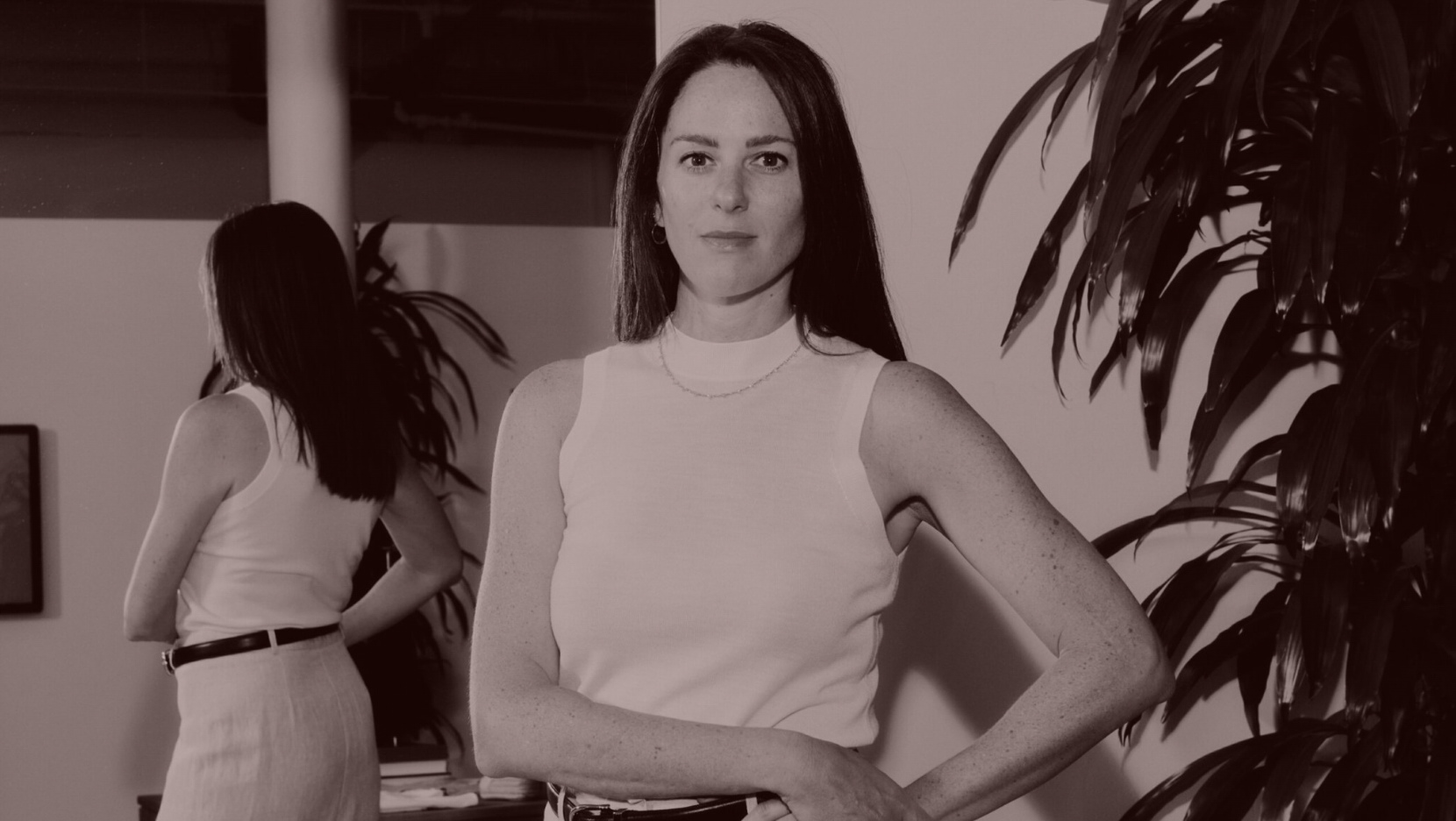
I finally met Borenstein a few years ago at a Reformation dinner in Los Angeles, and was impressed by her matter-of-fact delivery; she has the clinical practicality of a management consultant, but the heart of a merchant. Her choices for outside partners—Brock Collection co-founder and designer Laura Vassar, the in-demand denim designer Benjamin Talley Smith—show a certain fashion aptitude that most retail C.E.O.s simply don’t possess. A few weeks ago, Borenstein and I Zoomed from opposite sides of Los Angeles to talk about what happens after you get the big check. Our conversation has been lightly edited for brevity. |
|
A MESSAGE FROM OUR SPONSOR
|
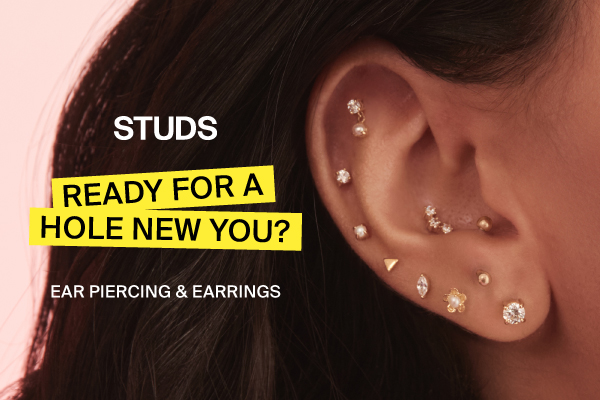 |
| Meet Studs – the brand revolutionizing the ear piercing experience. We've coined the term Earscaping® to describe the art and science of curating ear piercings and earring stacks tailored to your unique anatomy and style. At Studs, we make ear piercing fun, personalized, and stress-free. Our expert piercers use only single-use, sterilized needles (never piercing guns!) to ensure better precision, safety, and healing. With 25+ studios nationwide and a wide selection of high-quality, durable earrings, you’ll always find options that are both stylish and safe for sensitive ears. Every Studs piercing includes a complimentary consultation, where our experts guide you on the best piercings and earrings for your unique ear anatomy. Visit studs.com/pierce to book your appointment today, or drop by a Studs Studio near you! |
|
|
|
|
| Lauren Sherman: What was the state of Reformation’s business when Permira invested in 2019?
Hali Borenstein: There had been two rounds of fundraising, but never a ton of money [$37 million in total], especially when you think about the landscape you’re operating within. So many of the D.T.C. players out there were raising huge rounds and growing like crazy. Ref took a different path. We have had steady annual growth and have been profitable almost every year since I joined the company in 2014, even during Covid. [Editor’s note: A company spokesperson said that Reformation has been profitable since 2016, with a double-digit EBITDA margin.] But it wasn’t a rocket ship. At the same time, we were ready for the next stage, from new categories, to international, and we needed a partner to scale.
Why were you more focused on profitability than your peers at the time? How did the investors on your cap table respond when every other brand was like, grow, grow, grow?
Yael was not a first-time founder. She had the prior business that had to close. [Ya-ya, a contemporary line that she founded in 1999.] She knew what failure looked like. Also, we wanted to be a sustainable business, and you can’t be environmentally sustainable if your business itself isn’t sustainable. We wanted to be self-sufficient in order to grow. We were doing 30 percent, 40 percent jumps each year. We didn’t have that burning desire to achieve 80 percent growth, especially when that growth would be driven by paid media.
Post-acquisition, what did Permira want from you? And what did the investment allow you to do that you wouldn’t have been able to do before?
It was less about the capital and more about the sophistication and the exposure to different parts of the business. They’ve done an e-commerce replatform, they’ve done distribution center setups, they’re great at helping us make decisions in a less risky way. They’re also based in London. When Permira made the investment, the brand was organically clicking in the U.K., but we hadn’t put a lot of rigor around it. It took a while to get it right, and it’s still something we’re debating all the time. But it’s helpful to have partners that know the market. Our lead partner, John Coyle, lived there for 10 years. |
|
|
| In the early 2010s, there was a whole crop of brands that came up that started in vintage, with eBay shops, Nasty Gal, etcetera. But Reformation split off from that group pretty quickly and became the hot-girl wedding guest dress shop. More recently, you’ve had a lot of success with denim. And then there’s the recent Monica Lewinsky campaign focused on workwear. I have friends who buy a lot of shoes from Reformation now. How has the way the customer interacts with the brand evolved?
We had a very clear brand and design DNA from the beginning. It enables us to play in more spaces for more people because we are consistent. We were clearly famous for a couple of things. Vintage was one, and 10 of our stores currently sell vintage product of some sort. And then dresses. We always want to be famous for those things, but we’re doing that with the mindset of: How is our customer actually shopping and living today? And how do we fit in?
We’ve been fairly successful at this product expansion. Denim (launched in 2017) is over 10 percent of the business; shoes (launched in 2021) will be over 10 percent of the business. Our number one SKU [stock keeping unit] this year is actually a denim style, which is crazy and has never been the case before. At one point, dresses were over 60 percent of the business. This year, it’s going to be 40 percent or lower. That’s a hard transition to make, but it’s a good proof point that when you get product DNA right, you have the permission from the customer to do lots of things.
How much do you think customers actually care about the sustainability piece?
I’m smiling because I talk about this with this team all the time. You and I both know climate change is a huge problem. Customers are starting to understand where the apparel industry fits into this. But they’re still in the early innings of fully understanding. Fundamentally, when we look at the data, customers do not buy us for the first time because we are sustainable. However, the data will also tell you, pretty convincingly, customers come back to us and spend a lot more if they have that value alignment. There is a 35 percent incremental spend for customers who want to buy [environmentally responsible products]. It’s not a straightforward, linear narrative. You could look at cars and Tesla, or organic food and Whole Foods. It takes time.
Very few fashion brands’ email subject lines get screenshotted and shared on Twitter as consistently and frequently as Reformation’s. The culture writer Hunter Harris dedicated an entire newsletter to your emails. Do you have a secret weapon?
There was never a keeper of the brand. We were very, very thoughtful about how to build a company around the brand. There were constraints embedded in how we worked and operated, where we looked for inspiration. We live the brand book. There are so many people around the company who believe in it, understand it, get it, and can help facilitate it. Obviously, we have an incredible copy team as well. But to your point, you can’t just have one great writer because they can come and go and that’s really risky. |
|
|
| Looking back on your decade in the business, can you name a moment when the company really went off-track and you had to course-correct?
We launched shoes for the first time in 2019, with a partner. We designed, but they manufactured and did the product development, all of that. But we needed more control of the supply chain because of our sustainability principles. Shoes are complex. If you make a sustainable dress, you gotta get the fabric right and you’re 90 percent there. With a shoe, there are 20 components, you need a sustainable supply chain for every component.
From a speed-to-market point of view, we felt like we really needed to have the expertise ourselves. And so in 2020, we actually made the decision to shut the shoe business down and start over. And that was a hard decision for Permira to support, frankly, but they did it with no problem. They had just invested in us, right before Covid happened. And shoes are our new category that we told them was going to be huge. So, it was a tough decision. But ultimately, we did shut it down.
We started over, hired a full team of people who were experts in the space, and built our own supply chain using the sustainability frameworks that we already had. And we relaunched shoes back in April 2021. It’s been a slam dunk since, but we got it wrong the first time. We were willing to say, Hey, let’s rethink this. Let’s take the hit. We ultimately believed in the long-term opportunity of the category.
Permira has been with you for five years. Covid muddies that a bit, but overall, these kinds of firms are looking for an exit in at most 10 years, if they are very (very) patient. I know you’ve said in recent interviews that there are no current plans for an I.P.O., but broadly, what’s the next phase for a company like yours?
Regarding whether or not we are planning an I.P.O.: There’s no change to my answer right now. As for the rest, the business is really outperforming the market, thank goodness, from everything I hear. We are fortunate that Permira is a very smart, patient partner. They’re large. They don’t need to monetize us immediately. Yes, at some point, we will have to realize value. But there’s no clear timetable or right path of what that will look like.
More broadly: Apparel has had a couple of really tumultuous years. But I do think there are some good stories throughout it all. Fran [Horowitz] at Abercrombie is setting a new record. Then there are the Skims of the world. We do have a new generation of strong emerging brands out there that will come to market, whether they’re going to get picked up by a strategic, another P.E., or I.P.O. I don’t know. It’s about finding the right opportunity in the right timetable. I hope soon, but between inflation and the election, I’m sure everyone’s kind of nervous right now.
We went through a period where growth was easy, and there were some brands that we thought were great brands but didn’t have the firepower to get over that $250 million mark. And so because there are fewer than we probably anticipated, it maybe feels a little bit more dramatic. If you look at the history of apparel, there’s been a lot of very successful deals over time. |
|
|
|
|
| Vanessa Friedman asked Oscar de la Renta C.E.O. Alex Bolen why there weren’t really any editors invited to their fashion show a couple of weeks ago. “I don’t much see the point of engaging with the fashion press when they require a different show than what we require to bring to our customers,” he told her. “I don’t know that having the press advances our business interest.”
I’ve talked to Alex a little bit about this, too, and essentially agree with him. While I believe Laura Kim and Fernando Garcia, who design Oscar de la Renta, would like to do runway shows because they want to be a part of the industry conversation, they also understand that investing in celebrity dressing has a far better R.O.I. than inviting 100 editors with okay social media followings to a runway show. Those seats are better left for customers.
From my perspective, I try to show up to anything Laura and Fernando do because I’ve been writing about them since they started Monse and I consider them to be work friends, but I only on occasion feel the need to write about their designs, and I don’t think they feel the need to read my writing about their designs. (As most of us know, before the internet, fashion show reports functionally explained what the clothes looked like to people who weren’t at the shows. Now… it’s more complex. Everyone, including me, has their shtick.) Anyway, this piece with Vanessa is far more impactful than any review she would have written, no matter how good. Everybody won this time! [NY Times]
The best of Milan men’s: J.W. Anderson’s Guinness, Prada’s v-necks, Magliano’s pink silk, Zegna’s hand in the pocket. [Vogue Runway]
I first wrote about fashion brands getting an Ozempic bump more than a year ago, and now, other publications are catching on. [WSJ]
Be sure to read two of my favorite generational talents, Tim Blanks and Jose Criales Unzueta, in conversation about many things, including making money, writing about clothes, and Duckie Brown. [Vogue Runway]
Lingerie and fashion expert Cora Harrington, whom Chantal interviewed for our book on Victoria’s Secret, did a lengthy chat with one of my other favorite fashion industry commentators-slash-journalists, Mikelle Street. [Essence]
The first season of The Real World was more real than you might remember. [The New Yorker]
I’m still betting that Gagosian is gonna simply ✌️ out with no succession plan in place. Because why not? [Puck]
It’s very fun to shop in N.Y. if you’re a dude. (For women, Paris is better.) [GQ]
“Fashion is not a profession,” Dries told Vanessa. “It’s a way of life. And it’s an addiction.” [NYT]
And finally… Why does every shirt have a monogram on it right now? Friends, you’re not Miu Miu—or Ralph Lauren—okay? |
|
|
Until Wednesday,
Lauren |
|
|
|
| FOUR STORIES WE’RE TALKING ABOUT |
 |
|
 |
|
 |
|
 |
| The Doug Bug |
| A close look at Mar-a-Lago’s veepstakes calculation. |
| TARA PALMERI |
|
|
|
|
|
 |
|
|
|
Need help? Review our FAQs
page or contact
us for assistance. For brand partnerships, email ads@puck.news.
|
|
You received this email because you signed up to receive emails from Puck, or as part of your Puck account associated with . To stop receiving this newsletter and/or manage all your email preferences, click here.
|
|
Puck is published by Heat Media LLC. 227 W 17th St New York, NY 10011.
|
|
|
|