 |
| Hi! Welcome back to Line Sheet. For those of you in the States, I hope you enjoyed the long weekend—and congrats if you made it into the highly produced video from Fanatics C.E.O. Michael Rubin’s white party in the Hamptons. (A special shoutout to Keith McNally’s No. 1 enemy, James Corden, wearing Bode’s $490 “Tiny Zoo” camp shirt.)
Today, I’ve got the latest in the what-will-Alessandro-do-next saga, but first, a quick spin around this super-lame GQ mess and a moratorium on High-Fashion Twitter.
Mentioned in this issue: Maria Grazia Chiuri, Alessandro Michele, Will Welch, Dior, Our Legacy, all the Arnaults, Kering, LVMH, GQ, Ye (again), Bode, Gucci, Jacopo Venturini, and many more… |
| R.I.P. High Fashion Twitter? |
|
| I continue to spend a good amount of time on Twitter, mostly out of habit. Of course, Fashion Twitter of the @DKNYPRGirl, @OscarPRGirl, @JohnJannuzzi era is long gone. (Elon Musk may be “working” to get luxury brands like Dior to advertise on the platform, but The New York Times recently reported ad sales are down 60 percent from last year.) What’s left is High Fashion Twitter, a subculture made up of mostly industry outsiders who sometimes rigorously, always vociferously, dissect what’s happening on the runways.
High Fashion Twitter’s power to dress down a designer doesn’t derive from any real authority, but from repetition. Favorite subjects of ridicule include Chanel’s current creative director (“Can Virginie Viard get fired already?” @charlottenzn, 716 followers; “The French state must prosecute Virginie Viard for crimes against the nation,” @IamMrLaurent,” 4,766 followers) and Dior’s Maria Grazia Chiuri, although they have recently come around to her practical approach. (More on that later.) While there are now plenty of critics on TikTok, you’d be hard-pressed to find such a fluid conversation about fashion anywhere else on the Internet, and I do think it has seeped into the consciousness of the industry as a whole.
The only gainfully employed fashion critic working today with the ability to change people’s minds is Cathy Horyn, and that’s because she doesn’t couch her critiques. For weak-minded people, her fearlessness makes it okay to say you don’t like something. It’s easy to dismiss the tough critiques on High Fashion Twitter as ill-informed or naive, but at least they’re honest.
These last few days, with the Couture shows in full force, I’ve enjoyed poking around High Fashion Twitter, Musk’s rate-limit be damned. As the platform continues to die its weird little death, I’m not sure where these conversations continue, if they do. Threads? As of 12:05 a.m. this morning, it seems like a possible solution. |
|
|
| GQ’s Pretty Woman Doghouse |
|
| I thought I could lay off of GQ for a while, and then there was the unwise decision to write a critical piece on Warner Bros. Discovery C.E.O. David Zaslav, let WBD flacks essentially rewrite the story post-publication, and then eventually yank the entire thing off the web. Here’s what went down for those of you not on Twitter: GQ published a story online about the WBD chief that painted him in a distinctly negative light, comparing him to Richard Gere’s corporate-raider character in Pretty Woman. (A fun callout, I’d say: Like many Old Millennials—perhaps including the writer of the article—this movie was my first foray into the then-new world of private equity.)
Anyway, someone got mad at the article, which was edited to be nicer about Zaslav, and eventually taken down after the writer asked for his byline to be removed. Yes, the writer of the article was also mad. The Washington Post, and then The New York Times, wrote about it. Eventually, Variety figured out that Will Welch, the global editorial director of GQ and Anna Wintour’s Number One Boy, is supposedly producing a movie for Warner Bros, citing a 2021 report in Deadline. Conflict of interest!?!?
Okay, so a few things. Alas, conflicts are everywhere: The Newhouse Broadcasting Corp, owned by Advance, which is also the parent company of GQ-owner Condé Nast, is the second-largest shareholder in Warner Bros. Discovery. Steve Newhouse sits on WBD’s board.
But I doubt that anyone on the Advance floor of One WTC sent Will a note—it’s not like a GQ rant piece published on the 3rd of July is going to move the stock price. In fact, I doubt this story got laddered up to Advance. (In fact, I know it didn’t.) The Newhouses aren’t like that. The other problem was that the reporter did not reach out to Zaslav’s team for comment. (Probably because it was more of an op-ed: There was no original reporting.) I know it’s annoying, but it’s something you gotta do, like how I had to message Will Welch and also his P.R. yesterday to see if at least one of them could talk to me. (They sent me an on-the-record statement that you can read pretty much anywhere, let’s not waste our column space. In sum: GQ screwed up, they’re taking responsibility for it, time to move on.)
For me, though, the major reason to address this in Line Sheet is what it says about the GQ brand, which I wrote about as recently as last week. A generation ago, when the legendary-ish Art Cooper was the editor, GQ was a writer’s magazine. During the Jim Nelson era, it was known for its pretty standard, if well-executed, mix of narrative non-fiction and profile writing, in addition to the Jim Moore-directed fashion and style. These days, however, it’s essentially a fashion and culture pure play—a market necessity, and also an honest reflection of Welch’s sensibility. No one is looking to GQ for incisive takes on the Zaslav, they are looking to GQ for commentary on Albert Hammond Jr.’s new solo album and a first look at the latest iteration of the New Balance 990. I’m all for journalism, obviously, and I wish glossy magazines would do more of it, but this incident illuminates that GQ is probably not equipped to handle these types of tricky stories on a regular basis. (Nor is really any Condé or Hearst publication, other than Vanity Fair, The New Yorker, and Esquire—Hearst in particular is really afraid of getting sued. Ask Jay Fielden.)
After this whole mess is over, Welch will need to work on thinking about what the next iteration of GQ looks like. As I reported from their Men’s Fashion Week party at L’Avenue in Paris two weeks ago, the brand is strong, which is important in an era when what happens outside of the magazine is more important than what happens inside it. However, many of the key people that made GQ a thing to watch (longtime writer Mark Anthony Green, current Washington Post fashion reporter Rachel Tashjian, and the newly-appointed editor of Marie Claire, Nikki Ogunnaike) are gone. And maybe most importantly, lauded fashion director Mobolaji Dawodu has moved into an “at large” role. Welch seems to have a talent for identifying talent, and also identifying GQ’s specific role in the culture, but we’re certainly at an impasse.
And now for the Alessandro-LVMH of it all… |
 |
| How Badly Does LVMH Want Alessandro? |
| LVMH is in the business of hoovering up all the land’s top design talent, which would put the industry’s biggest free agent right in their crosshairs. And perhaps their infrastructure is just what he needs in his next act? |
|
|
|
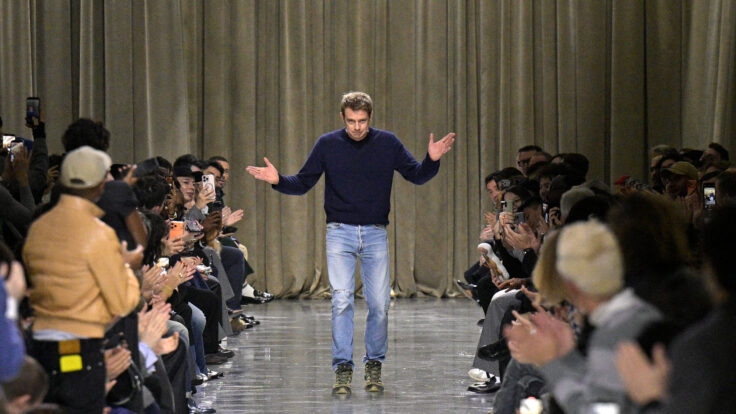
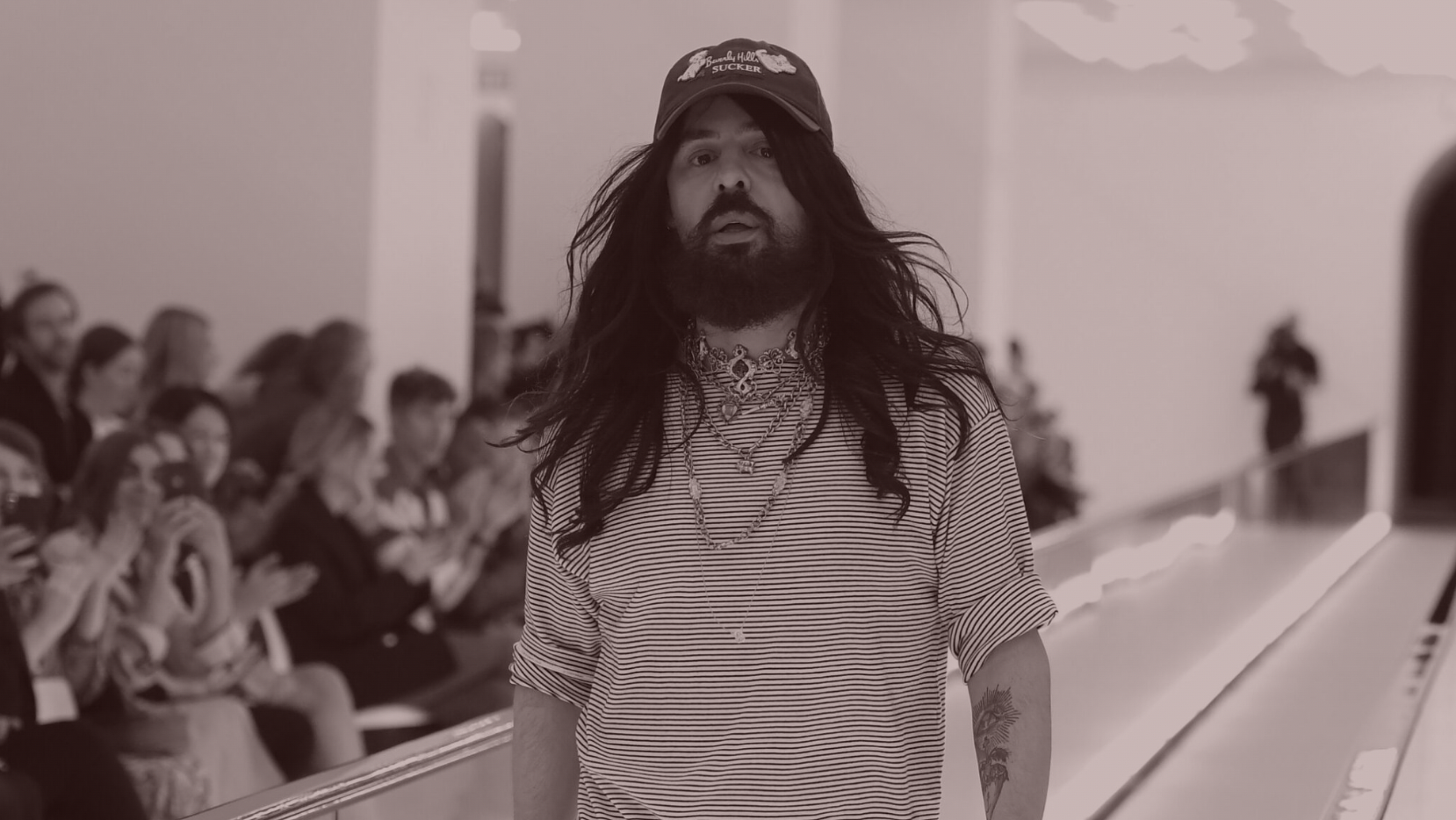
| Was that picture of Dakota Johnson wearing a Chanel bag in his Instagram Story supposed to be some sort of Easter egg? Did Bidayat, the investment firm backed by the C.E.O. of Qatari-funded luxury group Mayhoola, really buy dormant Italian label Walter Albini just for him? Is he next in line at Louis Vuitton? The rumors swirling around Alessandro Michele’s next move abound, but the only thing I know for sure is that the former Gucci designer, who spent 20 years at the Kering-owned leather goods house, seven as its star, recently met with LVMH heir and current Dior C.E.O. Delphine Arnault. (A spokesperson for the conglomerate didn’t respond to my request for comment.)
Of course, a meeting between an executive and a designer isn’t unusual, and could mean absolutely nothing, or simply be the familiar mating ritual of money and talent circling one another out of mere curiosity, as is often the case. But Delphine, the eldest child of LVMH C.E.O. and chairman Bernard Arnault, the second-richest person in the world, is also a serious business person and perhaps the most well-positioned and quietly ambitious of the heirs. She has been working at the group since 2000—developing close relationships with many of its designers, including Jonathan Anderson (the creative director of Loewe) and Nicolas Ghesquière (the women’s creative director of Louis Vuitton) along the way. She likes designers, real designers, and even spearheaded the LVMH Prize, the group’s annual competition for young talent that serves as a feeder into the $500 billion company’s ecosystem. And, of course, her still-new position as the C.E.O. of Dior—the first of the Arnault children to be in charge of a brand of that size—adds a certain weight to any interaction. |
|
|
| As does Michele’s very presence. For months, rumors have been swirling that Maria Grazia Chiuri, the uber-successful women’s creative director of Dior, the group’s second-largest brand, was headed to Fendi women’s, which is currently designed by Kim Jones, who also designs menswear for Dior. I find this scenario to be generally preposterous. Since Chiuri’s arrival in 2016, the Dior business has more than quadrupled, in no small part thanks to her ability to make covetable accessories (especially shoes) but also ready-to-wear. As one executive said to me a couple of weeks back, there are not many designers who can convince a woman, even a rich woman, to buy a $6,000 dress. Chiuri, with her simple silhouettes and rich fabrications, is one of them. Why would she go to Fendi, a lesser house, unless it was for personal reasons?
Yes, she is Italian, and has swung back and forth between that country and Paris for all her time at Dior. And, yes, nothing is certain at LVMH until a press release lands in your inbox. Up until the day that Hedi Slimane was named creative director of Celine, I was hearing—even from a person who deals directly with Bernard Arnault—that he was headed to Dior. But the point here is that Michele meeting with Delphine Arnault does not necessarily mean he’s headed to Dior. Maybe he requested the meeting, and she was being courteous. My educated hunch, though, is that LVMH would very much like Michele to be in its fold, in some capacity. |
| Alessandro in Wonderland? |
|
| Michele, after all, is a commercial dynamite, who helped to more than double Gucci’s annual sales—to more than €10 billion in 2022—over the course of his tenure as creative director. Working simpatico with his talented head merchant, Jacopo Venturini (now the C.E.O. of Valentino), Michele drove the LVMH executives crazy. Arnault’s taste is what I would call conservative—not necessarily subtle, but conservative. Michele’s Gucci, on the other hand, was often described as magpie, especially in the early days, with lots of flair—and I mean that in the TGI Friday’s sense. Many of the LVMH executives could simply not understand why it was such a hit. LVMH is the category leader in pretty much every way, but Gucci’s success was so fast and furious that they had to take notice. Personal style aside, it was occupying the zeitgeist unlike anything the leading group was doing at the time.
And now, as everyone knows, Michele is a free agent—after a mutual, if not entirely stress-free separation with Kering in late 2022—and so it would make sense that LVMH would come a-courting, as they did with Stella McCartney (who bought back Kering’s stake in her namesake brand, then promptly sold a chunk of it off to LVMH) or Slimane, who worked at LVMH designing Dior Homme in the early 2000s, left fashion for a while, reinvented Saint Laurent for Kering, and eventually headed back to LVMH to makeover Celine. (That deal was supposedly brokered by Sidney Toledano, now head of the LVMH Fashion Group, and Alexandre Arnault, at present the most dynamic brother of the Arnault siblings.)
Sure, LVMH’s top executives may have balked at Michele’s fur-lined horsebit loafers and G-covered tapestry robes at the time. But they couldn’t deny their power. LVMH’s imperative is to own as much of the supply chain as possible, from the fabric mills to the retail floors, and that includes the design talent. It’s why they stage the LVMH Prize, and do everything in their power to keep their top talent satisfied, through big paychecks and perks like free housing. If they can find the right job for Michele, it makes a lot more sense to keep him close than to allow even a small player, such as Bidayat, to scoop him up. LVMH wants to continue gaining market share, and any fairly major threat to that is not worth it. |
|
|
| And Michele is still a major threat. He was, as I’ve reported here before, visibly out of steam at the end of the Gucci run. Kering wants to make Gucci into a brand as versatile as a Louis Vuitton, and he wasn’t the right person to do it. However, Kering is a very different company than LVMH: its brands are more emotional, its way of working is more iterative. Kering executives like to say “evolution not revolution,” but they can also flip a line in one season. Just look at the transition from Daniel Lee to Matthieu Blazy at Bottega Veneta or, going back further, Frida Giannini to Michele at Gucci or Stefano Pilati to Slimane at Saint Laurent.
LVMH, on the other hand, leads with heritage, not fashion or feeling, especially with its larger brands. The idea is to let the components—the handbag silhouettes, the logos, the branding—do the work, and then the designer can play around within those lines. It’s all about infrastructure. Maybe that’s what Michele needs to succeed in this next round. |
|
|
| Re: Timothée Chalamet’s deal with Chanel: Reports suggested that his payout was $20 million. I deduced lower: $3 million to $5 million. Then, a Paris-based reader who knows about these things said that it had to be at least $15 million: It’s an exclusive, and Chalamet is a hot commodity.
Re: Tiina closing: “When we lived out East, her store was the only place to get the essentials and special things you needed.” –A retail advisor
“Worst news in U.S. retail in 2023.” –Another retail advisor
Re: Ye-Dov love: “I’m curious what the goal is with Dov in charge when the public vision of Yeezy, and seemingly the motivation for the Gap collab, was fast fashion priced clothing with ‘Central Saint Martins’ design. Dov’s skills seem radically different to his predecessor Mowalola [Ogunlesi], more logistical than creative? I like Kanye’s output in menswear but find his constant cycling of small and midsize designers frustrating when it rarely results in something that us mere consumers can purchase. And on sales, I always thought that his Gap collab didn’t seem to ‘hit’ as well as it should have, and this was before the end of last year.” –An industry observer
Re: FashionGPT: “On A.I.: I know of a couple of (very small) print mags that have been using it to fill any gaps they don’t have the time / budget for: an essay that needed images but there wasn’t any budget to shoot, just put some keywords into the generator and job done! Not sure how / if the images were credited but they didn’t do any P.R. around it. (Personally, I’m still scared.)” –A writer
Re: Our Legacy: Giant thank you to the sweet Line Sheet reader who approached me at dinner last night. His one request was that I look into the business of Our Legacy, which seems to be much bigger and more influential than anyone realizes. I’m on it! Hope you enjoyed the wine. |
|
|
|
|
| Fun things to discuss from Couture, including Armani, Balenciaga, Jean Paul Gaultier x Julien Dossena and Valentino. [Vanessa Friedman’s Twitter and StyleNotCom]
It’s hard to write anything new about Bode, mostly because the brand is not about newness, but also because the people behind it are pretty guarded. Brock Colyar found a smart, different way in. (And I’m not only saying this because I’m quoted.) Also: Read the comments! [NYMag]
Jannik Sinner carrying a Gucci bag at Wimbledon means something. [NYT]
Stefano Pilati’s models in the Anonymous Club Spring/Summer 2024 lookbook. (It’s a Shayne Oliver project.) [Instagram]
The Top Shelf is back! [Into the Gloss]
Gabriela Hearst announced the previously reported news that she is leaving Chloé after September. [Instagram]
Anyone who wishes for a fashion-industry version of The Bear… please don’t. [Twitter]
High Snobiety laid some people off. [BoF]
Tom Ford’s new creative director, Peter Hawkings, is showing his first collection at Milan Fashion Week in September. [Inbox]
Michael Cunningham, the Pulitzer Prize-winning author of The Hours, wrote a Prada commercial starring Benedict Cumberbatch, Kodi Smit-McPhee, Hunter Schafer, and Letitia Wright. [WWD via Matt Schneier’s Twitter]
Alsara, the Swiss-based investment firm backed by Rachid Mohamed Rachid, has hired Shahzad Akhtar, a former Unilever exec, to oversee its portfolio, which includes Bidayat, a subsidiary that owns a group of fashion and jewelry brands, including Azza Fahmy and Walter Albini. Rachid is also the C.E.O of Qatari-backed group Mayhoola, which owns Valentino. Phew. Get it? [Inbox] |
|
|
| Until Monday,
Lauren |
|
|
|
| FOUR STORIES WE’RE TALKING ABOUT |
 |
|
 |
| ESPN Anxieties |
| Notes on the network’s uncertain trajectory. |
| DYLAN BYERS |
|
 |
|
 |
|
|
|
|
|
 |
|
|
| Need help? Review our FAQs
page or contact
us for assistance. For brand partnerships, email ads@puck.news. |
| You received this email because you signed up to receive emails from Puck, or as part of your Puck account associated with . To stop receiving this newsletter and/or manage all your email preferences, click here. |
| Puck is published by Heat Media LLC. 227 W 17th St New York, NY 10011. |
|
|
|