{{ 'now' | timezone: 'America/New_York' | date: '%b %d, %Y' }} |
|
|
|
Hello, and welcome back to Line Sheet. We love to philosophize about the mindshare conceded by
Nike, the world’s largest shoe and sports apparel brand, as legitimate challengers have gained momentum in the market. But Adidas, its O.G. competitor, has also suffered its fair share of post-Yeezy blowup. Today, Malique Morris has the inside story on why executives are fleeing Adidas.
Up top, Rachel Strugatz is here with a scoop about the future of Bobbi Brown, the brand. (I wonder what Bobbi Brown, the person, will think about it.)
Malique also has an update on the performance of minor Line Sheet celebrity Ty Haney’s other business, TYB, and I’ve got thoughts on Chanel’s Resort hard launch in Biarritz. Someday, I promise you, I will not like one of Matthieu Blazy’s collections. But this is not that day.
By the way, thanks to everyone who came out last night for Line Sheet’s first San Francisco dinner, co-hosted with Swap Commerce. Sarah Shapiro invited top founders
and executives from Rothy’s, Parker Thatch, Cuyana, Ariel Gordon Jewelry, and more to Flour + Water (a local institution) for Loonen sparkling water, mint funghetti, and great conversation—all off the record, of course. Special thanks to Swap’s Juan Pellerano-Rendón for making it happen. (On the subject of San Francisco, I’m now craving Bi-Rite’s sea salt and caramel—the best ice cream scoop in the world.)
Also mentioned in this issue:
Beyoncé, Bad Bunny, Nicole Kidman, Bjørn Gulden, Roland Auschel, Outdoor Voices, Paolo Zampolli, Ye, Samba, Sabastian Sawe, Brian Grevy, Ivy Park, Yomif Kejelcha, Stefano Rosso,
Pharrell Williams, H&M, Torben Schumacher, Kasper Rørsted, Robert Krankowski, New Balance, Rupert Campbell, Melania, and more… |
Three Things You Should
Know…
|
|
|
|

| Rachel Strugatz
|
|
- The Bobbi Brown
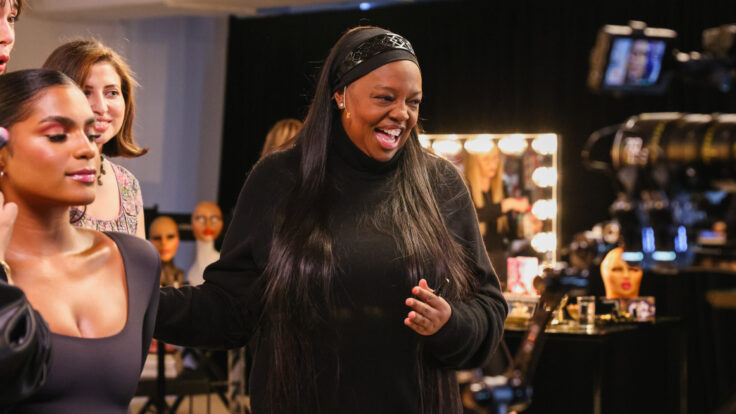
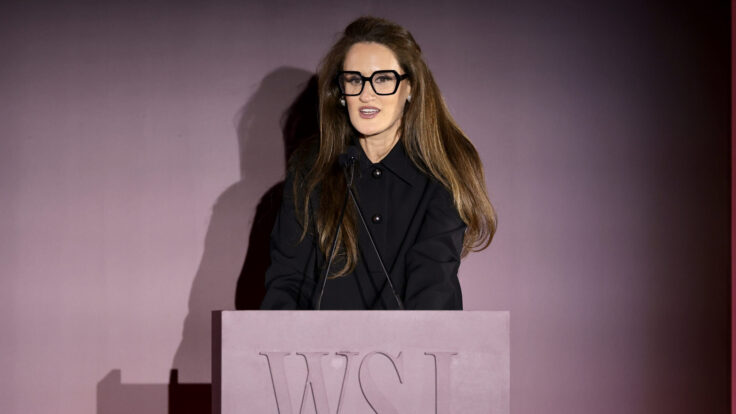
earthquake: What’s going on at Bobbi Brown? A few weeks ago, word went out that global general manager Lahnie Strange would be leaving the brand. Now the business is preparing for a distribution shake-up: Bobbi Brown will exit every U.S. department store (Dillard’s, Macy’s, Bloomingdale’s, Saks Fifth Avenue, etcetera) except Nordstrom, which has a foothold on the West Coast. It’s a massive change for the Estée Lauder Companies–owned brand, which has been
battling through a decade-long identity crisis since its founder famously completed her noncompete and exited the business.
Employees at affected retailers were notified about the changes this week, and an internal announcement is imminent. “It was a difficult decision, but it makes sense,” said a source close to the business. “The company’s strategy is to follow the high-growth channels, and this is exactly that.” The go-forward plan, I’m told, will center on Ulta Beauty and Amazon.
“That’s where the future is,” said a person with knowledge of the situation. I’ll have more tomorrow.
|
|
|
|
A MESSAGE FROM OUR SPONSOR |
Agentic commerce isn’t a future concept. It’s already reshaping how people shop. Static storefronts are giving way to
guided, conversational experiences that don’t just surface products. They drive decisions and conversion in real time. Swap’s Agentic Commerce 101 breaks down what’s real and what it means for brands right now. Inside: |
• What agentic commerce is and why most AI tools don’t qualify • Why AI discovery platforms aren’t built to convert for your brand • Why owning your AI experience and your data is becoming non-negotiable |
|
|
|

| Malique Morris
|
|
- Glossier M.I.A. on
TYB: We’re now several years into the community epoch of marketing, and brands are still learning that actually building and maintaining a committed fandom is a lot harder than dropping the buzzword du jour into your pitch deck. Take TYB, the rewards platform run by Ty Haney, the serial lifestyle fashion entrepreneur behind Outdoor Voices and wellness brand Joggy. Last week, after my
reporting on O.V.’s Sam’s Club–abetted comeback, a source reached out to share that TYB, which allows brands to create “challenges” to hook customers, may have a problem with some of its clients. As it turns out, Glossier, which counts
231,000 members on the platform, appears to no longer be active on TYB and hasn’t posted any content since February. (TYB didn’t reply to a request for comment.)
This may be part of a changing social landscape where labels increasingly can be seen running their own group chats on Instagram and going live with devoted fans on TikTok. Platforms such as TYB will really need to state their cases in such an ecosystem—if they even have one at all.
|
|
|
|
-
Biarritz Blitz: Last night, I had a drink with a friend who possesses the discernment of a French person, but the ingenuity of an American. We were talking about what makes something feel luxurious. She mentioned the experience of buying Easter candy here in Paris; the white-gloved service of her favorite chocolatier. No chocolatier is wearing white gloves at See’s Candies at the Americana! (As good as those toffees may be.) I rubbed my middle and index finger and thumb together
to describe that intangible feeling she got when she bought the chocolate. She simply called it “charm.”
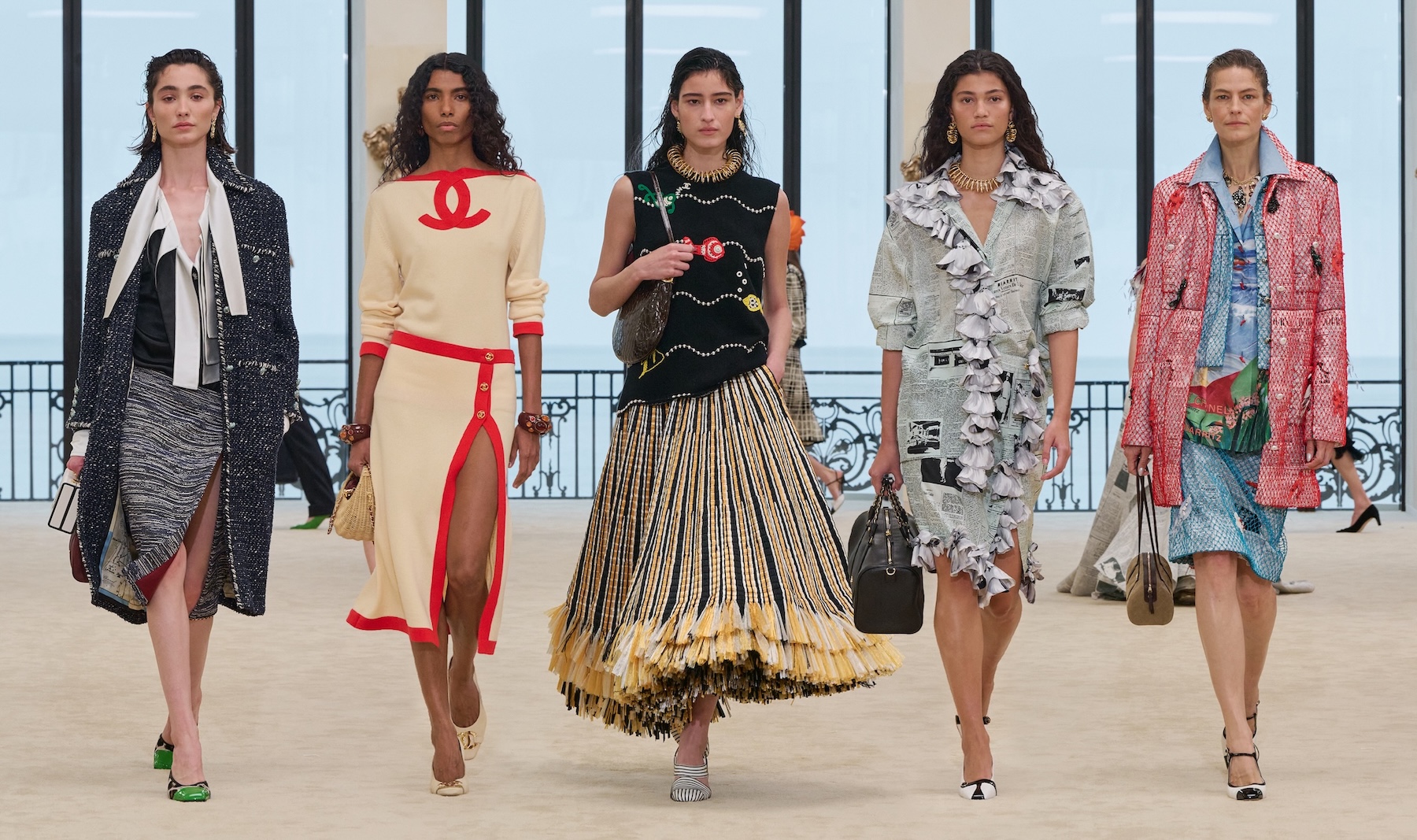
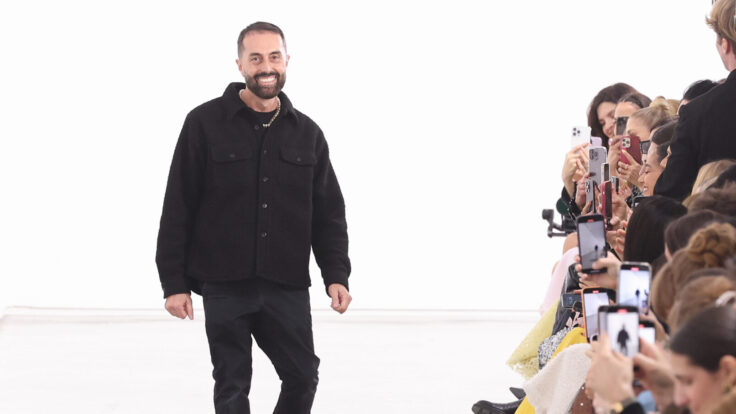
If you were going to reduce what Matthieu Blazy is doing at Chanel down to a single word, “charm” is a good one. For his first Cruise show, which took place in Biarritz, the French seaside town where Gabrielle “Coco” Chanel first established her practice, the crowd was once again smitten with his mix of technique, beauty, and just enough flash. From the
fashion ideas that he’s carrying from collection to collection (the crossover skirt and broad-shouldered jacket) to the colors he’s owning (more red and sea glass; black-and-white) to the novelties (like a jumbo beach bag), it’s such a layered approach—and all aligned with the current retail strategy. (As in: If you like what you saw today, there’s stuff already in stores that may scratch the itch.)
|
-
Many of the snobbier fashion insiders have been fixated on the clothes, but less inclined to partake in the accessories. Not anymore. This season, everyone wants the shoe. Also, the pomp around the circumstance didn’t go unnoticed for Blazy’s Cruise debut: Nicole Kidman casually sitting at dinner with everyone else the night before; the pretty sea urchins that were served and immediately Instagrammed; the care to stage the show inside even though the beach was
beckoning. (Bad weather will ruin a good press trip.)
There’s an open question about whether Cruise shows should be as closely covered as ready-to-wear or couture. In the past, they were generally ignored—too commercial, and too boring, etcetera. Obviously, that is changing now. Blazy is setting the bar, and we are all charmed.
|
|
|
|
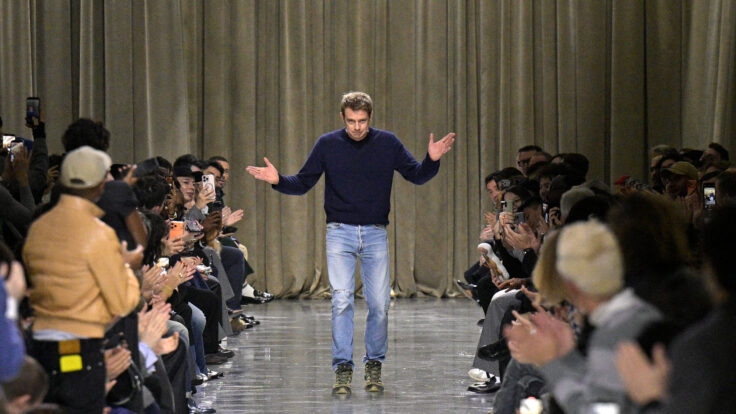
Adidas C.E.O. Bjørn Gulden helped the company recover from its post-Yeezy malaise. But
recent executive departures and slower sales growth evidence a less rosy future for the second-largest player in sportswear. |
|
|
|
When Bjørn Gulden stepped in to replace Kasper
Rørsted as C.E.O. of Adidas, in 2023, the company was badly in need of some turnaround artistry. At the time, Adidas was sitting on more than $1 billion of unsold Yeezy inventory—the detritus of a once lucrative partnership that had exploded amid Ye’s racist and antisemitic public breakdown. The company’s stock was down more than 50 percent from its recent highs, and new competitors were rushing the field. Gulden, a former
professional footballer who’d served as C.E.O. of Puma and Pandora, was under immediate pressure to get Adidas back on track. |
|
|
|
A MESSAGE FROM OUR SPONSOR |
Agentic commerce isn’t a future concept. It’s already reshaping how people shop. Static storefronts are giving way to
guided, conversational experiences that don’t just surface products. They drive decisions and conversion in real time. Swap’s Agentic Commerce 101 breaks down what’s real and what it means for brands right now. Inside: |
• What agentic commerce is and why most AI tools don’t qualify • Why AI discovery platforms aren’t built to convert for your brand • Why owning your AI experience and your data is becoming non-negotiable |
|
|
|
At his first town hall, Gulden gave all 60,000 employees his phone number. Then he went to work. He got rid
of the consultants, empowered in-house designers to innovate, ramped up Adidas’s presence in soccer and running, and restored wholesale partnerships that the previous regime had allowed to fall by the wayside. When the Samba and Gazelle renaissance started early in his tenure, Gulden ramped up production a year ahead of schedule. Adidas got back in the zeitgeist via collaborations with Grace Wales Bonner and Sporty & Rich.
Meanwhile, Gulden aggressively streamlined the
organization. In 2024, multiple senior executives left, including Roland Auschel (global sales), Brian Grevy (global brands), and Rupert Campbell (North America), while Gulden crowned himself head of sales and branding. Last year, the company moved to eliminate 500 “obsolete” roles, offering generous packages to employees who volunteered to leave.
And yet, Gulden’s early moves to cull what he referred to as “lame ducks” in the organization
now look less promising. After initially rebounding, Adidas stock is down around 47 percent since February 2025. Revenue growth slowed to 5 percent in 2025, down from 11 percent the year before. Inside the company’s Herzogenaurach headquarters, anxiety has begun to set in. Over the last year, executives have started to emphasize the need to boost profit margins and growth to reassure shareholders, even as sales have continued to rise.
It seemed like an inauspicious signal when I learned
earlier this month that Torben Schumacher, the longtime head of Adidas’s Originals, is leaving after 21 years. Schumacher, after all, wasn’t just another suit. Functioning as a sort of celebrity whisperer, he helped broker and maintain relationships with stars including Ye, Pharrell Williams, and Bad
Bunny. He had relocated to Los Angeles, in 2024, to drive North American growth at a moment when Nike’s headwinds created an opening for the world’s second-biggest sportswear firm.
There have been other warning signs, too. I’m told that Adidas occasionally missed e-commerce sales targets last year for the Samba and Gazelle on its own site—part of its high-margin “terrace” franchise—while retail partners, where Adidas’ margins are thinner, consistently hit their goals. On a March
earnings call, Gulden said that sales of the Samba remained “very, very strong,” but cautioned that “we have, of course, not believed that we will grow terrace double-digit every quarter for the next 10 years.”
Since 2023, the company has pushed to increase full-price selling and minimize discounting, a strategy that at times conflicted with the need to close short-term gaps. By last September, Adidas had expanded discount eligibility for its corporate partners and increased
markdowns for them during Black Friday, according to a person familiar with the matter. (Adidas didn’t respond to a request for comment.) |
The problem, as investors see it, is what comes next. As Samba hype fades, the expectation is that Gulden
will “identify the next growth driver,” said equity analyst Robert Krankowski in an April note. Back in 2024, Gulden told The Wall Street Journal that he wanted to “build small Yeezies.” Yet nothing has rivaled the Yeezy tie-up in sales or cultural ubiquity. Pharrell’s Jellyfish shoe launched in March 2025, won Footwear News’s “Shoe of the Year”—an award the Yeezy Boost claimed a decade earlier—but it remains a niche product. Its future is also less clear
without Schumacher, who often appeared alongside Pharrell at company events. |
|
|
|
Other celebrity launches have also disappointed. On the March earnings call, Gulden said Bad Bunny’s BadBo
1.0 “blew out very quickly” after the musician wore them for his Super Bowl halftime show. But I’ve heard that other items from the partnership, which launched in 2021, haven’t sold as well in regions outside the U.S. Indeed, Adidas has a famously shaky track record with celebrities. After the Yeezy debacle, there was Ivy Park, Beyoncé’s ill-fated athleisure line, which Adidas took over from Topshop in 2019. The partnership left a $200 million hole in Adidas’s annual projections
in 2023, according to the WSJ, and the partnership ended that year.
Like Nike, Adidas also has undeniable winners within its running franchises. I’m told the Adizero Evo SL, which launched in limited quantities in October 2024 and went wide in March 2025, is doing gangbusters as a performance and lifestyle shoe. And on Sunday, the brand received a truly historic
marketing bump when Kenya’s Sabastian Sawe broke the two-hour barrier at the London Marathon wearing the ultra-light Adizero Adios Pro Evo 3. The second-place finisher, Ethiopia’s Yomif Kejelcha, also broke the two-hour mark in the same shoe. “From a general performance shoe perspective, getting behind the Adidas Evo as a running shoe and having it resonate with customers, and the average sneaker guy alike, is super-smart,” one retail buyer told me.
“They know that they can compete in a real way with running.”
Still, the competitive field has shifted. Hoka, On, Salomon, and New Balance have all gained cultural traction and market share. One former insider said, “I could see Adidas drop into like sixth place because you have On Running growing; you have Hoka growing. You have other players now that are stronger than ever.”
Unlike Nike, Adidas is not in the middle of an identity crisis. But its outlook has dimmed. Earlier this
month, the company issued full-year guidance that said its 2026 revenues will likely grow 8 percent on the brand’s currency-neutral rate, down from 13 percent in 2025. When the company reports earnings tomorrow, it expects 9 percent year-over-year revenue growth versus the 17 percent uptick from the same period last year. It’s reassuring that Gulden, ever frank, publicly acknowledges that Adidas needs a wider variety of successful products to avoid a proper slowdown. As C.E.O. and head
of branding, Gulden presumably has the dexterity and vision to identify exactly what Adidas needs to retain its momentum. After all, they’re both in his job description now. |
No matter how you spin it, H&M selling on Nordstrom’s marketplace is a bit odd.
[WWD]
Puig reported tepid Q1 earnings. Revenues
were up less than 1 percent year over year, flanked by nearly flat sales in fragrance, its largest business, double-digit increases in China (to offset declines in North America), and a Charlotte Tilbury–led 3 percent lift in its makeup division. [Inbox]
Here is a 4,000-word investigative piece detailing the sordid connection between Paolo Zampolli, Melania Trump’s former model agent turned U.S. special representative for global
partnerships and the founder of the highly viewed but incredibly irrelevant FashionTV, and Jeffrey Epstein, who apparently tried to buy the network 16 years ago. It’s as scathing and entertaining as you’d expect, and contains at least one ChatGPT response to a comment request. [The American Prospect]
Marni C.E.O.
Stefano Rosso is now the chairman of the Aura Blockchain Consortium, the nonprofit founded in 2021 by (Marni owner) OTB Group, LVMH, Prada Group, and Richemont. [Inbox] |
Until tomorrow,
Lauren
P.S.: We use affiliate links because we are a business. We may make
a couple bucks off them. |
|
|
|
Puck fashion correspondent Lauren Sherman and a rotating cast of industry insiders take you deep behind the scenes of this
multitrillion-dollar biz, from creative director switcheroos to M&A drama, D.T.C. downfalls, and magazine mishaps. Fashion People is an extension of Line Sheet, Lauren’s private email for Puck, where she tracks what’s happening beyond the press releases in fashion, beauty, and media. New episodes publish every Tuesday and Friday. |
|
|
|
An essential, insider-friendly Hollywood tip sheet from Matthew Belloni, who spent 14 years in the trenches at The
Hollywood Reporter and five before that practicing entertainment law. What I’m Hearing also features veteran Hollywood journalist Kim Masters, as well as a special companion email from Eriq Gardner, focused on entertainment law, and weekly box office analysis from Scott Mendelson. |
|
|
|
Need help? Review our
FAQ page or contact us for assistance. For brand partnerships, email ads@puck.news.
You received this email because you signed up to receive emails from Puck, or as part of your Puck account associated with {{customer.email}}. To stop receiving this newsletter and/or manage all your email preferences, click here. |
Puck is published by Heat Media LLC. 107 Greenwich St., New York, NY 10006 |
|
|
|
|