 |
 |
|
Hi, and welcome back to Line Sheet. Someone asked me yesterday what the vibes are like here in Los Angeles. I couldn’t tell her, because I hadn’t left the house. Excited to feel something at the RMS Beauty-meets-Dôen party tonight at San Vicente Bungalows.
Today, I’ve got some fun scoops for you, including Goop Kitchen’s financials, how much Chanel is prepared to pay its next creative director, and the effects of Ozempic on West Hollywood’s most extreme fitness nuts. (Plus, a little color on the big for-real personnel shakeup at LVMH: the firing of the group’s longtime head of human resources, Chantal Gaemperle.) For the main event, I examine what Louis Vuitton, Christian Dior, and Gucci are doing to combat the luxury slump. (At Louis Vuitton, the strategy includes relaunching one of its most popular collaborations.)
🎧 🎧 Programming note: Tomorrow on Fashion People, I’m joined by Mark Bozek, director of The Times of Bill Cunningham and author of The Battle of Versailles: The Fashion Showdown of 1973. He also worked for Barry Diller at QVC and HSN, where he was C.E.O. for a spell. We chatted about all of it, but the highlight for me was learning more about designer Willi Smith, for whom Mark worked in the ’80s. Listen here and here.
Mentioned in this issue: Leena Nair, Nicolas Ghesquière, Francesca Amfitheatrof, Marc Jacobs, the Lady Dior, Chantal Gaemperle, the Chanel flap bag, Simon Porte Jacquemus, LVMH, Takashi Murakami, François-Henri Pinault, Givenchy, Valérie Leberichel, Pharrell Williams, Kim Jones, Gucci, Louis Vuitton, Delphine Arnault, Bernard Arnault, and many more…
|
|
A MESSAGE FROM OUR SPONSOR
|

|
|
PERFORMANCE UNLEASHED
With a distinct sporting personality, the Range Rover Sport is a peerless performer.
EXPLORE
|
|
|
| Four Things You Should Know… |
|
- Chantal’s messy exit: Once again, LVMH has botched a personnel move in uncharacteristic fashion. This morning, the French publication La Lettre reported that Chantal Gaemperle, the longtime head of human resources at LVMH and a Bernard Arnault confidante, had been fired from the company after allegations of “serious misconduct.” I don’t yet know what that means, but I do know that she was escorted out of the building, and after making a few calls, it was made evident to me that Gaemperle—the public face of LVMH’s propaganda machine, featured in lots of articles about how she liked to promote women—rubbed many people the wrong way. (“Every single man hated her guts,” one person told me.) Gaemperle was seen as sort of a hall monitor who perhaps got a little too comfortable sharing her opinions about the company—and family members—with recruits. (The company didn’t respond to a request for comment.)
Anyway, LVMH’s talent acquisition over the past five years or so—both on the executive and creative side—has been patchy, and maybe the Arnault kids smelled an opportunity to bump off a member of the old guard. This sort of attrition is exactly what you’d expect as the next generation takes on more responsibility and starts to throw their weight around. Regardless of the reason, Gaemperle’s exit is truly the end of an era: She got the job in 2007, just as LVMH was really coming into its own, and saw it through 17 years of incredible growth. “It’s like Nancy Pelosi leaving the House,” one person close to the company said. “She kept those boys in line.”
- What happens when gym rats load up on Ozempic: Apparently, trainers at one of West Hollywood’s finest fitness establishments are in a pickle. Since their clients began doubling down on GLP-1 weight-loss drugs to achieve a cut look with less effort, they haven’t been eating enough to support their intense weight training—they’re undernourished, their bodies are overworked, and the trainers are flummoxed. Workouts are being adjusted, sure, but what do you say to a client who wants to keep lifting a certain weight and suddenly can’t? It’s a recipe for injury or worse.
I asked some people who work out a lot at fancy venues if they’ve heard similar complaints from their trainers. One friend believes that this could be a specific-to-West Hollywood crisis, since that’s the nexus of the entertainment industry and a particular flavor of 3-percent-body-fat gay guys. Anyway, the threat of malnourishment on these drugs is slight, if real, and it sounds like a lot of these people just need their doses adjusted, or, more likely, don’t need to be on the drugs at all. (The latest news, by the way, is that taking GLP-1s can help reduce joint pain—duh—and also potentially lower the risk of Alzheimer’s. Okay, so maybe it is worth the loss of appetite...) If these people want to keep it up, they need to drink more protein-packed, sugar-free smoothies. Or eat more David bars. (I tried them, by the way, but they weren’t for me.)
- Details on the Goop Kitchen deal: After viewing the financials for Goop Kitchen—the fast-casual, ingredient-driven, healthy-ish but very salty, carryout-only restaurant—I’m beginning to understand more about the future of the business. (In case you missed it, Rachel and I discussed Gwyneth’s options yesterday.) In 2024, Goop Kitchen is slated to generate more than $30 million in sales across its five L.A.-area ghost-kitchen locations. It’s also profitable on the bottom line, with a 17 percent EBITDA margin. The pitch to prospective investors is that this could become a platform for other business opportunities, including catering, licensing, and C.P.G.
Goop Kitchen was set up as a joint venture—a separate commercial entity—via a $15 million Series A led by former Uber C.E.O. Travis Kalanick, who now runs Cloud Kitchen, with Greycroft as an investor, at a $75 million pre-money valuation ($90 million post-money). That’s a lofty number for a low-margin business, but given the names attached to this—not only G.P., but Kalanick, too—it makes enough sense.
- How much will the creative director of Chanel get paid?: Between $4 million and $5 million, according to someone familiar with the interview process. (The company declined to comment on the matter.) To be clear, that’s low for such a high-profile gig, especially because it requires exclusivity: no collaborations, no other creative director gigs. That may have been what knocked Simon Porte Jacquemus, who just announced a fundraiser for his namesake line, out of the running.
At some houses, this role could command $15 million, $20 million a year. Why so frugal, Chanel? Well, it’s further evidence that Leena Nair does not want her own omnipotent Kaiser, who will lord over everything, but rather a structure in which the leaders of each atelier will report in to a business leader. In that world, the number is completely fair.
|
 |
| Vuitton’s Retro Trick & Gucci’s New Story |
| News and notes on the goings-on at LVMH and Kering—the troubles at Dior, Kim Jones rumors, LV’s revival of the Murakami collab, and Gucci’s new comms strategy. And whether any of it even matters if Trump’s tariff policy is fully realized. |
|
|
|
| For two decades, as the luxury industry consolidated and became a powerful cultural force, it seemed as though anything the brands put forward—from merch on the runway to logos on everything—was accepted as gospel. During the past few years, though, category fatigue has set in. Consumers started to feel tricked by the higher and higher prices, and they began seeking alternatives to commodified high-end fashion.
Sales have slumped, especially in China, with its increasingly wealthy but also increasingly sophisticated consumers. Kering’s Gucci may have generated the worst results over the past year, but the underperformance of LVMH’s two largest houses, Louis Vuitton and Dior, have become most worrisome to the rest of the industry. (Sales in LVMH’s fashion and leather goods division were down 5 percent in its most recent quarter, surprising analysts.) Vuitton (which peaked at something like €22 billion in annual sales in 2023) and Dior (half that size, but growing rapidly) are seen as standard-bearers. Historically, they can sell anything to anyone at any time. And when they can’t… everyone takes notice.
Dior was down only a couple percentage points this past quarter in the U.S.—still a bigger market for LVMH than China on most days, according to people familiar with the figures. Sales in China, however, are far worse. Meanwhile, there is plenty of speculation that Dior C.E.O. Delphine Arnault might be forced to make a creative change despite the fact that her father, LVMH chairman and C.E.O. Bernard Arnault, recently vouched for menswear designer Kim Jones, who has transformed Dior’s once-lagging menswear business into a multibillion-dollar juggernaut. Maria Grazia Chiuri, the womenswear designer, has made the Arnaults even more cash. (The company declined to comment.)
And yet, the brand has not had a new hit handbag in years—the Lady Dior, its answer to the Chanel flap bag, remains the cornerstone. If Delphine does indeed stay in her role, she will need to shake things up in order to get the business back on track—especially on the merchandising side, which might not require a creative-director change. LVMH is a company that lives by the if-it-ain’t-broke-don’t-fix-it adage, and is unafraid of being boring, at least as long as boring still sells. |
|
A MESSAGE FROM OUR SPONSOR
|
|
|
PERFORMANCE UNLEASHED
With a distinct sporting personality, the Range Rover Sport is a peerless performer.
EXPLORE
|
|
|
|
|
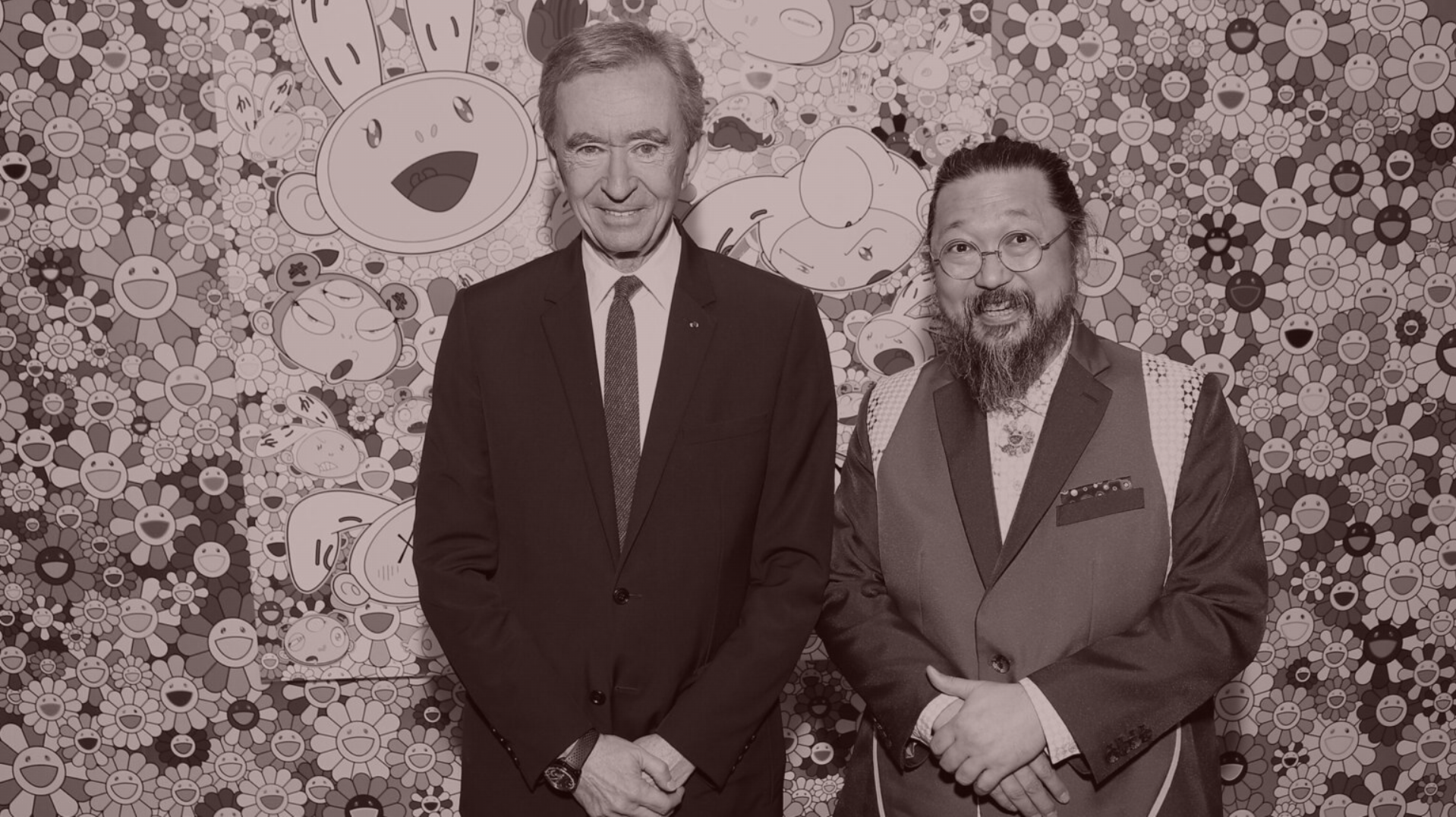
| Dior is a trickier challenge than Louis Vuitton, which has benefited from the warm reception bestowed upon creative director Pharrell Williams when he joined to design menswear in early 2023. Nearly two years later, however, things have cooled, and Vuitton, too, needs a boost. And artistry alone won’t cut it. While the creative directors at the house—Williams, Nicolas Ghesquière on womenswear, and Francesca Amfitheatrof on jewelry—all drive significant sales, even the billions of dollars Ghesquière is pulling in pales in comparison to the revenue derived from LV’s humble coated canvas wallets and handbags. Perhaps that’s why the company is planning on relaunching its collaboration with the artist Takashi Murakami in the coming months.
I guess everything old is new again (or everything old that was once sellable is still, hopefully, sellable). The Murakami collab was famously first introduced in 2003, back when Marc Jacobs was the creative director of the entire maison. The collection—for which the artist Murakami-fied the brand’s signature monogram with rainbow colors and cherries, among other treatments—was available until 2015, about two years after Jacobs exited the business. It was hugely successful, generating more than $300 million in its first year alone, and still commands high prices on the secondary market.
Supporting players were whispering that Ghesquière was not thrilled about the comeback. After all, he and his team have designed most of the brand’s top-selling handbags, and reviving Murakami could be considered a lazy stunt on the part of Louis Vuitton C.E.O., Pietro Beccari. In the end, after talking to people close to Ghesquière, it seems that he is happy to see it revived in a new context. After all, Ghesquière has succeeded at Vuitton over the past decade because he has managed to handle the extreme commercial pressures while continuing to design collections that often feel daring and artistic. He knows how to play the game, and certainly understands that Beccari is under pressure to jumpstart sales before demand for luxury goods picks back up toward the end of 2025, when China (hopefully) gets back on track and interest rates continue to drop, as many analysts predict. (The company didn’t respond to a request for comment.) |
|
|
|
|
| Gucci, for its part, can’t wait to turn a corner and exit this morass. Earlier this week, the brand announced new hires in its marketing and communications division. As I predicted two weeks ago, the change puts Givenchy’s Valérie Leberichel in charge of the department. Incoming C.E.O. Stefano Cantino seems to be working overtime to streamline the business, which already had a complex setup before Sabato De Sarno entered the picture. However, it became more chaotic when he brought in his people, who overlapped with Gucci’s people, which made it even harder to get things done. Or at least done properly.
Runway shows aside, one of the most challenging aspects of the De Sarno era has been the communications and marketing strategy rollout. Things started strong with a few great campaigns that were shot long before he ever showed a collection, but then quickly became muddled. De Sarno did far too many interviews, and was positioned by the brand as a star (complete with his own documentary) when they should have let the industry anoint him, instead.
Of course, the real challenge for Gucci is bigger than De Sarno. As Cantino knows from his formative experience running marketing and communications at Louis Vuitton, leather goods are a practically inexhaustible resource for consumers. (Indeed, Louis Vuitton generates more revenue annually than all of Kering.) Gucci already generates more than half its revenue from leather goods, but there’s room to grow and leverage those recurring revenue opportunities. Chairman and C.E.O. François-Henri Pinault has made it clear that his leadership team believes Gucci could and should be the Louis Vuitton of his group.
The problem with this theory, inevitably, is that Tom Ford turned Gucci into a fashion house in the ’90s. During that same period, Jacobs and Martin Margiela were additive at Louis Vuitton and Hermès, respectively, but Ford overwhelmed Gucci, and his influence and legacy were compounded during the Alessandro Michele era. (He, too, overwhelmed the brand.) People want real flair from Gucci, but part of Cantino’s job will be to impart a sense of fashion into the offerings while also establishing it as the first stop for handbags, luggage, wallets, belts, etcetera. Not easy. Of course, all of this could be derailed if Donald Trump decides to enforce tariffs on the damn things. |
|
|
| I’m loving Misty White Sidell’s shopping column for the Times. This week, she wrote about the fancy pants that have become status symbols analogous to “It” bags. The High Sport kick flare finally got its due in the Grey Lady. Good job, Misty! [New York Times]
Reddit is profitable for the first time ever! [The Verge]
Chris Black recommended a bunch of nice coats for guys if you don’t want to wear a puffer. I really love this one from the brand Sunflower, but they’re all very nice. [The Strategist]
It’s likely that a lot of U.S. retailers will front-load goods ahead of Trump’s inauguration, so as to avoid the expected crazy-bad-for-the-economy-manufacturing-is-never-coming-back-here tariffs. [WWD]
Remember when I said LVMH Ventures was about to announce an investment? It was in Our Legacy. Good for those guys! [BoF]
Ralph Lauren “blew past” analyst estimates in its most recent quarter, causing the stock to “soar.” I guess you all bought Polo baseball caps? [Marketwatch]
The aubergine suit Kamala Harris wore during her concession speech was by Tory Burch. [CNN] |
|
|
| And finally… Wasn’t John Galliano’s contract up in October?
Until Monday,
Lauren
P.S.: We are using affiliate links because we are a business. We may make a couple bucks off of them. |
|
|
|
| FOUR STORIES WE’RE TALKING ABOUT |
 |
|
 |
| Gloom & Goop |
| On Goop’s eternal unprofitability and potential exit strategies. |
| RACHEL STRUGATZ & LAUREN SHERMAN |
|
 |
|
 |
|
|
|
|
|
 |
|
|
|
Need help? Review our FAQs
page or contact
us for assistance. For brand partnerships, email ads@puck.news.
|
|
You received this email because you signed up to receive emails from Puck, or as part of your Puck account associated with . To stop receiving this newsletter and/or manage all your email preferences, click here.
|
|
Puck is published by Heat Media LLC. 227 W 17th St New York, NY 10011.
|
|
|
|