Welcome back to Wall Power. I’m Marion Maneker.
Tonight,
Julie’s got the helm and there’s a fair bit of news, from the Toledo Museum of Art buying a $4 million Kiddush Cup to the robust sale of Sadruddin Aga Khan’s Islamic art to Carrie Bradshaw’s fascinator. Then, Julie looks at Cartier’s efforts to support the secondary market for its own classic works of jewelry, and how exhibitions like the recent blockbuster at the Victoria & Albert Museum, featuring more than 350 Cartier pieces, have helped to cement those
efforts.
|
|
|
A MESSAGE FROM OUR SPONSOR
|
|
|
 |
Julie Brener Davich |
|
- Holy Toledo!:
I recently discovered that the buyer of the $4 million Medieval Kiddush Cup at Sotheby’s last week was the Toledo Museum of Art. The price is a record for any Jewish ceremonial object, beating the 2014 record of $1.6 million for the 18th century Rothschild Torah Ark. The Kiddush Cup, dating from the 11th or 12th century, is the oldest known in existence, and was acquired with funds from
the museum’s unrestricted endowment. It will be a centerpiece of the reinstallation of the Ohio museum’s galleries, scheduled for completion in 2027, which aims to tell a more inclusive history.The Kiddush Cup features a rare early pairing of Hebrew and Arabic inscriptions, showing the intertwined histories of the two cultures. “It will deepen visitors’ understanding of the global forces that have shaped artistic expression over time,” said museum director Adam Levine in
a statement.
- Christie’s sets a South Asian record: This week, Christie’s achieved an extraordinary £45.7 million for the classical Indian and Persian paintings collection of the late Prince Sadruddin Aga Khan and his second wife, Princess Catherine. Estimated to bring only £8 million, the collection achieved the highest total ever for a South Asian art sale. Though born in France and raised in Europe by his mother, the prince was
deeply influenced by his father, the 48th imam of Nizari Ismailism, a branch of Shia Islam. The prince died in 2003 and is survived by his wife, who is in her late 90s and has three children from her first marriage.The success of the Sadruddin collection reflects the depth of demand (and pockets) in India and the Middle East. The top-selling lot from the collection was a diminutive Mughal Indian
painting, circa 1575-1580, depicting a family of cheetahs attributed to Basawan, the emperor’s favorite artist. It sold for £10.2 million, setting a world auction record for a classical Indian or Islamic painting. The previous record, from 2022, was £8 million for a 16th century folio from Persia’s Book of Kings at Sotheby’s.
Action in
this market extended to the various-owners offerings. Sotheby’s sale brought in £10.1 million against an estimate of £4.4 million. Historic weapons were the big winners, with a pair of 18th century
pistols and a blunderbuss, both made for Tipu Sultan, selling for £1.1
million and £571,500 respectively, and a 17th century dagger and scabbard making £406,400. Leading Christie’s £7.7 million sale
was a 16th century Persian tankard for £1.9 million.
- S.J.P. adds to her Carrie collection: Two years ago, when Sotheby’s auctioned the vintage taxidermied bird headpiece
Carrie wore to her cancelled wedding on Sex and the City, market observers speculated whether the buyer was Sarah Jessica Parker, who has famously archived her character’s wardrobe at high-end clothing storehouse Garde Robe. At the New Yorker Festival this past week, in conversation with
Rachel Syme, Parker confirmed that she was indeed the winning bidder for the 1800s fascinator, taking it home for $25,400 against an estimate of $40,000. “The bird almost flew away, but she’s back,” Parker said, putting her hand over her heart, “and she’s in my possession.”
|
|
|
The Cartier Collection, formed over the past five decades in part via
headline-grabbing purchases at auction, is about marketing as much as heritage—as was the blockbuster V&A exhibition of some of its best-pedigreed jewels.
|
|
|
This past summer, the Victoria & Albert Museum plastered buses in London with ads for
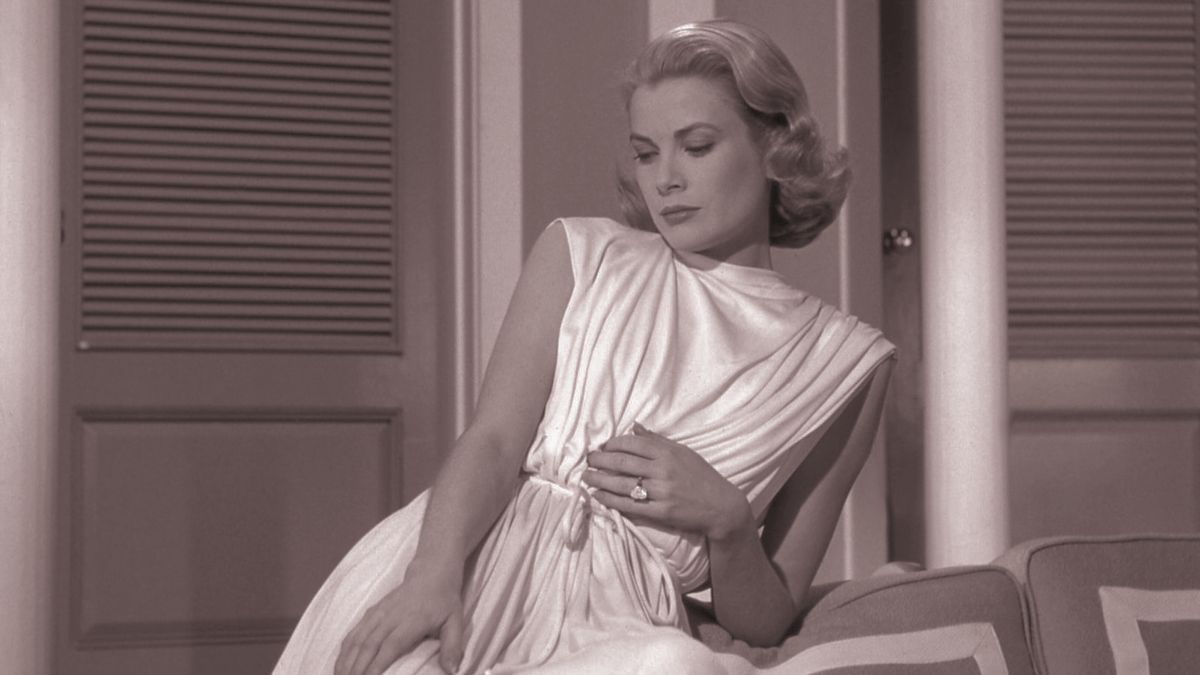
its sold-out Cartier exhibition in South Kensington, which is filled with some of the brand’s best pedigreed pieces: the Williamson Brooch owned by Queen Elizabeth II (loaned by King Charles III), Grace Kelly’s engagement ring (loaned by the Prince of Monaco), several jaw-dropping gems from the Al Thanis. But the majority of precious items came from the brand’s own extensive collection, which Cartier assembled
over five decades, partly by buying back culturally significant pieces at auction.
Cartier’s collection, overseen by Pascale Lepeu and now totaling about 3,500 objects, originated in the early 1970s, when Cartier bought its first archival item at auction—a Portico Mystery Clock, for an amount lost to history. After that, Cartier’s acquisitions continued apace. Among its more eye-popping purchases was the ruby-and-diamond necklace that Elizabeth Taylor was
given by her third husband, Mike Todd, in 1957, which Cartier bought at Christie’s for $3.8 million in 2011, and which Blake Lively wore in Vogue’s September 2024 issue. In 2014, Cartier beat five other bidders at Sotheby’s Hong Kong for a jade necklace gifted to Woolworth heiress Barbara Hutton when she married Prince Alexis Mdivani in 1933. Featuring 27 flawless, perfectly matched jade
beads and a ruby-and-diamond clasp, the Hutton-Mdivani necklace is widely considered to be the greatest piece of jadeite jewelry in the world. And by paying $27.4 million for it, Cartier made it the most expensive of its own jewels ever bought at auction.
|
|
|
A MESSAGE FROM OUR SPONSOR
|
|
|
Both necklaces are displayed at the V&A, which amounts to a kind of double marketing
coup—first via the headline-grabbing prices, and then via a museum display for thousands to see. “When Cartier sells something through one of its stores, no one knows,” jewelry consultant Matthew Girling told me. “What people see and what gets written about is when things are sold at auction.” At least three jewels that Cartier acquired at auction as early as the 1990s are on view at the V&A, including heiress Mary Scott Townsend’s diamond tiara and stomacher
brooch from the sale of American socialite Thora Ronalds McElroy’s collection, and French socialite Daisy Fellowes’ “Collier Hindou” Tutti Frutti necklace, both acquired at Sotheby’s. For the past 30-plus years, Cartier has been owned by Richemont, which clearly understands the value in keeping their heritage front of mind.
|
The Hutton-Mdivani jadeite necklace, the most expensive piece of Cartier jewelry ever
sold at auction, sold at Sotheby’s in 2014, for $27.4 million. Photo: Courtesy of Sotheby’s
|
The V&A show, curated by Helen Molesworth (no relation to the art
historian of the same name) and Rachel Garrahan, follows more than 40 institutions worldwide that have hosted dedicated Cartier exhibitions over the past 35 years—beginning with a 1989 show at the Petit Palais and including a 150th anniversary show at the Met in 1997, as well as shows at Moscow’s Kremlin Museums and Beijing’s Palace Museum. About 200 of the roughly 250 jewels, timepieces, and precious accessories in the V&A exhibition come from the Cartier collection. (There are
also about 100 pieces of archival material, including design sketches.)
|
Signed jewelry has long been desired by collectors—at least since the 1980s—but it
wasn’t really a thing until Lalique in the mid-19th century, and brands like Cartier capitalized on the demand for such pieces in the 20th. Signed jewels have a cognoscenti-bait quality for those who buy to wear, and can potentially offer a solid return for those who make purchases as an investment.
According to Christie’s, a signature on a piece of jewelry can add multiples to the value—as much as 50 to 300 percent, depending on period and maker—since it ensures a certain level of quality. But because Cartier’s output was so vast,
a signature’s impact on a piece’s value isn’t always as significant as with other brands—an exception being their most sought-after designs, like Tutti Frutti pieces. In 1995, Christie’s sold a Tutti Frutti bracelet for $74,000; 25 years later, they sold it for CHF 615,000, or about $705,000. In 2015, Christie’s sold a Tutti Frutti
brooch for HK $1.2 million; five years later, Sotheby’s resold it for twice as much. Signatures, of course, can be faded or faked, but Cartier’s archives help with identification.
|
|
|
Cartier’s own attention-grabbing auction purchases may also have an effect on prices,
driving up perceived value while limiting supply, at least at the very top end. “When you buy Cartier, you’re buying into something so much bigger,” Girling told me. “Cartier is still the name that comes to most people’s minds if they’re going to buy period jewelry. It’s become the most sought-after name, no doubt.” While Cartier accounted for just 5 percent of the lots in Christie’s $109.3 million “Maharajas & Mughal Magnificence” auction of the collection of Sheikh Hamad Al Thani
in 2019, they accounted for fully one quarter of the sale total.
The marketing potential of exhibitions like the V&A’s is real. In May last year, Sotheby’s suddenly pulled the Allnatt diamond brooch, estimated at CHF 5.6 million, or $7 million, from its Magnificent Jewels sale in Geneva. The brooch, a
diamond flower featuring a 101.29-carat fancy vivid yellow diamond center, hadn’t appeared at auction since 1996. It turned up at the V&A near Queen Elizabeth II’s Williamson Brooch, another diamond flower from the same year—1953, the year of her coronation—but with a pink center instead of a yellow one. Trotted out most recently by Queen Camilla at a Buckingham Palace garden party last year, the Williamson Brooch is a hometown hero. Might the Allnatt Brooch reappear at auction
soon with a post-exhibition markup?
Similarly, next week at Sotheby’s in Geneva, an enterprising consignor is selling the sixth and final Portico Mystery Clock that Cartier produced between 1923 and 1925, once owned by Gunter Sachs, at an estimate of CHF 3 million, or $3.7 million.
The first clock in the series, and possibly the first object Cartier ever bought at auction, it is prominently displayed in the V&A exhibition.
|
Thanks, Julie. The all-important November sales season is almost upon us, and the full
extent of the auctions will be revealed at the end of this week. We’ll be back on Tuesday with more insights into how the season is shaping up.
M
|
|
|
The ultimate fashion industry bible, offering incisive reportage on all aspects of the business and its biggest
players. Anchored by preeminent fashion journalist Lauren Sherman, Line Sheet also features veteran reporter Rachel Strugatz, who delivers unparalleled intel on what’s happening in the beauty industry, and Sarah Shapiro, a longtime retail strategist who writes about e-commerce, brick-and-mortar, D.T.C., and more.
|
|
|
Finally, a media podcast about what’s actually happening in the media—not the oversanitized,
legal-and-standards-approved version you read online. Join Dylan Byers, Puck’s veteran media reporter, and Julia Alexander, a longtime media analyst, as they sit down with TV personalities, moguls, pundits, and industry executives for raw, honest, sometimes salacious conversations about the business of media and its biggest egos. New episodes publish every Tuesday and Friday.
|
|
|
Need help? Review our FAQ page or contact us for assistance. For brand partnerships, email ads@puck.news.
You received this email
because you signed up to receive emails from Puck, or as part of your Puck account associated with {{customer.email}}. To stop receiving this newsletter and/or manage all your email preferences, click here.
|
Puck is published by Heat Media LLC. 107 Greenwich St., New York, NY 10006
|
|
|
|





_01K92Y669NE3PPSEY1Q0K6WFZZ.jpg "The Hutton-Mdivani jadeite necklace, the most expensive piece of Cartier jewelry ever sold at auction at Sotheby’s in 2014, for $27.4 million. Photo: Courtesy of Sotheby’s")