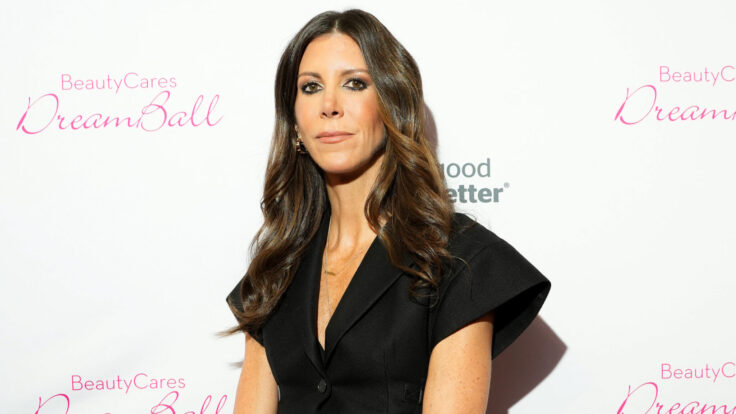
Hi, and welcome back to Line Sheet. Rachel Strugatz doesn’t miss, and today, she
has can’t-find-anywhere-else intel on the biggest beauty stories of the week—from the real reasons why the ultra-hyped, venture-backed Ami Colé is shutting down, to details on TSG Consumer’s deal to acquire Phlur, a fragrance brand with one of the worst names in the world. In other news, luxury earnings season has begun—first up, Moncler—and I’ve got the scoop on the costume designer pulling the (literal) strings on the Devil Wears Prada 2 set.
Mentioned in this issue:
Diarrha N’Diaye-Mbaye, Ami Colé, Sephora, Rare Beauty, Priya Rao, Summer Fridays, Drunk Elephant, Kayali, Molly Rogers, Patricia Field, The Devil Wears Prada 2, Phlur, Chriselle Lim, Moncler, and many, many more… |
|
|
A MESSAGE FROM OUR SPONSOR |
The refined BMW 7 Series is all luxury. With the ability to define your design, the ultimate glamour is yet to be.
Learn more at BMWUSA.com. |
|
|
Three Things You Should Know…
|
- And just like that… The Devil
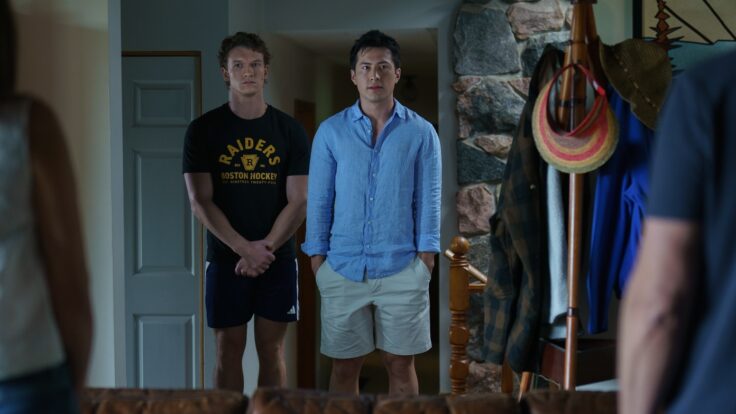
Wears Prada 2’s costume designer is revealed: I’m told by multiple sources, including some directly connected to the production, that the costume designer for Devil 2 is Molly Rogers, who’s also behind And Just Like That…, HBO Max’s Sex and the City reboot. There’s a pattern here, of course. Rogers is the disciple of Patricia Field, who was the fashion mastermind behind the O.G. Sex and the City and
original The Devil Wears Prada. But Rogers, who worked alongside the legendary costumer from the start of SATC, is much slicker than Field’s, for better and for worse: Nothing is downright ugly, but nothing is that interesting or trendsetting, either.
The whole production seems to be about getting the band back together—writers, actors, etcetera—but I would have loved to see them bring in someone like Miyako Bellizzi (Uncut Gems) or
longtime GQ fashion director Madeline Weeks (Mr. and Mrs. Smith). Both could have offered the messed-up edge that defined Field’s style. Weeks, for instance, put the Courrèges turtleneck on Maya Erskine before it was ubiquitous—whereas I sold a dress after seeing it on Cynthia Nixon in the AJLT promos. As for why the production hasn’t added Rogers to IMDB? Perhaps this was a late-stage decision, or maybe it’s
nothing. - The Moncler bellwether: Moncler, the Italian group that also owns Stone Island, kicks off earnings season for luxury. (LVMH is tomorrow, Kering is early next week.) The group’s results—sales were relatively flat in the first half of 2025, while profits shrunk 13 percent—could preview what’s to come for the industry, even if Moncler is largely an outerwear brand that operates on a different cycle than most luxury goods businesses. However, two
things stood out to me that we should be watching for this season.
First, even as growth slowed in Japan—a savior for luxury brands in Asia amid the China downturn—sales in the U.S. accelerated. Moncler, like many luxury brands, remains underpenetrated in the U.S.—where the majority of wealthy locals prioritize spending on many items more than clothes. (I just spent the weekend in Chicago, where plenty of people were wearing Loro Piana caps and carrying Gucci bags while mostly outfitted
in Vuori.) More broadly, though, I suspect we’ll see a similar pattern from the bigger groups that deal mostly in accessories: Okay sales in the U.S., shrinking profits, and trouble in Asia.
|
|
|

| Rachel Strugatz
|
|
- The Phlur-TSG deal: The
fragrance category has been on a tear since the pandemic. But right now, there are a handful of $100-ish brands peaking in popularity: Kayali, Phlur, Boy Smells, and others have seen enormous success at retailers like Sephora and online via TikTok Shop. Of course, the P.E. money is following.
On Tuesday, my pal Priya Rao at BoF broke the news that TSG Consumer Partners acquired Phlur, a Sephora darling best known for its $99 eau de parfums and gourmand body sprays (vanilla, peach, heavy cream, etcetera). It makes sense that TSG pounced on Phlur; after all, TSG took a majority stake in Summer Fridays last year. Even as it offloaded minority stakes in Huda Beauty and Kayali, the firm is obviously eager to get back into beauty. “It was a superfast process,” said a person familiar with
the Phlur deal.
Although Phlur has been around for almost a decade, it only gained traction after a 2022 relaunch, following a 2021 acquisition by The Center, Ben Bennett’s beauty incubator. Influencer Chriselle Lim was tapped as Phlur’s creative director around the time of the relaunch, and was instrumental in creating and promoting the viral scent Missing Person. Since then, Phlur has become one of TikTok Shop’s bestselling fragrance brands. According
to BoF, it’s apparently on track to hit $150 million in retail sales this year.
|
|
|
The beloved makeup brand Ami Colé is shutting down despite its nearly four-year partnership
with Sephora. The development resurfaced one of the most pressing questions in the beauty business: Is a deal with Sephora still the best way to get ahead in the industry? |
|
|
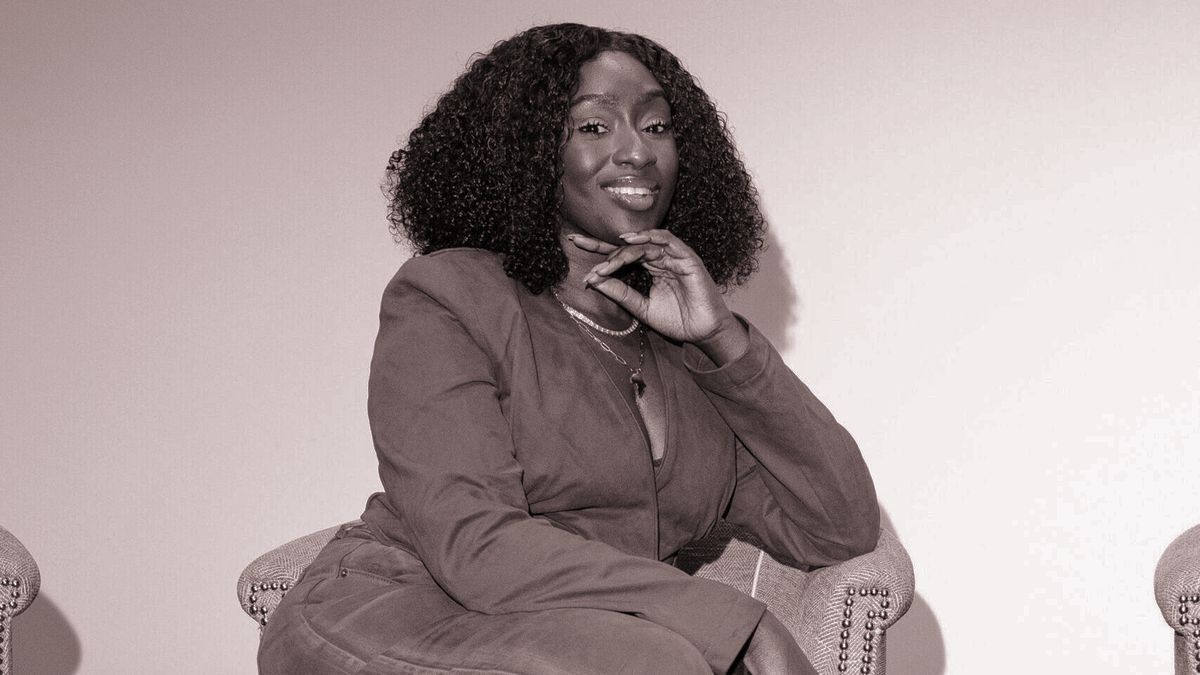
Only four years ago, Diarrha N’Diaye-Mbaye founded Ami Colé, a line that specialized in
foundation and tints for “melanin-rich” skin. Alas, last week, N’Diaye-Mbaye announced she would be shutting it down. In a well-written and candid essay for The Cut, she laid out many of the challenges other founders are scared to address: She called out temperamental investors, and perhaps most saliently, explained the inequities involved in competing with corporate-backed brands for Sephora shelf space. (N’Diaye-Mbaye declined to comment for this piece.)
Upon hearing the news,
someone asked me how it was possible that a venture-backed brand—particularly one that seemed to be doing fine, and had secured Sephora distribution—could have failed. But Ami Colé’s situation is not uncommon. In fact, many startups, even established ones in the beauty space, are in similarly precarious positions. |
|
|
A MESSAGE FROM OUR SPONSOR |
The refined BMW 7 Series is all luxury. With the ability to define your design, the ultimate glamour is yet to be.
Learn more at BMWUSA.com. |
|
|
At this point, it’s conventional wisdom that beauty lines that are stocked at Sephora—with perfectly coiffed
founders who sit on panels and vamp about female empowerment, or post videos of themselves crying at in-store displays—have it made. But many struggle to hit their wholesale partner’s aggressive sales targets, which makes it harder to raise additional capital from investors. (Plus, many just can’t keep up with whatever beauty trend or product has gone viral that month.) The challenges, as Ami Colé’s fate demonstrated, are often insurmountable, even for a beloved brand that was early to
the viral lip oil trend.
Indeed, N’Diaye-Mbaye talked a lot about fundraising, a painful process for founders of all brands and sizes. But it’s impossible to ignore the role that Sephora, her brand’s exclusive retailer, played in the alchemy of the collapse. Sephora, of course, has transformed plenty of indie labels into multi-hundred-million-dollar or even billion-dollar brands, and the retailer undeniably supports companies that are exclusive to their shelves. But it’s
also true that the complexity and cost of doing Sephora well is significant. Over the years, I’ve talked to dozens of founders and executives who work with (and have worked for) the retailer, and for every Drunk Elephant, Kayali, or Summer Fridays, there are many more brands that never deliver for their investors, and whose founders end up feeling burned. |
In some ways, selling via the world’s most powerful beauty retailer can be more of a curse than a blessing.
There’s low margins, and lots of cash spent on marketing and imagery, and the inevitable loss of control over products. “You’re in hand-to-hand combat,” said a person close to Sephora, who also noted that, for vendors, the retailer is a “loss leader” until a brand is doing at least $5 million in wholesale, which is the equivalent of about $9 million at retail. Most brands, of course, never make it to that point.
I’ve heard varying accounts about how much Sephora controls product
development, which has been described to me as a collaborative process that retailers refer to as being “in the kitchen.” (The results of this quiet process are easy to spot—e.g., there’s a reason so many brands launch similar products around the same time.) Some brands say they’ve been able to successfully push back against Sephora, and have managed to bring their preferred products to market. But it’s a tricky situation, and one that often pits what’s best for Sephora against
what’s best for the brand. “They’re literally dictating your assortment,” the person close to Sephora said.
As time went on, I assume that Sephora expected N’Diaye-Mbaye to expand her line’s complexion offerings so it would appeal to a wider swath of Sephora’s shoppers. (I’m told by a number of sources that only a very small percentage of the retailer’s customers are women of color.) And yet, while expanding the purview of Ami Colé’s offerings might have introduced the brand to new
customers, it also might have alienated the core customer. “The only thing Ami Colé could’ve done is make more shades,” a Sephora insider said. “But those shades wouldn’t have resonated with her customers––they would’ve been Sephora’s most high-performing shades.” |
|
|
Complexion is the hardest, most expensive category in all of beauty, where product development, inventory,
and marketing are each uniquely capital intensive. In order to do complexion right, a brand needs to stock a wide swath of shade offerings, no matter what’s selling at a given moment. Then there’s the issue of margins. While the most desirable brands might land a coveted 50/50 split, smaller lines often secure a range from about 40 to 45 percent. It all depends on the power dynamic. “I’m sure Rhode has a great margin,” said a person close to Sephora.
Another insider gave a more
nuanced take, noting that Sephora usually suggests a generic 60 percent margin—which can be negotiated down—when they send an initial vendor agreement. But, counterintuitively, once a brand gains traction, and their purchase orders hit certain dollar thresholds, their margins could go up another point. Then when a brand decides to end their exclusivity with Sephora, margins could instantly soar up to 60 percent.
In short, everything is relative. When you look at the brands that
do really well at Sephora, and I mean really well—like Rare Beauty, Milk Makeup, Summer Fridays, One/Size, and Makeup by Mario—the retailer is their whole universe. Their entire marketing machine is geared toward launching products at Sephora, where exclusivity is everything. “It should be a really big decision for a brand to decide to go into Sephora,” said one founder whose brand is currently sold there. “You have to ask, ‘Is this really what I want?’ Because once you position that way,
you can’t un-position it. I decided I either needed to go big or go home, and I’d rather close the door to this business than not win at Sephora––so it was yes for me.” |
Les Wexner, the recently reclusive, Epstein-linked former C.E.O. of Limited
Brands and Victoria’s Secret, has bought Norman Foster’s Martha’s Vineyard estate, which was once occupied by the Obamas. [Curbed]
Obviously we are excited over here about the Sofia Coppola documentary about Marc Jacobs. Should we reroute to Venice for
the premiere? [W]
Sydney Sweeney stars in American Eagle’s new denim campaign, styled by her own stylist, Molly Dickson. [People]
Will P.R.s
who attend the closet sale of ex-Vogue writer Liana Satenstein discover items they once gifted to said writers? There’s only one way to find out! [Instagram] |
Until tomorrow,
Lauren
P.S.: We are using affiliate links because we are a business. We
may make a couple bucks off them. |
|
|
Puck fashion correspondent Lauren Sherman and a rotating cast of industry insiders take you deep behind the scenes of this
multitrillion-dollar biz, from creative director switcheroos to M&A drama, D.T.C. downfalls, and magazine mishaps. Fashion People is an extension of Line Sheet, Lauren’s private email for Puck, where she tracks what’s happening beyond the press releases in fashion, beauty, and media. New episodes publish every Tuesday and Friday. |
|
|
The industry’s go-to source for unflinching reporting on the trillion-dollar business of artificial intelligence - perhaps the
single most important technology of our time. Ian Krietzberg, the powerhouse journalist behind The Deep View, delivers twice-weekly insights into the latest dealmaking and breakthroughs in A.I., and how the intersecting worlds of finance, entertainment, media, and politics are being transformed in its wake. |
|
|
Need help? Review our FAQ page or contact us for assistance. For brand partnerships, email ads@puck.news. You received this email because you signed up to receive emails from Puck, or as part of your Puck account associated with {{customer.email}}. To stop receiving this newsletter and/or manage all your email preferences, click here. |
Puck is published by Heat Media LLC. 107 Greenwich St, New York, NY 10006 |
|
|
|