Welcome back to Wall Power. I’m Marion
Maneker.
Tonight, Julie takes a look at Zachys’ upcoming sale of a unique wine cellar from a member of the family that owns the storied Château Lafite Rothschild winery in Bordeaux. The trove was all laid down between 1868 and 1942 and left in Pauillac when Rothschild family members fled the Nazis in 1939, making them a rare hidden treasure for the wine crowd. The auction will take place at The Pool in the Seagram Building on September 19,
but bidding on the wines has already begun online. Julie will get to that below the fold.
|
|
|
Van Cleef & Arpels invites you to open the doors of wonder with the "Cosmic Splendor: Jewelry from
the Collections of Van Cleef & Arpels" exhibition at the American Museum of Natural History in New York City. Until January 4, 2026, discover the Maison's precious creations, paying tribute to the marvels of the cosmos.
|
|
|
 |
Julie Brener Davich |
|
- Vogue’s darkroom
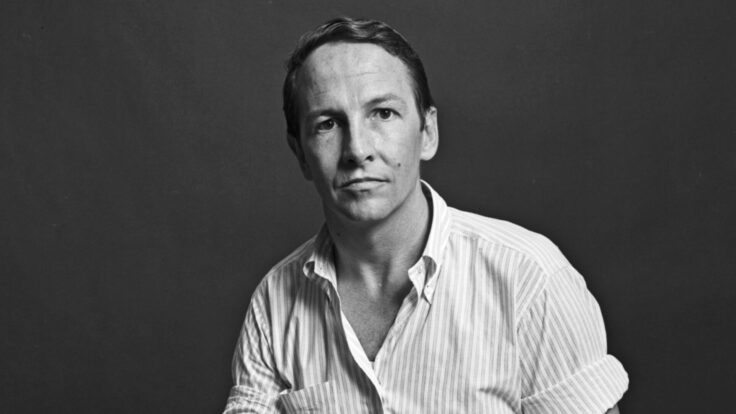
maestro: Unlike many 20th century photographers, there are no posthumous prints by Irving Penn, who shot for Vogue for more than six decades. Each print that exists was made by Penn himself, in his darkroom, in editions of varying sizes, which limits how many are available on the market. Next month, Phillips is holding a historic sale of
70 works from the Irving Penn Foundation, established 25 years ago by the photographer’s son, Tom Penn, to manage his father’s legacy and archives.The sale will feature lots from a broad cross section of Penn’s seminal work in fashion, beauty, portraiture, and still life. Of note, not only did Phillips have the opportunity to choose which images to offer, the house also selected the particular prints. “Within an edition, Penn played around with the process, so some are
lighter or darker, or more textured,” said Vanessa Hallett, global head of photographs at the auction house. “Each one is unique.”One of the most recognizable images on offer is a black-and-white portrait of Penn’s wife, Harlequin Dress (Lisa Fonssagrives-Penn), from 1950, estimated at $200,000. It demonstrates not only Penn’s technical prowess but also the strength of his compositions, with the negative space created by the sitter’s arm and hat. (The same
image achieved an auction high of $407,000 in 2007.)
Flooding the market with 70 images by the same artist can be risky, although Phillips had no trouble this past spring selling 43 works by William Eggleston for $5.7 million against an estimate of $3.8 million, even achieving a new auction record for the photographer of $1.9 million. “The sale created real demand,” said Hallett, who is surely hoping to do the same for Penn.
- A rare
Sargent auction: As those who saw the recent Sargent in Paris show at The Met know, John Singer Sargent was in the French capital early in his career, from 1874 through the mid-1880s. There, he painted street scenes and society portraits, including one of 3-year-old Peter Augustus Jay, son of American diplomat Augustus Jay. That diminutive 1880
portrait is up for sale on Wednesday at Brunk Auctions in Asheville, estimated at $1 million, as part of a private collection of American art and Americana. “Children were well suited to Sargent’s energized brushstroke,” Brunk’s Nan Zander told me. Altogether, Sargent painted four members of the Jay family—descended from founding father
and first chief justice of the United States John Jay—one of which is on view at the Jay family homestead in Katonah, New York.Sargent is not an artist whose best works come up at auction often. Most of his highest prices were achieved in the 1990s and 2000s, an indication that collectors tend to hold on to them. The present work has never appeared at auction. It passed from the sitter through a few different collections, ending up in 2015 at Vose Galleries in Boston,
where the current consignor purchased it for $2.2 million.
- A $3.65 million movie prop: As if we needed more evidence that the Hollywood memorabilia market is on fire, this past week Propstore sold Darth Vader’s original dueling lightsaber from The Empire Strikes Back and Return of the Jedi for $3.65 million, against an estimate of $1 million, making it the most valuable Star Wars prop ever sold at auction. It came to
Propstore from an unnamed private collection. In 2017 Heritage sold Luke Skywalker’s lightsaber, used in the first two movies in the original trilogy, for $450,000.
|
|
|
Once the gold standard for collectors, Bordeaux wines have seen better
days and higher values. A new offering of nearly 1,000 prewar bottles, straight from the house of Rothschild, hopes to reset the market.
|
|
|
Much ink has been spilled on the decline of the wine market, with younger
generations, in particular, drinking less and less. Whereas the media once proselytized about the health benefits of a daily glass of red—along with similarly convenient theories about dark chocolate—a counternarrative has since emerged that posits no amount of alcohol is safe. The retail wine industry is suffering the effects, exacerbated by macroeconomic factors, inflation, and more competition for consumer dollars. “There are headwinds,” master of wine Vanessa Conlin
told me, “but people have sold wines through world wars.”
Of course, the story is more complicated when it comes to the market for collectible wines. For two decades, fine wine prices saw a sustained increase, driven in part by low interest rates and strong global demand, particularly from Asia. From 2005 to 2025, Liv-ex’s Fine Wine 1000
index value rose from around £100 to £350. As with most everything else, the trend was distorted during the pandemic—peaking at £500, thanks to a small subset of very high-value wines—which drove up asset prices for everything from tech stocks and memecoins to luxury watches and
cars.
|
|
|
Van Cleef & Arpels invites you to open the doors of wonder with the "Cosmic Splendor: Jewelry from
the Collections of Van Cleef & Arpels" exhibition at the American Museum of Natural History in New York City. Until January 4, 2026, discover the Maison's precious creations, paying tribute to the marvels of the cosmos.
|
|
|
Since then, “the bottom has fallen out of the high end of the market,” said
Charles Curtis MW, founder of WineAlpha, pointing to the price of a bottle of 1990 Domaine de la Romanée-Conti Grand Cru, which has plunged from about $30,000 to $15,000. The driver of the price for that particular vintage was Chinese real estate billionaire Joseph Lau, who recently sold a huge portion of his cellar at Christie’s—a good reminder that
at the top end of the market, “trends” can just be the whims of individuals. To address this, “the auction houses are making it up in volume from the lower end,” Curtis told me. Indeed, according to the most recent ArtTactic Luxury RawFacts Auction Review, the average lot value in wine sales at Christie’s and Sotheby’s dropped from
$8,800 in 1H22 to $4,900 in 1H24.
But the high end of the market is starting to rebound as collectors snatch up rare bottles for relative bargains. The average lot value at Christie’s and Sotheby’s in 1H25 increased to $5,600, pushed upward by the record $28.8 million Bill Koch collection sale at Christie’s in June. “In April of this year I was advising people to buy because they would never see prices so low. That was the nadir of the current market,” Curtis told me.
“It has started to turn around slightly in recent months.”
|
Within the rare wine market, of course, there are micronarratives for different varietals and vintages. Bordeaux and Burgundy have always made up about 80 percent of
the collectible wine market, according to Curtis, with other regions, like Champagne, California, and Italy, rounding out the final fifth. But the share for the fuller Bordeaux blends has gone way down in the past 15 years or so as the share for lighter-bodied Burgundy pinot noir has gone up, driven in large part by the preferences of Chinese buyers like Lau—that is, until a couple years ago, when the seemingly endless ascent of prices for the most sought-after Burgundy hit a
ceiling.
Zachys, a fourth-generation wine retailer and auctioneer based in the U.S. and Hong Kong, is seizing this opportunity to stage a sale of ultra-rare Bordeaux from the private cellar of the late Jacqueline de Rothschild Piatigorsky, a descendant of the storied banking
family that owned Château Lafite Rothschild. The 228 lots, comprising 947 bottles dating from 1868 to 1942, are estimated to bring at least $2.6 million. They are the wines she and her husband left behind in France when they fled the Nazis in 1939, immigrating first to New York, then later moving to California, where she died in 2012. “It is the greatest undisturbed collection of 19th century Bordeaux in the world,” Zachys auctioneer Charles Antin told me. According to Zachys,
the collection remained untouched in Pauillac—the municipality in Bordeaux where Château Lafite Rothschild is located—in the possession of Jacqueline’s heirs, somehow surviving the Nazis’ pillaging of the region.
Since dissolving its partnership with Christie’s in 2001, Zachys has established itself as a leading player in the wine auction world. Last year, Zachys did approximately $100 million in sales, with about two-thirds of that coming from rare wines. That’s about half the $114
million generated by Sotheby’s wine auctions in 2024, and about a third of the $175 million sold by Acker Wines, the category leader. Zachy’s rare wine auction sales are on par with the smaller players—the Chicago-based Hart Davis Hart, with $72 million last year, and Christie’s, with $52 million. Earlier this year, Zachys appointed retail veteran Eileen Rizzo as C.E.O.—the first time someone from outside the founding Zacharia family has held that position—with
a mandate to accelerate growth. The family also gave up its majority ownership in exchange for fresh capital.
|
|
|
The upcoming sale is not the first time Zachys has generated buzz with the Rothschild
name. Six years ago, the firm staged an auction of wines directly from Château Lafite Rothschild in celebration of the 150th anniversary of the Rothschild family’s acquisition of the winery. The sale of 691 lots—comprising almost 3,400 bottles—achieved $7.9 million. The top lots were a bottle of 1868 and a magnum of 1869, both of which made $123,500. (The former came with lunch for four at the Château.) The price per drop (P.P.D.)—a metric conceived by Wine Spectator to tabulate its list of the most expensive wines ever sold, and which allows for more accurate price comparison between different-size bottles—of the magnum was $8.23. (A “drop” is 0.05ml, which means a 750ml bottle contains 15,000 drops.)
But despite the historic nature of the offerings, the 2019 sale was a comedown from the previous highs for ultra-rare Lafite. In 2010, at the peak of
the Bordeaux market, a bottle of 1869 sold in another “Lafite-direct” sale at Sotheby’s Hong Kong for a record $234,000, or a P.P.D. of $17.96, setting a world auction record at the time for any bottle of wine.
|
With Burgundy on the decline, the Zachys sale might be just the type of once-in-a-decade
event that jolts the Bordeaux market back to life, not only because of the media attention, but also the opportunity to educate younger collectors. The bulk of the collection is Château Lafite Rothschild, the winery acquired by Jacqueline’s great-grandfather James Mayer de Rothschild in 1868. The most expensive single bottle on offer from the collection is a magnum of
1870, estimated at $50,000. There’s also a double magnum of
1878, estimated at $26,000—the first-ever double magnum of this vintage to appear at auction. (Larger formats slow the oxidation process, preserving the flavor of the wine for longer.) About 20 other châteaux are represented in the sale,
including other “First Growth” wineries such as Latour, Margaux, and Haut-Brion. The four highest-estimated lots, at $70,000, each comprise three magnums of 1900 Latour. The oldest wine on offer is an 1868
Margaux, estimated at $4,000. The sale is now open for online bidding and concludes on September 19 with a live auction at The Pool in New York.
Almost all of the
decades-old wines in the collection have been reconditioned by the various châteaux that originally produced them, meaning the bottles have been opened inside a vacuum, tasted and then topped up with wine from the same vintage. “They burn a bottle to save a bottle,” Antin explained. “So, yes, it’s drinkable. In fact, I’m drinking six of them [tomorrow] night with some clients.”
|
Thanks, Julie. More on Tuesday,
M
|
|
|
The ultimate fashion industry bible, offering incisive reportage on all aspects of the business and its biggest
players. Anchored by preeminent fashion journalist Lauren Sherman, Line Sheet also features veteran reporter Rachel Strugatz, who delivers unparalleled intel on what’s happening in the beauty industry, and Sarah Shapiro, a longtime retail strategist who writes about e-commerce, brick-and-mortar, D.T.C., and more.
|
|
|
Finally, a media podcast about what’s actually happening in the media—not the oversanitized,
legal-and-standards-approved version you read online. Join Dylan Byers, Puck’s veteran media reporter, as he sits down with TV personalities, moguls, pundits, and industry executives for raw, honest, sometimes salacious conversations about the business of media and its biggest egos. New episodes publish every Tuesday and Friday.
|
|
|
Need help? Review our FAQ page or contact us for assistance. For brand partnerships, email ads@puck.news.
You received this email because you signed up to receive emails from Puck, or as part of your Puck account associated with {{customer.email}}. To stop receiving this newsletter and/or manage all your email preferences, click here.
|
Puck is published by Heat Media LLC. 107 Greenwich St, New York, NY 10006
|
|
|
|