Hi, and welcome back to Line Sheet. Men’s Fashion Week is in full swing here in Paris, where I’ll be stopping by a few shows, showrooms, and get-togethers over the next 48 hours. (More on what I’m observing tomorrow.) But the real reason I’m here is to play hostess.
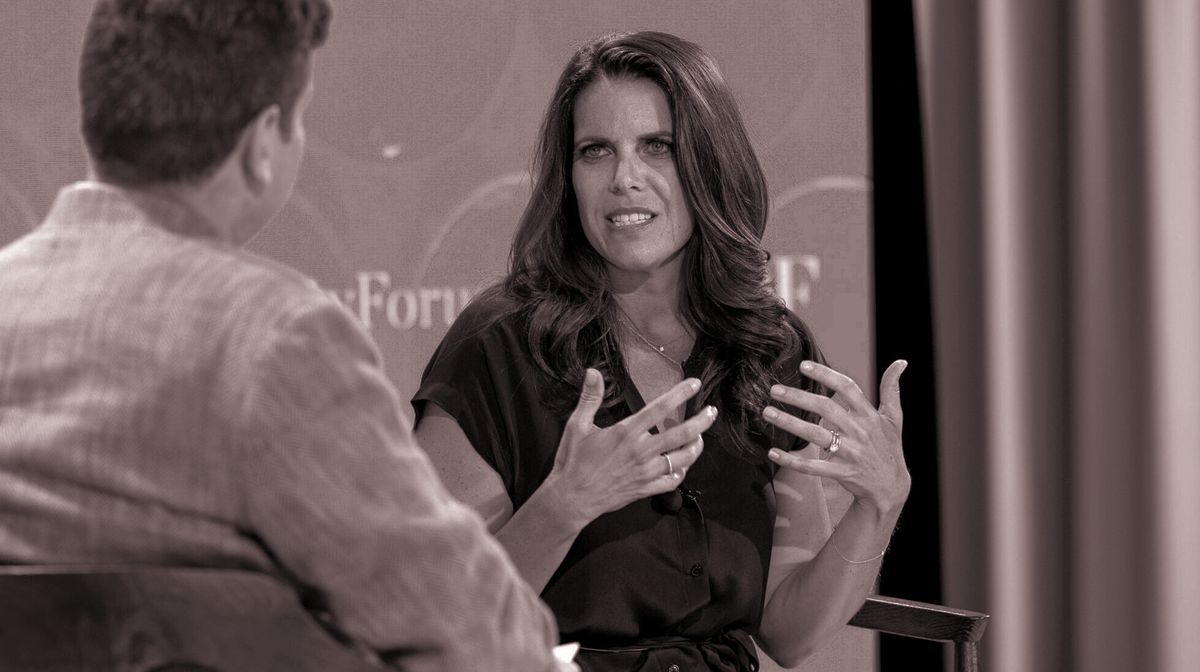
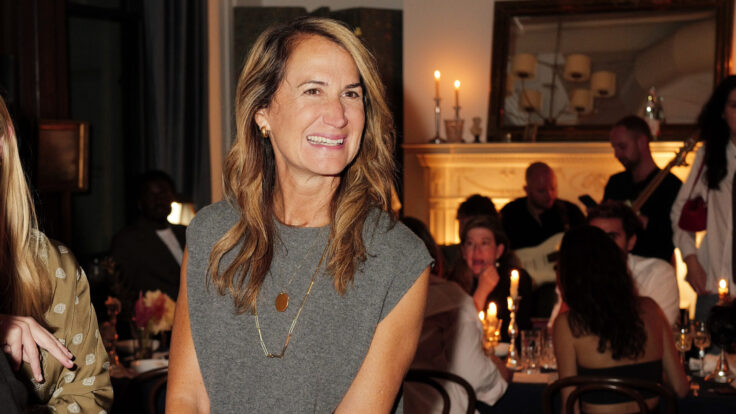
Last night, a crew of executives (and a famous casting director) joined me on the ground floor of the incredibly charming La Petite Chaise to meet Tiffany Lopinsky and Anisha Kamat of ShopMy fame. I love a densely populated event, and we gathered such a great group from many of your faves, including Hermès, Courrèges, Balenciaga, Loewe, Lanvin, Jacquemus, Isabel Marant, Atlein, a headhunter who wishes to remain anonymous, Puig—the list goes on.
One guest described the atmosphere as “warm,” which, in my book, is the best compliment. As always, the table conversation was off the record, but I can tell you we discussed the French approach to mixology at length. (My advice: Don’t order a margarita in this city. Piscine all the way!) Thanks to Tiffany and Anisha for making something we love to use and write about, and thanks to Team Puck Events ( Louise Johnson and Eric Van Gelder) and my partner in commuting by Lime, our V.P. of creative strategy, Alex Bigler. (If you want to throw a party with me, email her at Alexandra@puck.news to get the conversation started.)
In today’s issue, Rachel Strugatz has the definitive report on the exit of Glossier C.E.O. Kyle Leahy. Rachel saw this coming from a mile away, and now she’s telling us why it went down this way. Up front, I’ve got a small but significant Condé Nast update, plus Sarah Shapiro’s preview of Nike earnings and the much-anticipated launch of Daydream, retail-tech star Julie Bornstein’s heavily funded A.I. play.
Mentioned in this issue: Glossier, Kyle Leahy, Emily Weiss, Sephora, Rhode, Alexis Page, Annie Kreighbaum, Condé Nast, Susan Cappa, A.I. shopping tools, Nike, Elliott Hill, NikeSkims, and many more…
|
|
|
|
A MESSAGE FROM OUR SPONSOR
|
Now Viewing: FRAME Sotheby’s. A limited-edition collection from the California fashion house and the world’s leading name in art and design. Explore now at FRAME.
|
|
|
Three Things You Should Know…
|
- The Condé exit that’ll matter to fashion people: This week, as the Condé Nast Union complained publicly about a management directive requiring them to go into the office amid New York’s current heat dome, something far more consequential was going down within the air-conditioned confines of One World Trade Center. This week, Susan Cappa, head of sales for the fashion and luxury category at Condé Nast, tendered her resignation. Cappa has been described to me as the high-level, sales-side link between the company and the European brands. Last year, Condé made an effort to position another revenue guy, Craig Kostelic, as a go-to for the luxury brands, but he left before he could really make headway there.According to multiple sources, this was entirely Cappa’s decision, driven by her frustration with the downsizing and reorganization of the company following the exit of longtime chief revenue officer Pam Drucker Mann, last year, and the subsequent arrival of Elizabeth Herbst Brady. While it’s clear that Herbst Brady and her boss, C.E.O. Roger Lynch, are trying to diversify the business to expand subscription and custom events revenue, luxury advertising remains a meaningful (if diminishing) part of Condé’s P&L.
Look, these types of reorganizations are never easy, even if they’re often fruitful in the long run. But Anna Wintour worked closely with Cappa, and there’s no denying that it’s a loss. (Condé Nast’s comms team did not respond to my requests for comment.)
|
|
|
 |
Sarah Shapiro |
|
- ShoppingGPT: Earlier today, Julie Bornstein’s A.I.-powered shopping discovery tool, Daydream, launched alongside glowing press coverage and industry buzz. But the real story isn’t another A.I. shopping tool—it’s what Bornstein’s $50 million seed raise, which she finalized last summer, signals about the evolving venture capital landscape. Just a few years ago, V.C.s considered commerce tech dead money after they got burned on direct-to-consumer brands and shopping apps. Then the A.I. revolution arrived, and now everyone wants back in.Bornstein is also a trusted veteran founder and steward of a large capital raise. She was the C.O.O. at Stitch Fix, ran digital for Sephora, and founded The Yes with lots of money from NEA before selling it off to Pinterest. Backing from Forerunner’s Kirsten Green, who co-led the round with Index Ventures, adds another layer of validation. Of course, it’s an open question whether A.I. will fundamentally change how customers shop. But everyone from Salesforce to Meta to Google is launching A.I. shopping tools and racing to the forefront of the next big wave.
- Nike’s green shoots: Nike shares are down 16 percent year-to-date, and down almost 25 percent since Elliott Hill was named C.E.O. of the company late last year. The company’s problems, of course, are well known, and Lauren has documented them fastidiously. In short, Nike
disengaged its wholesale partners, largely ignored female customers, lost sight of the performance market, and let a gazillion competitors, from On to the dreaded Vuori, enter the space. Traffic at Nike stores has been down for the past eight months, according to Placer.ai. Hill always had his work cut out for him, and this was never going to be a quickie turnaround.Nevertheless, many analysts feel positive ahead of tomorrow’s earnings call, hopeful that the C.E.O. will offer more clarity on his renewed commitment to third-party retail, and the return to performance categories like ACG. I’ll be focused on how Hill addresses analyst questions regarding post-Liberation Day uncertainties: Trump’s 20 percent tariffs on Chinese imports will erode Nike’s margins as it tries to offload its discounted legacy inventory and pivot from a D.T.C.-first strategy back to wholesale. I’m also watching for concrete timelines on NikeSkims, which was supposed to be a spring launch.
|
|
|
|
And now for the main event…
|
|
|
|
The sudden departure of C.E.O. Kyle Leahy is merely the latest setback for the decade-old Millennial beauty brand, which is struggling to raise fresh capital at even half the valuation it achieved in 2021. “Everyone is balking at the price,” said a person with knowledge of the situation. And the private equity vultures are beginning to circle.
|
|
|
Amid a stalled fundraising process and a series of underwhelming product launches, Glossier has never looked more tarnished. C.E.O. Kyle Leahy, who stepped in three years ago to stabilize the Millennial D.T.C. beauty brand, announced on Tuesday that she would exit Glossier later this year. She’ll follow the departure of C.M.O. Kleo Mack, who left in April for a similar role at SharkNinja. A few months earlier, longtime creative director Marie Suter and her deputy, Adriana Deleo, both resigned simultaneously.
The writing had been on the wall for some time. Leahy joined Glossier in 2022, following a major restructuring in which a third of corporate staff were laid off. But she struggled to create new momentum for the company. Revenue bounced back in 2023 and 2024, but potential acquirers seemed unexcited by her pivot to retail and new fragrance launches. In April, I reported that Glossier was raising a down round, at “south of a billion dollars”—half the valuation bestowed upon the company in 2021. I learned that Glossier was seeking $250 million—a $100 million investment into the company, plus $150 million in secondary to buy out existing stakeholders. The goal would be to recapitalize, of course, but also to inject “new blood around the board table,” according to a person familiar with the situation, ideally via a motivated new investor with more experience in consumer brands. (Reps for Glossier did not respond to requests for comment.)
|
|
|
|
A MESSAGE FROM OUR SPONSOR
|
Now Viewing: FRAME Sotheby’s. A limited-edition collection from the California fashion house and the world’s leading name in art and design. Explore now at FRAME.
|
|
|
|
Yet potential investors apparently think Glossier’s reduced valuation is still too high. “Everyone is balking at the price,” a person with knowledge of the fundraising process told me. Indeed, I’m told that a number of private equity shops, including L Catterton, passed on the opportunity because they felt the company was overvalued and they saw no real pathway to profitable growth. Glossier does have a strong fragrance business, but that hasn’t been enough to get anyone to pay up… yet. “There are too many quality makeup assets on the market,” said a person familiar with the fundraising deck and terms.
At least one reputable P.E. shop has bid on Glossier, I’m told, but the board rejected the offer because it was significantly below the already reduced $900 million valuation the company is seeking. “They don’t think it’s worth that,” the person with knowledge of the fundraise told me. “Glossier isn’t making money.”
|
Leahy stepped in as C.E.O. exactly three years ago, after founder Emily Weiss, who had served as the brand’s C.E.O. since its 2014 launch, was popemobiled up to an executive chair role. Leahy was brought in to right the ship, which she did—until she didn’t. As a young, polished executive with experience at American Express and Nike, she successfully navigated Glossier’s transition from direct-to-consumer darling to omnichannel brand. She oversaw its Sephora launch in 2023, and helped resuscitate the business by repositioning the company as the beauty brand it always was, and not the tech startup Weiss wanted it to be.
But about a year after its successful Sephora debut, Glossier saw its relevance start to slip again. The brand’s makeup and skincare businesses—both in need of new “hero” items—lost market share to Summer Fridays, Rare Beauty, Sol de Janeiro, and, most importantly, Rhode, which was acquired by e.l.f. Beauty last month in a billion-dollar deal.
Of course, it’s not uncommon for beauty companies, which rise and fall on trends and micro-generational loyalty, to lose their luster. But Glossier arguably accelerated its own decline by resting on its past successes. To wit: Last month, Glossier launched what felt like a two-years-too-late lip oil that got basically zero traction online. Then its new body mists launched last week with little more than a peep. Both products felt reactive (almost Estée Lauder Companies–esque), but the absolute worst part about the body mist launch was that Glossier didn’t release a mist in “You,” its longtime bestselling scent.
|
|
|
|
Glossier’s fragrance is, according to a person close to Sephora, “still holding its own” at the retail giant, “with growth outpacing total fragrance,” but there are fundamental issues with its overall fragrance strategy. The brand launched three “You” flankers in a haphazard span of five months, when it should have deployed an entirely new fragrance franchise.
Now, Glossier needs to rebuild its leadership team. One investor I chatted with suggested that Glossier bring back Alexis Page, the brand’s original director of product development, who came up with the idea for the pink pouch, and most recently worked on Savannah James’s new skincare line, Reframe Beauty. There’s also Annie Kreighbaum, who was Into the Gloss’s editorial director and one of Glossier’s first employees. Lore has it that Kreighbaum invented Cloud Paint and came up with the name “Boy Brow,” a gel pomade so popular that it once made up the majority of Glossier’s sales. I hear Kreighbaum is launching her own brand. (Hopefully more on that soon.)
Leahy’s departure won’t make closing a new round of funding any easier, but at least the company can start fresh with a new executive team who will actually reinvigorate the brand, develop cohesive product strategies, and close most of those damn stores. With Leahy in place through the end of the year, the brand can also do a proper executive search to fill the role. I’m already thinking of all the people who would or wouldn’t be good at spearheading another Glossier turnaround, but I do wonder what Weiss has to say about all of this.
|
Saks is apparently in talks to raise another $600 million from its bondholders. Bill Cohan will explain soon! [ Bloomberg]
French national treasure Kylian Mbappé is top of mind this week. Jonathan Anderson just named the Real Madrid football player his first Dior ambassador (this suit is the best bit of pre-runway-show bait), and then Puck’s very own Julia Alexander made him the poster boy for her recent piece on Netflix’s partnership with the French television channel TF1. [ The Varsity]
Very here for Dani Michelle styling Ines de Ramon, Brad Pitt’s extremely gorgeous girlfriend. [ Instagram]
I could write an entire dissertation on the front row at Pharrell’s Louis Vuitton show on Tuesday. (Coming soon?)
|
|
Until tomorrow,
Lauren
P.S.: We are using affiliate links because we are a business. We may make a couple bucks off them.
|
|
|
|
Puck fashion correspondent Lauren Sherman and a rotating cast of industry insiders take you deep behind the scenes of this multitrillion-dollar biz, from creative director switcheroos to M&A drama, D.T.C. downfalls, and magazine mishaps. Fashion People is an extension of Line Sheet, Lauren’s private email for Puck, where she tracks what’s happening beyond the press releases in fashion, beauty, and media. New episodes publish every Tuesday and Friday.
|
|
|
|
Puck’s daily art market email, anchored by industry expert Marion Maneker, offers unparalleled access to the mega-auctions and galleries, elite buyers and sellers, and the power players who run this opaque world. Wall Power also features Julie Brener Davich, a veteran of Christie’s and Sotheby’s, who provides unique insights into how the business really works.
|
|
|
Need help? Review our FAQ page or contact us for assistance. For brand partnerships, email ads@puck.news.
You received this email because you signed up to receive emails from Puck, or as part of your Puck account associated with . To stop receiving this newsletter and/or manage all your email preferences, click here.
|
|
Puck is published by Heat Media LLC. 107 Greenwich St, New York, NY 10006
|
|
|
|