{{ 'now' | timezone: 'America/New_York' | date: '%b %d, %Y' }} |
|
|
Hi, and welcome back to Line Sheet. R.I.P. Robert Redford. You will never look as
good as he did in Three Days of the Condor.
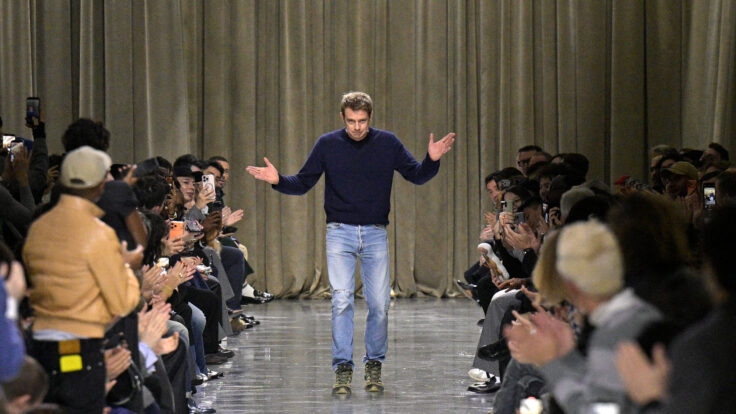
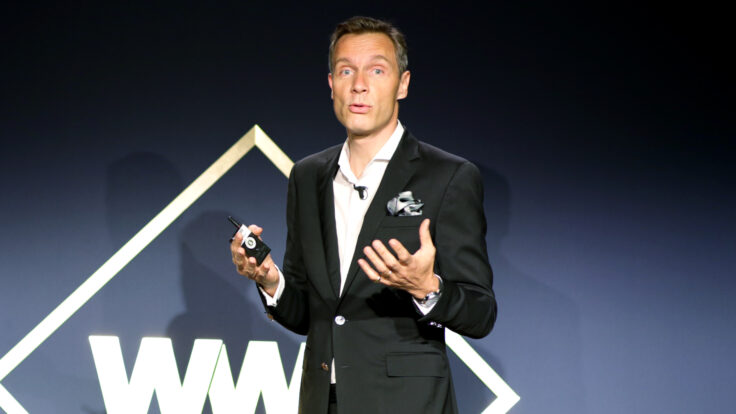
In today’s issue, Sarah Shapiro has the latest from Ralph Lauren’s investor day livestream. With the passing of Giorgio Armani, there is going to be a renewed focus on succession planning at RL—especially from outside investors. Of course, Ralph Lauren is better equipped to continue operating independently after the founder is no longer involved, thanks in large part to C.E.O. Patrice
Louvet, the platonic ideal of a brand manager.
Sarah is also traveling to the bowels of the Class B mall to check in on Pacsun, that relic of 1980s Californian surf culture that has evolved into a teen brand emporium. Today, it’s also the place where kids in Nowhere U.S.A. can access Edikted, Brandy Melville, and Tiger Mist—brands that you have probably never heard of but that generate way more money than your favorite New York fashion label. Speaking of which: You’ll also find
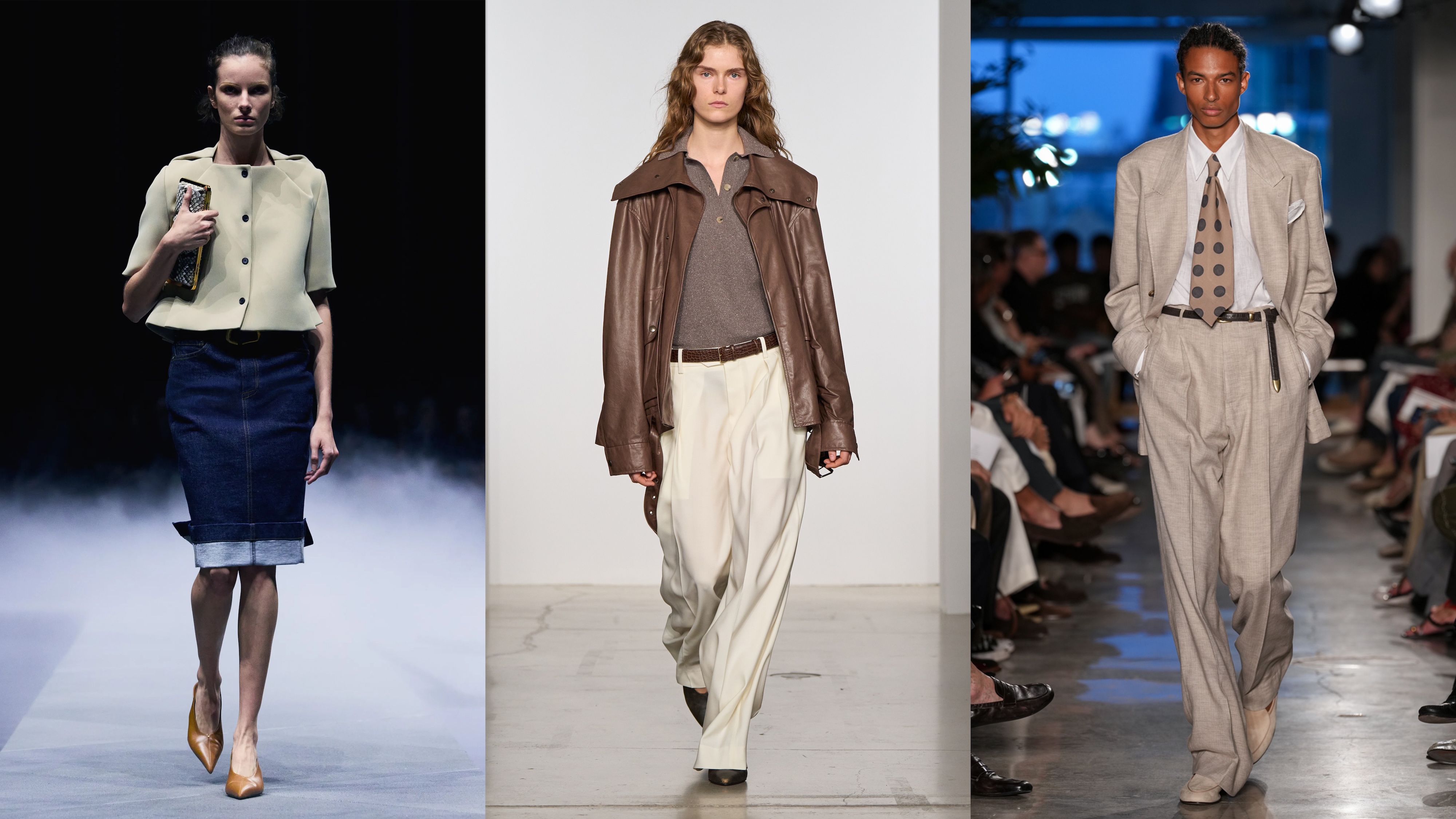
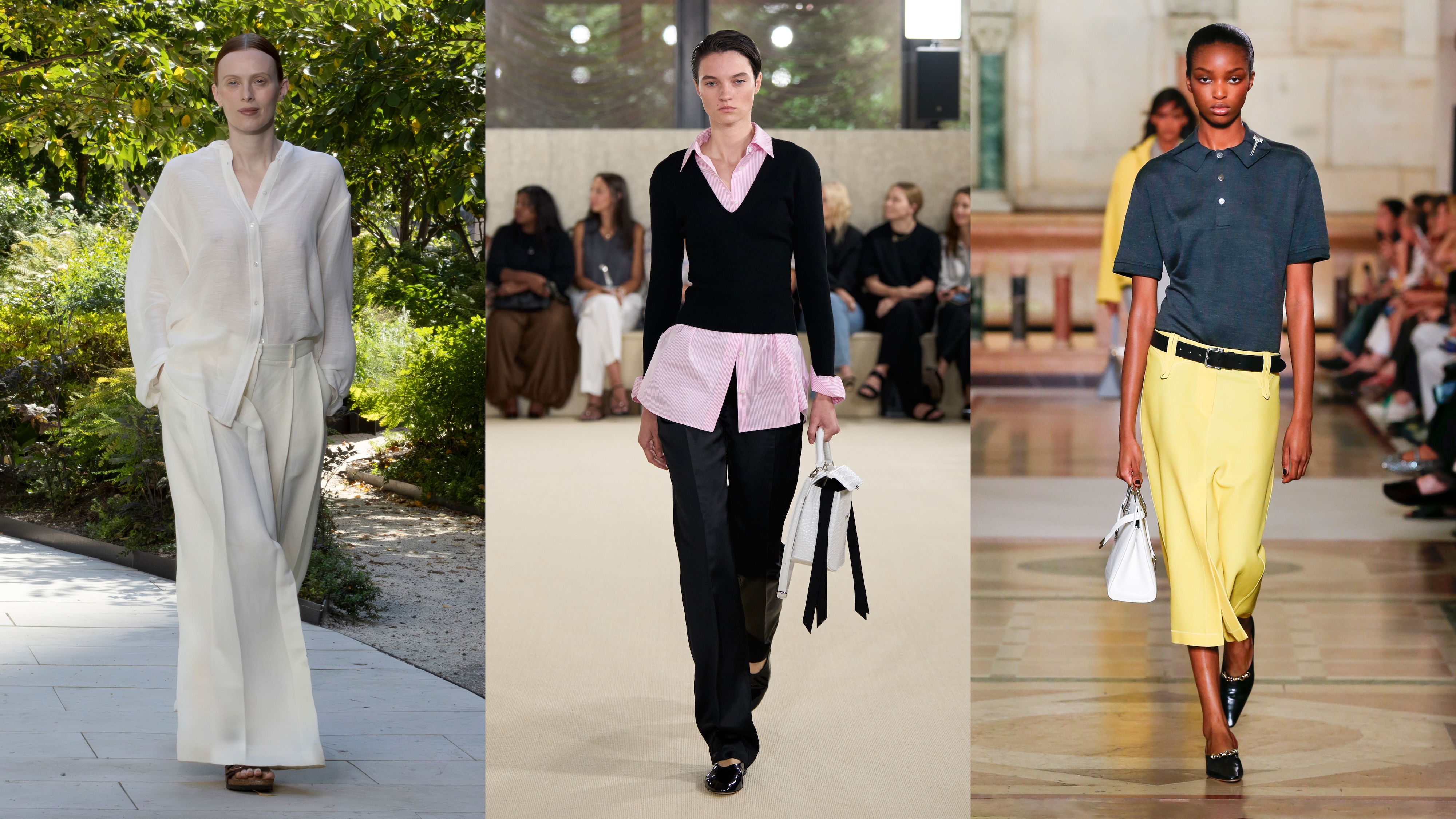
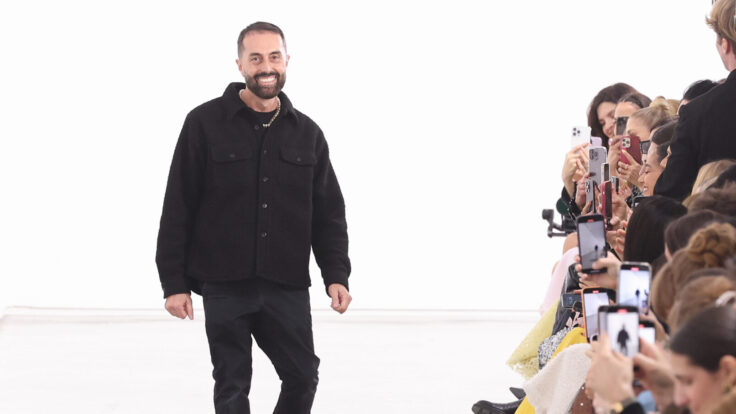
my take on the shows at New York Fashion Week.
Mentioned in this issue: Phoebe Philo, Pieter Mulier, Simone Bellotti, Bally, Eckhaus Latta, Rachel Scott, Ib Kamara, Off-White, Alexander Wang, Veronica Leoni, Calvin Klein, Tory Burch, Catherine Holstein, Khaite, Pacsun, Brie Olson, Fear of God, and many,
many more… |
|
|
A MESSAGE FROM OUR SPONSOR |
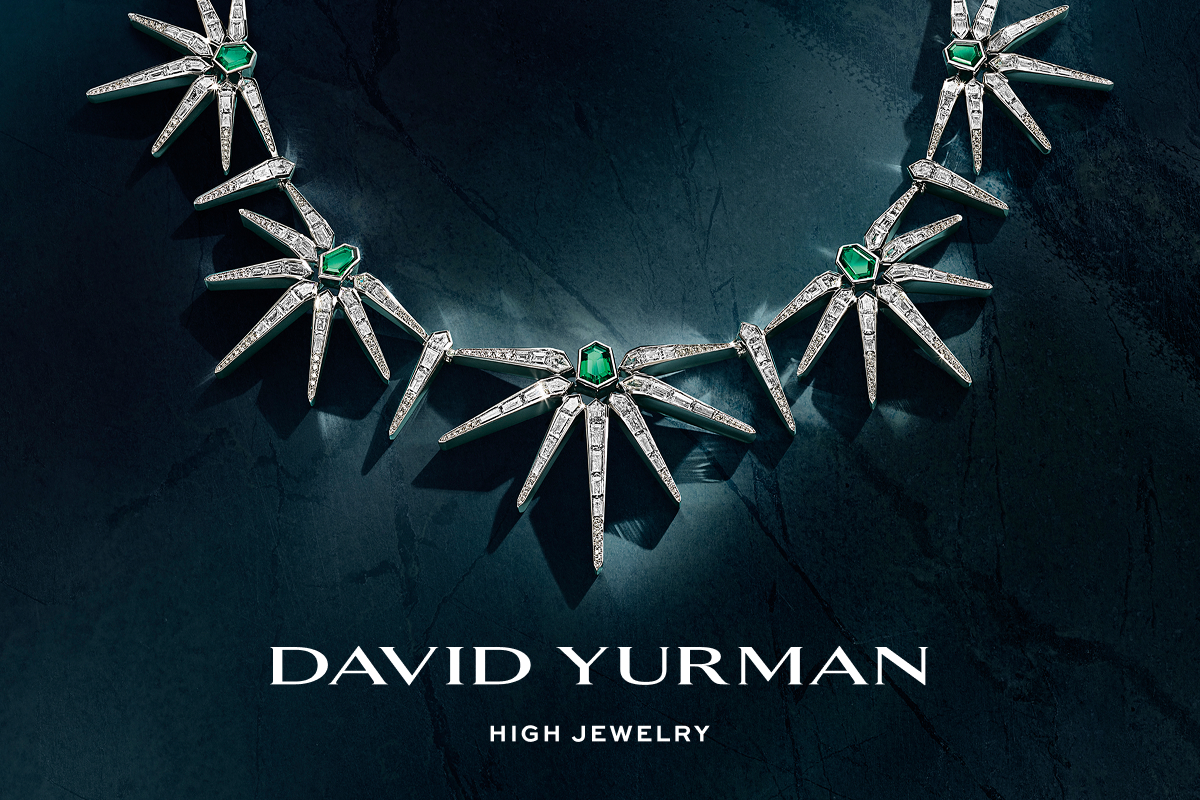
JEWELRY AS HIGH ART
David Yurman High Jewelry is the
pinnacle of the
House’s creative expression and artistry, marrying form and color with exceptional craftsmanship for modern collectors. The Liberty collection evokes the spirit of New York City’s iconic skyline. Bespoke-cut diamonds and
luminous emeralds are hand-set in white gold, radiating icy perfection like the Statue of Liberty’s crown.
Book a private appointment: concierge@davidyurman.com EXPLORE DAVID YURMAN |
|
|

| Sarah Shapiro
|
|
Two Things You Should Know…
|
- Ralph, revisited: Today,
during Ralph Lauren’s first investor presentation since 2022, C.E.O. Patrice Louvet mentioned that the company defines its business as “inclusive luxury.” That’s great, if a little like Veep’s Selina Meyer talking about “continuity with change.” But the stock price is up more than 70 percent over the past year, so something is clearly working.
Still, the brand needs to continue growing across multiple channels—not just men’s, where they are strong right now, but women’s, Gen Z,
international, and outlet. Owning inclusive luxury will also require significant growth in the handbag category, which accounts for a single-digit percentage of their total revenue. The brand owns less than 1 percent of the global premium handbag market, which gives it significant room to grow.
Meanwhile, Ralph Lauren has reclaimed its upscale brand identity by cutting U.S. promotions by 50 percent, per the executives on the call. (Their outlet customers, often seen as the value
segment, still average $100,000 in annual income.) Louvet acknowledged the volatility in the economy and political system but maintained that Ralph Lauren’s diversified approach—from $30 Polo shirts to $3,000 Purple Label suits, and from outlets to exquisitely merchandised flagships—leaves them well-positioned for whatever comes next. - The revival of a B mall brand: Pacsun, a staple of 1980s California surf culture, went bankrupt in 2016 and was
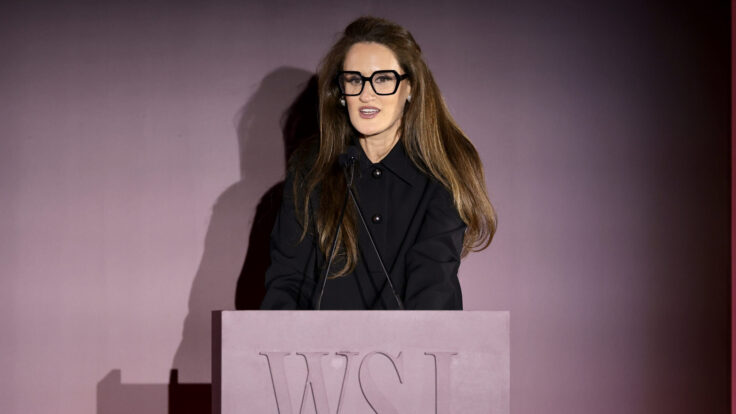
subsequently rescued by Bay Area private equity firm Golden Gate Capital. Since then, it’s morphed into a teen retail powerhouse as well as a suburban gateway to brands like Edikted, Brandy Melville, and Tiger Mist. Two years into the top job, Pacsun C.E.O. Brie Olson seems to be going for the kind of glow-up that Fran Horowitz pulled off at Abercrombie & Fitch.
Pacsun has 300 stores in the U.S. and Puerto Rico, and according to a source, store traffic is
up 17 percent year to date. While e-commerce represents a third of Pacsun’s total business, the TikTok shop has been especially impressive—they’re the number two denim brand on the platform, doing $13.3 million in revenue on $2.1 million of ad spending from August 2024 to July 2025, according to Charm.io. Overall, they’ve doubled their revenue from TikTok year over year.
Pacsun’s breakdown is around 50 percent in-house brands, the rest wholesale, in an assortment targeted at Gen Z and Gen
Alpha tastes. Brands like John Galt, Brandy Melville, and Edikted benefit from the exposure of being merchandised in Pacsun storefronts—Edikted, for instance, only has eight storefronts of its own. The merchandising mix also includes Princess Polly, a brand from Australia’s Gold Coast founded in the early 2010s, which makes hoco (a.k.a. homecoming) dresses and trend-driven items teens gravitate toward. While Fear of God Essentials, another brand in the Pacsun portfolio, can feel like an adulting
version of streetwear—with sweat sets and t-shirts, but also canvas pants, oversize blazers, and denim and leather jackets—the price point makes it a reasonable next step for their customer.
Pacsun, which has also invested considerably in its own research, recently released its youth trends report. Even so, just like any other retailer, it will remain a few steps behind fickle teens, who will always get the last word.
|
|
|
Now on to the main event… |
|
|
News and notes from 17 shows in New York, many of which were unmemorable, while plenty of
others—Eckhaus, Calvin, Tory, etcetera—offered clues to where the industry, and individual brands, are headed. |
|
|
In the midst of New York Fashion Week—between the Armani news, the deluge of Natalie-Erik
schadenfreude, the Ssense bankruptcy, and the Saks fears—investors were dreaming of a recovery in the luxury market. I, too, believe in fashion’s ability to seduce—and that we are programmed to spend money. But success is going to be more difficult to engineer than it has been in the past. “I don’t see a single macro trend—political, financial, or otherwise—that stabilizes things,” one of my most trusted sources said the other day. “Fashion is moving back to a meritocracy, where the brands that
nail it will succeed, but everyone else will continue to flail.”
He was talking about the brands in the hands of the big European groups, but the same could be said for those at New York Fashion Week. I went to 17 shows. It felt like five. I barely remember what I saw. Cumulatively, it was like when you leave a movie theater and never think of the film again.
Fortunately, I did take some notes. On the subject of meritocracy, it’s undeniable that Pieter Mulier’s
Alaïa—one of the European brands with more modest financial support—has had a tangible impact on the commercial fashion business, especially in the U.S. Everyone here has their version of his dropped-waist dance dress, some better than others. Phoebe Philo’s influence is subtler, but also undeniable. You see it in the cut of the trousers on the runway. (So happy she returned so that everyone could stop knocking off Old Céline.) Simone Bellotti’s Bally was also
everywhere, and not just in the varying takes on the boat shoe. (His Jil Sander could be transformative for OTB.) |
|
|
A MESSAGE FROM OUR SPONSOR |
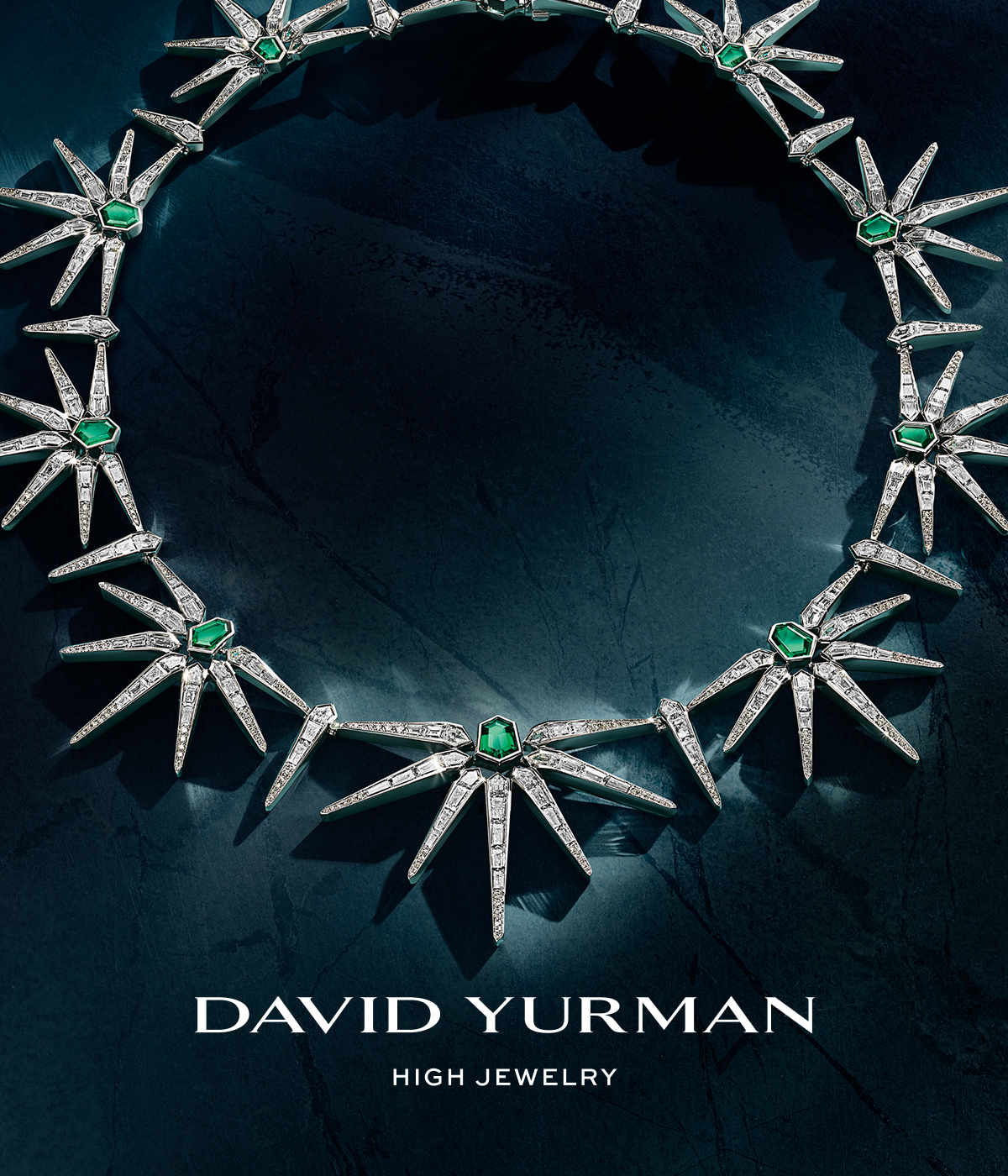
JEWELRY AS HIGH ART
David Yurman High Jewelry is the
pinnacle of the
House’s creative expression and artistry, marrying form and color with exceptional craftsmanship for modern collectors. The Liberty collection evokes the spirit of New York City’s iconic skyline. Bespoke-cut diamonds and
luminous emeralds are hand-set in white gold, radiating icy perfection like the Statue of Liberty’s crown.
Book a private appointment: concierge@davidyurman.com EXPLORE DAVID YURMAN |
|
|
But there were originals, too. Eckhaus Latta’s idea of corporatecore (no blazers, just slacks) resulted in
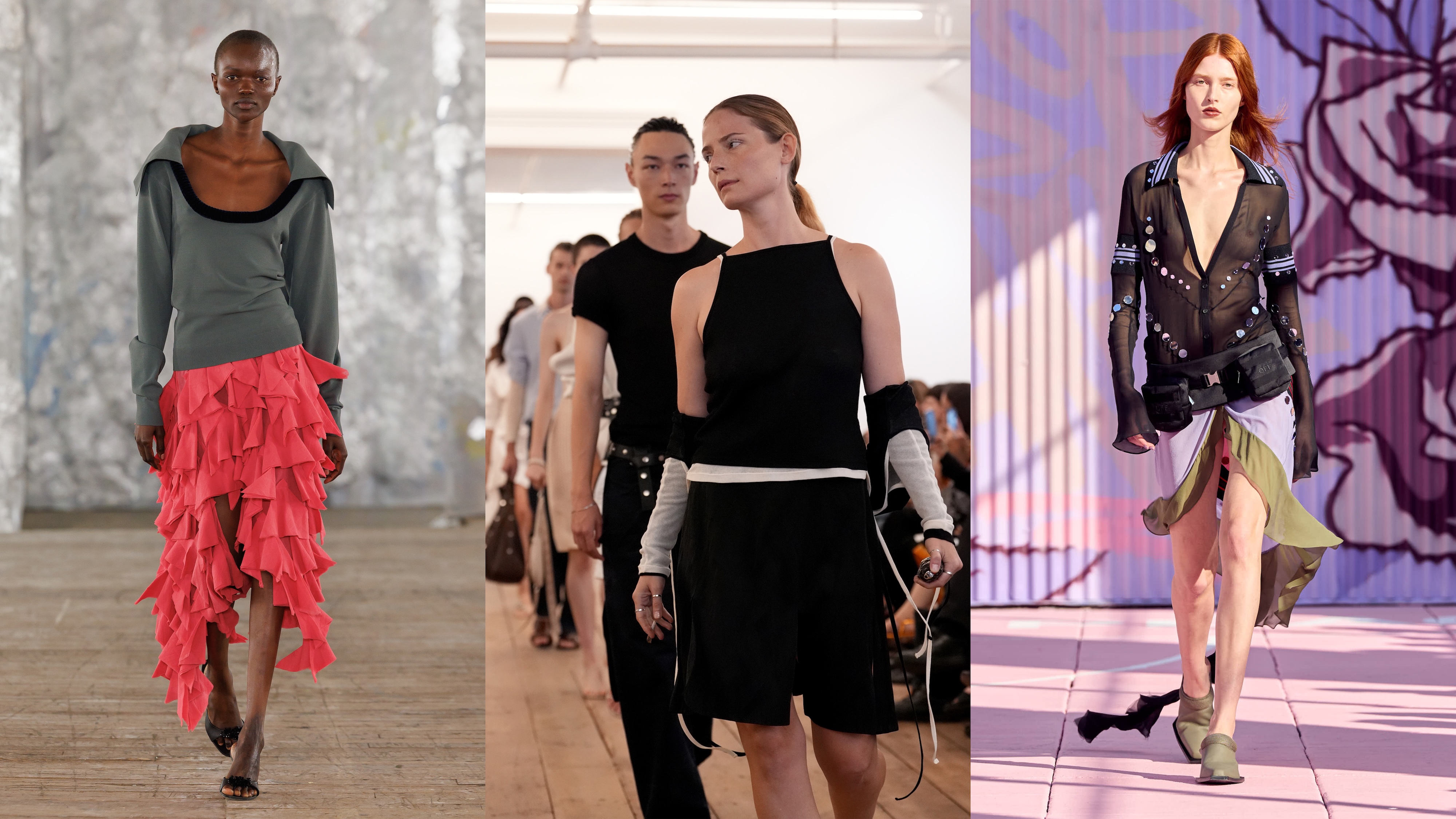
one of the two best shows of the season: It was sexy, clear, and simple, like the double waistband on their soon-to-be-signature black trousers. Someone give these two a money job, they are the real deal. Rachel Scott, who just started her money job at Proenza Schouler quite recently, proved herself worthy at the runway show debut of her brand Diotima, the other best show of the season. I saw something in her tiered knit skirts that I have never seen before
from Scott: an openness and willingness to take risks. |
Photos:
Courtesy of Diotima, Sean Zanni/Getty Images for Gotham, Courtesy of Off-White |
Meanwhile, I’m glad Bluestar Alliance, the licensing firm, has continued to let Ib Kamara
cook since its acquisition of Off-White. I hadn’t been to a show since his first, and his vision is so much sharper now. (I liked the narrow, v-like silhouette that he kept up throughout.) And it was fun to see all the fans in their Off-White, standing on the basketball court at a high school on the Lower East Side that had been painted over by four graffiti artists,
including Daze Ellis.
The power of fandom was also on full display at Alexander Wang, where I witnessed guests attempting to sit on the floor to get closer to the runway, and to the striking mahjong tables that doubled as V.I.P. seating. (They were an ode to his mother.) The presence of the fashion establishment remained muted, but I am confident that was less about the overcovered 2020
scandal and more about Wang going the way of many designers, from Betsey Johnson to Badgley Mischka. Wang’s aesthetic remains frozen in time, so they don’t know what to do with him anymore. And honestly, he doesn’t need them; those kids crouching down near the runway are more important.
Catherine Holstein, on the other hand,
still hears from the critics: A significant number of European journalists came backstage to speak with her after the show; she probably remains an enigma to them. They know this brand Khaite is very popular, and they want to better understand why. Holstein recalled that in high school, she reveled in getting under people’s skin. “I liked bothering people,” she said. And she still does. This wasn’t my favorite collection—Holstein’s penchant for bulbous shapes can be discomfiting—but her ability
to make things people want to buy is undeniable. What sets her apart from the others in New York—these days, at least—is her steeliness, and ability to find commercial success at what many would consider a prohibitive price point. Good for her. |
Photos: Courtesy of Khaite, Courtesy of Calvin Klein, Courtesy of Todd Snyder |
Backstage at Khaite, Calvin Klein designer Veronica Leoni stood behind the scrum of
journalists asking questions, waiting to congratulate her friend on the show. I’m glad they have each other, I thought, given how tough it is to operate in New York. I do think Leoni’s second outing for Calvin Klein was better. It felt like less of a mood board show and more of an attempt, on her behalf, to explore the history of the brand. (I liked the late 1970s–early 1980s references; there was something sort of sensual about it.) |
|
|
But Leoni needs to focus, which can be difficult to do when the infrastructure simply isn’t there, and you’ve
hired the wrong stylist. At these sorts of megabrands, the best shows are a dialogue between the designer and stylist—think of Miuccia Prada and Katie Grand, Miuccia Prada and Lotta Volkova, The Row and Brian Molloy, Tom Ford and Carine Roitfeld. Sometimes, the stylist does more work than any of us could ever imagine. |
Stylist Jane How is not the right partner for Leoni on this project; she needs
someone who can get it all in order, crystallize the big idea, and boom. Otherwise, this is never going to work. (And it may never work anyway, but at least it would be more memorable.) On a less dramatic note, I also think Todd Snyder needs to break up with his stylist, the venerated editor Jim Moore. They have done great things together. Now, it’s time to part ways so the brand can modernize itself.
A great example of a stylist making something
look even better is Jorden Bickham over at TWP, which is absolutely blasting the competition into smithereens at retail. The brand’s annual sales are on track to hit $85 million after just a few years in business. (Investor Andrew Rosen still has the magic touch.) Bickham, who knows how to balance the butch and femme like none other, has great chemistry with designer Trish Wescoat Pound. This season, Bickham styled all the shirting and shimmer
with simple brown leather Arizona Birkenstocks and silk cords from fine jewelry designer Danielle Sherman, who just launched a range of silver, establishing an idealized version of the customer. When I walked out, I asked Beth Buccini, owner of Kirna Zabête, what she thought. Her response? “Ka-ching.”
Toteme, which hit the $85 million mark ages ago, staged a big-league show on Monday morning, one that once again indicated to me that Elin
Kling and Karl Lindman have the price value-equation thing down pat. I loved the silk blouse and trouser sets, and so will their client, who views their offering as downright affordable. |
Photos: Monica Feudi/Courtesy of TWP, Courtesy of Toteme, Courtesy of Tory Burch |
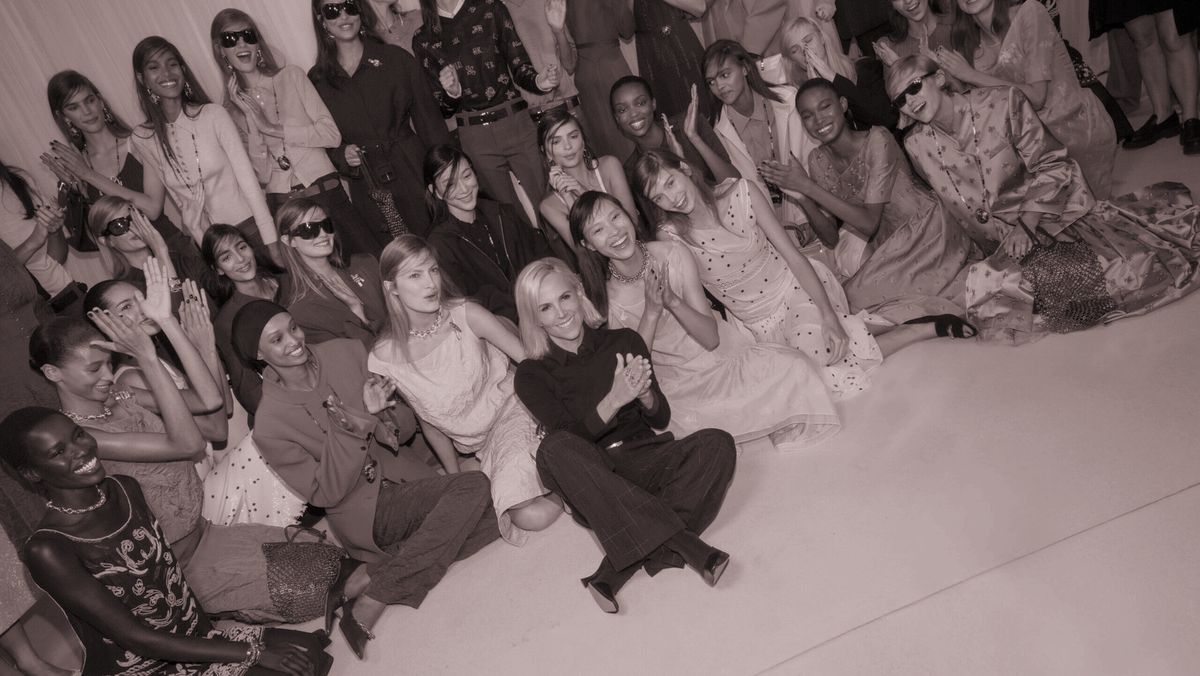
My fashion week ended with the Ralph Lauren of her generation, Tory Burch, who remained
totally true to her current self (with low-slung pencil skirts, weird shoes, and inside-joke embroideries) but grounded it in the polish that originally made her famous. It was not an easy thing to pull off, and showed an evolution that I suspect will help spread the gospel of Tory further. Once you establish who you are, you must then let go a little bit. |
While some C.E.O.s have cautioned employees against posting about the murder of Charlie
Kirk, Gap C.E.O. Richard Dickson is receiving the full spectrum of comments on LinkedIn after posting, himself. [LinkedIn]
S&P Global Ratings has upgraded its rating on Saks: It’s now CCC, but “with a negative outlook.” The kicker of this story, courtesy of an unnamed source: “They frankly just have an unsustainable debt load.”
[WWD]
Laura Brown and Kristina O’Neill discuss their respective defenestrations in preparation for the October release of All the Cool Girls Get Fired. [New
York Times]
Uniqlo history, plus how Clare Waight Keller is paying attention to every detail and introducing v-necks to the retailer. Lauren Collins covers Uniqlo’s quest to be the world’s biggest clothing manufacturer. [The New Yorker] |
Until tomorrow,
Lauren
P.S.: We use affiliate links because we are a business. We may make
a couple bucks off them. |
|
|
Puck fashion correspondent Lauren Sherman and a rotating cast of industry insiders take you deep behind the scenes of this
multitrillion-dollar biz, from creative director switcheroos to M&A drama, D.T.C. downfalls, and magazine mishaps. Fashion People is an extension of Line Sheet, Lauren’s private email for Puck, where she tracks what’s happening beyond the press releases in fashion, beauty, and media. New episodes publish every Tuesday and Friday. |
|
|
Puck’s daily art market email, anchored by industry expert Marion Maneker, offers unparalleled access to the mega-auctions and
galleries, elite buyers and sellers, and the power players who run this opaque world. Wall Power also features Julie Brener Davich, a veteran of Christie’s and Sotheby’s, who provides unique insights into how the business really works. |
|
|
Need help? Review our FAQ page or contact us for assistance. For brand partnerships, email ads@puck.news. You received this email because you signed up to receive emails from Puck, or as part of your Puck account associated with {{customer.email}}. To stop receiving this newsletter and/or manage all your email preferences, click here. |
Puck is published by Heat Media LLC. 107 Greenwich St, New York, NY 10006 |
|
|
|