 |
|
The always patriotic Wall Power went to Philadelphia, the defacto capital of the colonies, late last week. Even though it was 10 degrees hotter, Mrs. Wall Power and I went to a couple of comfortably air-conditioned museum shows, including Mary Cassatt at Work at the Philadelphia Museum of Art and Matisse and Renoir: New Encounters at the always provocative Barnes Foundation.
Philly is also an under-recognized food town. Our trip was spur of the moment, so we weren’t able to get some of the more coveted reservations. But we still ate well.
More on our pastures below.
But first…
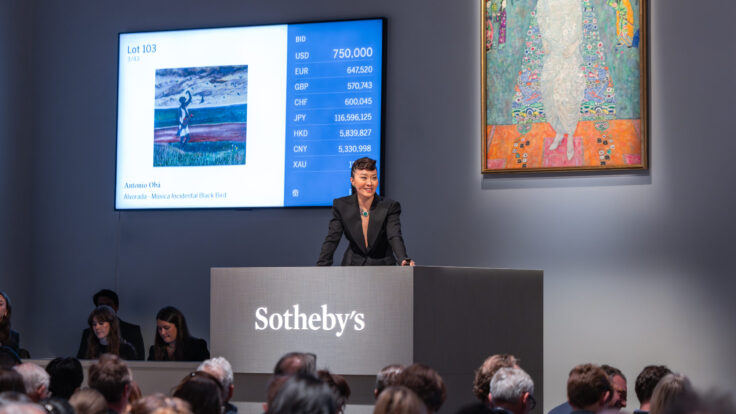
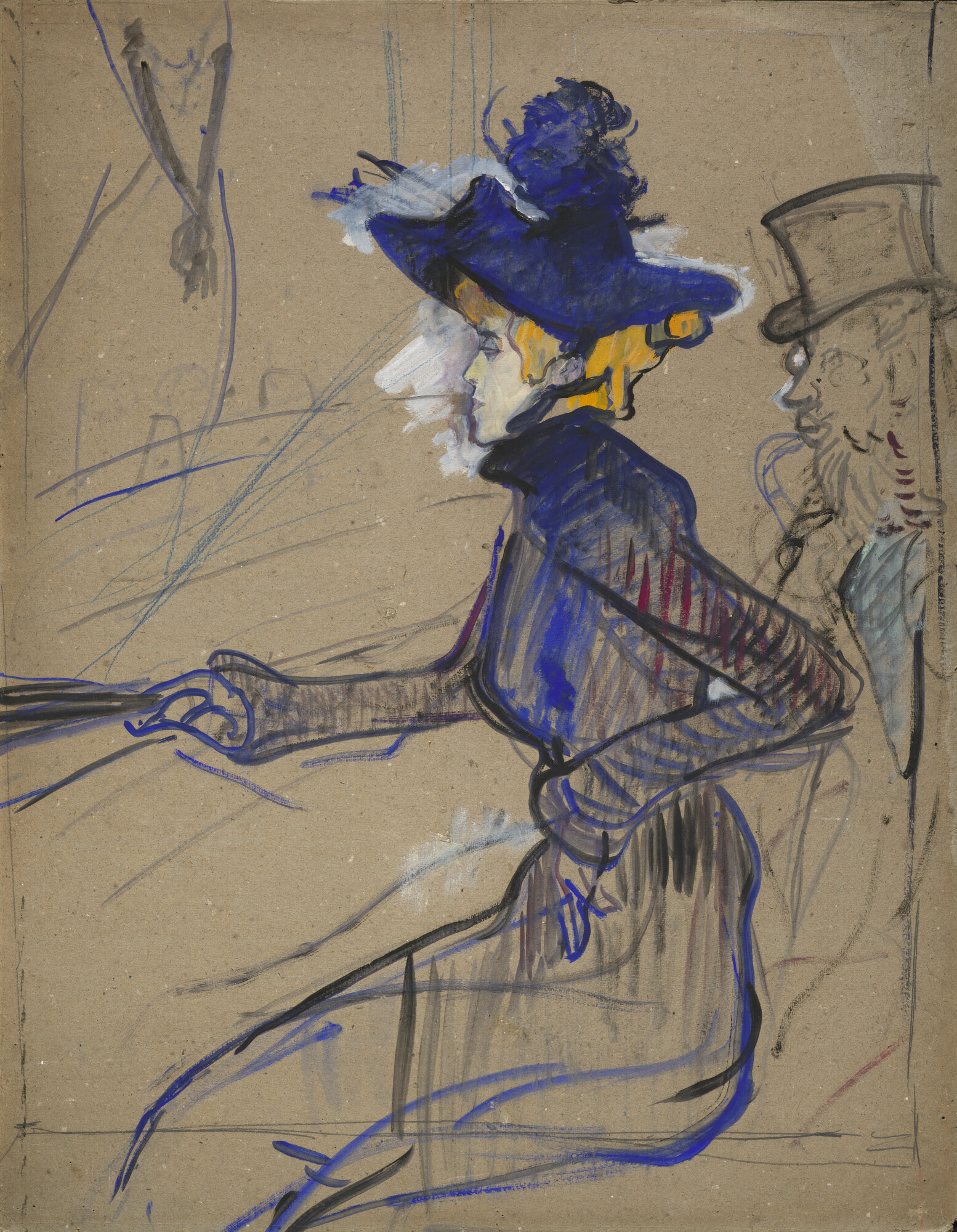
- Christie’s Toulouse-Lautrec for Paris in October: Last winter, Christie’s tried to send a bullish signal to the art market by releasing its $30 million Brice Marden months before the May sales. The painting ended up being withdrawn, but the sales were otherwise successful. This week, four months ahead of Art Basel Paris, the auction house has sent a similar signal about its October sales. On October 18, Christie’s will offer a preparatory sketch of Henri de Toulouse-Lautrec’s famous 1892 lithograph, a symbol of Parisian café society, Divan Japonais, which is part of The Met’s collection though currently not on view. The sketch, which is being promoted as a major rediscovery, has not been seen in public for nearly a century. Estimated at $2.7 million, Jane Avril au Divan Japonais, also from 1892, is a reason to keep a close eye on those Paris sales.
|
|
|
Henri Toulouse-Lautrec, Jane Avril au Divan Japonais, estimated at €2.5 million
|
|
|
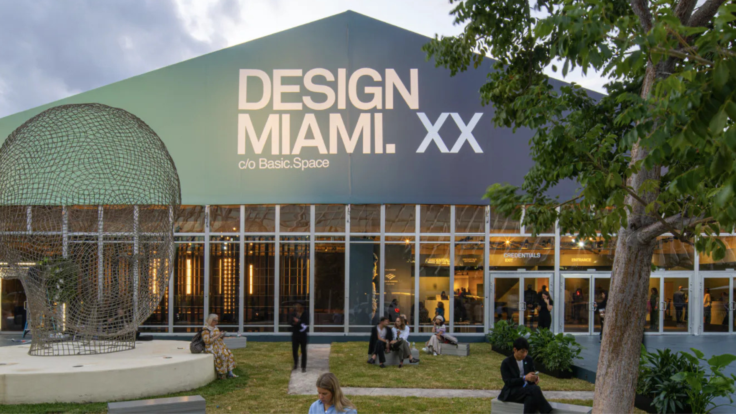
- Art Basel Miami Beach gallery list: Art Basel is revving up the hype machine by touting former gallerist Bridget Finn’s new directorship of Art Basel Miami Beach and all the galleries participating in the December show. Topping out at 283 galleries from 34 countries, Art Basel says this is its largest Miami show yet, with 43 new galleries participating, two-thirds of those based in the Americas. It’s no secret that primary galleries have proliferated and remain under pressure. But Art Basel wants you to know that it has created more options, including a new minimum booth size, allowing galleries to share booths, and a sliding scale that charges larger firms more per square foot than smaller galleries taking tighter spaces.
- Antiquities surprises: Although the art market seems stuck in a downshift, there are always surprises somewhere. During last week’s sale of antiquities at Christie’s in London, an Egyptian bronze falcon estimated at $320,000 sold for $806,000; an Etruscan bronze kore (or figure of a maiden) was sold for slightly more than $383,000 over a $128,000 estimate; a 7-inch Roman glass jar in cobalt blue estimated at $6,300 sold for more than $64,000; and 10 lots of gold objects excavated in Iran in 1920 were sold for more than $1 million, with the two top lots each making $306,000 over estimates of $77,000.
|
| 📈 P.S. If you have opinions about how we do things at Puck—and I bet you do—please participate in our new study. We want to hear from you to make your experience even better!
Now let’s get to Philly… |
 |
| Yo Mary Cassatt! |
| Philadelphia, which eschews its reputation as a blue-collar sixth borough, is actually a sneaky-great art city. And never more so than now. |
|
|
|
| New York may be the center of the art world, but it doesn’t have a monopoly on art, of course. In America’s other, lesser cities, there are a number of important institutions that put on shows that never reach our shores. I trekked down from civilization over the long weekend, for instance, because I wanted to see the Philadelphia Museum of Art’s Mary Cassatt at Work. The museum, after all, holds almost 10 percent of the finished works produced by Cassatt, the late 19th century, Pittsburgh-born painter. The new show—based on a two-year technical study of the Philadelphia museum’s archive but also borrowing freely from other world-class institutions—portrays Cassatt as a pragmatic, calculating, and hard-working artist, against her previous reputation as a cosseted chronicler of haute-bourgeois domesticity.
Mary Cassatt at Work is an odd title for the first major museum show in Philadelphia—a city where Cassatt’s brother ruled over the Pennsylvania Railroad—devoted to the artist in nearly 40 years. The only American member of the Impressionist circle, Cassatt often feels overlooked not only because of her sex but also her focus on children and maternal responsibilities in some of her most famous and recognizable images.
What curators Jennifer Thompson and Laurel Garber are trying to do with this show is present Cassatt not as the dilettante daughter of a very rich 19th century stock and land speculator, but as a professional artist. They are keen to reveal that although Cassatt’s paintings are noted for their depictions of motherhood and childrearing, they’re not primarily society portraits but rather carefully crafted works using unrelated models (often drawn from working class neighbors and employees) to create calculated images that would sell to an eager market. Cassatt’s art dealer was the Gagosian of his day, Paul Durand-Ruel.
Cassatt trained at the Pennsylvania Academy of Fine Art, where one of her schoolmates was Thomas Eakins. Later, bored with the limitations of her education there, Cassatt decamped to Paris to study with Orientalist painter Jean-Leon Gerome. She wasn’t able to attend the Ecole des Beaux-Arts because women were not admitted, even though they were allowed to study privately. Eakins, too, would migrate to Paris and become a student of Gerome’s.
The Franco-Prussian War of 1870 sent Cassatt back to the United States. By the time she settled again in Paris, the Impressionists had begun their revolt against the state-controlled Salon system. Cassatt was approached by Edgar Degas to join the Impressionist salons and, along with Berthe Morisot, became a central figure in the group.
Like Morisot, Cassatt didn’t have to work: Her father’s wealth covered her living expenses and her parents and sister lived with her for decades in Paris. But Cassatt’s social position as a bourgeois American woman made it difficult for her to plunge into the café-based social life of her artist peers. Unwilling to be relegated to the ranks of women amateur painters, Cassatt saw herself as a professional artist. Complicating matters, her father insisted that she pay for her art expenses from her earnings. (The fees she paid for models were not trivial. Studios, supplies, and print-making equipment all added up.)
This is the context surrounding Mary Cassatt at Work. The show pounds the point home both by juxtaposing one room of family portraits—evoking the somewhat overwhelming presence of her family throughout her unmarried life—against her prodigious output of pastels, oil paintings, and prints in other rooms. The prints, in particular, represent Cassatt, the professional, who bought the tools and equipment for modern, multi-state printmaking and hired a printer to work alongside her in the complicated and messy process.
A focal point of the show is the “Set of Ten” prints Cassatt made in response to seeing the influential show of Japanese prints at the Ecole des Beaux-Arts in 1890. Many of the Impressionists, especially van Gogh, were bowled over by the show. Cassatt went on to re-create her own imagery in the style of Japonism. These domestic scenes can be poignant about the appeals and constraints of bourgeois life and, like their Japanese counterparts, evocative of hidden emotions and desires, not the effect usually associated with Cassatt. Flinty, resourceful, and proud, a new Mary Cassatt emerges from the show. |
|
|
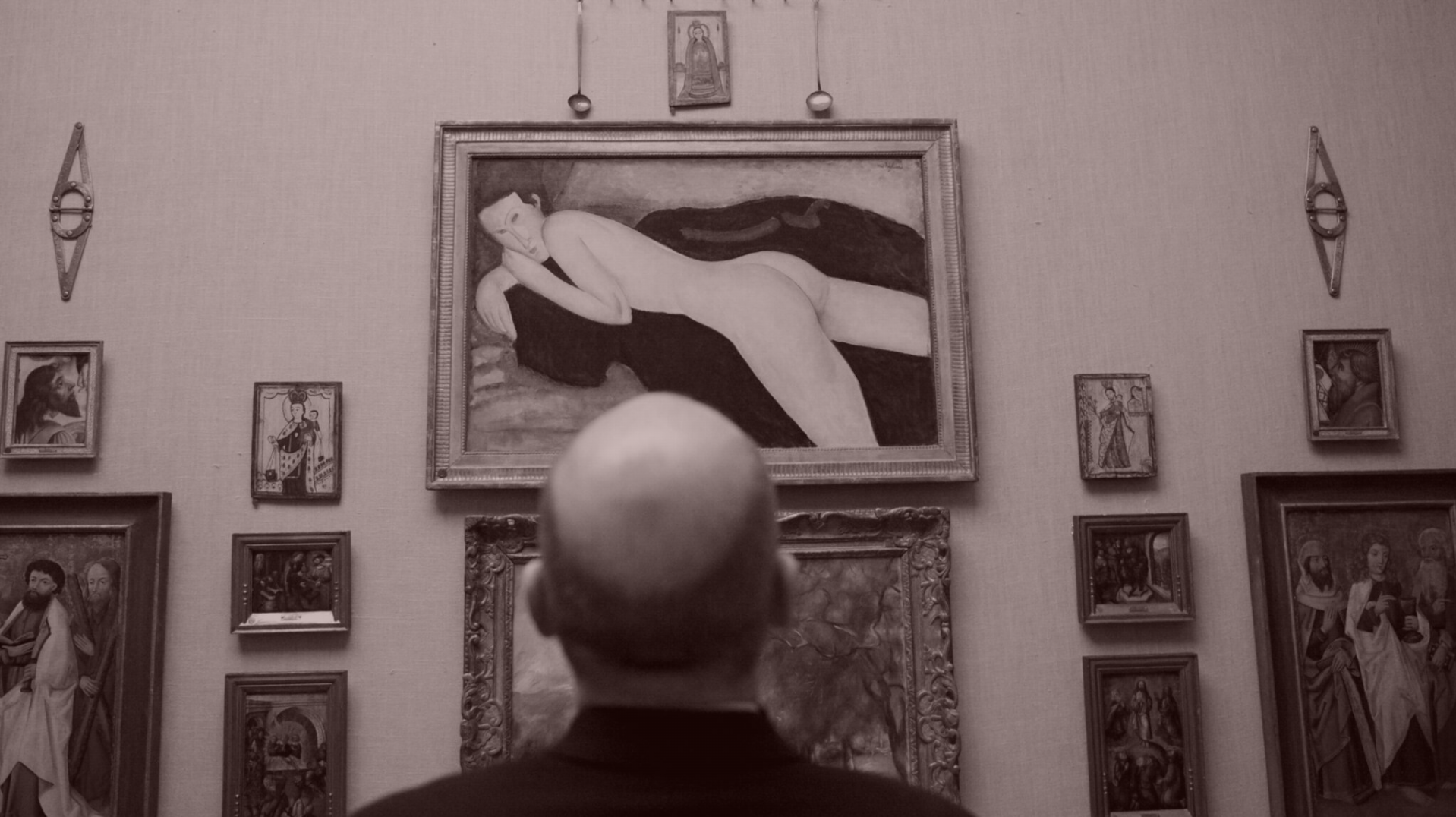
| When you’re in Philadelphia, it’s always a good idea to visit the Barnes Foundation, the deeply idiosyncratic collection of mostly Impressionist and Modern art assembled by pharmaceutical salesman Dr. Albert Barnes. Barnes had his own ideas about art, how to display it, and how it should be taught. Two decades ago, the foundation was allowed to move from Barnes’s former home in suburban Merion to a structure—it’s hard to call it a museum—in central Philadelphia. The city replicated the rooms in Barnes’s home where he had created strict and peculiar arrangements of paintings and other important (to him!) design objects (mostly examples of iron work).
Such is the bizarre set of emotions that surround art that even this accommodation failed to satisfy self-appointed guardians of Barnes’s legacy, who would have preferred to see his collection remain in its obscure and less accessible location. (Barnes originally required all interested visitors to request appointments by letter.) Only last year, the museum got permission from a court overseeing the foundation to loan works to other museums—or even move works within the collection. This decision allowed the Barnes Foundation to mount a show memorializing the brief friendship between Henri Matisse and Pierre-Auguste Renoir.
The result is Matisse & Renoir: New Encounters at the Barnes—a somewhat funny title given how the foundation displays its intense and overwhelming collection in densely packed rooms of artworks with gnostic pairings. The didactic Barnes, who was also an early patron of African American artists, didn’t want anyone encountering his art in a new or novel way. The Barnes has 180 Renoirs in its collection, by far the largest number of any artist represented, and 59 paintings by Matisse. The show presents 35 of these works together.
We should be thankful to the judge who allowed the museum to mount this show—and presumably many more in the future—and gave the foundation permission to make loans from its extraordinary 900-work collection. (The Barnes itself has only recently allowed visitors to take pictures.) Don’t get me wrong, the Barnes experience—as he intended it—is well worth engaging. But it takes time and can produce a sense of visual exhaustion and an overwhelming feeling that one is missing a great deal of the context behind the art and the artists. There is no wall text at the Barnes. Tiny brass plates at the bottom of each frame will tell you the name of the artist but little else about the picture. Some of the best works are hung far above eye level and beyond the limits of most observers’ ability to examine them in any detail.
It’s true that studies have shown museum-goers actually spend more time reading the wall text and tombstones next to a painting than observing the art. A few hours in the Barnes will force you to become better at looking—although there is so much to see in the collection, you have to dart your eyes constantly even to know where to look.
Despite all that, Matisse & Renoir is a welcome addition to what the Barnes can offer its guests. When Matisse went to Nice for the first time in 1917, he made sure to visit Renoir, who lived nearby. During their two-year friendship—Renoir died in 1919—Matisse was able to learn from the Impressionist master. Renoir told him he needed to get out more and paint landscapes to counteract the effect of his many interiors. And that’s what Matisse did. The two artists share interesting approaches to color, and there are some technical aspects that the show tries to gesture toward.
But it quickly becomes clear that the show is more of a trial balloon than a scholarly thesis. It depicts Renoir, who was 30 years older, and Matisse working on parallel tracks. The first room presents Renoir’s Impressionist works. The second room contains some of Matisse’s most striking works, including Red Madras Headress, painted 10 years before the two artists would meet, and the magnificent The Joy of Life, from 1905-6. In the next gallery, we see three tall paintings by Matisse, made in mid-1917 around the time he met Renoir, each depicting a group of three sisters in different settings. Across from those works are large Renoirs from 40 years earlier, including a social scene titled Leaving the Conservatory and a depiction of a woman and three children who are described as “mussel-fishers.”
If there is something obvious to be learned from having Matisse and Renoir square off in this way, the Barnes isn’t articulating it. That doesn’t mean the opportunity to experience the standoff isn’t appreciated or instructive. Even though the show lacks a thesis beyond the chance encounter between great artists, seeing works from the Barnes in a refreshing and more relatable setting is a major step forward.
The final room is an almost chapel-like experience of Matisse, with the very large The Music Lesson, from 1917, surrounded by smaller Matisse interiors from the same period in Nice and odalisque nudes from the early 1930s. This room alone is worth the trip.
The great joy of these shows is the chance to rediscover the work of familiar artists. The advantage the very rich have over the rest of us is the ability to continually encounter and re-encounter the work of their favorite artists by owning it. No amount of money will get you any of the works Barnes collected. And the supply of Cassatt works in private hands is small and dwindling. In both cases, these shows allow you to see Cassatt, Renoir, and Matisse’s work in a way you might not have seen them before. In the case of the works at the Barnes, in a way you never will see again. |
|
|
| That’s all for today. I’m sure we’ll have art-related reasons to be back in Philly before too long. Meanwhile, I’ll leave you with one last thought…
Normally when I go to the Barnes, I time the trip so that an early morning drive gets us to Sabrina’s Cafe, a local Philly mini-chain of burger & sandwich joints, in time for breakfast. Sabrina’s breakfast is an “if you know, you know” kind of situation. But this trip was different. I wanted to see the Cassatt show first, which left open the question of where to have lunch. (There are a bunch of places in Philly where I’m dying to have dinner but that makes for a long drive home late at night.)
We settled for Middle Child Clubhouse, a Fishtown hipster cafeteria-style joint. I made up for missing breakfast with one of the current food fads, a skillet-cooked buttermilk pancake covered in honey-butter syrup. (For all of you Golden Diner fans, it was almost as good.) That didn’t keep us from having a vegan Phoagie, which consisted of Hoisin eggplant, avocado, and onions covered in pho sauce, and a Shopsin Club, their take on a turkey club with a cranberry miso mayonnaise. A frozen coffee and lemonade cut with clementine juice helped on a hot day.
See you Sunday, sports fans,
Marion |
|
|
|
| FOUR STORIES WE’RE TALKING ABOUT |
 |
|
 |
|
 |
|
 |
| Shell Games |
| Foreshadowing the Jeff Shell era at Paramount & CBS Sports. |
| JOHN OURAND |
|
|
|
|
|
 |
|
|
|
Need help? Review our FAQs
page or contact
us for assistance. For brand partnerships, email ads@puck.news.
|
|
You received this email because you signed up to receive emails from Puck, or as part of your Puck account associated with . To stop receiving this newsletter and/or manage all your email preferences, click here.
|
|
Puck is published by Heat Media LLC. 227 W 17th St New York, NY 10011.
|
|
|
|