Hi, and welcome back to Line Sheet. It’s Inner Circle Day in these parts, which means I’m serving up super-insidery intel that you most certainly can’t find anywhere else. If you haven’t traded up to our elite tier, do so now and we will forward you today’s issue.
First up, Rachel Strugatz is here with a Drunk Elephant bombshell. Elsewhere, I’ve got a fun scoop about a new Loewe hire, and some thoughts on PVH head Stefan Larsson’s firing of Eva Serrano, the Calvin Klein executive charged with resuscitating the beloved brand. For the main event, I’ve got what you need to know about Satisfy, the Paris-based running brand founded by a former skater that recently raised a significant amount of money from a Chanel heir.
🚨 Programming note: Tomorrow’s Fashion People guest is Andrew Rosen, the founder of Theory and an investor in what feels like every American brand that’s amounted to anything over the past 30 years. We discuss his latest success story, TWP, as well as his investment philosophy, how the industry has changed since he joined the family business in the 1970s, and plenty more. Carl Rosen, Andrew’s dad, was Calvin Klein and Barry Schwartz’s partner in the denim line when it took off in the early 1980s, so the conversation feels even more relevant given today’s news. Listen here and here.
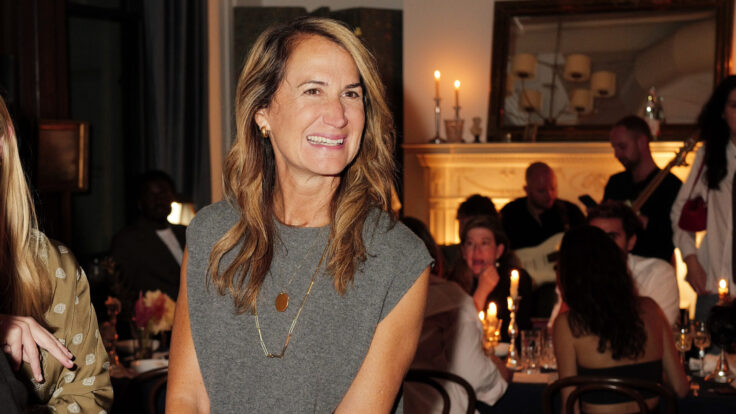
🛍️ For those of you with the Shoppies: A few weeks ago at Sarah Hoover’s book party at the Chateau Marmont in Los Angeles, I complimented Art Production Fund leader Casey Fremont on her woven-check tote: There are so few handbags that compel me these days, and this one was floppy enough to carry around on the weekend but elegant enough to be the daily laptop holder. It’s from Akris, the Swiss-engineered women’s fashion label beloved by boardroom execs and sensible-chic women alike. You can buy it here.
Mentioned in this issue: Brice Partouche, Satisfy, LVMH, Bernard Arnault, 1686 Partners, the Wertheimer family, Chanel, Shiseido, Drunk Elephant, Tiffany Masterson, Maryam Nassirzadeh, Loewe, Stefan Larsson, Calvin Klein, Eva Serrano, David Savman, Raf Simons, and many, many more…
|
|
|
|
A MESSAGE FROM OUR SPONSOR
|
For Spring 2025, we’ve turned the lens on the effortless allure of the It Girl, who—with quiet confidence and a cool, carefree attitude—makes every outfit uniquely her own. From chic tailored sets to denim with It Factor, discover the full collection at VeronicaBeard.com.
LEARN MORE
|
|
|
Three Things You Should Know…
|
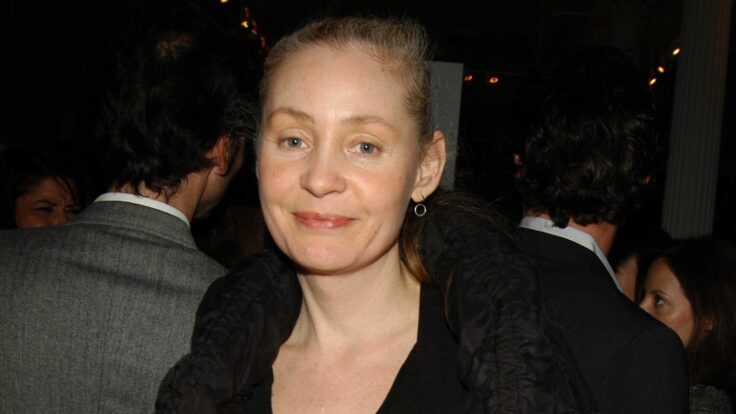
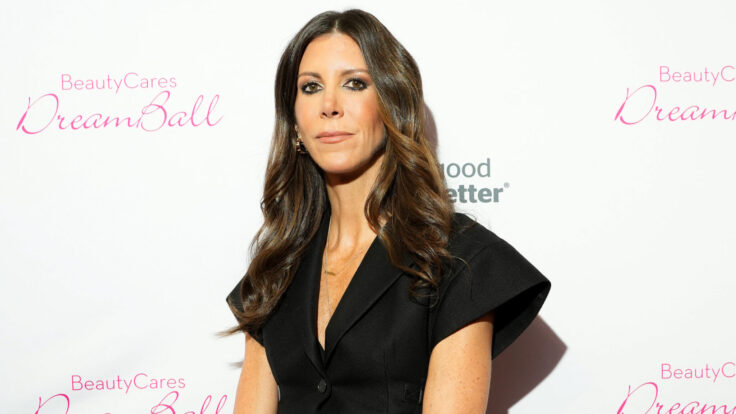
- Rachel on a spicy Drunk Elephant shake-up: Another high-level executive is in conversations about leaving Shiseido, the troubled Japanese beauty giant that abruptly bid adieu to its Americas C.E.O. and global M&A lead, Ron Gee, less than a month ago. I’m hearing that Tiffany Masterson, founder and chief creative officer of Drunk Elephant—a pioneer of the “clean” beauty movement for which Shiseido paid close to $850 million back in 2019––will be stepping down from her day-to-day duties. Supposedly, an internal announcement about Masterson’s departure is imminent. (Masterson didn’t respond to a request for comment, and Shiseido declined to comment.)My understanding is that Masterson will transition into more of a popemobile role, where she’ll do personal appearances on behalf of the brand for launches and at events. “Tiffany doesn’t see eye to eye with the changes that were made and the results that new leadership has gotten,” said a person with knowledge of the situation. Current and former executives told me that Masterson had been pushed out by Gee, the C.F.O. turned C.E.O. whom many hold responsible for Drunk Elephant’s recent troubles—including ongoing stock issues, off-brand messaging, and double-digit declines. In its last earnings call, Shiseido revealed that Drunk Elephant’s sales declined by 25 percent last year. A lot more to come on the Shiseido situation next week. —Rachel Strugatz
- Maryam in Paris: Everyone in the post–Dimes Square crowd can’t stop talking about (my personal fashion idol) Maryam Nassirzadeh’s new gig on the design team of Loewe Paula’s Ibiza, the successful, resort-y sub-brand, launched in 2017. Of course, designers moonlight at bigger houses all the time, so this arrangement isn’t at all out of the ordinary. Nassirzadeh just happens to be one of the first high-profile hires by new Loewe creative directors Jack McCollough and Lazaro Hernandez, and, to be honest, everyone is very excited for her. (Many people gleefully shared this information with me.)Just a few months ago, I said that Nassirzadeh possessed a wonderful mix of eccentricity and commercial sensibility, and that a European brand should recruit her. Bringing Nassirzadeh into the fold is a pretty brilliant early maneuver on McCollough and Hernandez’s part: I’m not sure there’s a better project for her than Paula’s Ibiza. This is a good omen for everyone involved. (Reps for Loewe and Nassirzadeh did not respond to a request for comment.)
- The Calvin Klein conundrum: Stefan Larsson, the C.E.O. of Calvin Klein and Tommy Hilfiger parentco PVH, announced this morning that Calvin Klein’s global brand president, Eva Serrano, was leaving the business. She’ll be replaced by David Savman, the company’s head of operations and chief supply chain officer.Serrano will supposedly be advising the company through the end of the year, but she was fired. The efforts to reconstitute the shriveled Calvin Klein brand, including the return to showing a runway collection—designed by the well-regarded Veronica Leoni, previously a number two at The Row—have been challenged by everything from poor execution to issues in China that started long before Trump’s tariff war. Shares of PVH are down nearly 33 percent this year.
PVH is a tricky, tricky company: In reality, it’s essentially a private equity firm masquerading as a strategic group. Larsson, who arrived in 2019 and was promoted into the C.E.O. role in 2021, wants to change that. Unfortunately, the group is entrenched in complex, often brand-eroding licensing deals that are nonetheless the engine of the machine. Calvin Klein’s lucrative licensing deal with G-III concludes at the end of 2027 and, as I’ve previously reported, PVH executives have apparently made queries about partnering with other licensing firms, despite insisting that their plan is to bring it all in house.
I understand why: Larsson worked for a long time at Swedish fast-fashion giant H&M before a successful stint at Old Navy and a less successful one at Ralph Lauren, where he clashed with the namesake. If he could somehow pair the fast-fashion efficiencies of H&M and Zara with the branding architecture of Ralph Lauren, perhaps he wouldn’t need licenses. And his decision to replace Serrano with Savman—an H&M veteran and supply chain expert—indicates that he still wants to get the supply chain right. But it won’t be easy: For years, both Calvin Klein and Tommy Hilfiger were run regionally, not globally—so it’s a bit of a Frankenstein situation, on top of all the very bad macro things happening right now.
Meanwhile, Leoni, whose Calvin Klein Collection received mixed reviews, still has time to make her mark. Larsson, despite mostly working at faceless brands, understands that identity for an emotional brand like Calvin Klein is important. Unfortunately, I am still not convinced they have the infrastructure
in place to make a designer-priced collection successful. (This was the downfall of the Raf Simons Calvin Klein 205W39NYC experiment.) Let’s see how Leoni’s first effort does at retail—what the quality-for-value ratio is like, in particular—and whether or not her second collection is better received. (In his internal email to staff announcing Serrano’s departure, Larsson called out Leoni and beloved marketing exec Jonathan Bottomley, indicating that he is sticking with them both.) Fashion elites like and admire Leoni, and want her to succeed. And Larsson, I suspect, sees value in that. For now. At the end of the day, though, Calvin Klein sells jeans and underwear, and they have to sell more of them.
|
|
And now, on to the main event…
|
|
|
|
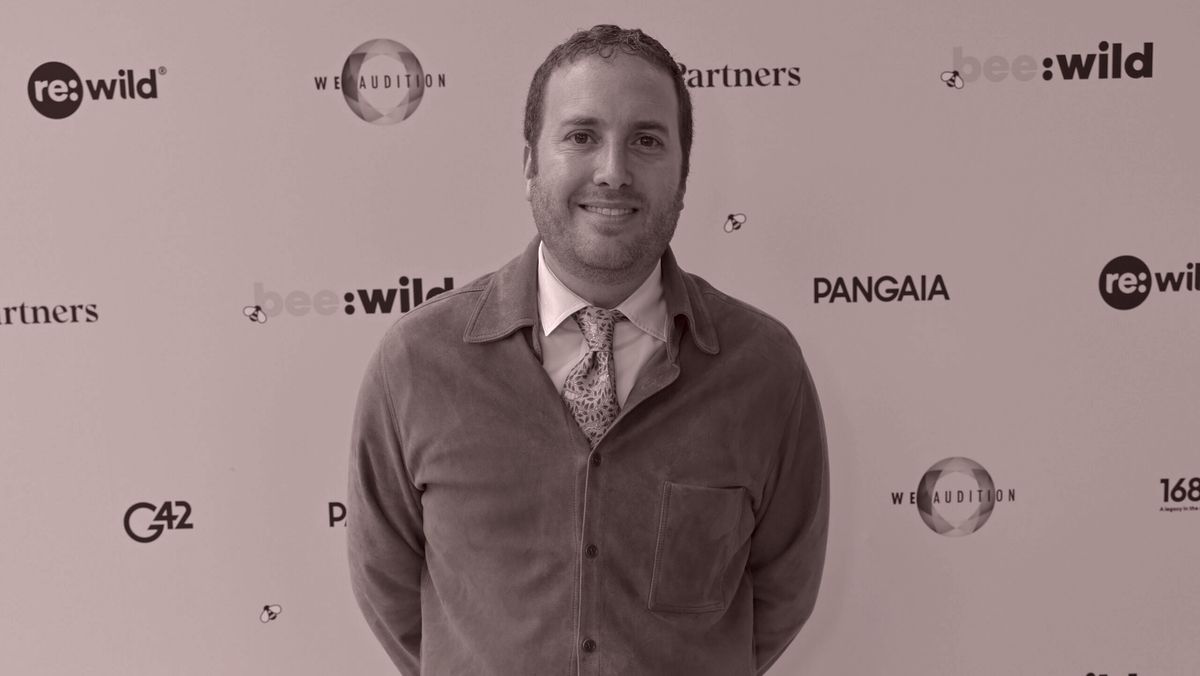
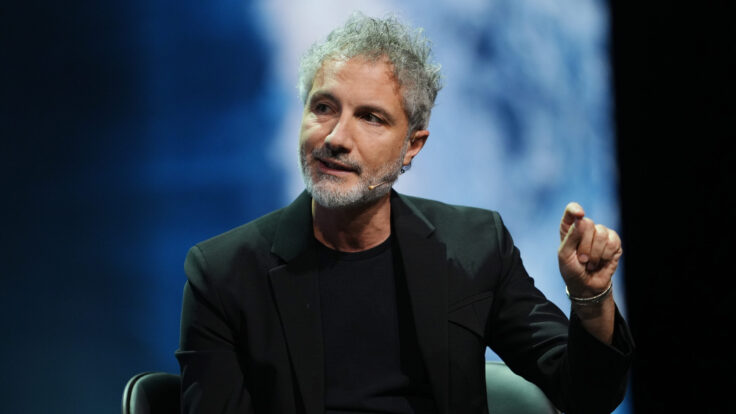
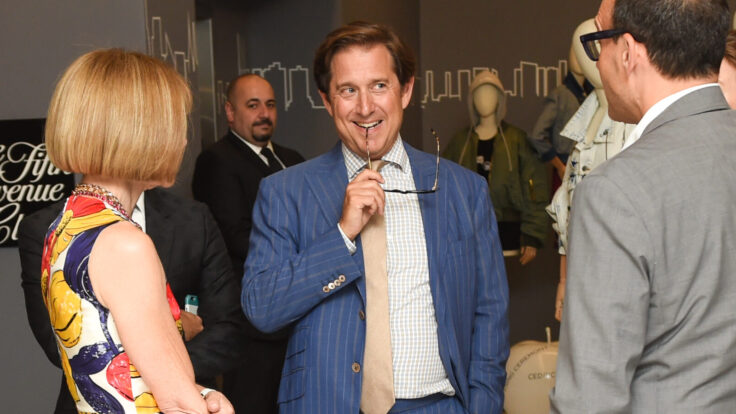
David Wertheimer, a 38-year-old heir to the Chanel fortune and founder of 1686 Partners, is the surprising new money in Paris-based activewear brand Satisfy.
|
|
|
|
An industry friend of mine recently offered a psychological observation about yours truly. “You love a sub-$5 million brand and an above-$2 billion brand more than anyone I know,” he said. It’s true: While my number-one rule is to follow the money, incipient brands offer the promise of what money could be made in the future. The brands in the middle are often, well, middling: That’s when the going gets hard, and often kinda boring.
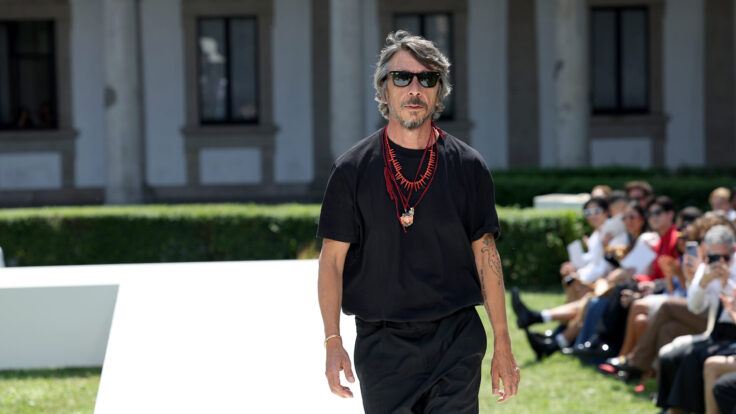
We were trading notes on Satisfy, a Paris-based, running-focused activewear label founded by a Swiss skater named Brice Partouche in 2016. Satisfy is a member of the clique of running-club-associated brands that came up as a sort of reaction to On Running, which was founded in 2010, but also to Nike’s relative ineptitude. These brands, including District Vision (also founded in 2016) and Tracksmith (2014), initially targeted men, who make up the majority of marathon runners globally, although that ratio is changing fast. Satisfy Running’s differentiator was that it was based in Paris, and very designed: One of its signatures, for instance, is moth-hole-like perforations in the t-shirts to improve aeration. (Satisfy calls it MothTech.) You could argue this improves performance—and Satisfy does use performance fabrics—but it’s also reminiscent of the arguably appalling tattered t-shirt trend of the early 2010s. A real choice.
|
|
|
|
A MESSAGE FROM OUR SPONSOR
|
Our latest drop captures the essence of true spring—a mix of statement pieces and wardrobe staples, from embroidered linen dresses to relaxed tailoring. Classics with a twist—polished, but always cool. Shop new arrivals at VeronicaBeard.com.
LEARN MORE
|
|
|
|
I was asking about Satisfy because, earlier in the day, I’d been chatting on the phone with a uniquely positioned European executive: not a banker or investor, but someone who is clued in on much of the deal flow surrounding those little brands I love so much. Satisfy’s recent funding round came up, and this person pinned it to LVMH. “When a guy in a blue suit tells you something, it’s usually at least half-true,” the person said.
Of course, then the question was, where in the LVMH universe could the money be coming from? Not the group. (Way too small.) Not L Catterton, the private firm that often invests behind Bernard Arnault and company. (Still too small.) Maybe LVMH Luxury Ventures, which historically cuts tiny checks and is extremely driven by current tastes, with a portfolio that includes Gabriela Hearst, Aimé Leon Dore, and Our Legacy? After all, Satisfy’s earliest high-profile supporter was Ian Rogers, the former Apple and Beats executive who spent the back half of the 2010s working as LVMH’s chief digital officer. (They never replaced him, obviously, because that job is nebulous.) Rogers, an American skater-type in Paris disinclined to wear a blue suit, left the group in 2020 to work at Ledger, a French crypto wallet company, but is still around and buddies with people.
Anyway, whether or not Satisfy ever had a conversation with some division of LVMH—and I’m sure they did—the source of the Satisfy money (at least some of it) was accessible via a fairly quick Google search. Notably, proceeds came from another, equally famous, fashion family.
|
Turns out, Satisfy’s Series B was led by 1686 Partners, the Luxembourg-based private equity firm founded in 2023 by David Wertheimer, one of the heirs to the Chanel fortune. David is the son of Gérard Wertheimer, brother to Alain, chairman of Chanel. Of course, 1686 is but one investment vehicle controlled by the Wertheimers, whose combined net worth is currently estimated to be just under $75 billion, according to Forbes. (As with the Arnaults, there is probably a good amount of money not being accounted for in that estimate.) Mousse Partners, the family office, which is run by the Wertheimers’ half-brother, Charles Heilbronn, has been around since the 1990s, and actively invests in fashion and beauty—from Bonobos and Beautycounter to, most recently, The Row, with its active portfolio estimated to be around 30 brands, according to PitchBook. (There’s plenty of other consumer stuff in there, too, like SeatGeek and Cava.)
David, who is 38 and based in Geneva, decided to start his own shop, raising $110 million in his first funding round. His investment thesis at this point seems to be driven at least in part by personal taste, targeting “impactful and disruptive B2B and B2C companies which focus on scaling innovations in the consumer space: lifestyle & sport,” according to 1686’s website. Investments thus far include Ahlem, the eyewear brand, and Mschf, makers of those big red pandemic-era boots that nobody over 25 understands. He also put a good chunk of money into True Classic, a middle America men’s t-shirt brand with a distinctive online marketing strategy, in a deal that valued the company at $850 million. And unlike his father and uncles, David appears to be interested in living a semi-public life. (There are 202 images tagged with his name on Getty. The tally for Gérard, his father, is only 27.)
Before February 2025, Satisfy had raised only about $2.5 million, according to PitchBook, with Series A investors including Rogers, Tony Fadell—another former Apple exec—and Bpifrance, a sovereign wealth fund. The Series B, closed this year, was $11.76 million on about $12 million in revenue in 2024. The valuation was not disclosed, but given what I know about these types of deals, and the market potential, I’d peg it at between $60 and $96 million. (The company declined to comment on the deal.)
|
|
|
|
Anyway, much of this info was hiding in plain sight, even though, increasingly, small fashion companies like
Satisfy are being judicious about what financial information they share with trade publications and other outlets to avoid the inevitable hype machine. And with reason. If you share annual sales and growth rates on background in hopes of drumming up investor interest, you often have to deal with a follow-up, years later, when you’re one of those middling brands still struggling to turn a profit.
As for Satisfy’s prospects? I haven’t viewed the pitch deck, but I assume it said something like this: Nike is a $50 billion-a-year-in-sales business. Adidas is $25 billion. On, the 15-year-old challenger, did $2.6 billion in sales last year. We know that the business of sports gear and activewear is really the business of sneakers, so that’ll have to be on Satisfy’s road map. And they haven’t even touched womenswear yet. Anyway, sometimes it’s good to think small.
|
I’m obsessed with this Keith McNally Interview interview, in which he is grilled by various New York City elites. (That reminds me: Mel Ottenberg for Vanity Fair!) Also obsessed with McNally’s Instagram posts from all the I Regret Almost Everything parties. He is really doing this book promotion right. [ Interview and Instagram]
Choire follows the money! [ Puck]
Teen (and tween) queen Casey Lewis is launching American Eagle’s Substack! Sarah will have more on this tomorrow. [ Off the Cuff]
Printemps’ U.S. C.E.O., Laura Lendrum, is out, replaced by a guy with more department store experience. (Lendrum’s expertise is food and beverage, so perhaps she really was brought in just to set things up. Now they have to sell clothes.) [ WWD]
|
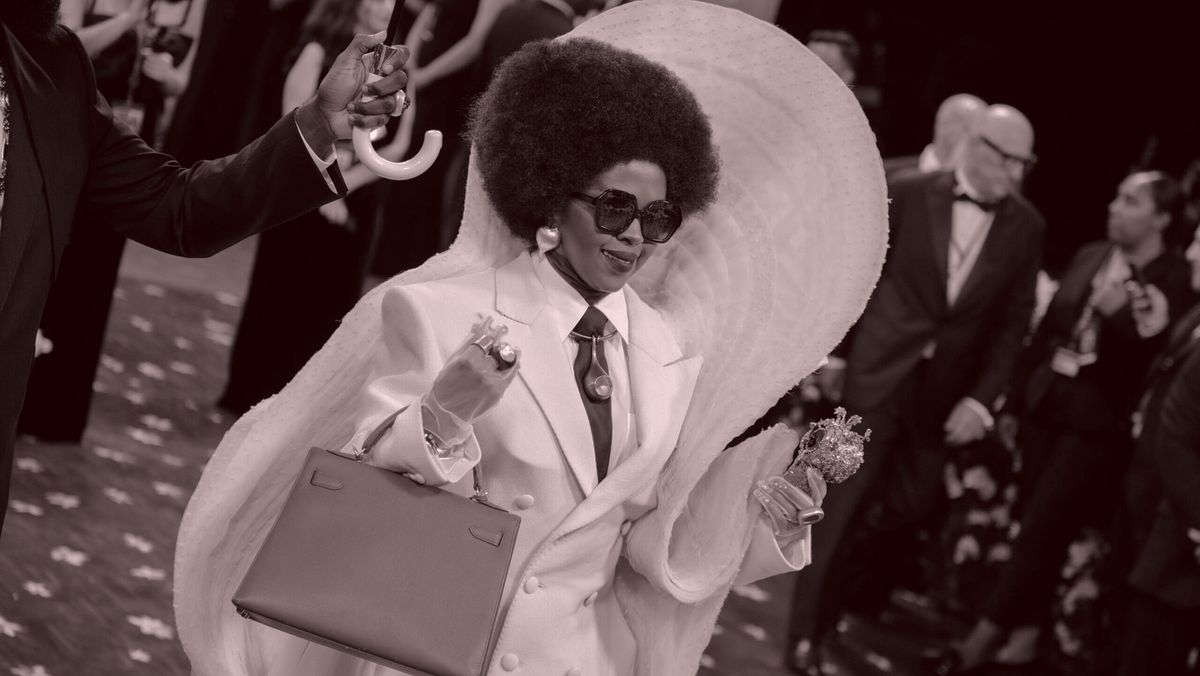
And finally… I made a couple annoying mistakes in my Met Gala Superlatives. Lauryn Hill’s look at the party was by Cheney Chan, not Stella McCartney. Hill wore Stella, and then Willy Chavarria, to the afterparties. She looked great all around! Also, Zac Posen’s afterparty dress for Laura Harrier was printed with a portrait taken in 1989 by Alice Springs (a.k.a. June Newton).
Until tomorrow,
Lauren
P.S.: We are using affiliate links because we are a business. We may make a couple bucks off them.
|
|
|
|
Puck’s daily art market email, anchored by industry expert Marion Maneker, offers unparalleled access to the mega-auctions and galleries, elite buyers and sellers, and the power players who run this opaque world. Wall Power also features Julie Brener Davich, a veteran of Christie’s and Sotheby’s, who provides unique insights into how the business really works.
|
|
|
|
Puck founding partner Matt Belloni takes you inside the business of Hollywood, using exclusive reporting and insight to explain the backstories on everything from Marvel movies to the streaming wars.
|
|
|
Need help? Review our FAQ page or contact us for assistance. For brand partnerships, email ads@puck.news.
You received this email because you signed up to receive emails from Puck, or as part of your Puck account associated with . To stop receiving this newsletter and/or manage all your email preferences, click here.
|
|
Puck is published by Heat Media LLC. 107 Greenwich St, New York, NY 10006
|
|
|
|