{{ 'now' | timezone: 'America/New_York' | date: '%b %d, %Y' }} |
|
|
|
Hi, and welcome back to Line Sheet. Phoebe Philo Collection E mania has set in to offset the
ongoing Chanel mania. (I hear appointments are booked at many Chanel stores through the end of March.) Let me know what you’re ordering next, from wherever.
You know who has no trouble with sell-through? The Los Angeles–based Alo Yoga, which is ramping up over here in Europe as ex-Miu Miu and Dior exec Benedetta Petruzzo settles in to lead international expansion. For today’s issue, Sarah Shapiro pokes the
activewear bear. Up top, I’ve got some thoughts on a celeb-stylist breakup and Sabato De Sarno’s relaunch, planned for the Salone del Mobile design fair this April. Plus, Sarah analyzes the sitch at Macy’s and whether the success at Bloomingdale’s can make up for at least some of the bigger issues at the marquee business. And we’re sharing the week’s feedback on everything from Phoebe to who should replace Hanya
Yanagihara at T.
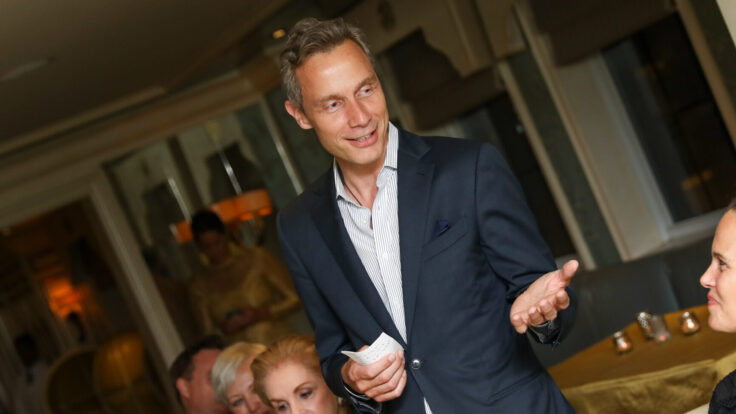
By the way, thank you to everyone who came out for Sarah’s dinner last night in New York, co-hosted with our Swap Commerce buds at Il Buco’s very cozy showroom. (Il Buco never fails.) Execs from La Ligne, Still Here, Leset, Petite Plume, Freda Salvador, and plenty more schmoozed and swapped war stories. As usual, everything was off the record, but I just have to share Sarah’s favorite quote from the night: “I read things about my business in Puck
that even I didn’t know yet!” You know it’s good when everyone’s asking to share the contact list and no one wants to leave. We are grateful to Juan Pellerano-Rendón at Swap and the wonderful Puck events team for doing it right.
Also mentioned in this issue: Anna Wintour, Kendall Jenner, Gucci, Riz Ahmed, Pedro Pascal, Nicole Kidman, Vanity Fair, Bella + Canvas,
Isabel Wilkinson, Milan Fashion Week, The Sartorialist, Demi Moore, Tony Spring, Danny Harris, Zegna, the Met Gala, Marco DeGeorge, Brandon Yoshimura, Moelis, Simone Marchetti, Julie Ragolia, Felicity Kay, Lululemon, Bluemercury, Alexandra Spunt, and more… |
Three Things You Should Know…
|
-
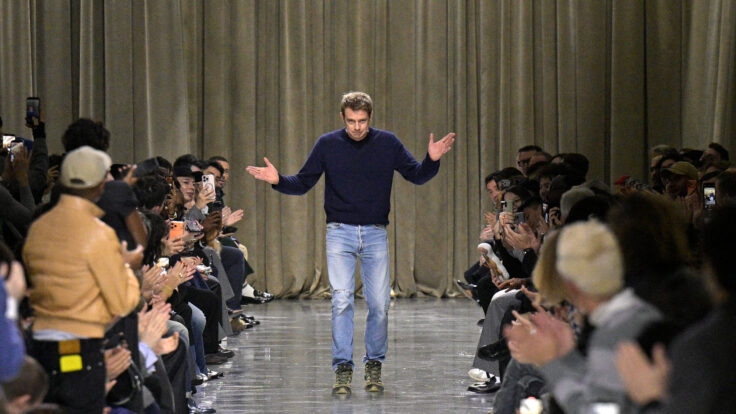
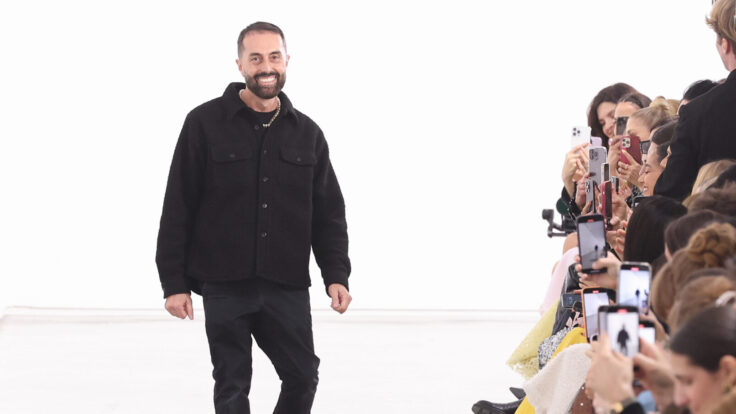
Sabato’s soft (re)launch: If Sabato De Sarno, formerly of Gucci, was one of those creative directors you thought would just disappear, show up working for another designer, or else sail off into the severance sunset… you would be wrong. De Sarno’s name was everywhere a couple of months back, when the internet decided he was headed to Ferragamo. (Hasn’t happened.) Then, during Milan Fashion Week, he showed up at the press conference that Anna
Wintour organized to announce plans for the next Vogue World. Now, perhaps we know why: De Sarno has partnered with Vanity Fair to curate an exhibition, which he’s called Insieme, for Salone del Mobile, the annual design fair that has become overrun with fashion people and brands in recent years, Art Basel–style.
The project, as described by Vanity Fair Italy’s Simone Marchetti, is “dedicated to human excellence.” Okay.
I honestly don’t know how to describe it, other than saying it’s mixed media and focused on people who work with their hands. It’s also the first installment of Archivio Italia, a new franchise for the Condé Nast–owned title. If you’re going to be in Milan during the fair (who isn’t?), it will be worth checking out, at least to see how De Sarno and collaborator JR transform the facade of
the Cozzi swimming pool. Anyway, the best thing De Sarno did at Gucci was a Salone installation, so give it a chance.
As for a potential return to clothing design? In an interview published today to promote Insieme, De Sarno said that he “really” thinks “ready-to-wear is dead,”
adding that, “I hate to admit it, but who can afford fashion these days at these prices?”
|
|
|
|
A MESSAGE FROM OUR SPONSOR |
For over 90 years, we have defined Italian elegance. As a family-owned brand across three generations, we celebrate
heritage, craftsmanship, and timeless style. Made in Italy is more than a label— it’s our promise of quality, responsibility, and enduring design. Blending tradition with modern sensibility, we shape men’s style worldwide with understated luxury that transcends trends, generations, and borders. Discover our collection at Canali.com |
|
|
|
-
A stylist’s retreat from the celebrity industrial complex: Julie Ragolia became internet famous because she was on the cover of The Sartorialist’s first street style book. But then she became famous-famous for dressing Riz Ahmed in workwear at a Met Gala paying homage to the Gilded Age. Ragolia, whose main gigs are brand and editorial-related—she’s the runway
stylist at Zegna, among other pursuits—once had a decent-size roster of celebrity guys she dressed. But she’s been slowly winnowing it down, first consciously uncoupling with Pedro Pascal last year, and now saying goodbye to Ahmed, who is now working with Felicity Kay. Of course, this is a personal decision that seems specific to Julie, who was never a part of the Hollywood stylist ecosystem anyway. But it also reflects a reality that we’ve discussed here
before: These gigs often pay very little and require an endless amount of resources, time, and emotional bandwidth.
|
|
|
|

| Sarah Shapiro
|
|
- State of
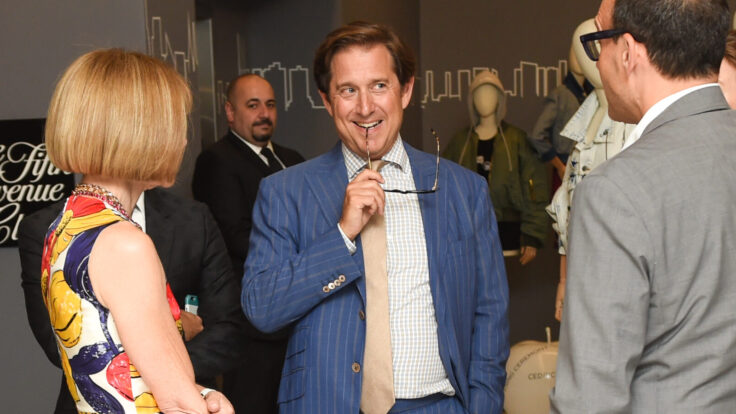
Macy’s: Tony Spring, the C.E.O. of Macy’s Inc.—the parent company encompassing Macy’s, Bloomingdale’s, and Bluemercury—used Wednesday’s earnings call to underscore the company’s emerging strategic positioning: a “barbell” approach designed to serve both the value shopper and the luxury consumer.
So far, that strategy is tracking with broader retail dynamics. Bloomingdale’s, the higher-end banner, delivered 7.4 percent comparable sales growth for the full year—its
strongest two-year run in recent memory—while Macy’s, positioned at the lower end, grew a more modest 0.6 percent. Notably, Bloomingdale’s operates the smallest store fleet in the portfolio. The underlying bet is that luxury shoppers continue to spend, even as more price-sensitive customers hunt for promotions. The question is whether the stronger side of the barbell can offset the other. The earnings presentation also highlighted a structural tension: Nearly 40 percent of Macy’s Inc.’s
fourth-quarter sales came through digital channels, even as the company still operates 665 stores—down from 680 a year ago. That raises a fundamental question: Does Macy’s still have too large a physical footprint?
|
|
|
|
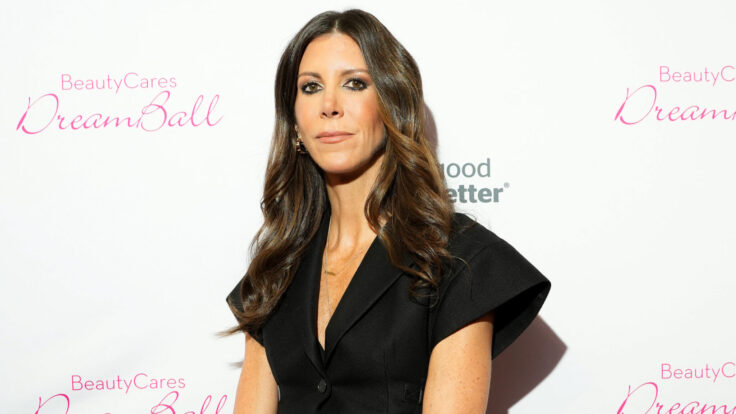
By hiring ex–Miu Miu C.E.O. Benedetta Petruzzo, Alo co-founders Danny Harris and Marco
DeGeorge may be making a bid to reorient their privately held, billion-dollar-plus athleisure company. |
|
|
|
In January, Alo Yoga co-founders Danny Harris and Marco DeGeorge hired
Benedetta Petruzzo—the former C.E.O. of Miu Miu—as their first international chief executive. Alo Yoga, of course, has mostly built its reputation in athleisure, driven by bestsellers like its Airlift leggings and matching bra sets that hit with the Calabasas crowd and then the millions who aspired to their ranks. Last year, the Lululemon and Nike alternative was estimated to do over $1.5 billion in U.S. direct sales, according to Consumer Edge, which
aggregates data from 40 million U.S. credit cards. (Alo Yoga did not respond to requests for comment for this story.) So why is it bringing in a C.E.O. with luxury experience, including a stint at Dior? |
|
|
|
A MESSAGE FROM OUR SPONSOR |
For over 90 years, we have defined Italian elegance. As a family-owned brand across three generations, we celebrate
heritage, craftsmanship, and timeless style. Made in Italy is more than a label— it’s our promise of quality, responsibility, and enduring design. Blending tradition with modern sensibility, we shape men’s style worldwide with understated luxury that transcends trends, generations, and borders. Discover our collection at Canali.com |
|
|
|
As Lauren once
put it, “Alo fashionized activewear.” But luxury itself isn’t in the brand’s DNA. Harris and DeGeorge, who built the business without outside capital, previously founded Bella + Canvas, Alo’s very successful blanks t-shirt sister company. And the basics-adjacent business has been good to them. In 2023,
Harris and DeGeorge explored a minority sale at a $10 billion valuation through Moelis, but walked away without securing investors. The numbers may have been slightly aspirational, and finding investors who wanted in without full control would’ve been a challenge. But Alo is highly profitable, and its founders have the luxury of moving at their own speed—no early
investors to repay, and the business continues to grow without new capital.
Several recent moves signal the potential scale of their ambitions. The company—which is in the process of relocating its headquarters from the old CAA building designed by I.M. Pei to a larger space in Beverly Hills—is developing a Paris flagship on the Champs-Élysées. And Alo has also introduced leather handbags produced in Florence, priced up to $3,600, which have sparked significant online
chatter—even if sales remain a murkier proposition. With a luxury C.E.O. in place and a push into higher-priced accessories, does Alo aim to reposition itself as an upmarket player—or simply test the outer limits of its brand as it builds for longevity?
By most external measures, Harris and DeGeorge’s business continues to perform. According to Launchmetrics, Alo Yoga generated more than $451 million in media impact value in 2025—more than 10 times that of British challenger brand
Adanola, which logged $40.9 million. It still trails Nike, at $3.1 billion, but sits roughly in line with Lululemon, at $470 million. Meanwhile, Trendalytics ranks Alo Yoga as the most-searched athleisure brand, with browser inquiries up 74 percent year over year. And Lyst reports that demand has increased 4 percent quarter over quarter, led by leggings, jackets, and pants. The core business is holding its own.
Yet signs of fatigue have started to emerge. Last year, retail
intelligence firm Edited declared “the death of leggings,” reflecting a broader sense of oversaturation in athleisure. Younger consumers have begun playing with alternative looks and materials. Meanwhile, a growing army of competitors are deploying Alo Yoga’s own playbook. Adanola’s January 2025 U.S. launch featured Kendall Jenner, the same model Alo Yoga once built a campaign around. |
None of this forces urgency on Harris and DeGeorge. Consumer Edge estimates that U.S. sales have already
risen more than 50 percent year over year in 2026, while the U.K. business has grown roughly 200 percent. Indeed, Alo may rank among the most profitable privately held apparel companies in the country.
That position gives them room to experiment. “You have a lot more permission as a private company to launch a luxury handbag, or hire a luxury executive, without the market assuming they’ve run out of growth in their core market,” said Brandon Yoshimura, managing director
of consumer retail at Solomon Partners. He contrasted that optionality with the situation at Lululemon, where slowing growth in key markets has raised red flags. |
|
|
|
The Petruzzo hire may signal long-term thinking rather than immediate repositioning—perhaps along the lines
of Moncler, the Italian outerwear brand that expanded into luxury on the back of a technical hero product. That company still sells its signature black puffer, yet it has also built a broader, highly profitable ecosystem around it—generating €2.7 billion in revenue in 2025 with nearly 30 percent operating margins. “Maybe [Alo Yoga] will always be an 80 percent business concentrated in the $128 leggings—but the way to maintain that relevance might be by doing things à la Moncler to
continue to elevate it,” Yoshimura said.
Harris and DeGeorge have been largely quiet after walking away without an investor in 2023, and have kept the business mostly out of the spotlight since then. What they ultimately will build—and how they do it—remains one of the more intriguing unanswered questions in American retail. |
On the missed opportunity at Everlane: “I mean… (marketing guru) Alexandra Spunt was a huge loss. And moving away from radical transparency was the other. Brutal.” —A former exec
On skinniness: “I’m disturbed that you praised how thin the stars were at the Oscars. Demi
Moore, Nicole Kidman, and others were skeletal! It’s deeply unhealthy!” —A reader
[Ed. note: I’m mostly being facetious when I say these things, but point taken.]
On T’s place at The New York Times: “You are right to say that the newsroom reigns supreme and they never
understood T. They could not accept the idea that some people really liked T and bought the paper because of T. As long as you made money, they never cared who was doing it and what was going on. Pure negligence. And that was freedom, but also unnerving.” —A former T magazine employee
A long-shot candidate to replace Hanya: “Isabel Wilkinson [the former T editor and founder of Attersee].” —A media
executive
One request from the peanut gallery regarding Hanya’s replacement: “Here’s hoping it’s not Kurt Soller!” —Everyone |
Until Monday,
Lauren
P.S.: We use affiliate links because we are a business. We may make a
couple bucks off them. |
|
|
|
Need help? Review our
FAQ page or contact us for assistance. For brand partnerships, email ads@puck.news.
You received this email because you signed up to receive emails from Puck, or as part of your Puck account associated with {{customer.email}}. To stop receiving this newsletter and/or manage all your email preferences, click here. |
Puck is published by Heat Media LLC. 107 Greenwich St., New York, NY 10006 |
|
|
|
|