Welcome back to Wall Power. I’m Marion Maneker.
Tonight, Julie Davich reports on the new Diane Arbus show that opened at the Park Avenue Armory this week. The entire photography market has been upended in the past few decades, with smartphones making photographic images ubiquitous. Photographers who are exceptional artists, like Arbus, have migrated into the contemporary art market, even into contemporary evening sales. The exhibition is a good occasion to discuss the elevation of photography, which Julie does below.
As always, if you’re getting this email forwarded from a friend, colleague, or peer, do yourself (and Puck) a favor: subscribe. A gallerist kindly told me this week that he thought our coverage was distinctly above anything else out there. That was gratifying to hear, but not nearly as gratifying as growing this community, which is getting bigger every day. (Looking for a group rate? Email Fritz@puck.news and see if he can help you out.)
Mentioned in this email: Isabella Proia, Jeff Fraenkel, David Leiber, Carroll Dunham, Emmanuel Di Donna, Diane Arbus, Matthieu Humery, Sarah Krueger, José Horna, and many more…
But first…
|
- Matthew Brown’s unintended leak: Late on Wednesday, Matthew Brown Gallery sent around a press release announcing its representation of Carroll Dunham, the well-respected 75-year-old artist. The fact that Dunham was leaving Gladstone, his gallery of 20 years, was worth a raised eyebrow. But within the announcement was the news that Dunham would have a solo exhibition at Matthew Brown in September 2026, followed by “a career survey at the Institute of Contemporary Art,
Miami.” That news caused the director of ICA Miami’s phone to blow up, because the museum is still “in the process of conceptualizing with the artist.” Anyway, congratulations to Matthew Brown and to Dunham.
|
Leonora Carrington’s Mermaid Metamorphosis
|
|
Leonora Carrington, Sueño de Sirenas (1963). Photo: Pauline Shapiro Photography/Courtesy of Di Donna Galleries
|
|
An art advisor told me at lunch yesterday that she wasn’t surprised gallerists were presenting works they’d saved up all year to bring to Basel, the mother of all art fairs. What did surprise her was the quality of the work she’d seen in the PDFs circulating in advance of the fair, given the bad press the overall art market has received recently and the perception that fair attendees were choosing Paris over Basel. She found it noteworthy that the old patterns of the art market were still in place.
As an example, she told me she had just come from Di Donna Galleries, where she got an early glimpse of Leonora Carrington’s Sueño de Sirenas, from 1963, a triptych painting encased in a carved wood cabinet with a gilded and painted frame. This is the special kind of work you see only in Basel. Intrigued, I walked over to the gallery, where they were willing to let me take a peek while they packed it up to ship to Switzerland.
|
|
|
|
A MESSAGE FROM OUR SPONSOR
|
ALWAYS CONTEMPORARY
With a bold silhouette that conveys movement even at standstill, the Range Rover Sport is striking from every angle.
EXPLORE
|
|
|
Carrington painted the three images after hearing the film star María Félix describe a dream. Félix, who was big in the 1940s and ’50s in Mexico, where her reputation remains on par with Frida Kahlo’s, had dreamed that she was a mermaid in three different states: fire, bronze, and mother-of-pearl. Carrington’s triptych represents each one.
Like all of Carrington’s work, the images are filled with smaller, beguiling scenes: skeletons of flying dinosaurs, trees with malevolent but curious faces, cascades of Hieronymus Bosch–like falling figures, and a tribunal of judgmental chickens. With the help of wood-carver José Horna, who crafted the Cat Woman sculpture that Carrington painted (and which sold for $11.4 million last year), Carrington also created a cabinet for the three paintings. The metal frame of the painting and cabinet was gilded and then painted over in green, which gives the frame a glowing, otherworldly patina. When closed, the cabinet doors show two carved and painted faces that look out at the viewer, one with eyes open, the other with eyes closed.
For the dealer Emmanuel Di Donna, the work is “the epitome of the embodiment of female power.” Carrington is depicting a famous actress in religious form. “She becomes the goddess, she becomes the creature,” he told me. “The whole thing is imbued with symbolism and meaning.”
There has never been a better time to sell an impressive work by Carrington. Her three top prices at auction were all achieved last year, including $28 million for what is recognized as her greatest work, Les Distractions de Dagobert, from 1945. Sueño stayed in the Félix family until 2007, when it was acquired by the current consignor, who is now ready to part with it.
I asked Di Donna how much they were asking for the piece. Keep in mind that there are only about half a dozen of these collaborative works between Horna and Carrington, making them scarce and significant within an already rare body of work. Di Donna decided to keep that to himself, but judging from recent sales, it’s going to be a big number—seven, possibly eight figures. Di Donna checked in with a few museums before deciding to bring the work to Basel. “This is the time to do it,” Di Donna said. “The owner and I decided to make a splash with it. It’s an extraordinary object. I’m just hoping someone will fall in love with it.”
|
|
|
 |
Julie Brener Davich |
|
|
It’s luxury sales week at the auction houses—which means you’ll be hearing plenty about watches and jewelry over the next few days. It kicks off this weekend with Phillips’ watch sale, followed by Christie’s on Monday.
It’s a strange moment for the market: Watches imported into the U.S. are tariffed based on the origin of the movement, which is usually Switzerland, making them subject to a 10 percent import tax (although that rate is expected to jump in July, if President Trump doesn’t change his mind again). This didn’t seem to hamper high-level bidding at recent sales in Geneva and Hong Kong, but Americans won fewer lots around the $50,000-$100,000 level, indicating a lowered price ceiling to accommodate the higher tariff. The auction houses are predicting more bidding from American collectors in the New York sales, where the import duties have always been baked into the auction price.
This weekend’s Phillips sale has 143 lots, led by a yellow gold Patek Philippe from 1941. It’s the first perpetual-calendar chronograph wristwatch produced
in series by any brand, making it a “milestone watch.” Estimated at $400,000, it has been in the same collection since 1989, and has never been worn. Isabella Proia, Phillips’ V.P. of watches, told me that F.P.Journe timepieces have become particularly popular since this past November, when the house sold the second wristwatch that the watchmaker ever produced, a Tourbillon Souverain à Remontoire d’Egalité from 1993, for $8.4 million. This season, Phillips is offering a rare collaboration between F.P.Journe and Harry Winston from 2002, estimated at $100,000.
The Christie’s sale on Monday will be smaller, with 106 lots. It includes eight watches from a private collection of 160 being sold over the course of the year, including two Greubel Forsey watches estimated at $120,000 each, one with a 30-degree double tourbillon and one with a world-time tourbillon. The top lot of the sale is a $650,000 pink gold Patek Philippe that, at the time of its production in 1992, was the world’s most complicated wristwatch.
Both Phillips and Christie’s have a Rolex Cosmograph Daytona “Rainbow” in pink gold, both estimated at $250,000. It will be a fun case study to see how each does. I’ll be back on Sunday with highlights from the Sotheby’s masterpiece watch sale, including a $3 million-plus vintage Patek Philippe.
|
|
|
|
A huge new exhibition at the Park Avenue Armory, plus a gallery show in L.A., highlights the value of true photographic artistry in an era where everyone is wielding a camera, all the time.
|
|
|
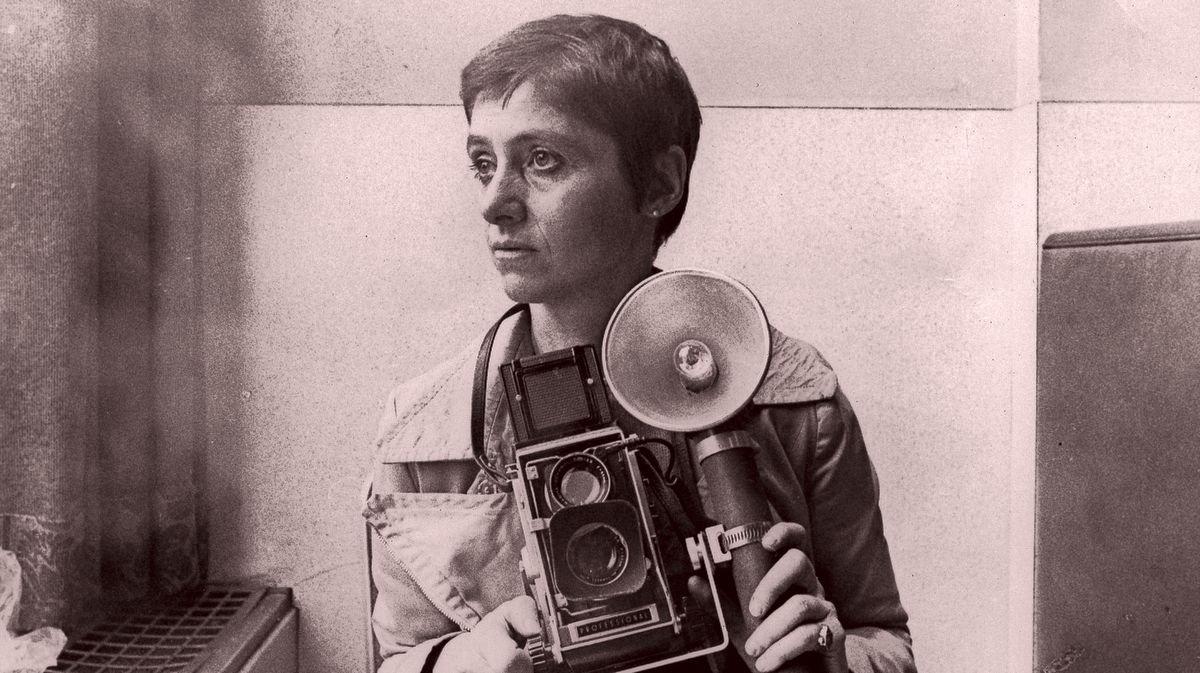
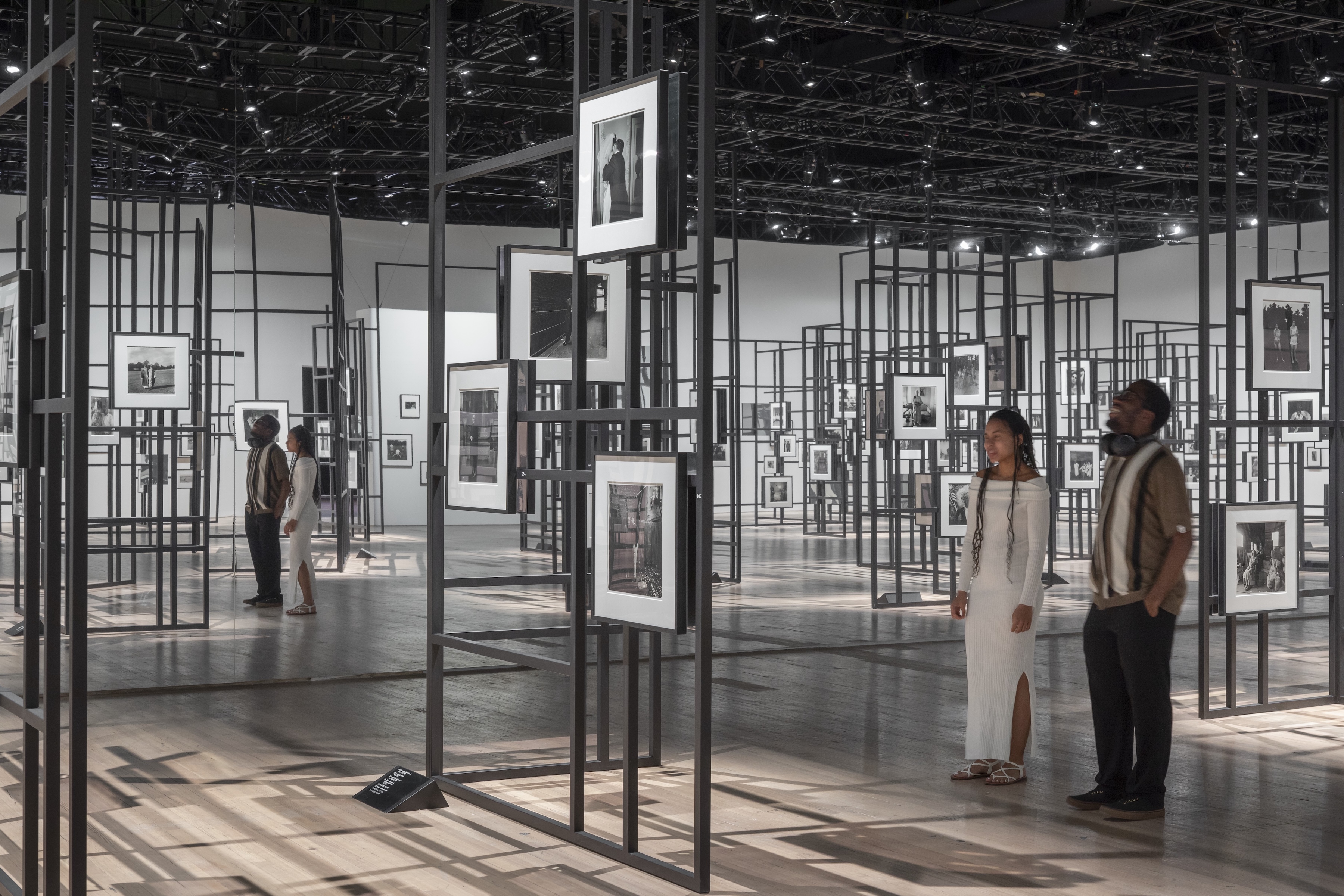
In a world where digital images are ubiquitous and everyone has a camera, it’s no surprise that appreciation for film photography has waned, especially among younger generations. But Constellation, an exhibition of 454 photographs by Diane Arbus that opened yesterday at the Park Avenue Armory, reminds viewers that photography is a singular and tactile art form. Ironically, the curator, Matthieu Humery, accomplishes that in part by making the exhibition an immersive, Instagrammable experience.
Arbus, who died in 1971, is, of course, best known for her portraits of various subcultures—nudists, circus performers, strippers, transvestites, and socialites—capturing a cross-section of midcentury humanity. “She was an anthropologist with her camera,” said Sarah Krueger, head of photographs at Phillips, as we wandered through the Armory exhibition together. “Her goal wasn’t to sensationalize, but to understand—to capture and, in her own way, connect.” Others continue to view Arbus’s work as exploitative rather than empathetic, although that’s a minority opinion these days. (A 2022 Washington Post story was titled, “Diane Arbus was accused of exploiting ‘freaks.’ We misunderstood her art.”)
|
|
|
|
A MESSAGE FROM OUR SPONSOR
|
ALWAYS CONTEMPORARY
With a bold silhouette that conveys movement even at standstill, the Range Rover Sport is striking from every angle.
EXPLORE
|
|
|
|
The Armory exhibition is pure celebration. Humery has hung the images on a black grid-like armature, allowing attendees to meander through Arbus’s world. That feeling is reinforced by the square mirrors hung alongside some of the photographs, as well as the mirrored wall that runs the length of the exhibition. This inserts the viewer into a dialogue with the photographer and the subject, sure, but it also provides perfect selfie opportunities.
The ticketed event coincides with a major exhibition of Arbus’s work at David Zwirner in Los Angeles. (The gallery now represents her estate in partnership with its longtime caretaker, Fraenkel Gallery in San Francisco.) They are also presenting one of her masterpiece works at Art Basel Unlimited next week. Both galleries, along with the global auction houses, have helped to grow the audience for Arbus’s work in recent years beyond the typical collectors of photography. In the process, they’ve helped define her as one of the greatest artists of the 20th century. It’s a substantial step up for a medium that was once seen as inferior to painting and sculpture.
|
|
Installation view of Diane Arbus: Constellation (2025), Park Avenue Armory, New York. Photo: Nicholas Knight/Courtesy of Maja Hoffmann/LUMA Foundation
|
|
The Armory event, which features the collection of Maja Hoffmann, is the largest exhibition of Arbus’s work to date. (The exhibition traveled from Hoffmann’s LUMA Foundation in Arles, where it was staged in 2023, for the centennial of Arbus’s birth.) The collection comprises the complete set of images printed after Arbus’s death by her former student Neil Selkirk, the only person authorized to print works from her negatives. Arbus’s unique printing process, which Selkirk dutifully replicated, is among the factors that distinguish her work. Contemporaries such as Ansel Adams sometimes manipulated their images in the darkroom, making some areas darker, others lighter. Arbus did none of that. Her images have “staggering credibility,” Selkirk said.
|
|
In the late 1960s, when photography was only just beginning to be bought and sold like art, Arbus conceived of her now-famous A Box of Ten Photographs, presented in a Lucite box intended for hanging on a wall. Her plan had been to produce the box in an edition of 50, but by the time of her death in 1971, she’d produced only eight. Today, half are in institutional collections, and half are in private collections (including one owned by Jasper Johns, who bought it from an ad that Arbus placed in Artforum).
|
|
|
|
Next week, David Zwirner is offering one of those rare sets from Arbus’s two daughters at Art Basel Unlimited for $6.5 million, a price that reflects the growing recognition of Arbus as among the great artists of the 20th century. Those 10 photographs are believed to be the ones Arbus felt best represented her work, and they remain her most well known. At the Armory exhibition, they’re set apart in their own section—the only part of the exhibition that’s not hung to highlight the mix of her subjects. The box set includes her most recognizable image of all: Identical Twins, Roselle, N.J., from 1966, which inspired the twins in the movie The Shining. A lifetime print of that image (meaning Arbus printed it herself, making it more valuable) set a world auction record last year for the artist in a Christie’s 21st century evening sale, bringing $1.2 million against an estimate of $800,000. Arbus printed very few works because there was no market for them at the time.
|
|
Diane Arbus, Identical Twins, Roselle, N.J. (1966). Photo: Christie’s Images Ltd.
|
|
Selling Arbus in the context of a contemporary art evening sale wasn’t always an obvious choice. Christie’s was the first to do it in 2005, when Boy with a straw hat waiting to march in a pro-war parade, N.Y.C., from 1967, sold for $228,000—but the catalogue entry doesn’t say when it was printed or by whom, reflecting the lack of maturity in the market at the time. It wasn’t until 2015 that Christie’s included Arbus in another contemporary art evening sale—this time in its Looking Forward to the Past auction, where a lifetime print of Child with a toy hand grenade in Central Park, N.Y.C. sold for $785,000.
Some time afterward, David Leiber of David Zwirner reached out to Jeff Fraenkel to discuss a gallery partnership. Their first exhibition together, held in New York in late 2018, included all 66 images from Arbus’s Untitled series, made in the final two years of her life at residences for people with developmental disabilities. In 2022, they restaged Arbus’s seminal 1972 MoMA retrospective—the most highly attended one-person show in the museum’s history at that time—at David Zwirner in New York.
Six months after the Zwirner exhibition closed, Christie’s exceeded the $1 million mark for a work by Arbus with a Selkirk-printed Box of Ten in a 21st century evening sale. Zwirner is now staging the retrospective again at its Los Angeles location. It’s on view for two more weeks, for those on the West Coast who can’t get to New York this summer to see the Armory exhibition. It’s well worth your time. “We’re so used to seeing images on our phone,” Leiber told me. “Then you see the prints and their richness in person—they have something so distinctive.”
|
|
Thanks, Julie.
That’s all for this week, guys. We’ll be back on Sunday.
M
|
|
|
|
The ultimate fashion industry bible, offering incisive reportage on all aspects of the business and its biggest players. Anchored by preeminent fashion journalist Lauren Sherman, Line Sheet also features veteran reporter Rachel Strugatz, who delivers unparalleled intel on what’s happening in the beauty industry, and Sarah Shapiro, a longtime retail strategist who writes about e-commerce, brick-and-mortar, D.T.C., and more.
|
|
|
|
Finally, a media podcast about what’s actually happening in the media—not the oversanitized, legal-and-standards-approved version you read online. Join Dylan Byers, Puck’s veteran media reporter, as he sits down with TV personalities, moguls, pundits, and industry executives for raw, honest, sometimes salacious conversations about the business of media and its biggest egos. New episodes publish every Tuesday and Friday.
|
|
|
Need help? Review our FAQ page or contact us for assistance. For brand partnerships, email ads@puck.news.
You received this email because you signed up to receive emails from Puck, or as part of your Puck account associated with . To stop receiving this newsletter and/or manage all your email preferences, click here.
|
|
Puck is published by Heat Media LLC. 107 Greenwich St, New York, NY 10006
|
|
|
|



%20(1)_01JX38W6ERXV8J2P0T0H92V6SJ.jpg)


,%20Roselle,%20New%20Jersey,%201967_01JX3AXV5M19RF9JS6GSP1P76K.jpg "Diane Arbus, Identical Twins, Roselle, N.J. (1966). Photo: Christie’s Images Ltd.")