Welcome back to Wall Power, where the autumn season is really shaping up. I’m
Marion Maneker.
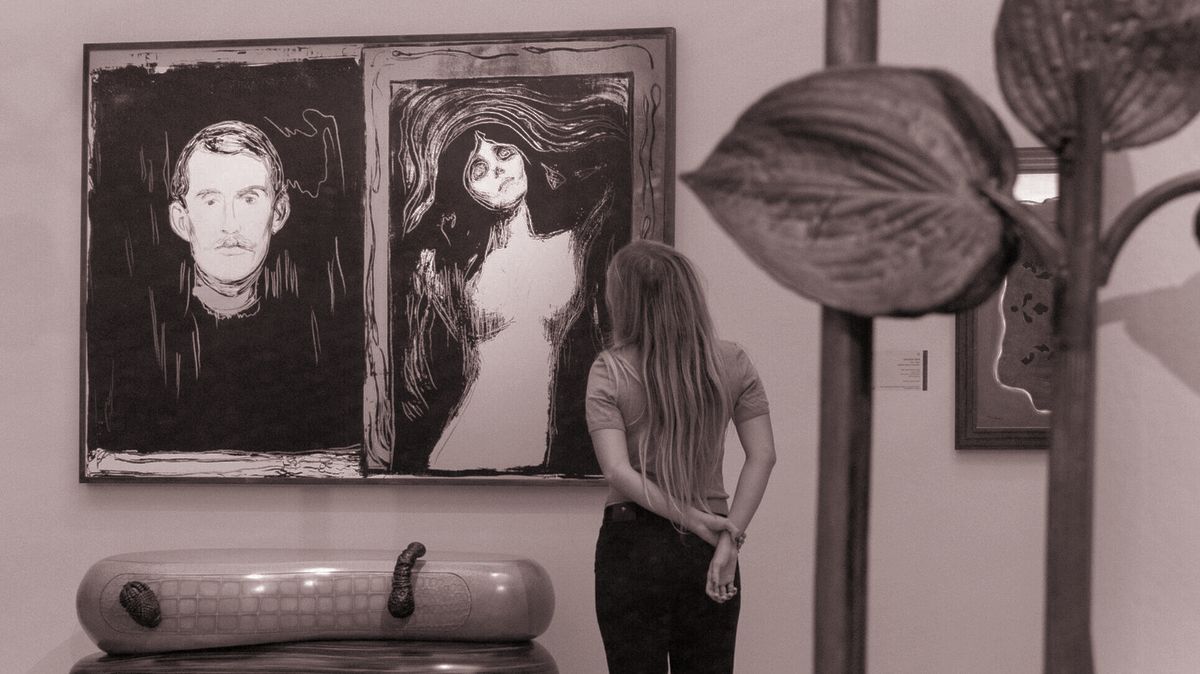
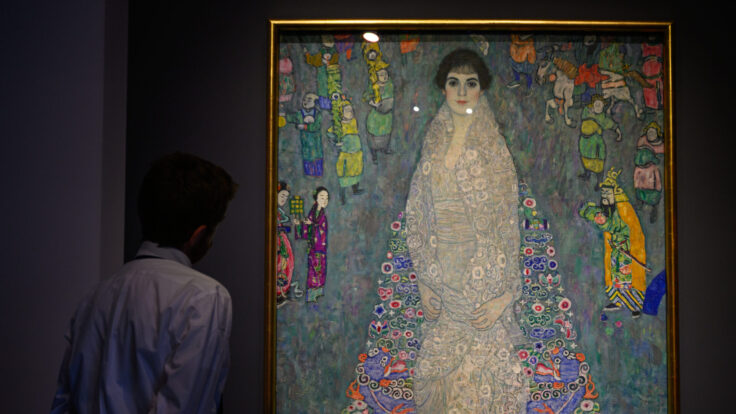
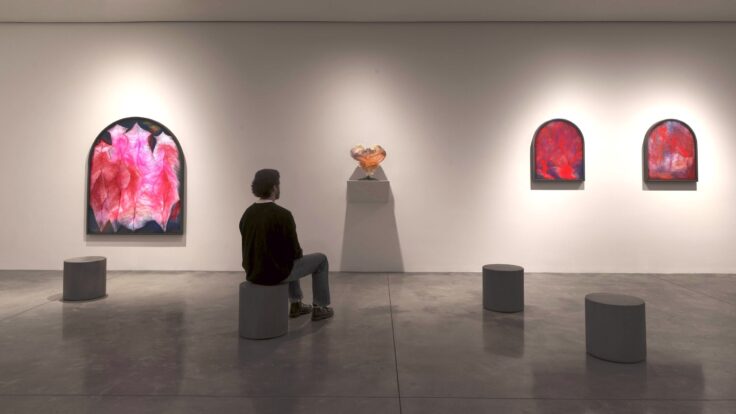
With the fall museum shows opening and new collections coming to market, it now seems stunningly obvious that we live in an art world dominated by surrealism in all of its forms. Tonight, I’m going to look at the Whitney’s new Sixties Surreal show; the results from Pauline Karpidas’s London sale, which was filled with surrealist works; and Sotheby’s newly announced $70 million Exquisite Corpus collection that will be sold this
November.
But first… |
-
Beaumont Nathan continues to grow: On Wednesday, the art advisory firm Beaumont Nathan announced two appointments and three initiatives. Lateefa bin Hamoodah will open a new office in Abu Dhabi and become a regional advisor for the firm. This begins to answer a central question about whether the Gulf can drive growth in the art market: Will more individual collectors (as opposed to regional rulers buying art to fill museums) emerge in the region? BN has also hired
Kara Popowich, who was until recently head of client services at Sotheby’s, as director of client strategy.
Finally, the firm’s founders, Wentworth Beaumont and Hugo Nathan, have launched a family services line of business to offer “independent perspectives to those who have significant art collections as they approach intergenerational planning and long-term collection strategies.” In other words, a lot of art is going to be handed down
in the next few years, but tastes have changed and value continues to migrate. Someone has to help collecting families sort things out. - Cardinal Timothy Dolan unveils his new mural at St. Patrick’s: I got a chance to see the inimitable Cardinal Timothy Dolan at work on Thursday morning at St. Patrick’s Cathedral during the press unveiling of its new mural. The work by Adam Cvijanovic depicts the
Apparition of Knock, a vision seen by 15 people in August of 1879 during a time of famine and emigration from Ireland. It decorates the entry to the church that millions visit each year.
Dolan related how the project had been postponed by more pressing renovations to St. Patrick’s, but said the delay had functioned “like a Crock-Pot” to allow the mural to mature. The final piece combines depictions of the apparition—which features the Virgin Mary, Saint John the Evangelist, a lamb, et
al.—with tributes to important figures in the history of the New York City church, including a Mohawk convert, a Catholic activist for workers and the poor, a former slave from Haiti who became a philanthropist in the 19th century, and the first archbishop of New York, who defended Irish Catholic immigrants. The mural is also a permanent and prominent statement about immigration and its essential importance to the city. Although the cardinal pointed out that “the current hyped-up
controversy about immigration postdates” the conception of the mural, he did remark that “some have asked me, ‘Are you trying to make a statement about immigration?’ Well, sure we are.”
|
|
|
A MESSAGE FROM OUR SPONSOR |
|
|
- Designer Jonathan Anderson is selling Lucie Rie ceramics: The foundation for midcentury ceramicist Lucie Rie had some unproduced designs that Wedgwood has now made in jasperware so that JW Anderson can sell them. Sales will benefit the Lucie Rie and Hans Coper
Foundation, but also help Dior’s creative director continue to burnish his art-and-craft crossover bona fides.
- The great Japanese art unwind: Christie’s announced today that it will sell works from the Kawamura Memorial DIC Museum of Art in Chiba, Japan. The $60 million consignment includes eight works that will be sold in the 20th century evening sale, with additional objects to appear in day sales. The most prominent work is a very domestic-sized
Claude Monet, Nymphéas from 1907, that is expected to make at least $40 million. A larger, later version in the same orientation owned by Sydell Miller sold for $65 million last fall at Sotheby’s.
The sale will also feature a Pierre-Auguste Renoir,
Baigneuse from 1891; an Henri Matisse nude from 1920; and two later Marc Chagall paintings. As I’ve mentioned in recent newsletters, there are a lot of under-the-radar Chagall sales taking place in the market, especially in the band above $1 million, which is where these works will be estimated.
Half of the collection in the Kawamura Museum, which closed on March 31 of this year, was owned by DIC Corporation. The other half, including an
installation of some of the Mark Rothko paintings originally made for the Four Seasons restaurant in New York, will go to the International House of Japan in Tokyo, reopening as a museum in 2030. As the Financial Times wrote nearly a year ago, shareholder activists have been pushing Japanese companies that bought art in the 1980s to sell those
assets. This seems to be the first major move in that direction and, if the sales perform well, may unlock significant supply for the market. - A David Hockney double portrait comes to market: Christie’s announced yesterday that it will be selling David Hockney’s double portrait of Christopher Isherwood and Don Bachardy in its 20th century evening sale in New York this November. The painting—which has appeared in Hockney’s major
museum retrospectives, including the 2017-18 shows at the Tate in London, the Met in New York, and the Centre Pompidou in Paris, as well as this year’s Fondation Louis Vuitton show in Paris—is priced at $50 million.
That’s pretty much the final, all-in price paid in 2019 for Hockney’s last major double portrait sold at auction, Henry Geldzahler and Christopher Scott. There are only seven of such portraits, which mark a pivotal moment in Hockney’s career, especially from the view
of curators who often set aside a single gallery for them. Four have made their way to museums by now.
|
Now let’s get to the main event… |
|
|
Museum orthodoxy is starting to give greater weight to surrealism as a
force in art history. And fascination with the movement is helping the private market regain some of its mojo. |
|
|
Earlier this week at the press preview for the Whitney Museum’s new
show, Sixties Surreal, curators Dan Nadel and Laura Phipps posed a question: “What if surrealism, not cubism, had emerged as the dominant force to shape the course of postwar art in America?” Their presentation made an impressive case, and the show itself has many interesting and provocative works by more than 100 artists. But sitting there, I
couldn’t help but notice that the curators’ counterfactual actually expressed our current reality. Surrealism has become the dominant force in the art world right now.
Partly because of the 100th anniversary of André Breton’s Surrealist Manifesto, but also on account of a growing interest among artists and collectors, we’ve recently seen a number of agenda-setting museum shows dedicated to the genre. In particular, there’s been intense market
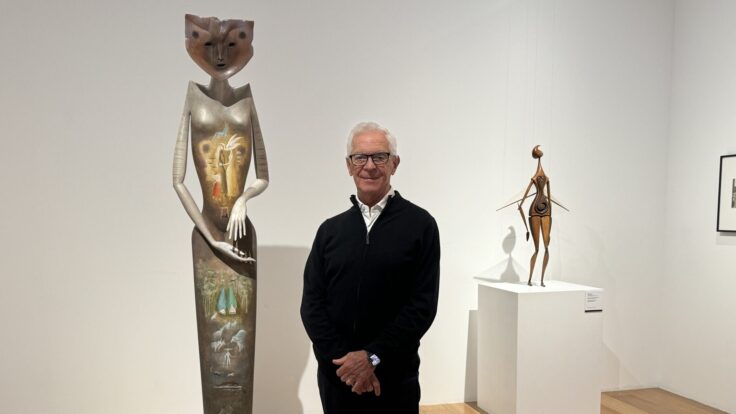
interest in works by household-name surrealist artists, like René Magritte, and also in formerly obscure or overlooked surrealists like Leonora Carrington, Remedios Varo, Leonor Fini, Kay Sage, Dorothea Tanning, and others. Indeed, surrealism is setting the current tone of the art world, and other schools once thought to be dominant have lost their top status.
|
|
|
A MESSAGE FROM OUR SPONSOR |
|
|
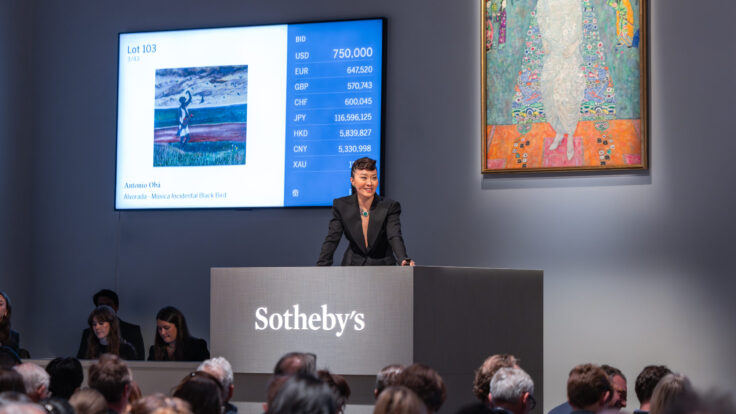
This week, Sotheby’s sold the contents of collector Pauline
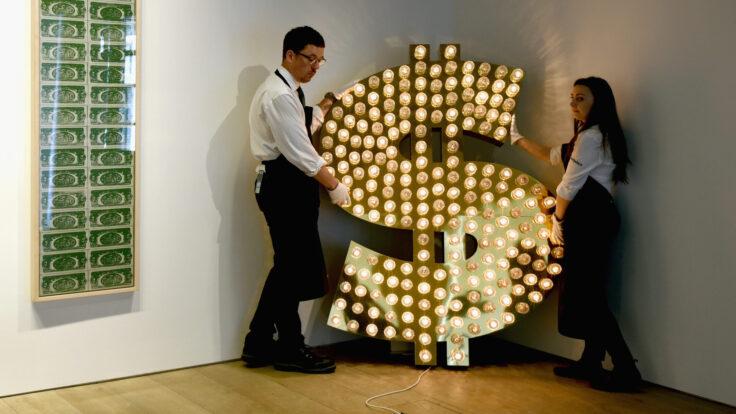
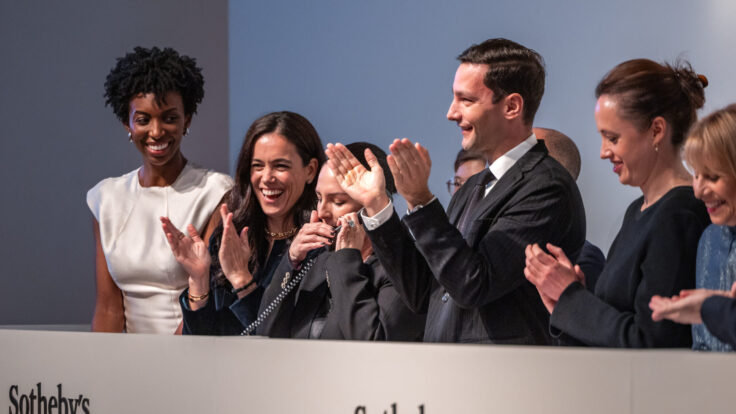
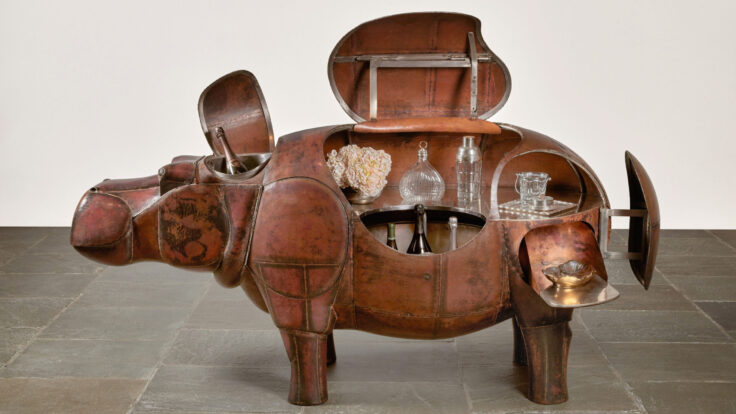
Karpidas’s London home, which was filled with paintings by acknowledged leaders of the surrealist movement and furniture by Les Lalannes, who became the movement’s spiritual inheritors. The day and evening white-glove sales—meaning every lot found a buyer—totaled more than $137 million. Highlights from those sales further reinforced the momentum that surrealism has brought to today’s market. This morning, Sotheby’s announced that it will sell 80 lots of surrealist
artworks, led by Frida Kahlo’s El Sueño (La cama) from 1940, estimated at $40 million, in the November auctions in New York. |
Despite Sixties Surreal’s counterfactual framing, the curators’ thesis is
neither speculative nor even that controversial. Nadel, Phipps, and Elisabeth Sussman unite very different artworks into a common theme that seems organic and obvious once you’ve walked through.
After all, surrealism’s core mission in the 1920s and ’30s, and even after the war, was to access thought, or the unconscious, directly unmediated by reasoning. The midcentury world was dominated by psychoanalytic tropes. And surrealism relied on oneiric imagery and an appeal to
the uncanny to access a common id and shared prerational feelings. The id, of course, is where Freud believed repressed sexual desires resided. During the long 1960s, many of these formerly repressed feelings of rage and desire erupted into political and social life. The catalogue notes the context of the Vietnam War escalation, the Civil Rights Movement, second-wave feminism, and so on, noting that the moment was “infused with darker currents” as “reactionary forces”
cracked down on the progressive movements. “The brutality they unleashed was splashed across the mass media in horrifying images from Vietnam and from protests at home, creating a disorienting and polarizing era of change,” the curators wrote.
Viewing the show and reading the catalogue, it was hard for me not to see the legacy of this liberation in our current culture, which is suffused with sexual imagery and has also unleashed the kind of ferocious views that reason used to keep
repressed—and often in response to some of the very groups that demanded attention in the 1960s. In many ways, we’re living on a daily basis in the malignant version of what surrealism hoped to accomplish: direct access to our collective id.
Don’t blame the show for that depressing conclusion. There’s a lot of great art in Sixties Surreal—with many new artists to discover or look at in a new context. Let me just mention a few discoveries and favorites of my own: Martha
Rosler’s consumer-product-meets-pornography photomontages might seem obvious now, but her work is far less objectifying than a Mel Ramos painting, and more visually interesting. A Vija Celmins House #1 from 1965—a painted, fur-lined box—has obvious art historical references, but is still a powerful presence.
A Miyoko Ito painting borrowed from artist Wade Guyton is a reminder that many abstract
expressionists emerged in the postwar period after struggling with their own encounters with surrealism. A Franklin Williams work mixing crochet and acrylic paint makes its own point about the surrealist legacy of materials beyond paint on canvas. A massive nude by Harold Stevenson (there’s a big show of his work right
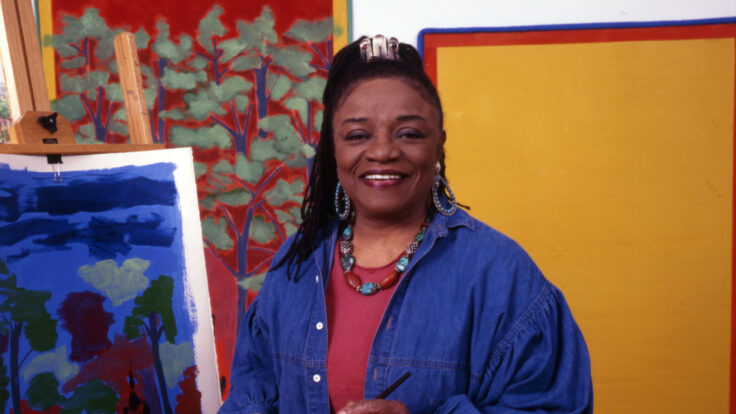
now at Art Omi in the Hudson Valley) anchors the far end of the Whitney’s building—a kind of halfway point in the journey, which shifts into cool assemblage works by artists like Roy De Forest and paintings by Joan Brown, Wallace Berman, and Joan Semmel. If there’s a problem with the show, it’s that everything becomes surrealism in the end, and emphasis on inclusion—Marisol,
Faith Ringgold, and Kenneth Anger—makes you wonder where the boundaries of surrealism lie. |
Strong Results for Karpidas
|
Meanwhile, back in the auction market, Pauline Karpidas’s surrealist works—not just the
Lalanne works with their absurdly low estimates—saw very solid bidding this week. Take the André Masson, La Femme paralytique, from 1939. Before the sale, auctioneer Oliver Barker picked this lot out as a sleeper. It turns out that wasn’t just auction hype, because the painting was estimated at £350,000 and sold for just a smidge more than £1 million with fees. A Dorothea Tanning painting, Kachina and Her Soul, from 1951, was estimated at
£300,000 but sold for almost £900,000. And Max Ernst’s work on paper, Portrait of Guillaume Apollinaire, from 1934, which carried a paltry £40,000 estimate, sold for almost a quarter of a million pounds. |
|
|
There were other works with modest estimates that soared, but there were also
bigger-ticket items that did well, like Magritte’s La Race Blanche, from 1937, which sold for £1.8 million with fees over a £1 million estimate. An Óscar Domínguez, Le Piano, from 1934, was estimated at £1 million and sold for a hair below £2 million. Yves Tanguy’s untitled work from 1928 was estimated at £1 million and sold for just shy of £2.5 million. All three works had irrevocable bids that seemed to ignite the bidding, not repress it.
|
Amid the demand for surrealism, Sotheby’s announced a single collection, titled
Exquisite Corpus, that traces “the full sweep of surrealism’s restless imagination,” with a combined estimate of $70 million. When I asked a dealer who the collection might belong to, I was directed toward the catalogue from the 1999 Guggenheim Museum show, Two Private Eyes, which showed the collections of Nesuhi Ertegun (the brother of Atlantic Records co-founder Ahmet Ertegun). His widow, Selma, died in
December.
The most valuable lot is Kahlo’s El sueño (La cama), from 1940, which depicts the artist sleeping in a bed, suspended in clouds, as a skeleton wired with dynamite and holding dried flowers lies atop the bed’s canopy. Dorothea Tanning’s Interior with Sudden Joy, from 1951, is also part of the collection, with an estimate of $2 million. Kay Sage’s painting, Point of Intersection, also from 1951, is estimated at $1 million.
Salvador
Dalí’s Symbiose de la tête aux coquillages, from 1931, is estimated at $2 million. Magritte’s La Représentation, from 1962, is a rare image depicting football players, and is estimated at $4 million. And another Magritte, La Révélation du présent from 1932, depicting a factory with a giant index finger as a smokestack, is estimated at $2 million.
As the auction market regains some of its former mojo, it would appear that surrealists and their artworks
are providing a base for growth and momentum. Paired with a museum orthodoxy that now puts greater weight on surrealism as the wellspring of the last century of art history, it feels like we need to start accepting its dominance. |
I was sad to see Agnes Gund’s death
announced today in The New York Times. Gund was a fixture at museum galas, gallery openings, and art fairs up to the very end. She was also a philanthropist who was willing to use her own cherished art to fund causes she believed in. She was a trustee of numerous museums, and served for 11 years as the president of MoMA, where she donated more than
250 works of art throughout her lifetime. She sold the last of her unpromised works two years ago at auction to fund organizations that fight for reproductive rights.
That’s all for now. See you back here on Sunday.
M |
|
|
The ultimate fashion industry bible, offering incisive reportage on all aspects of the business and its biggest
players. Anchored by preeminent fashion journalist Lauren Sherman, Line Sheet also features veteran reporter Rachel Strugatz, who delivers unparalleled intel on what’s happening in the beauty industry, and Sarah Shapiro, a longtime retail strategist who writes about e-commerce, brick-and-mortar, D.T.C., and more. |
|
|
Finally, a media podcast about what’s actually happening in the media—not the oversanitized,
legal-and-standards-approved version you read online. Join Dylan Byers, Puck’s veteran media reporter, as he sits down with TV personalities, moguls, pundits, and industry executives for raw, honest, sometimes salacious conversations about the business of media and its biggest egos. New episodes publish every Tuesday and Friday. |
|
|
Need help? Review our FAQ page or contact us for assistance. For brand partnerships, email ads@puck.news. You received this email because you signed up to receive emails from Puck, or as part of your Puck account associated with {{customer.email}}. To stop receiving this newsletter and/or manage all your email preferences, click here. |
Puck is published by Heat Media LLC. 107 Greenwich St, New York, NY 10006
|
|
|
|