Welcome back to Wall Power. I’m Marion Maneker, back in New York and
getting things sorted for the big push ahead. The mood of the art market may have shifted crucially in these last few weeks. But vibes hardly matter until the buyers put their cash on the barrelhead. There’s going to be a lot to talk about in the weeks ahead.
In the meantime: It used to be that noble provenance—even your random duchess or dowager—was the ne plus ultra for attracting auction bids, especially for jewelry. Today, celebrity has more glamour than aristocratic lineage
except, of course, if we’re talking about a celebrity royal. In that case, all bets are off. Tonight, Julie delves into the recent surge of interest in all things related to the most famous queen of all, Marie Antoinette. |
|
|
A MESSAGE FROM OUR SPONSOR |
|
|

| Julie Brener Davich
|
|
- Gallery Hopping With
Julie: Jesse Mockrin at James Cohan: Jesse Mockrin broke onto the scene five years ago with her Caravaggio-esque portrait of Billie Eilish for Vogue magazine. She’s best known for dramatically lit compositions that feature a feminist twist on baroque style and themes. At the Armory’s
2024 Winter Show, the dealer Robert Simon paired her mannerist painting, Unyielding, with the 17th century Guido Reni composition that was its source material. Her first solo museum exhibition, Echo, is currently on view at the Art Gallery of Ontario.
But Mockrin’s current show at James Cohan gallery comprises more intimate, scaled-down drawings, on traditional Venetian blue paper, of young boys dressed for battle—what she called “a
performance of masculinity,” inspired in part by her own preteen sons. Each of the Civil War–era images is based on an actual photograph of a soldier or reenactor. Among the 13 drawings in the show is a Renaissance-era soldier, resplendent in armor with a rosette on the shoulder, based on a 16th century Giorgione painting; there are also drawings of a 20-year-old Heath Ledger in A Knight’s Tale and a 21-year-old Leonardo DiCaprio in
The Quick and the Dead. Each is priced at $10,000, and the show is only up for one more week. - A $3M Cup of Joy: This Wednesday, Sotheby’s is offering the earliest known Kiddush cup, which they have dubbed the Cup of Joy, in a single-lot auction at an estimate of $3 million. Dated to the 11th or 12th century, the
piece is believed to come from the historic region of Khorasan along the Silk Road. It’s the earliest known example of medieval Judaica, of which only a few dozen pieces are known to survive, and it had never been displayed in public until it was previewed at Sotheby’s London this past April. It comes to auction from a private family who has owned it since the 1950s. The lot is guaranteed and has an irrevocable bid, so the question will be whether there’s additional interest above the
guarantee.
- Just another Napoleon brooch: Sotheby’s has announced the star lot of its upcoming Royal & Noble Jewels sale in Geneva is a brooch of old mine-cut diamonds once owned by Napoleon. (Lucky for the consignor, Taylor Swift has brought the
style back into fashion.) The brooch was found by the Prussian army in his abandoned carriage at Waterloo and presented to King Friedrich Wilhelm III. Estimated at $150,000, the circular brooch, from circa 1810, has a 13.04-carat diamond at its center, surrounded by two concentric rows of nearly 100 diamonds in varying shapes and sizes. Napoleon most likely wore it on his
bicorne on special occasions.
|
|
|
A new V&A exhibit is likely to fuel the high demand for Marie
Antoinette–associated artworks and objects. “I can’t think of a more important and valuable provenance,” as one person put it. |
|
|
The V&A’s blockbuster
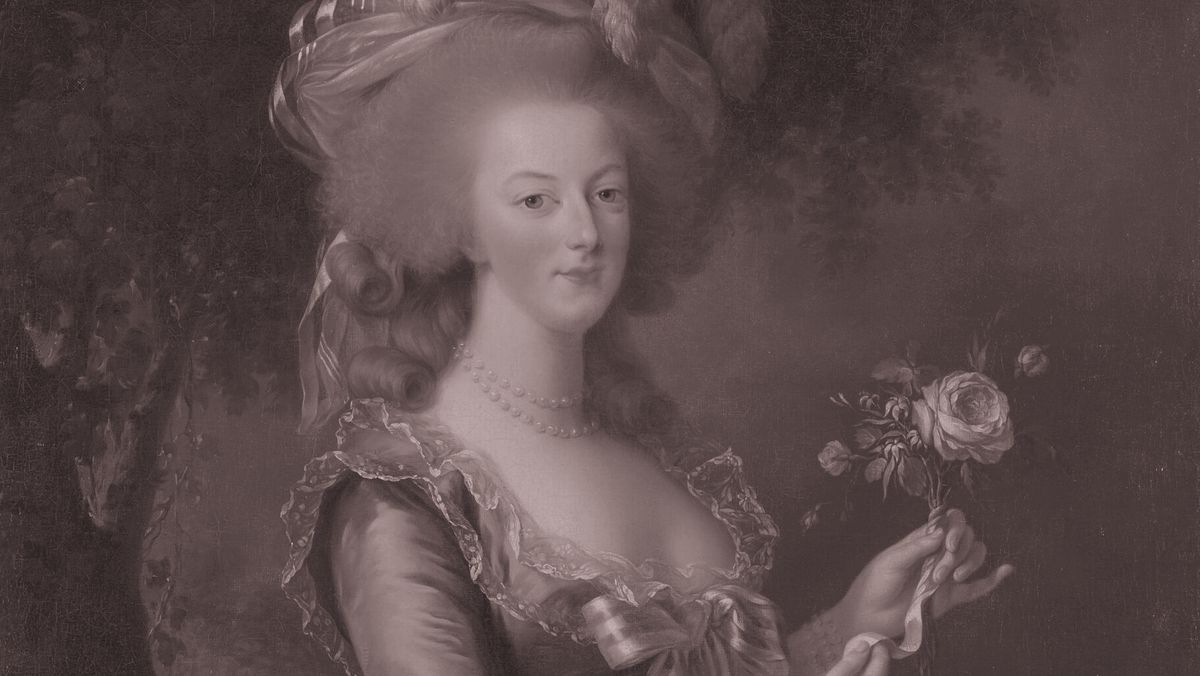
exhibition, Marie Antoinette Style, has put the ill-fated French queen’s name back on collectors’ lips. As you might expect, the show is full of bows, florals, toile, and lace, which have all come back in style again. At auction, however, Marie Antoinette has never
gone outof style—anything associated with her is practically guaranteed to sell for multiples of the price of a similar item without her provenance. “Basically, add a zero,” said antique advisor William Iselin. Sotheby’s vice chairman of jewelry Frank Everett likewise told me, “I can’t think of a more important and valuable provenance than Marie
Antoinette.”
Provenance, in general, has become hugely important in the market for historical objects. Today’s collectors don’t just acquire objects for aesthetic reasons, but also for storytelling purposes. Last week at Frieze Masters, an interior decorator told me that people no longer furnish homes in a singular style (unless you’re Christine and Stephen Schwarzman who are refurbishing not one but two historic estates, and singlehandedly
keeping the antiques business alive in the process). Instead, this person said, most people now decorate more eclectically, bringing together disparate periods and styles, thus increasing competition for the very best objects across different genres. As one paintings specialist told me, collectors want things they can talk about at their dinner parties. |
|
|
A MESSAGE FROM OUR SPONSOR |
|
|
And nothing gets people talking like Marie Antoinette. The French state has bought back
as many items as they can, but in the past decade, we’ve seen a few items sold at auction to private buyers, demonstrating the overwhelming demand for objects bearing her provenance. That demand is especially notable for her jewels, which survived the revolution because she sent them to her nephew in Vienna for safekeeping, hoping they’d support the family’s finances upon their escape from France. (Of course, it didn’t work out that way.)
Anyway, very few jewels from that period still
exist intact, making the ones that did survive incredibly sought-after. Even way back in 1999—before Marie Antoinette got the Sofia Coppola treatment—Christie’s sold a single-strand pearl necklace with a diamond clasp thought to have belonged to the queen, and also once owned by Barbara Hutton (double provenance!), for CHF2.2 million.
Some
of Marie Antoinette’s jewelry ended up in the hands of the Bourbon-Parma royal dynasty. Sotheby’s auctioned off the collection of 100 jewels—including 10 that once belonged to Marie Antoinette—in Geneva in 2018 after the death of the family matriarch, Infanta Alicia, Duchess of Calabria, in a truly once-in-a-lifetime auction event that had crowds lining up, Everett told me. The jewels hadn’t been seen in public in two centuries. “I never would have imagined that they
would have existed,” he said, “and then I was holding them in my hand.” Altogether the Antoinette jewels achieved a total of $42.7 million against an estimate of only $1.6 million.
Two of the most expensive jewels from that sale are highlights of the current exhibition at the V&A. First, there’s the diamond bow pendant
with a 1-inch drop pearl, which sold for $36.2 million against an estimate of just $1 million, setting a world auction record for any pearl. (The buyer was the late Heidi Horten, whose husband’s wealth was infamously connected to Nazi profiteering; it’s on loan to the V&A from her museum in Vienna.) The other is a diamond
bow-shaped brooch, with an 11.5-carat yellow diamond drop added in the 19th century, which sold for $2.1 million against an estimate of just $50,000. |
Replica of the necklace from the Diamond Necklace Affair, Marie Antoinette Style,
Victoria & Albert Museum. Photo: Courtesy of Victoria & Albert Museum |
Another highlight of the exhibition is a négligée necklace from the late 19th century featuring
nearly 500 diamonds totaling about 300 carats. The V&A describes the stones as “almost certainly” from the infamous Diamond Necklace Affair that contributed to Marie Antoinette’s reputation as a spendthrift and her ultimate downfall. (In case you slept through that class, essentially, a con artist pretended to buy an elaborate diamond necklace on the queen’s behalf, but in fact stole it and sold the stones abroad.) The V&A’s description is an upgrade from the “possible” link to that necklace
that Sotheby’s touted. They sold it last year to the Hong Kong–based Illuminata Collection for $4.8 million after a fierce, seven-way bidding battle. Alongside the négligée necklace, the museum is also displaying a replica of the original Diamond Necklace Affair design by jewelers Paul Bassenge and
Charles Auguste Boehmer. |
Lifestyles of the Rich and
Famous
|
Collectors are drawn to personal items that have an intimate connection to their owner, and the V&A
exhibition includes some items from the queen’s nécessaire de voyage (travel toiletry case), including her spittoon and eyebath, both on loan from the Louvre. This theme has also played out in the marketplace. French auction house Rémy Le Fur recently held a sale of Souvenirs intimes de la Maison de France, featuring several objects connected to the queen, including a
reliquary with locks of her hair, which sold for three times its €20,000 estimate, and Louis XVI’s snuffbox from Chateau de Varennes, adorned with a polychrome miniature of the queen, which sold for more than five times its estimate of €10,000. At Sotheby’s a couple of years ago, a
portrait by a relatively unknown artist depicting a poodle believed to be Marie Antoinette’s beloved “Pompon,” sold for $279,000, against an estimate of just $3,000. |
|
|
Unlike the jewels and personal knickknacks that Marie Antoinette smuggled out of France
before the revolution, most of the furniture from her various palaces was sold in revolutionary-era sales and dispersed. France has spent the past two centuries trying to buy it all back to restore the surviving palaces, namely Versailles, to their former glory. They have what’s called a right of preemption, meaning that after an object sells at auction in France, they can match the winning bid. Usually when word gets out that the French state wants something, other interested parties gracefully
bow out. In this way, the market for these objects, at least in France, doesn’t behave entirely rationally.
Versailles acquired a cream-painted armchair in Christie’s 2022 Exceptional Sale for €906,000, and a blue lacquered wood
fire screen for €254,000 in Sotheby’s 2023 Jacques Garcia sale, both by Georges Jacob and delivered to Marie Antoinette’s private apartment at the palace in 1788. Later that year, Sotheby’s sold the collection of Hubert Guerrand-Hermès, featuring a gilt
walnut chair, circa 1784-85, from the queen’s boudoir, listed as “estimate on request.” The Palace at Versailles probably wanted to buy it back, but it got bid up to a budget-busting €2.6 million. The buyer was an Asian collector with a home in France, meaning there was no export license needed and
thus no opportunity for the state to block the sale.
The Sèvres porcelain milk jug from the queen’s dairy at Rambouillet—one of four services made by the manufactory during the reign of Louis XVI—sold at Aguttes auction house in 2011 for €1.1 million against an estimate of €200,000. The service was designed in the queen’s favored Etruscan style and adorned with goats. Classified a decade later as a national treasure, the jug entered the Sèvres museum’s collection thanks to the
patronage of Madame Jessica Yu, C.E.O. of Shanghai Hantang Culture, and is on view there through December. With five pieces, the Sèvres museum has the largest holding from the Rambouillet service; the Met has a bowl. The V&A exhibition features one of four bol-sein from the service, on loan from the Sèvres museum. A modern-day replica by Bernardaud can be yours for just $1,550.
The V&A exhibition does an admirable job of reminding visitors how it all ended for Marie Antoinette, with a
gallery devoted to her untimely demise showcasing the simple white linen chemise she wore in prison, a 1793 etching depicting her executioner holding her head aloft, and the actual guillotine blade that is believed to have been used in her execution. Somehow, I don’t think that’s the part of her life story that people dwell on at dinner parties. |
Thanks, Julie. That’s all we have for today, folks. Look for us on Tuesday, when we’ll have much
more about the coming season ahead.
M |
|
|
Need help? Review our FAQ page or contact us for assistance. For brand partnerships, email ads@puck.news. You received this email because you signed up to receive emails from Puck, or as part of your Puck account associated with {{customer.email}}. To stop receiving this newsletter and/or manage all your email preferences, click here. |
Puck is published by Heat Media LLC. 107 Greenwich St, New York, NY 10006 |
|
|
|



%20Victoria%20and%20Albert%20Museum,%20London%20(9)_01K8H3H03VP28G261F5QVTA2TE.JPG)