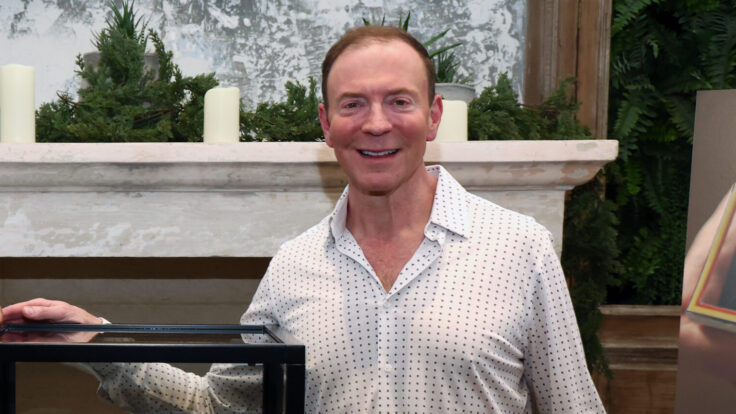
Welcome back to Wall Power. I’m Marion Maneker, in Edinburgh tonight waiting to
board the Caledonian Sleeper to London, where Frieze week begins in earnest on Monday morning. Tonight, Julie Davich takes you into the world of Sèvres, the famous French porcelain manufactory that once served royalty. She explains below why global auction houses’ retreat from European ceramics has created opportunities for smaller players. But we’ve also got a fair bit of housekeeping to take care of up top.
Let’s get started… |
- Sotheby’s
offers a $35 million Basquiat: At its Contemporary Evening sale in November, Sotheby’s is offering Jean-Michel Basquiat’s Crowns (Peso Neto)—which he painted when he was just 21 years old—with an estimate of $35 million, which would set a record for works he made at that age. Notably, the painting features a number of crowns, which are highly prized in the artist’s iconography. The work was originally shown in Annina Nosei’s first show of
Basquiat’s work, and then at Documenta 7.
- Matisse totals $2.6 million at Christie’s: The Pierre and Tana Matisse Foundation sold a number of prints and drawings at Christie’s earlier this week for $2.6 million. The works had come directly from Henri Matisse via his youngest son, the art dealer Pierre. The proceeds of the sale will benefit arts and arts education organizations. Christie’s said the total was $2,557,780,
with buyers from 18 countries. Thirty-one percent of the bidders and buyers were new to Christie’s, and 12 percent were younger collectors.
|
|
|
A MESSAGE FROM OUR SPONSOR |
|
|

| Julie Brener Davich
|
|
- Photo records for Penn and
Mitchell: Phillips’s sale of 70 lots from the Irving Penn Foundation this week achieved $4.9 million against an estimate of $3.1 million, with 94 percent of lots finding buyers. Penn’s dye transfer print Ginkgo Leaves, New York, 1990 set a new world auction record for the artist of $567,600, besting the record of $529,000 set by an early work, Cuzco
Children, that had stood for 17 years. (The previous record for an edition of Ginkgo Leaves was $469,904, set in 2014.) The photo’s success reflected “the rare convergence of personal history, artistic mastery, and market exclusivity,” Phillips head of photographs Vanessa Hallett told me. Other highlights of the sale include Three Poppies ‘Arab Chief,’ New York, 1969, which doubled its estimate to make $206,400, and Bee (A), New York, 1995, which
more than tripled its estimate to make $193,500. Tyler Mitchell’s Riverside Scene from Dreaming in Real Time, from 2021, also set a record for the artist at $54,180, at Phillips’s various-owners photographs sale the following day.
|
|
|
As auction houses have retreated from the category of European ceramics amid declining
prices, a next-generation dealer spots a market opportunity. |
|
|
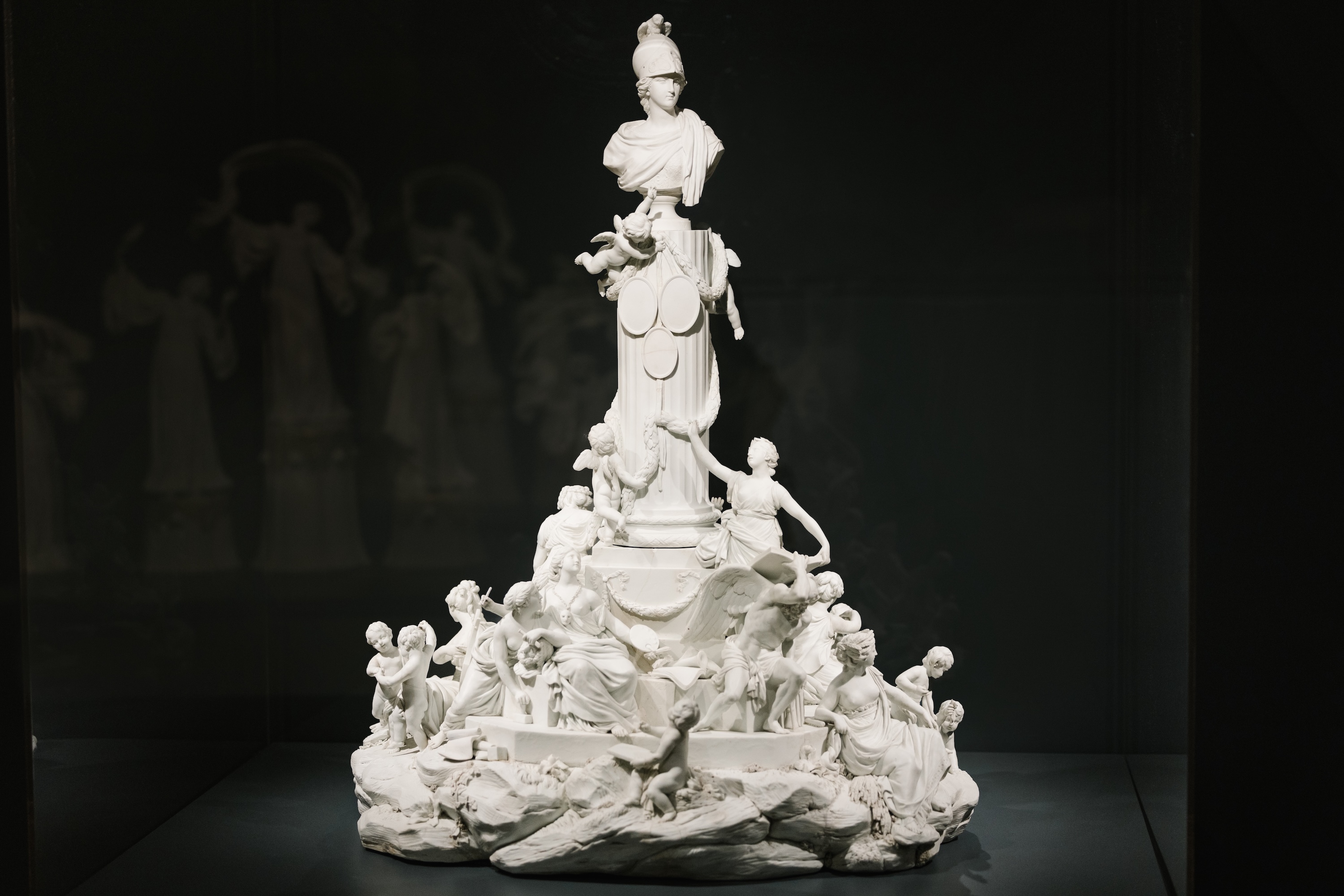
It’s been a while since there was much of a clamor for Sèvres, the nearly 300-year-old French porcelain
manufacturer that once produced tableware for the likes of Catherine the Great and Louis XVI, who famously commissioned the state-run manufactory to create a bol-sein for Marie Antoinette (yes, a bowl in the shape of a breast, nipple and all). Of course,
tastes changed: As minimalism became the prevailing design aesthetic over the past couple decades, European ceramics, with their liberal use of gilt and decoration, largely fell out of favor, and auction houses have mostly scaled back on the category, except for the highest-value collections. But in the art world, there’s always an opportunity for enterprising dealers who think they’ve found an underappreciated market.
Among those stepping into the void are a pair of Millennial dealers,
Camille Leprince and his frequent collaborator Guoxiong Liang, who have been producing scholarly books and exhibitions to try to grow the market for European ceramics. Last month, during Parcours de la Céramique, Leprince presented an exhibition focused on the royal manufactories; this week you’ll find him at Frieze Masters, and next week at the Ceramic Art Fair alongside Basel Paris. “There is a new generation coming up who are loving the material,” Leprince
told me. The Frenchman opened his eponymous business a little over a decade ago, at the age of 30, and has since sold pieces for as much as $2.5 million to clients such as the Getty, the Met, and the Louvre. |
|
|
A MESSAGE FROM OUR SPONSOR |
|
|
The European ceramics market is smaller than it used to be, with fewer buyers and lower prices. The big
auction houses mostly no longer sell items below the $5,000 mark—especially since the 2008 financial crisis, when they scaled back their large global teams of specialists and stopped holding dedicated sales. Today, Sotheby’s has only one young European ceramics specialist left on staff, and Christie’s has none.
But where the larger houses saw red ink, others saw opportunity. A lot of the decorative arts moved over to Bonhams in the 2000s, according to Nette Megens, who
now leads the European ceramics team there. Stair Galleries, a regional New York auction house, launched dedicated ceramics sales seven years ago, under yet another young specialist, Lauren Anderson. And there’s still money to be made in the middle tier of the market. Anderson told me about an unassuming creamer that made about $8,000.
As with other decorative
arts categories that have fallen out of favor, there’s still strong demand at the very top of the market. “The best of the best means impeccable provenance, amazing condition, and unique decoration or an interesting form,” said former Christie’s specialist and ceramic advisor Carleigh Queenth, who acts as a kind of porcelain influencer through her Instagram account, @breakingisbad.
Indeed, despite a broader ceramics slump, Sèvres hit its world record in 2018, when Napoleon I’s “Marly Rouge” service from the Rockefeller collection achieved $1.8 million at Christie’s. |
Photo: Da Ping Luo/Courtesy of Bard Graduate Center |
A current exhibition at Bard Graduate Center called Sèvres Extraordinaire! offers the most
complete survey of such pieces ever outside of France—The Wall Street Journal enthused that it “earned its exclamation point.” It consists of five floors comprising 200 objects, both utilitarian and decorative, drawn directly from the Sèvres archives, showing the evolution of French tastes from the manufactory’s 18th century origins to modern collaborations with such artists and designers as Yayoi Kusama and Ettore Sottsass. (Alas, the legend
that Marie Antoinette had a bowl actually molded to the shape of her breast, like the companion legend about how champagne coupes got their shape, have been debunked, but who doesn’t need a Breast Bowl?) |
|
|
The objects on display range from the expected, like a roast dish from Louis XV’s celestial
blue service and a bust of Madame de Pompadour, to more unexpected ones, like the cream jug in the shape of a cow’s head adorned with ribbons and flowers, created by Alexandre-Évariste Fragonard, son of Jean-Honoré. Also surprising are some of the contemporary pieces that you probably didn’t know were associated with Sèvres, like Louise Bourgeois’s gilt porcelain Nature Study.
(Another in the edition made £567,000 at Christie’s in 2023, and an unglazed version made £725,000 at Phillips in 2017.) Perhaps the most jaw-dropping gallery at Bard is the one dedicated to elaborate surtouts, or table centerpieces, across the centuries,
including François-Xavier Lalanne’s Canard aux Nénuphars, from 1972, one of which sold at Christie’s last year for $352,800.
Naturally, pieces that were associated with royalty are most prized by collectors. Broadly speaking, Leprince divides the market for antique Sèvres into two categories: pre-French Revolution and the 19th century,
especially Napoleonic. Pieces from the 1700s are by far the most rare, given that fewer things were produced then and even fewer survived. Pieces produced during the 19th century reigns of Charles X, Louis Philippe, and Napoleon III, and from the Art Deco and Art Nouveau eras, are not collected as much.
But it’s the storytelling that is most important in today’s highly selective market. Buyers are focused on “provenance,
rarity, and historical context,” said Liang. In Bonhams’ upcoming Classics sale in Paris, for example, there are two Sèvres plates from the original set of 72 that Louis XVI gifted to Archduke Ferdinand of Austria, circa 1784, estimated at $2,300 each, though similar pieces usually go for about $5,000 in the current market. Pieces actually owned by kings or
queens are orders of magnitude more valuable: A plate from the First Louis XV service made over $50,000 at Christie’s three years ago.
As for where the Sèvres market goes from here, Leprince and Liang have their eyes set on China. Liang just opened
the first museum dedicated to Sèvres in the country, a couple hours outside of Hong Kong, and has translated two of Leprince’s scholarly tomes on the manufactory into Chinese. Leprince reports that Chinese buyers are particularly interested in pieces from the 1800s. “It’s very exciting to see a new market opening up,” said Megens, who is also seeing Asian buying in her sales. “The group of people engaging with us is growing steadily.” |
Thanks, Julie. I’ll be back in touch on Tuesday with the latest from London as Frieze week gets
underway.
’Til then,
M |
|
|
The ultimate fashion industry bible, offering incisive reportage on all aspects of the business and its biggest players.
Anchored by preeminent fashion journalist Lauren Sherman, Line Sheet also features veteran reporter Rachel Strugatz, who delivers unparalleled intel on what’s happening in the beauty industry, and Sarah Shapiro, a longtime retail strategist who writes about e-commerce, brick-and-mortar, D.T.C., and more. |
|
|
Finally, a media podcast about what’s actually happening in the media—not the oversanitized,
legal-and-standards-approved version you read online. Join Dylan Byers, Puck’s veteran media reporter, as he sits down with TV personalities, moguls, pundits, and industry executives for raw, honest, sometimes salacious conversations about the business of media and its biggest egos. New episodes publish every Tuesday and Friday. |
|
|
Need help? Review our FAQ page or contact us for assistance. For brand partnerships, email ads@puck.news. You received this email because you signed up to receive emails from Puck, or as part of your Puck account associated with {{customer.email}}. To stop receiving this newsletter and/or manage all your email preferences, click here. |
Puck is published by Heat Media LLC. 107 Greenwich St, New York, NY 10006 |
|
|
|