Welcome back to Wall Power. I’m Marion Maneker, wrapping up the week
here in New York, but looking to Hong Kong and Philadelphia. Bet you haven’t seen those two cities linked very often.
Minimalism is difficult for many people to understand and appreciate, but it’s even tougher to imagine how to live with the artworks—fluorescent lights, tiles and bricks, lines drawn on a wall from a set of instructions—let alone grow up with them. With perhaps the most important collection of minimalist art—including major works by Donald Judd,
Sol LeWitt, Dan Flavin, Carl Andre, and others—coming to market, Christie’s has taken some novel approaches to presenting and marketing the works.
Tonight, I’ll take you through the Hank McNeil collection. On our way there, some notes on the strong Old Masters results in Paris this week, why the South Asian market is on fire in New York, Rashid Johnson’s big move, and
Guillaume Cerutti’s departure from the Artemis fold.
Also mentioned in this issue: François and François-Henri Pinault, Cristopher Canizares, Damien Hirst, Joe Hage, Gerhard Richter, Francis Bacon, Peter Doig, Andrea Crane, Cecily Brown, Max Teicher, Richard
Prince, Matthew Gaughan, Manjari Sihare-Sutin, and many more… |
|
|
|
-
M. Pinault is back in charge of his art collection: A well-sourced art advisor told me yesterday that Guillaume Cerutti was out at the Pinault Collection. Of course, the news broke early this morning in a French newsletter that follows fashion; and Cerutti subsequently confirmed that he is also leaving Christie’s, where he is chairman, and the family-owned Stade Rennais football club, but
only after he ties up some loose ends reforming French football governance over the next few months.
Thirteen months ago, when François Pinault appeared to be in fading health, it seemed strategically astute for his son François-Henri Pinault to install Cerutti at the Pinault Collection, which has facilities at the Bourse de Commerce in Paris and in Venice. Positioning the collection for a donation (there will surely be tax negotiations after the
paterfamilias goes) would do more than give Paris a museum focused on the art of the last 50 years, it would take a huge cost off the Pinault family balance sheet. But the 89-year-old Pinault père seemed to have a different point of view. After all, the art collection is his personal passion. And now that he feels better, apparently, you can see why he’d want to take back the reins (Venice is coming up, you know), even if it might cost his heirs a pretty penny.
The Pinaults might
have wanted Cerutti to remain, in the hopes that he could still effectuate a transformation, either behind the scenes or once the senior Pinault is, again, no longer able to run the collection. But at 60, Cerutti is neither young enough to enjoy the paycheck while awaiting the inevitable, nor old enough to hang on to the sinecure. I also cannot help but notice that the French minister of culture resigned recently to run for mayor of Paris. Cerutti certainly has the relevant qualifications to
replace her. And whether he hopes to be tapped by the Elysée Palace or just wants the phone to ring for other opportunities, Cerutti is probably better served by a public departure than quietly looking for his next role while still cashing a check from the Pinaults. - Rashid Johnson upgrades: There’s a lot going on in Rashid Johnson’s world: His nine-month mid-career retrospective at the Guggenheim finally closed; he made a major real estate purchase on
the Upper East Side; and his longtime director and consigliere at Hauser & Wirth, Cristopher Canizares, is taking a new role as his agent or advisor.
On Wednesday, Canizares started sending emails to art advisors announcing Artist Legacy Bureau, his artist agency firm. As I’ve explained before, globally recognized artists need someone to integrate and support a steady stream of museum shows, supervise their secondary market, oversee marketing and publicity strategy, work
with galleries around the world, manage relationships with collectors, and also keep a studio full of assistants and complicated fabrication challenges running. It’s the same sort of job that Joe Hage does for Damien Hirst. (Hage also played an important part in the markets for artists ranging from Gerhard Richter to Francis Bacon and Peter Doig.) Andrea Crane,
who works with 291 Agency’s Max Teicher, handles many such tasks for Cecily Brown. And Richard Prince has had Matthew Gaughan at his side for years.
The emergence of these artists’ agents—a term that doesn’t really do the role much justice—reflects the transformation of the art market into a global business, and an expansion of the duties that galleries can and should perform for artists. Until recently,
there’s been a dearth of individuals with the necessary and relevant experience for these positions; meanwhile, the industry is only starting to recognize the benefit of having steady hands guiding the careers of major artists. Canizares is one of the few who can point to his success with Johnson and legitimately claim he can do something similar for others. Now, he just has to put some other successes behind that claim. - South Asian art carries the
market: The South Asian sales in New York did not disappoint. Christie’s racked up a little more than $27 million on Wednesday morning. Sotheby’s followed up on Thursday with an equally successful sale totaling $22 million. I spoke to Sotheby’s Manjari Sihare-Sutin afterward, and she showed me how her sales have consistently come in at twice the estimates (or more), including fees, from 2021 to 2025, with a huge jump in dollar volume in 2024. She explained that there has
been a resurgence of interest in the standard-bearing Progressive artists like M.F. Husain, Vasudeo Gaitonde, F.N. Souza, and others, and also a rotation into artists like Jehangir Sabavala, Jagdish Swaminathan, Vivan Sundaram, and Kattingeri Krishna Hebbar.
The top lot at Sotheby’s was Husain’s Second Act, from 1958, which employs the Christian imagery of Adam
and Eve. It was offered at $2.8 million and sold for a total of more than $5.1 million with fees. Souza’s Untitled (Mountain with Houses), from 1961, was offered with an estimate of $400,000, but sold for $2.3 million with fees. Hebbar’s colorful Ajanta, from 1974, was estimated at $100,000 but sold for $768,000 with fees. Sundaram’s Inbetweenness, from 1967, was
estimated at $80,000 but sold for almost $900,000. In the end, all of Sotheby’s lots sold, with 12 new artists’ records and an average lot value of $300,000.
At Christie’s, the top lot was Tyeb Mehta’s Gesture, from 1977, which was
estimated at $2 million but sold for nearly $4 million with fees. Two paintings by Ganesh Pyne did astonishingly well: Crossing the Fountain, from 1974, was estimated at $300,000 but sold for nearly $2.3 million with
fees; and Encounter in the Twilight Zone, from 1974, had a final selling price 10 times the $250,000 estimate. Ram Kumar’s Untitled (Benares) sold for nearly $1.15 million—the estimate was $200,000. And
K.G. Ramanujam’s Untitled (Procession), from 1968, sold for nearly $1.1 million against a $100,000 estimate. The vast majority of Christie’s lots also sold for prices well above the estimates. There seems to be no slowing this market.
|
|
|
|
-
Fragonard shines in Paris: Off-the-hook bidding wasn’t confined to the New York sales this week. In Paris, Christie’s had the Veil-Picard collection of Old Masters works, which featured an Antoine Watteau drawing that did as expected and sold for nearly €840,000. Jean-Honoré Fragonard’s Happy Family
made nearly €2.9 million over an estimate of €1.5 million. A pair of Hubert Robert paintings, estimated at €800,000, were bid up to more than €2.4 million. And Fragonard’s La Petite Coquette was
estimated at €400,000 but sold for more than €1 million. Again, this is where the action is in the art market.
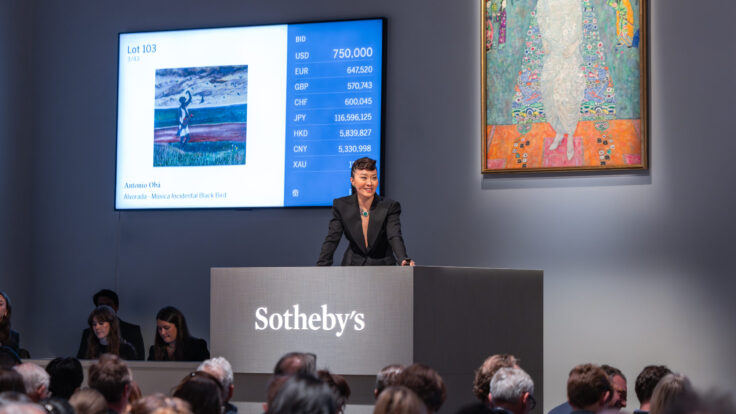
- Christie’s kicks off Hong Kong sales with $85 million evening sale: It’s the beginning of a long weekend of sales in Hong Kong, but Christie’s was already able to net HKD655,761,600 in its 20/21 Evening sale in the
island city. The top lot was a red Richter abstract painting that sold for slightly less than the estimate, presumably to the third-party guarantor. A Sanyu painting of a horse made nearly $8.2 million. And a painting by German artist Walter Spies, who lived in Indonesia and Bali, set its third record for the artist. It had previously sold in 2001 for $1 million; it came back to market in 2013 and made just over $4 million; today, that top price was bumped up to
$7.5 million. That’s going to be a market confidence builder. I’ll have more on the sales on Sunday as they progress.
|
Now, let’s go to Philadelphia… |
|
|
|
Ahead of the $30 million Henry S. McNeil Jr. collection sale of exceptional minimalist
art, Christie’s devised a clever method for showcasing what it might feel like to live with provocatively pared-down work. The question is whether buyers can see it in their homes, too. |
|
|
|
This week, Christie’s announced it will sell what is perhaps the most important collection of
minimalist art to appear at auction since 2006, when the Judd Foundation sold 35 sculptures to raise $20 million. The Henry S. McNeil Jr. collection will be sold in an evening sale in New York this May, featuring 12 lots from artists like Sol LeWitt, Dan Flavin, Carl Andre, and Donald Judd, plus additional work in design and day sales. The whole collection has a
combined presale estimate of $30 million, and includes seminal works like a copper Judd stack lined with red Plexiglas, estimated at $10 million, and Flavin’s first fluorescent-light work, which is estimated at $1.5 million.
Interest in minimalist art has reached something of a nadir in recent years. For those already skeptical of “modern art,” the work can come off as coolly intellectual and needlessly provocative, and sometimes appear to be a parody of itself. Who doesn’t struggle to
see the art in pencil lines drawn on a wall—or white bricks arranged in a neat stack? Indeed, a quick check of auction prices shows that the top price paid for a work by Donald Judd came a dozen years ago. The same is true of Dan Flavin. Carl Andre’s work had a run at auction in 2019, and again in 2021, but none of those sales cracked the $3 million mark. For Sol LeWitt, whose work can often be little more than instructions for executing wall drawings, there was a market pop three years ago that
doubled his top price all the way to $1.6 million.
But McNeil, who died last year at the age of 81, loved and lived with his art in an 8,800-square-foot townhouse off Rittenhouse Square in Philadelphia. The son of the inventor of Tylenol, he lived a querulous life. He battled with his parents, with his adult children from a previous marriage, and even with an addiction to cocaine. Although his mother cut him out of the family fortune when she died nearly three decades ago, she left him a
small bequest, which set off an epic legal battle with his siblings. However, he used money he had inherited earlier, in a trust, to build a substantial real estate portfolio in Pennsylvania.
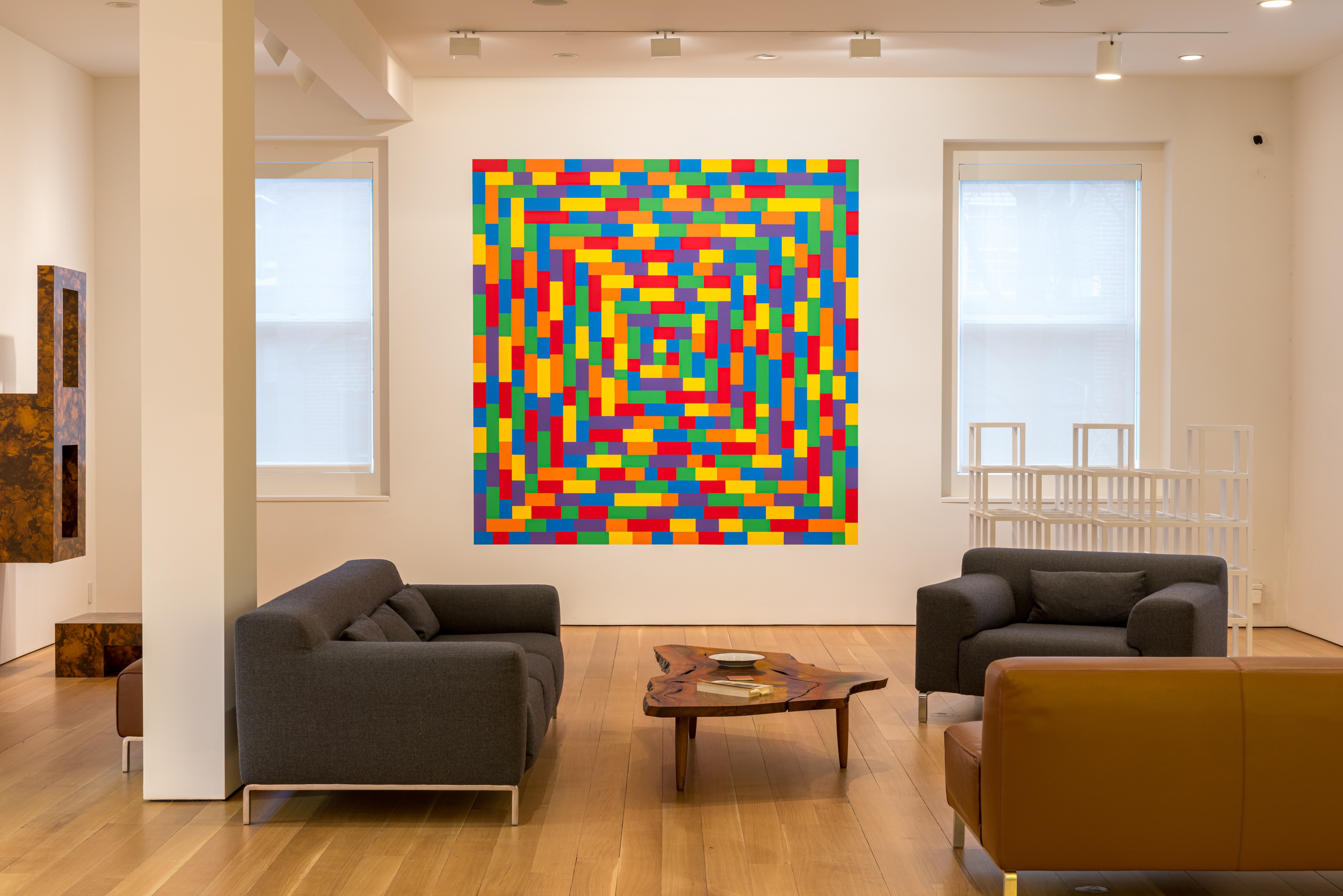
McNeil raised his two children, Calder and Cole, in the Rittenhouse Square townhouse alongside his exceptional collection of minimalist art. And Christie’s made the smart decision to turn that curious situation into a selling point. Last week, they invited a stream
of art advisors, collectors, and folks like me, who were simply interested to see what it meant to live with a peerless collection of minimalist art, to tour McNeil’s home. |
One curious thing about the art market is that we often see a collector’s art, but don’t often see
how they actually live with it. On occasion, the auction houses will re-create the setting with improved lighting and editing, or present the public with shelter-magazine-style pictures of the collectors’ homes. Many collectors will also create spaces that are purpose-built to show off their collections; it’s not uncommon to go to a collector’s home and find a laminated checklist of the art on the walls for easy reference. |
|
|
|
An art auction, however, isn’t a house tour. It’s the opposite. When you see great art in a
collector’s home, it feels less historic and more personal, often situated around the areas where they eat, read, watch television, and entertain. But this kind of approachability doesn’t quite square with the austerity of minimalist art. So what would a functioning family home built to live with minimalist art feel like? To help get people across the divide, Christie’s created this video tour of the townhouse, hosted by Calder and Cole.
McNeil had a taste for beautiful George Nakashima wood tables and wall shelves, Sam Maloof carved wood chairs, and tables by Poul Kjaerholm and Florence Knoll. In the dining room, which one enters through a brushed aluminum frame holding a frosted-glass door, there is a collection of
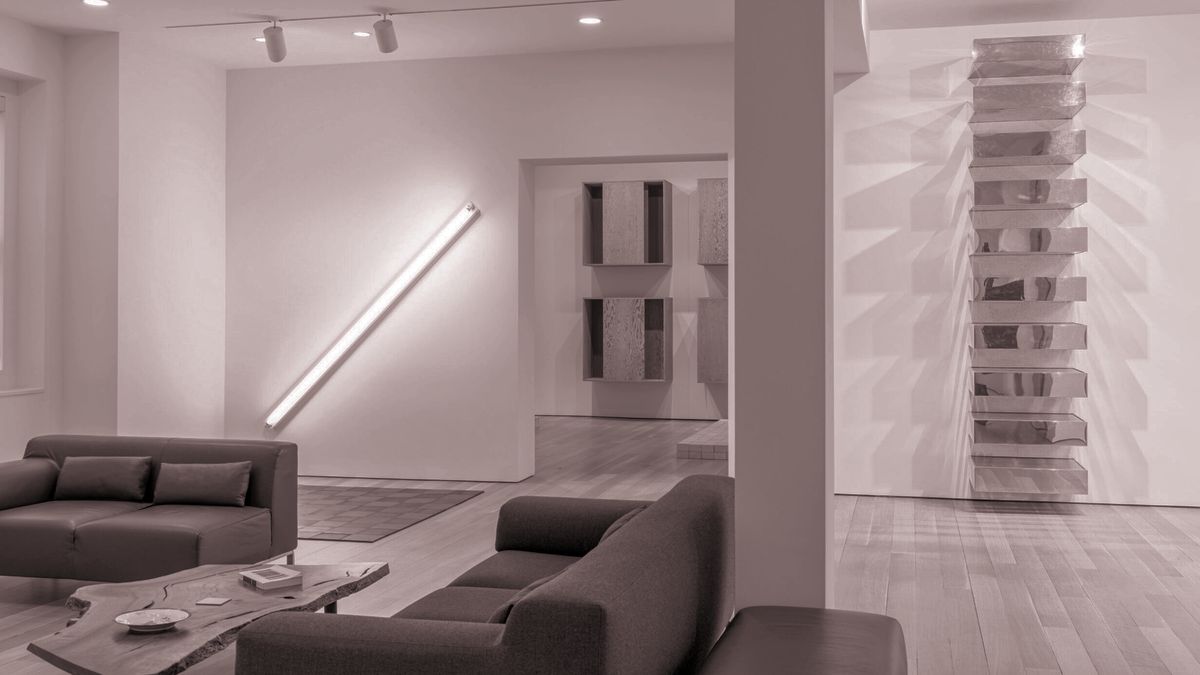
Georg Jensen silver serving pitchers and platters. Up the three-story central staircase—lined with Fred Sandback corner pieces and framed by Judd boxes—lies the main floor. There one finds a spacious and surprisingly livable room, where the Judd stack rises to the ceiling in the vicinity of major works by Andre, Flavin, and LeWitt. |
Photo: Max Touhey/Courtesy of Christie’s |
Off the living room is McNeil’s study. On the other side is a room consciously set up as a gallery
space with more Andre, Judd, and LeWitt. Ascending further, a large Flavin work, which will be sold in the autumn, points like an arrow to a skylight that caps the stairs, and a landing that connects the family’s three bedrooms. Another important Judd dominates that space. Each of the three bedrooms, the walls of the study, the living room, the kitchen, and the main hall are covered with LeWitt wall drawings.
Even though it had surely been cleaned up like a realtor’s open house, the
Rittenhouse Square townhouse came off not as contrived and antiseptic, but rather like a liminal space where one could revive from the aesthetic assault of everyday life. Is it enough to seduce a new generation of buyers to appreciate the serenity of minimalism? We’ll have to wait until May to find out. |
I hope you have a restful and aesthetically reviving weekend ahead of you. I will see you all back
here on Sunday.
M |
|
|
|
Puck founding partner Matt Belloni takes you inside the business of Hollywood, using exclusive reporting and insight
to explain the backstories on everything from Marvel movies to the streaming wars. |
|
|
|
Ace media reporter Dylan Byers brings readers into the C-suite as he chronicles the biggest stories in the industry:
the future of cable news in the streaming era, the transformation of legacy publishers, the tech giants remaking the market, and all the egos involved. |
|
|
|
Need help? Review our FAQ page or contact us for assistance. For brand partnerships, email ads@puck.news. You received this email because you
signed up to receive emails from Puck, or as part of your Puck account associated with {{customer.email}}. To stop receiving this newsletter and/or manage all your email preferences, click here. |
Puck is published by Heat Media LLC. 107 Greenwich St., New York, NY 10006 |
|
|
|
|