 |
|
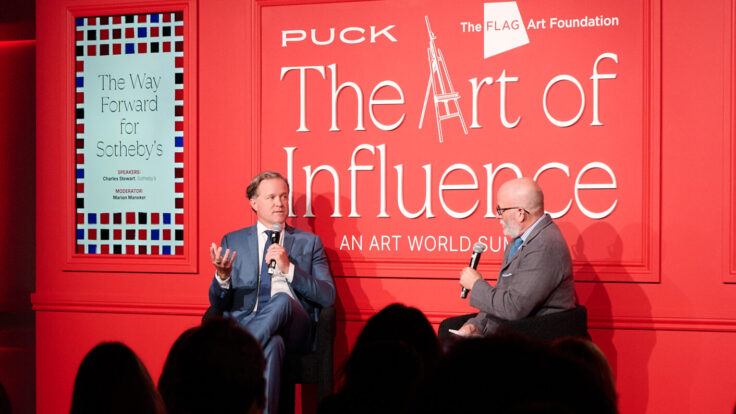
Welcome to Wall Power. I’m Marion Maneker and I’ll be your server tonight. If you were previously a paid subscriber of Artelligence, my old Substack publication, welcome to Puck, my new home. If you’re just joining us, or coming over from the unpaid list, a friendly reminder that this newsletter will be free for the next four weeks—then we’re going behind the paywall. Sign up here to get in on the ground floor.
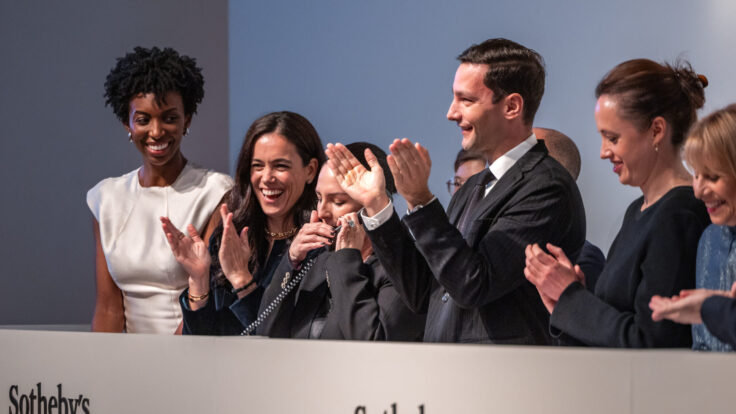
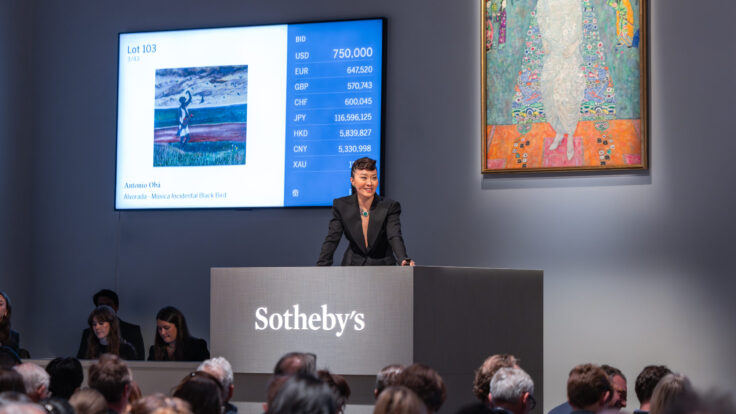
In tonight’s issue, I’ve got the backstory behind Sotheby’s remarkable new fee structure, which just went into effect yesterday. The new fees are a major departure from the way the business has been run for many years, and a potential signal of the very different business models the two biggest houses seem to be perfecting.
|
|
|
But first…
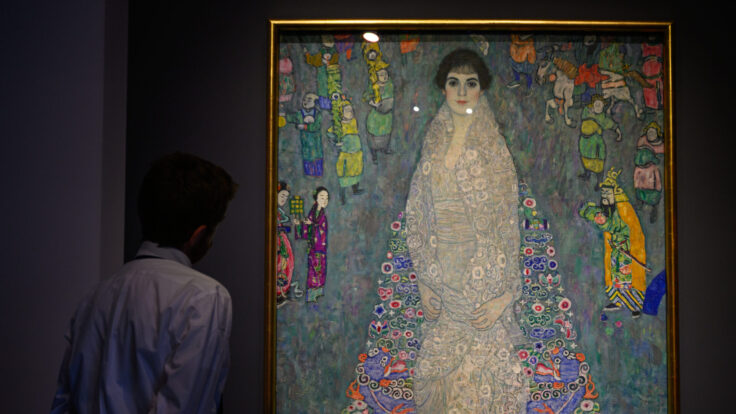
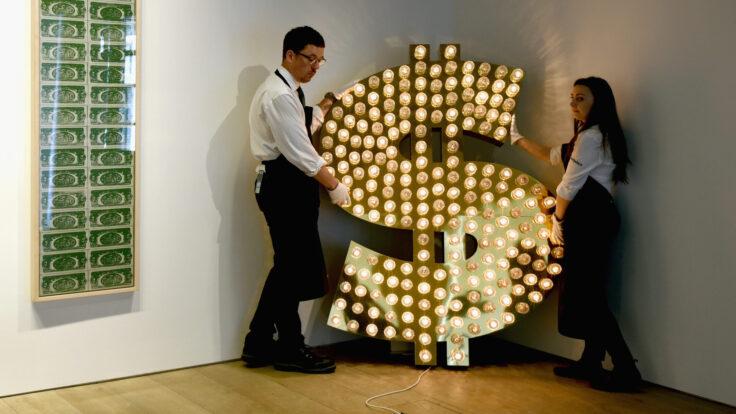
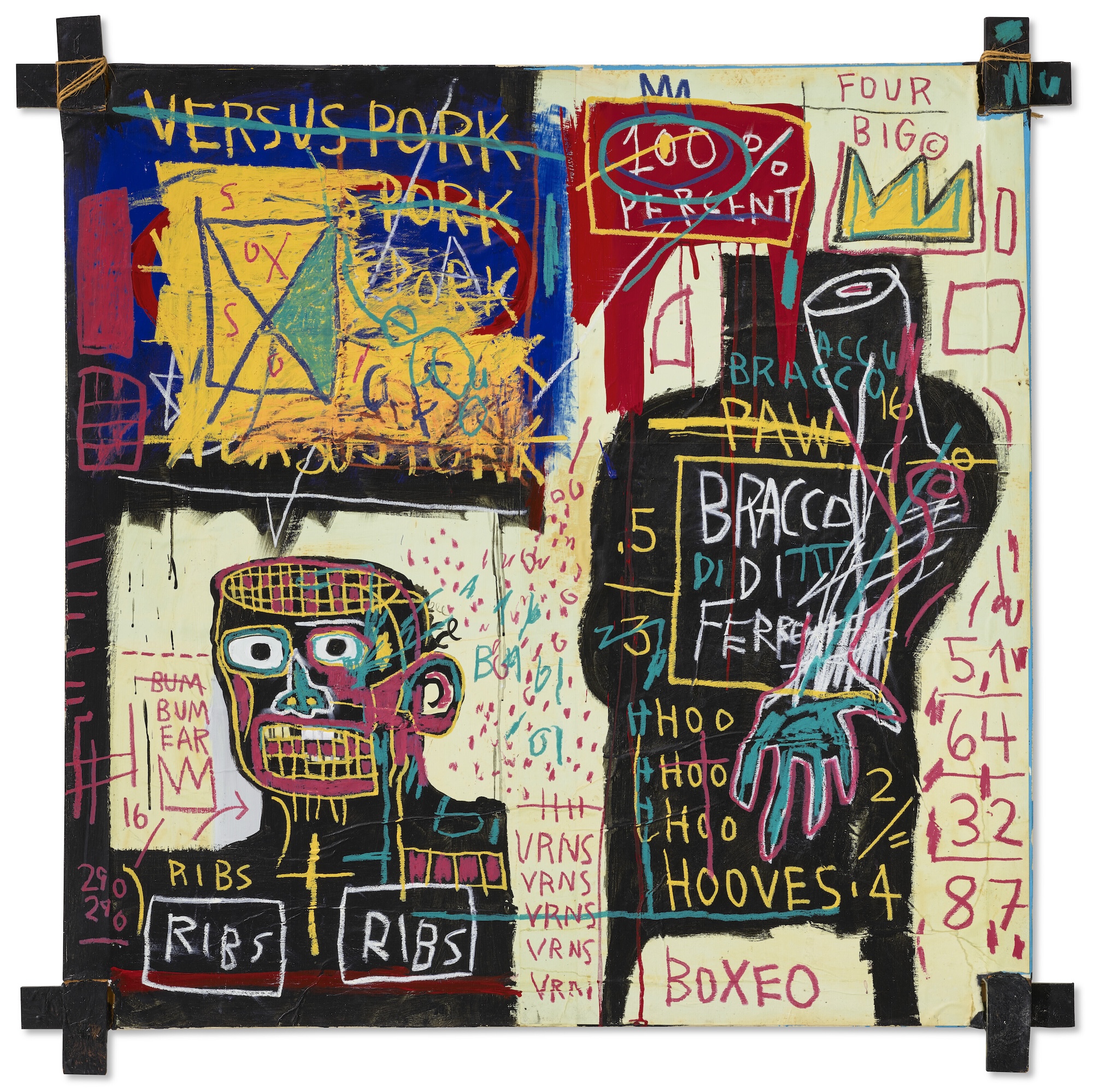
- Basquiat espectáculo: It looks like Jean-Michel Basquiat will be the king of this season, with Phillips selling three works in New York and London this spring and summer, and Sotheby’s auctioning a collaboration between Basquiat and Andy Warhol (recently featured at the Fondation Louis Vuitton in Paris and the Brant Study Center in the East Village). Meanwhile, Christie’s announced late last week that it’s offering Basquiat’s 1982 The Italian Version of Popeye Has No Pork in His Diet, with no published estimate. (The whisper number is $30 million.)
Contrary to popular misunderstanding, of course, estimates are not appraisals. (Sorry, Dmitry Rybolovlev.) Rather, they are signals about the minimum price a seller will accept at auction. If the auction house publishes an estimate below where the seller is willing to trade, they risk frustrating buyers. So when the auction house says the estimate is upon request, they’re giving their specialists and the seller some time to be flexible. Here, for example, we have a work from Basquiat’s prime year painted upon the artist’s unconventional canvas, heightening the connection to his origins as a graffiti artist. Christie’s press materials call the work Basquiat’s “finest stretcher bar painting” and point out that it has not been exhibited publicly for almost 20 years. The painting also contains some of the most appealing elements from Basquiat’s iconography. Collectors generally prize works that include some, if not all, of the following: anatomical images inspired by the painter’s childhood study of Gray’s Anatomy, words and crossed-out words, and, most of all, the artist’s easily recognizable crowns.
|
|
|
|
Jean-Michel Basquiat, The Italian Version of Popeye Has No Pork in His Diet (1982), estimate in the region of $30 million
|
|
|
- Norman Lear’s $50M trove: Strangely, among the many collectors’ estates that have come to term this season—the polite way of saying the owners died and there are taxes due—few have chosen to consign their art to auction for the May sales in New York, the art market’s premier annual event. Undoubtedly, the estates and their various advisors are concerned about the overall mood of the art market, which is fairly unprecedented.
The auction business is used to suffering through bad economic climates. It is rare, though, that buyers are cautious when the economy is strong. Alas, it’s hard to imagine the market being less unpredictable the following season in New York, right after the presidential election. As one auction executive put it to me the other night, does anyone think there won’t be chaos and controversy, no matter which way the vote goes?
But everyone else’s caution is Lyn Davis Lear’s opportunity. The longest-serving of Norman Lear’s three partners is selling several of the late producer’s art works, totaling a $50 million pre-sale value, at Christie’s in May. David Hockney’s A Lawn Being Sprinkled, from 1967, is the work with the highest estimate, at $25 million. Ed Ruscha’s Truth, from 1973, has a $7 million estimate. (It seems the Ruscha retrospective that debuted at MoMA and has now opened in the artist’s hometown of Los Angeles hasn’t further increased his market momentum, which had been rising for a few years in advance of the show.) Willem de Kooning’s Man in Wainscott, from 1969, has a $4 million estimate.
The Lear estate also includes Robert Rauschenberg’s Rodeo Palace (Spread), a gargantuan 12- by 16-foot work, which may make it attractive only to institutional buyers. It is estimated at $3 million, but an institution might be able to get a good deal considering that an art advisor to some of the spendiest collectors recently bemoaned to me the state of the Rauschenberg market. (A topic for another time...) There’s no doubt Rauschenberg’s stature as a titan of the 20th century works in the favor of a museum that wants/needs an impressive installation.
|
|

|
|
David Hockney, A Lawn Being Sprinkled (1969), estimated at $25 million
|
|
|
 |
| The Sotheby’s Debt Soap Opera |
| Facing a mountain of debt both on his private auction house and public company, Altice, Sotheby’s owner Patrick Drahi is implementing a neat little trick to maximize revenue without increasing sales. Will it work? His competition isn’t sure yet… |
|
|
|
| Sotheby’s recently announced new fee structure officially went into effect yesterday. For the sales in May, the auction house is charging 26 percent on all bids up to $1 million; 20 percent on $1 million to $4.5 million; and 13.9 percent thereafter. But for anything signed up after yesterday and sold after May 20th, Sotheby’s will charge a much simpler 20 percent up to $6 million and 10 percent thereafter. To make up for the lost 6 percent for bids up to $1 million, Sotheby’s will now enforce its vendor’s—or seller’s—commission of 10 percent on all lots up to $500,000.
The new structure ostensibly accomplishes a few objectives. Sotheby’s would appear to be cutting prices in a slowdown, inducing buyers to bid more by mollifying their sticker shock over the house’s fees. Bidders have already lost patience with the add-ons that come on top of the hammer price. At Sotheby’s, it starts with a 27 percent commission—26 percent plus a 1 percent overhead fee—and then the buyer adds local sales tax and some hidden costs like shipping. The house is also hoping to shift some of its fee burden from the buyer to the seller, for whom it also provides significant value. On some level, this is an overdue change given Sotheby’s extensive network and services, but it also masks a bolder move: Sotheby’s has announced it will stop giving its best clients some of the house’s fees.
This may seem like an attempt to rescue the art world from its current market purgatory, where buyers are trying to expiate the sins of pandemic-era over-spending. Notably, however, neither Christie’s nor Phillips has so much as hinted that they would follow suit. Part of their wariness may come from the suspicion that the new plan was concocted by executives far removed from the selling floor. “No one who has ever sold art would have come up with that plan,” one old hand told me last week. Many in the industry suspect the strategy was put together without enough thought. Across town, the feeling is that the new scheme might have been devised on the back of a cocktail napkin. |
|
|
|
|
| The new fees may seem nonsensical to some, but if the strategy doesn’t work, Sotheby’s owner, Patrick Drahi, will be faced with some tough choices. The cable provider Altice, his primary business, is teetering atop its own mountain of debt and upside-down market valuation. Three years ago, Altice shares traded in the U.S. at more than $37; this week they closed at $2.05. A scandal involving one of the telecom’s co-founders cannot be helping, either. Since taking Sotheby’s private for $3.7 billion, in 2019, Drahi has made some elaborate moves with the company’s real estate—freeing up cash to service the new back-office facility in Long Island City and Sotheby’s new East Side headquarters—in the Marcel Breuer-designed building that once housed the Whitney—which will open next year. Drahi is also said to be quietly shopping as much as a 30 percent stake in Sotheby’s. (The house didn’t respond to my request for comment.)
On the balance sheet side, Sotheby’s went to market last week with a $500 million securitization of a portfolio of art loans. News of the offering was picked up by most of the financial press, beguiled by the idea of art-backed financial instruments. The security, which divides a portfolio of 89 loans against 2,484 separate works with an appraised value of $1.42 billion, isn’t really about the art. It’s about the borrowers and their ability to pay back those short-term loans. By dividing the income streams into tranches, $347 million of the $500 million is rated AAA by Morningstar DBRS, Sotheby’s is lowering the cost of capital for its lending business, thereby increasing the division’s margins.
Sotheby’s superior market intelligence—the specialists who constantly price and trade art—makes this all possible. These are short-term loans: 35 percent are for less than six months; a little more than 40 percent are for seven to 12 months. For the most part, the collateral risk is fairly spread out. There are some very big loans in the security, but the average is for $15.9 million against 28 different lots. And not all of the money is against loans. A little more than 10 percent of the outstanding principal is backed by three loans against consignor advances covering $144 million worth of art. That’s $144 million in art that Sotheby’s will sell and make commissions on (via the old fee structure) because it was able to front money to the consignors.
The loans aren’t risk-free, but Sotheby’s does well either way. If the borrowers pay back their loans, Sotheby’s makes money on the spread. If they don’t, Sotheby’s sells the art at favorable terms for itself, pockets the fees, and makes the trust backing the security whole. It would take a crisis like 2009 to put these notes at real risk. And if that happens, Sotheby’s securitization will be the least of investors’ worries.
The $500 million raised by this securitization is nothing to sneeze at, but it’s really just the beginning. Nearly a decade ago, when Sotheby’s installed new management under pressure from activist investor Dan Loeb, expanding the loan book was a priority. But the company soon found its bond rating under pressure from the ballooning loan book and had to cut back on its lending. As a private company, Sotheby’s bonds are under even more pressure now. Finding a source of cheaper off-balance-sheet capital was a strategic priority.
Solving that problem was the assignment for Alexander Klabin. Not long after Drahi bought Sotheby’s in 2019, he brought in the former hedge fund manager as an investor. Klabin had led a rival bid for the firm, but he really wanted Sotheby’s Financial Services. Instead of selling it to Klabin, Drahi formed a strategic partnership with his firm, Ancient. This securitization is the first big step in that transformation. If it sells well, Sotheby’s lending—and, by extension, its auction business—will get a huge jolt of working capital at advantageous rates.
The effect of all this cheaper money won’t be felt immediately. While the $500 million will help increase the lending business, the money doesn’t ease the pressure on Drahi, since SFS has had its own funding facility for the last several years. But it might help attract an investor. In the meantime, to find a buyer for the stake he’s been shopping, Drahi will have to improve the firm’s cash flow. That’s where the new fee structure comes in. |
|
|
|
|
| Today’s situation is eerily similar to 1990s market dislocation, though nowhere near as severe, but the economic logic is still the same. Instead of engaging in brutal price competition during an art market recession, the two houses (Phillips was a regional auction house then) defended their margins by not attacking each other. That détente turned out to be the price-fixing scandal that sent Alfred Taubman to jail. Of course, no one is going to collude with the competition today. Nevertheless, auction totals dropped by a quarter from 2022 to 2023; so far this year, they seem to be trending down further. With lower sales volume and the same fixed costs—the surprise of the winter break in the auction world was the absence of significant personnel turnover, voluntary or forced—it would make sense for all three houses to think about raising prices.
But that isn’t quite what Sotheby’s is doing this week. Instead, they’re just shifting the burden slightly from buyer to seller, which doesn’t actually help Christie’s or Phillips at all. By waiting, the other two will see if sellers will accept the vendor’s commission. When the vendor’s commission fell away decades ago as competition for consignments increased in the expanded art market, specialists started giving away some of the buyer’s premium to the seller.
These enhanced hammer deals started for big consignments or high-volume consignors as alternatives to a direct or third-party guarantee. In the hot markets we’ve seen since 2015, many sellers didn’t want to accept guarantees that limited their downside but cut into a potential unexpected bonanza. So specialists had to use the only other inducement available: enhanced hammer deals. Since the pandemic, the use of enhanced hammer has metastasized through the industry. Once only available to heavy hitters with marquee Evening sale property, enhanced hammer deals began to creep into the day sales as specialists competed for property. A lot isn’t only valuable for the commission it makes. A strong sale will attract consignors with similar works by the same artists. So the logic of cutting commissions to make it up on the volume is almost too compelling for the ever-hopeful specialist.
In fact, one of the biggest problems with managing an auction business is that your sales force—the specialists and marketers who bring in consignments—have an incentive to undercut the business by giving away too many deal sweeteners to get the art works in the door. There’s no incentive to turn away business, even if that business won’t make the house any money. (No one ever got promoted for turning down a great work of art from a very greedy consignor.) And, of course, once word gets out among the gossipy network of art advisors and dealers, everyone demands the same terms. It’s simply a matter of status.
Sotheby’s isn’t the only firm bridling at their own excesses. Christie’s is said to have clamped down on enhanced hammer deals last fall, even to the point of turning away good business. But Sotheby’s is using the launch of this new buyer-friendly fee structure to also announce the end of enhanced hammer deals across the board. Can the house win back margin from its own customers without losing them to the other guys? The back-channel communications with art advisors and heavy traders have been filled with mixed signals on that point. There have also been no reports of sales training or a company offsite that might suggest the rollout is coming from a unified front, and that it has real muscle behind it.
We probably won’t begin to hear how it is going until after the May sales, but property gathering for the June sales in London has already begun. Phillips and Christie’s have no incentive to move too quickly. If Sotheby’s really holds the line, as they say they will, Christie’s (and Phillips) can cut deals that are better than the ones they made last fall but still more advantageous to sellers. If Sotheby’s doesn’t hold the line, Phillips and Christie’s are not stuck defending Sotheby’s miscalculation. The much smaller Phillips really cannot move until Christie’s does. They’ll put themselves in an impossible position.
There’s one other hidden explanation for the new fee structure that might give the other houses good reason to hold back: Drahi wants to show potential investors an optimized business model for the industry where his success depends on much more than art. Today, Sotheby’s makes a lot of money from selling high-end real estate (both through its license for Sotheby’s International Realty and its concierge real estate auction business), classic cars, jewelry, and other fashion items. Luxury is supposed to be the future at Sotheby’s. Standardizing the seller’s commission across all of those categories may do enough to improve Sotheby’s financial projections over the next few years to land that investment Drahi wants, or perhaps needs.
Even if it doesn’t, Drahi has shown his competitors that he’s willing to take big bet-the-firm risks. That leaves his rivals with only one real option: Watch and marvel. |
|
|
|
| FOUR STORIES WE’RE TALKING ABOUT |
|
|
|
|
|
 |
|
|
|
Need help? Review our FAQs
page or contact
us for assistance. For brand partnerships, email ads@puck.news.
|
|
You received this email because you signed up to receive emails from Puck, or as part of your Puck account associated with . To stop receiving this newsletter and/or manage all your email preferences, click here.
|
|
Puck is published by Heat Media LLC. 227 W 17th St New York, NY 10011.
|
|
|
|