Welcome back to Wall Power. I’m Marion Maneker.
Tonight, we’re
going to Paris to see the Calder show at the Fondation Louis Vuitton. At least, we’re going to discuss the show through the catalogue, press materials, and what’s been visible on Instagram—a very modern way to experience art. Up top, Di Donna Galleries has opened their important Salvador Dalí show, and for all you Mets fans, Christie’s has Joan Whitney Payson’s $25 million Renoir painting.
Thank you to all the Old
Testament readers who wrote back to me on Sunday and Monday explaining that a rainbow appears in Genesis after Noah’s flood as a symbol of a new covenant and lasting peace. I appreciate the optimism, but I’m not sure we’ve seen the flood just yet.
Also mentioned in this issue: Larry Gagosian, Emmanuel Di Donna, Amalia Dayan, Jeanne Greenberg Rohatyn, Andrew Wolff, Jeff Yin,
Dieter Buchhart, Anna Karina Hofbauer, Sandy Rower, Alina Kohlem, Isabella Lauder-Frost, Helen Marden, Ed Ruscha, John Currin, Rachel Feinstein, and… Alec Baldwin.
Let’s begin… |
-
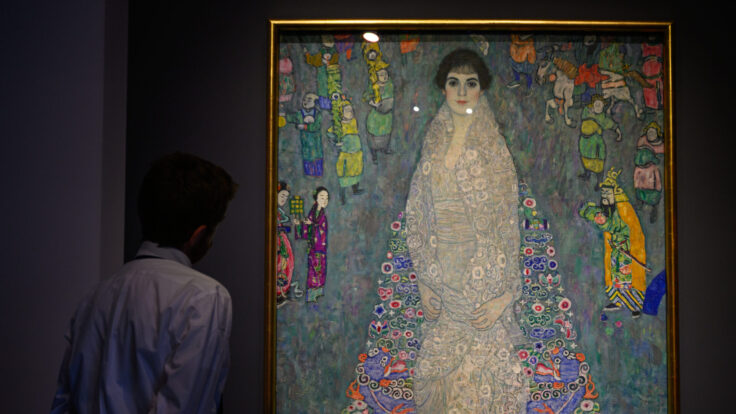
Joan Whitney Payson’s Renoir: Christie’s announced this week that it will be offering Pierre-Auguste Renoir’s La Femme aux lilas (Portrait de Nini Lopez), from 1876-77, from the collection of Lorinda Payson de Roulet, at an estimate of $25 million. De Roulet’s collection also includes works by Marc Chagall, Edgar Degas, Winslow Homer, Alfred Sisley, and Andrew
Wyeth, which will be offered during the May sales, as well as jewelry to be offered in June. The Renoir, though, is by far the most important work in the collection. New York Mets co-founder and majority owner Joan Whitney Payson bought it for $100,000 in 1929, at the beginning of her collecting career.
To explain the significance of the work, Christie’s offers a story from the same era of Whitney collecting. The same year Payson bought the portrait, her brother
John Hay Whitney bought Au Moulin de la Galette, from 1876, for $165,000—61 years later, it sold for $78 million. Christie’s is trying to establish the logic that this portrait is worth 60 percent of the Renoir crowd scene, which would mean it was worth $46 million in 1990. That would be about $116 million in today’s dollars, or far above the $25 million estimate. Will buyers see the $25 million as an invitation to bid, or has Renoir lost his appeal?
|
|
|
|
A MESSAGE FROM OUR SPONSOR |
Color That Moves With You
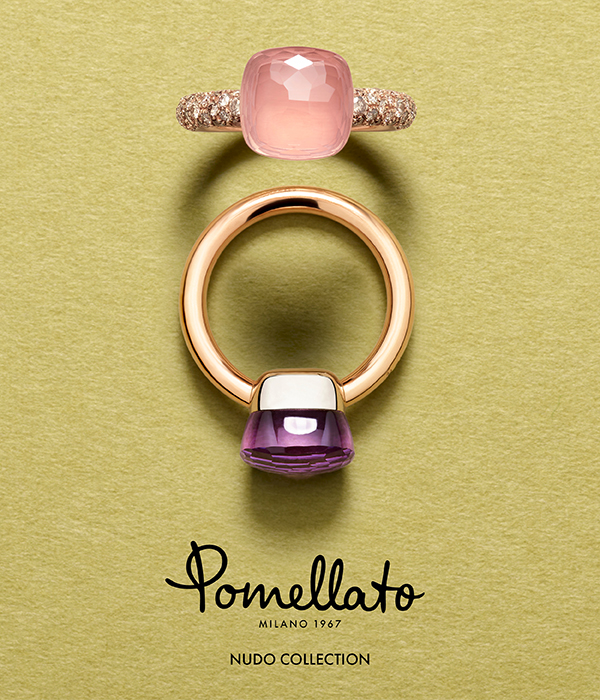
When a single stone captures a spectrum of emotion, the appeal of Nudo is
clear. Marking its 25th anniversary, Pomellato’s iconic design evolves with a fresh expression of color. Each gem is thoughtfully paired to create balance and depth. Designed to reflect the rhythm of modern life, Nudo is effortless, versatile, and distinctly personal. Free in spirit and easy to wear, it invites layering, stacking, and everyday expression. |
|
|
|
- Di Donna’s Dalí: This week, Emmanuel Di Donna is opening Dalí: The Great Years, 1929-1939, his final show in the upstairs Madison Avenue gallery space he’s inhabited for the last decade—and he’s going out in style. Di Donna has brought together many important museum loans of paintings, works on paper, and sculptures, along with works
borrowed from private collectors, to examine the first decade of Dalí’s artistic career. The Weaning of Furniture-Nutrition, a tiny work from 1934, shows the incredible worlds that Dalí created in confined spaces. The Profanation of the Host, from 1930, as well as a landscape from 1931, contain little details that hint at exquisite narratives.
The show charts the artist’s efforts to incorporate the uncanny into every aspect of art and design, like the chest of drawers
made from the Venus de Milo and his development of the not-quite-sculpture “surrealist object.” In all of these cases, we see Dalí’s hallucinatory imagery invade real life in unexpected places. The period of the show also encompasses the time when the 26-year-old Dalí encountered his muse and partner, Gala, who would be a central figure and collaborator for the rest of his life. The exhibition concludes when the artist leaves Europe for America as the Second
World War breaks out. It runs until June 13. - Larry’s 81st: Larry Gagosian’s 81st birthday dinner became the surprise hit of Instagram yesterday when Helen Marden, the widow of painter Brice and an artist in her own right, posted photos of the
gathering in Gagosian’s dining room. Ed Ruscha, John Currin, and Rachel Feinstein are pictured along with collectors Bill Bell Jr., Glenn Fuhrman, and Frank Moore, and celebrities like Woody Allen and Soon-Yi Previn, Alec Baldwin, and John McEnroe.
- Some Artnet updates and corrections: When I wrote about Artnet on Friday, I told you that Andrew Wolff, whose Beowolff Capital acquired both Artsy and Artnet before merging their U.S. operations, had met with all of the company’s employees. I’ve now been contacted by a couple of those employees who tell me they’ve never met with Wolff or the new C.E.O., Jeff Yin. But I am told that Wolff met with several teams in smaller group settings and held
one-on-ones with many of the employees.
|
Now, let’s get to Calder… |
|
|
|
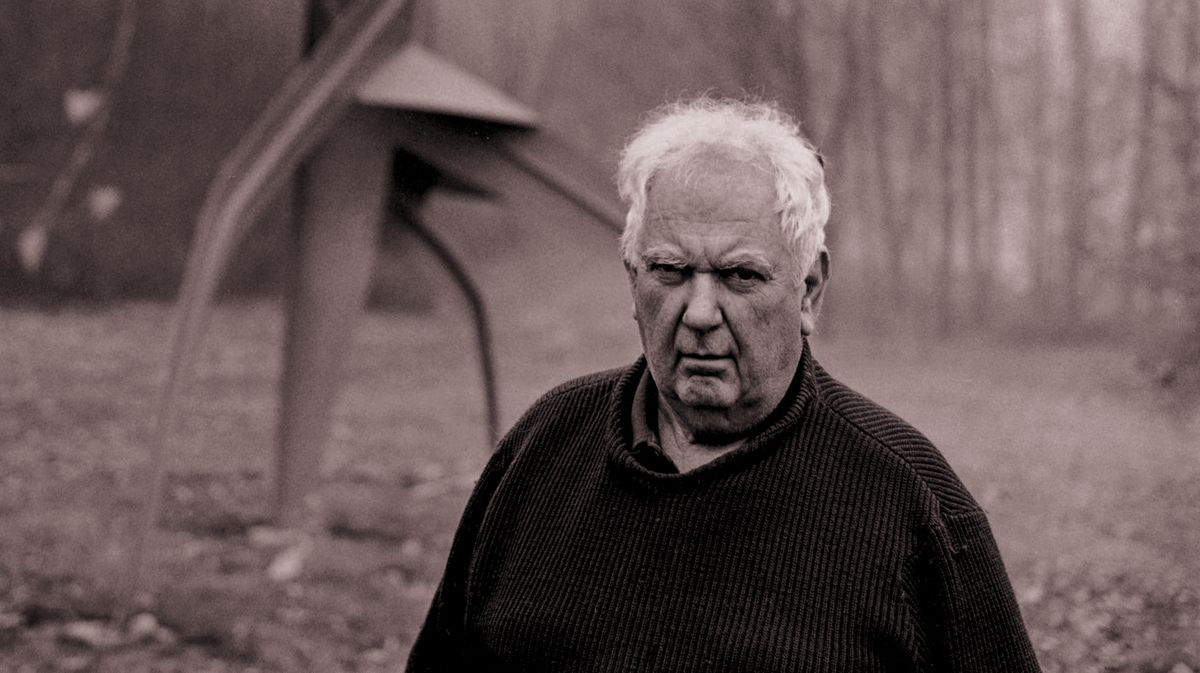
The new Alexander Calder retrospective at the Fondation Louis Vuitton reminds us
that the artist was a true revolutionary before he became a mainstream staple. It also shows off the influence and market activity of the Calder Foundation, where the artist’s grandson is still calling the shots. |
|
|
|
I don’t get FOMO often. But I’ve been seeing some of the coolest art-world characters
(Alina Kohlem, Isabella Lauder-Frost, Amalia Dayan and Jeanne Greenberg Rohatyn) post pictures of their trips to the Fondation Louis Vuitton in Paris, where a huge Alexander Calder retrospective opened last week, as well as the massive Centre Pompidou Matisse show at the Grand Palais. It made me want to book a flight for the weekend.
The Calder show is loosely timed to the 100th
anniversary of the artist’s first arrival in Paris, in 1926. Once there, the Philadelphia native ingratiated himself with the city’s community of modern artists by performing his circus of wire figures and inaugurating his uniquely animated approach to art. More than any other artist, Calder managed to incorporate movement into his sculpture in ways that have never been duplicated or matched. |
|
|
|
A MESSAGE FROM OUR SPONSOR |
Elevate your everyday with Nudo
Pomellato’s Nudo rings celebrate color, form, and individuality. The
brand’s signature “naked” setting rests on rounded shanks with delicate diamond pavé that catch the light and move with you. Versatile and effortless, each ring encourages mixing, matching, and layering, turning everyday wear into a personal expression of style, color, and contemporary elegance. |
|
|
|
The show also commemorates 50 years since Calder died. And it comes less than a year
after the opening of the Calder Gardens in Philadelphia, a major new venue focused on the artist. Both the Gardens and the Fondation Louis Vuitton retrospective are filled with works owned by the Calder Foundation, operated by the artist’s grandson and namesake, which still buys and sells works through prominent dealers and maintains an important archive of every work the sculptor made. |
Curated by Dieter Buchhart and Anna Karina Hofbauer, Calder:
Dreaming in Balance brings together some 300 works from every phase of the artist’s dizzyingly inventive career. But the show wants to do more than remind us of Calder’s fecundity and innovation. Buchhart and Hofbauer situate the artist within the ferment of Paris between the world wars and the modernism that evolved there. Buchhart notably connects
Calder—who studied mechanical engineering in college and worked in the field for a few years before committing himself to art—to the scientific discoveries of the early 20th century, including the advances in physics that would culminate in the detonation of the first atomic bomb. Calder’s work, especially his large mobiles, is so familiar to us today that we need this reminder: His innovations were about incorporating physicists’ radical discoveries about space and time into art.
In
Paris, Calder created and performed a circus using wire figures to replicate the various acts. It attracted a number of luminaries, including Le Corbusier, Fernand Léger, Piet Mondrian, and Theo van Doesburg. Composer Edgard Varèse frequented Calder’s studio and, in 1930, brought him to visit Mondrian’s own atelier, where Calder discovered abstraction in a thunderclap. In response, Calder went on a bender
of abstract painting, which resulted in a gallery show the next year. Léger wrote the introduction to the show’s catalogue, and Pablo Picasso stopped by to introduce himself and get a private tour.
Calder joined a group of abstract artists—including Mondrian, Jean Arp, Robert Delaunay, and Jean Hélion—as he worked out how to incorporate movement into his sculptures by adding cranks and motors. Visiting Calder’s studio
while he was working on these ideas, Marcel Duchamp dubbed the sculptures “mobiles.” |
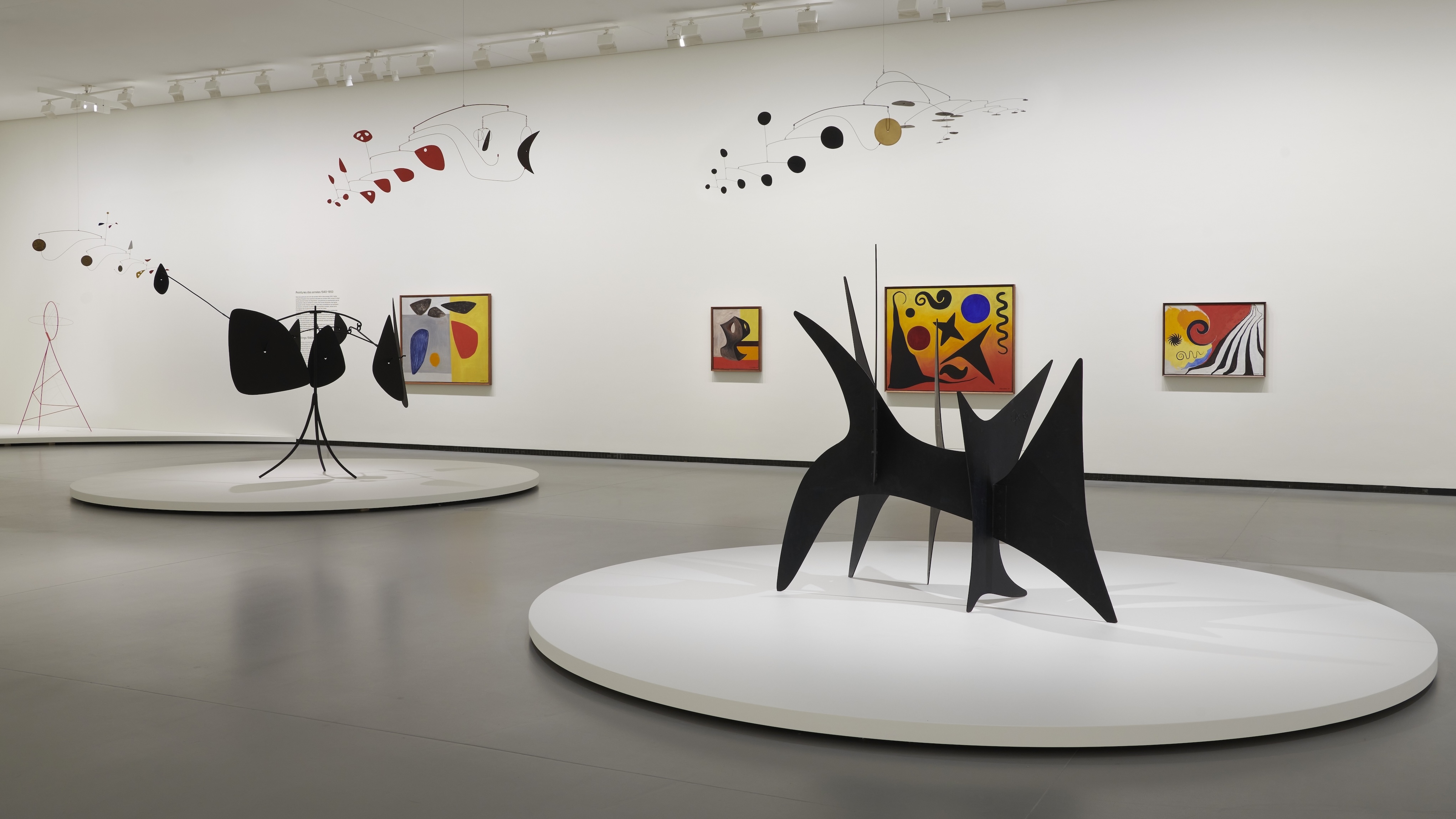
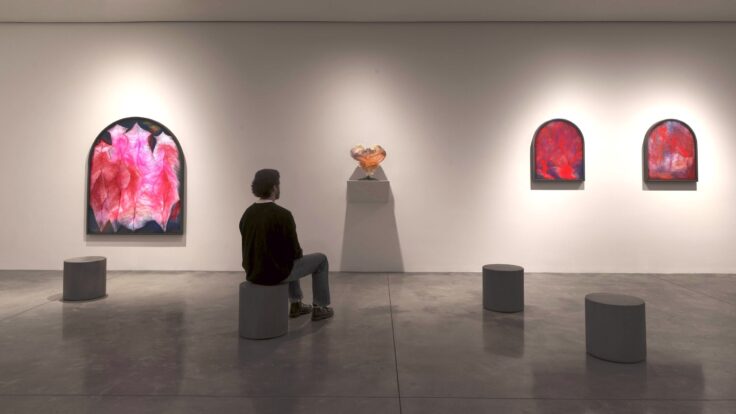
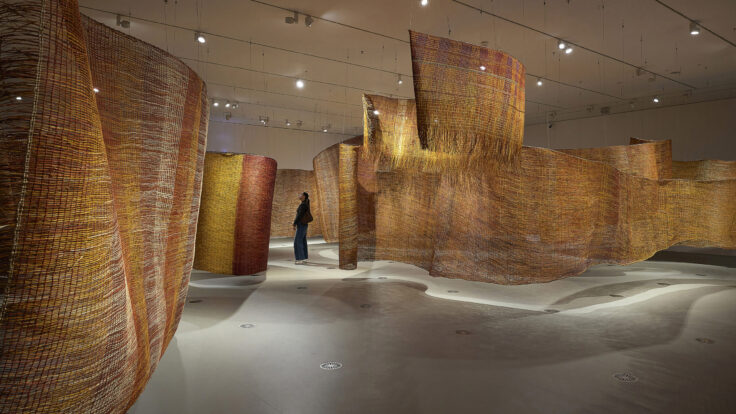
Calder: Rêver en Équilibre at Fondation Louis Vuitton, Paris. Photo: David
Bordes/Courtesy of Fondation Louis Vuitton |
The political situation in Germany in 1933 sent the artist and his wife back to the United States,
and they bought a farmhouse in Roxbury, Connecticut, where Calder set up his studio. With encouragement from modernism’s most important artists in Europe, and the support of MoMA, Calder’s career took off early. In 1934, he exhibited his mobiles at Pierre Matisse Gallery; by 1936, three of his works had been included in an important show at MoMA; and nine months later, another two were shown at the museum. But it took a decade or more before Calder’s fame extended beyond the confines of
avant-garde artists and their collectors. That later success—and the resulting familiarity with his work—has somewhat robbed us of the understanding that Calder was very much a revolutionary figure. |
|
|
|
The subtext of the Fondation Louis Vuitton show is the sheer volume of art still held by
the Calder Foundation. Although there are many works there from important museums and private collections—including those of Kenneth Griffin, Lisa and Steven Tananbaum, and the Shirley family—the bulk of the works on display are from the foundation. It’s a huge flex. And, according to one collector I spoke to, even those works represent only a small portion of what Calder’s grandson, Sandy Rower,
controls.
Although I had met Rower and was shown the Calder archives more than a decade ago, I didn’t manage to talk to him about the show or his other efforts, despite repeated requests. This likely isn’t a case of a foundation director wanting to stay behind the scenes—Rower is a frequent presence at the big evening auctions in New York, usually when there’s a Calder on offer. Indeed, because Calder’s is among the many foundations that no longer authenticate the works of their artists
to avoid lawsuits, an archive number with the foundation is a key factor in determining whether a Calder is a Calder. That, in turn, gives Rower a great deal of leverage, and I’m told he’s not shy about using it.
But building a strong market for an artist often takes a strong hand. (Though I’ve been told there are collectors who stay away from Calder because they find that hand too heavy.) In launching the Calder Gardens and mounting the Fondation Louis Vuitton show, Rower is capitalizing
on—or driving—market momentum. Last year, $113 million in Calder’s art was sold at auction, the artist’s best performance in a decade, after peak auction sales of $141 million in 2015, which itself had edged out the $140 million achieved in 2012. In many ways, the Calder market could be a bellwether for the art market writ large. If sales rekindle and surpass previous highs, the market will have a new level of confidence, which should prompt additional sales.
As the Paris
retrospective shows, Calder’s body of work is large and varied, ranging from relatively inexpensive jewelry and gouache paintings on paper to massive outdoor stabiles and standing mobiles that function almost as monuments. Buchhart and Hofbauer have also tried to reestablish Calder’s intellectual and cultural relevance, which his outsize fame and popular familiarity had inadvertently diminished in the second half of the 20th century. It’s a smart strategy. |
I’m going to leave it there for today. I’ll be back tomorrow with another interview for the Inner
Circle.
Until then,
M |
|
|
|
Puck founding partner Matt Belloni takes you inside the business of Hollywood, using exclusive reporting and insight
to explain the backstories on everything from Marvel movies to the streaming wars. |
|
|
|
Ace media reporter Dylan Byers brings readers into the C-suite as he chronicles the biggest stories in the industry:
the future of cable news in the streaming era, the transformation of legacy publishers, the tech giants remaking the market, and all the egos involved. |
|
|
|
Need help? Review our FAQ page or contact us for assistance. For brand partnerships, email ads@puck.news. You received this email because you
signed up to receive emails from Puck, or as part of your Puck account associated with {{customer.email}}. To stop receiving this newsletter and/or manage all your email preferences, click here. |
Puck is published by Heat Media LLC. 107 Greenwich St., New York, NY 10006 |
|
|
|
|