Welcome back to Wall Power. I’m Marion Maneker.
Tonight,
we’re looking at the watch world from a different perspective. Dimepiece’s Brynn Wallner is here with a guest column detailing her experience at the U.S. Open, taking us behind the scenes of the influencer marketing world that has turned the formerly staid, 144-year-old tennis tournament into a TikTok-ready cacophony of brand activations. While we’re talking about watches,
Julie Davich has the details on a rare Patek Philippe coming up for auction at Phillips. This same watch briefly held the auction record for a timepiece just nine years ago.
Let’s get started…
|
-
Almine Rech to close London gallery… temporarily: I got a text the other day that Almine Rech was closing its London location and lightening its roster. When I asked about this, the gallery’s rep responded that the closure is due to a dispute with their landlord, and the gallery has no plans to abandon the London market. The rep added that the gallery was undertaking a “considered shift” after 15 years of expansion to focus on “the artists most central to our vision” in order to “remain
agile and effective in an evolving art landscape.”
|
|
|
A MESSAGE FROM OUR SPONSOR
|
The first steps towards a masterpiece starts with a dream. The all-electric BMW i7 – the
evolution of brilliance. Learn more at
BMWUSA.com
|
|
|
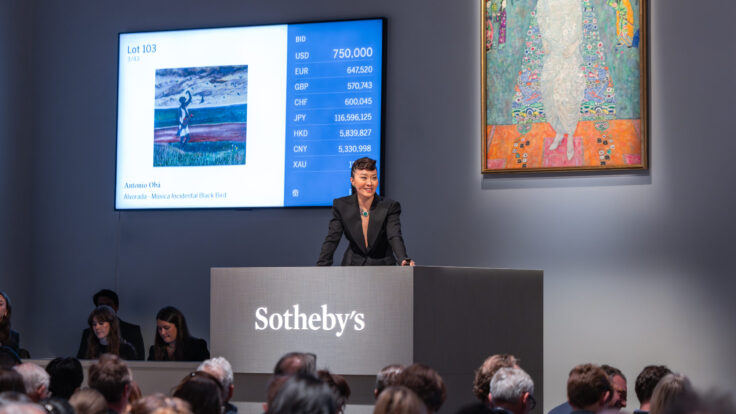
- Sotheby’s announces Abu Dhabi collectors’ week: From December 2 to 5 on Saadiyat Island in Abu Dhabi, Sotheby’s will hold a series of auctions focusing on jewelry, watches, classic cars, real estate, and of course, fine art. The sales will take place alongside the Milken Institute Middle East and Africa Summit, Abu Dhabi Finance Week, and Bitcoin MENA, and ahead of the Formula 1 Abu Dhabi Grand Prix on December 7.
|
$2.5M Joan
Mitchell Stars in Christie’s September N.Y. Sale
|
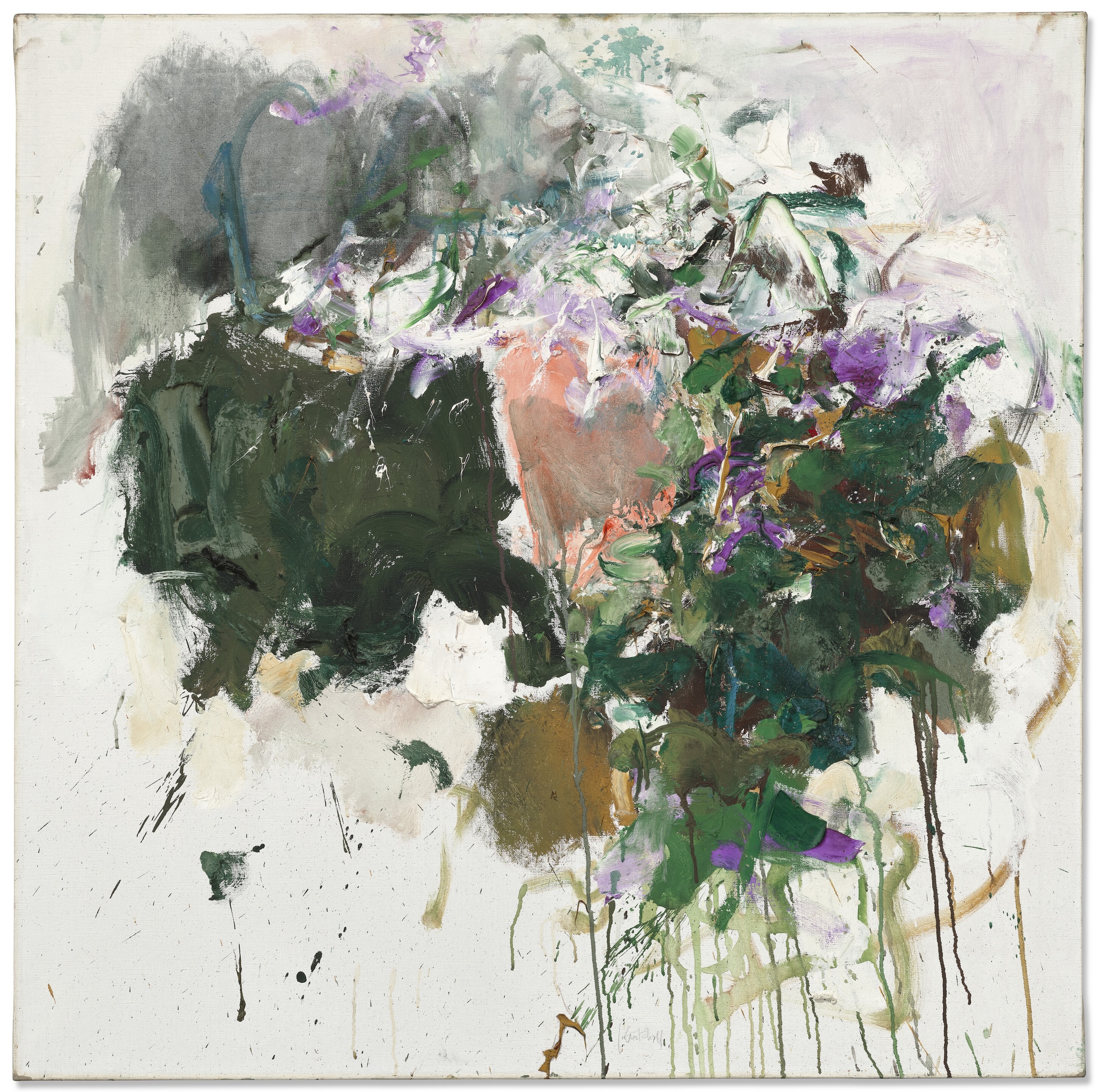
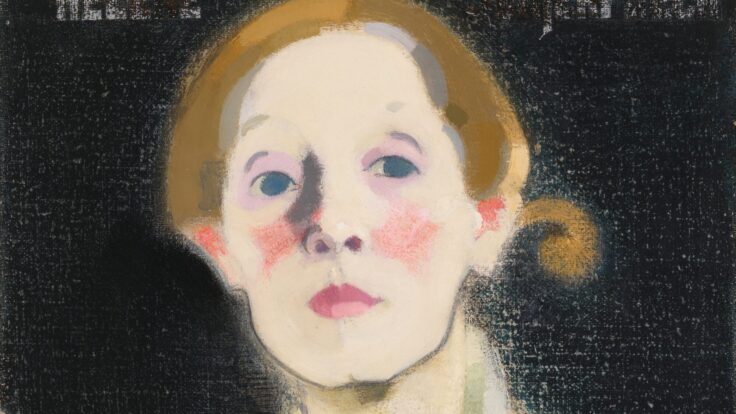
Joan Mitchell, Peinture II (1964). Photo: Courtesy of Christie’s
|
The art world will start up once again after Labor Day. But Christie’s got a jump start
by announcing that Joan Mitchell’s nearly 40-inch-square Peinture II, from 1964, will be the highlight of the house’s September 30 Postwar to Present sale in New York. The piece, which is from a body of work, completed between 1960 and 1964, that Mitchell has called her “black paintings”—even though there is no black in the compositions—is estimated at $2.5 million. It comes from the collection of Vivian Fusillo, a longtime professor of
theater at Winona State University in Minnesota, whose life was said to have inspired the screenplay for the 1993 comedy Grumpy Old Men. Fusillo also owned a Barbara Hepworth sculpture, Figure (Chûn), estimated at £500,0000, which will be sold as a highlight of the Modern British Evening Sale in London, as well as works by Larry Rivers, Jean Dubuffet, and a number of other modern British
painters.
|
|
|
 |
Julie Brener Davich |
|
Against the backdrop of World War II, starting in 1941, Patek Philippe introduced the
world’s first perpetual calendar chronograph wristwatch model, the reference 1518. In Geneva this November, Phillips is offering one of only four stainless steel models of this historic watch, from 1943, at an estimate of CHF8 million, or $10 million. The auction house previously sold this exact watch in 2016 for CHF11 million ($11 million in 2016 dollars)—the world auction
record for any watch at the time. The record was broken the following year when Phillips sold Paul Newman’s Rolex for $17.8 million—and broken again in 2019 when a Patek Philippe Grandmaster Chime sold for $31.1 million at the Only Watch charity auction in Geneva.
The highly sought-after reference 1518 “set the course for Patek Philippe’s dominance of the high-end of wristwatch manufacturing,” said Paul Boutros, Phillips’ head of watches in the U.S. “The design was so ahead of its time.” During the model’s 14-year production run, the brand made 281 pieces, with the majority in yellow gold and about 20 percent in pink gold. For most collectors, the pink gold version has become the ultimate get. Patek
Philippe didn’t start producing stainless steel watches regularly until three decades later.
All four of the known examples of stainless steel 1518s are in private collections. The watch coming up for sale at Phillips is not only one of four, it is No. 1 of four, engraved “1” underneath, indicating it was the first stainless steel 1518 ever made. It is also in remarkable condition, with hardly any signs of wear or polishing. Earlier this year, the No. 3 watch from the series was
offered for private sale at an asking price of $20 million through Monaco Legend. We probably won’t ever know what that one sold for, but its asking price was most likely enough to prompt the owner of No. 1 to part with it. (Boutros wouldn’t confirm my hypothesis.)
|
|
|
Now, let’s go to the U.S. Open…
|
|
|
At the end of every summer, the luxury gravy train arrives in Flushing,
where brands use their suites, and two weeks of Grand Slam tennis, to market their wares via an army of influencers. But what’s all that brand marketing doing to the U.S. Open itself?
|
|
|
If you’re hoping to attend the U.S. Open tonight and spectate from the
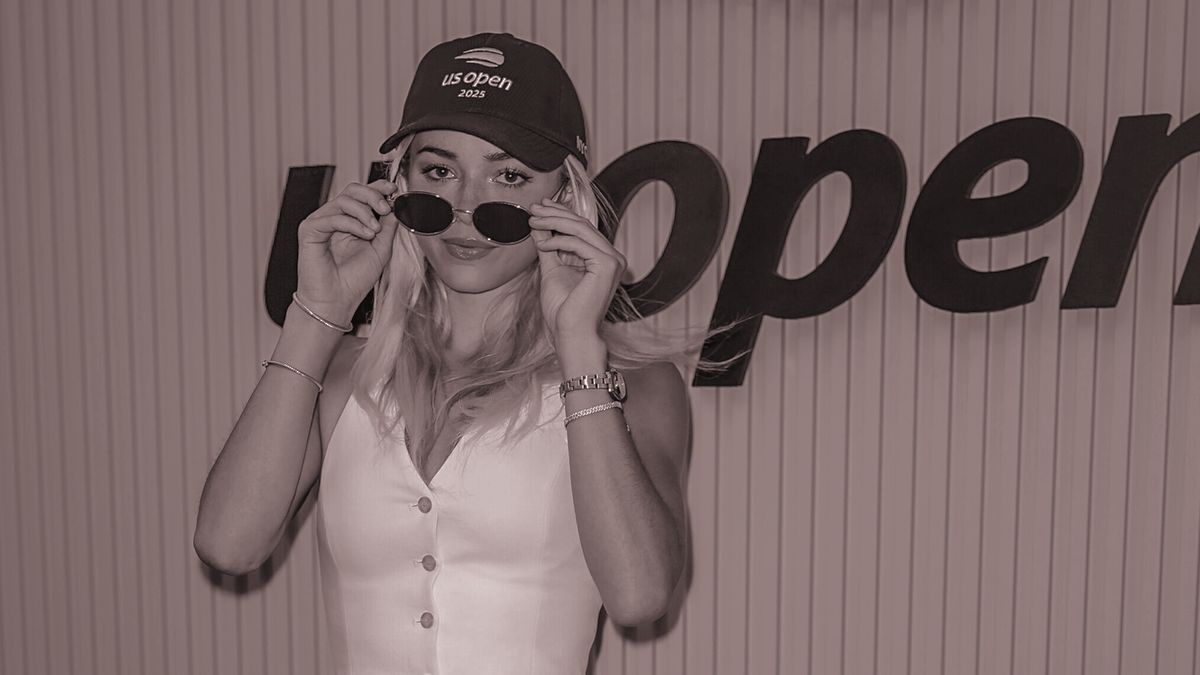
good seats, get ready to shell out up to $1,500 per ticket. Of course, if you’re a media personality of some kind, you can potentially sit courtside for free—which is how I found myself there last Sunday as an opening night guest of Rolex, a longtime sponsor of the Open. Throughout the two-week tournament, Rolex hosts groups of clients, retailers, press, and, yes, influencers in their primely located and well-appointed suite. Dimepiece, the women’s watch–focused Instagram
account I run, landed me in a block of seats perched slightly above the court—so close to Novak Djokovic that I could hear him muttering to himself with every botched serve.
Rolex first partnered with Wimbledon back in 1978, and these days, its emblematic crown—depicted by Honor Titus in his painting
Prosperity—practically blends in with the stadium. Inside the Rolex suite, Esquire creative director Nick Sullivan, a fellow guest of Rolex, remarked that the Open has always been “part of the very tony social season” but had lately “become a destination for the influencer crowd.” Caitlin Thompson, founder of the hip tennis publication Racquet Mag, noted that Rolex had mostly cocooned itself from the
“brand soup” blanketing Arthur Ashe Stadium.
|
|
|
A MESSAGE FROM OUR SPONSOR
|
The first steps towards a masterpiece starts with a dream. The all-electric BMW i7 – the
evolution of brilliance. Learn more at
BMWUSA.com
|
|
|
Although the Rolex suite wasn’t actually that heavy on influencers (you could count
them with one hand), the fact that I was invited reflected the shifting dynamics in the luxury watch market. According to a 2024 Deloitte Swiss Watch Industry Insight report, women represent a particularly significant untapped market in this traditionally male-dominated category: Last year, “just 12 percent of the women surveyed said they
would not buy a watch, compared to 17 percent in 2023. Among those who expressed an interest in purchasing a watch, a remarkable 66 percent of women in 2024 reported that they intended to buy one for themselves.”
This is due, in part, to women’s increased financial independence—but also trends driven by female celebrities. (Anyone could glean from this week’s fervor over Taylor Swift’s engagement announcement that the Cartier watch in the photo overshadowed the ring.) At
the same time, a pandemic-induced rise in watch coverage in fashion outlets and on social media has positioned timepieces as the focal point of women’s overall “look.”
Of course, the watchword of modern marketing—no pun intended—is authenticity. Leaning on content creators and fashion journalists to reach this growing demographic has supplemented some of the traditional watch advertising—which, until now (or at least the advent of the iPhone), has largely failed to capture the imagination of the evasive female
customer. That’s why, on Sunday, I found myself eating carrot cake topped with little matcha tennis balls in the Rolex box, and why I was invited to Watches & Wonders, the industry’s largest annual tradeshow in Geneva, which is run by a nonprofit supported by Rolex, Richemont, and Patek Philippe.
|
Last year, a reported 1,048,669 fans packed into the Billie Jean King National Tennis
Center in Queens—the first time U.S. Open attendance had crossed into the seven figures. And yet, for two weeks every year, it seems as if every person you follow on Instagram is somehow in attendance. That’s mainly because a large swath of guests are content creators invited by brands. This year, on opening night, around 40 floor seats directly behind the photographer pit were occupied by social media celebrities—including Jonah Reider (the
“Soft Boy Cook”) and Subway Takes’ Kareem Rahma, who received the New Yorker treatment that same morning—in matching branded bucket hats compliments of Graza, the
venture-backed olive oil company.
In short, tennis is getting the Coachella treatment. Brands are inserting themselves at every possible opportunity, to the point where the game itself can almost feel secondary to the Honey Deuce social scene. This has created certain headaches, as the ubiquitous marketing presence threatens to overshadow the tournament, itself. “The problem that arises from being on the ground and thinking, Jesus Christ, this is a Coachella influencer
zoo, is that [it shows how] the powers that be, the governing bodies, are caught way behind the times,” said Thompson. For each of the 25 title sponsors of the U.S. Open, 25 more brands have an unofficial presence, buying seats and hosting clients, testing the tournament guardrails set by its “governing bodies.”
|
|
|
But walking into the cream-colored Rolex suite, tucked discreetly away on the first
level of Arthur Ashe, any stress brought on from this tension (or navigating the sea of G.A. attendees) was quickly mitigated by the rush of air conditioning and friendly smiles. Compared with the olive oil seating bloc (“Everyone’s fuckin’ drunk and having a great time,” said Rahma), the Rolex experience felt more aligned with the elevated, clubhouse ideal of tennis, which has only recently started to inch into the overly commercialized, rowdier terrain of music festivals or the NBA. Every
guest was on their best behavior, politely clinking silverware on branded porcelain plates after each bite of lobster.
When I posted my Rolex suite experience on Instagram, it included a shot of a Rolex “Le Mans” Daytona ref. 126528LN in yellow gold worn by a high-up in the watches department at Phillips who immediately requested that I untag him. That was understandable: The watch, which debuted at the annual Watches & Wonders tradeshow in April, goes for nearly $300,000 on the secondary
market.
But, as someone who leverages my proximity to rare watches and exclusive experiences to pay my rent, I couldn't resist keeping the photo up. We—the press, the influencers, the brands, the tournament, the athletes—are all capitalizing off one another, even when the signals get crossed and etiquette is breached. Besides, we’re in Queens, not Wimbledon.
“I think [the energy] feels appropriate in New York, to be honest with you,” said journalist and consultant Chris
Black, who was also capitalizing on the tsunami of tennis-adjacent events prior to the Open. He co-hosted a live episode of his podcast, How Long Gone, in Brooklyn with New Balance and former pro tennis player Eugenie Bouchard. “It goes late, people are drunk, it’s fun,” he continued. “Obviously, early adopters are gonna get annoyed, but things evolve, and the more money and effort that goes into the sport will only make it grow and make it better. Anything
that becomes popular becomes corporatized.” In that way, he added, it’s not unlike Coachella, or even Art Basel Miami: “You can almost take the sport out of it.”
|
Thanks, Brynn. That was fun.
Enjoy your holiday weekend, everyone. We’ll be back
on Sunday.
M
|
|
|
The ultimate fashion industry bible, offering incisive reportage on all aspects of the business and its biggest
players. Anchored by preeminent fashion journalist Lauren Sherman, Line Sheet also features veteran reporter Rachel Strugatz, who delivers unparalleled intel on what’s happening in the beauty industry, and Sarah Shapiro, a longtime retail strategist who writes about e-commerce, brick-and-mortar, D.T.C., and more.
|
|
|
Finally, a media podcast about what’s actually happening in the media—not the oversanitized,
legal-and-standards-approved version you read online. Join Dylan Byers, Puck’s veteran media reporter, as he sits down with TV personalities, moguls, pundits, and industry executives for raw, honest, sometimes salacious conversations about the business of media and its biggest egos. New episodes publish every Tuesday and Friday.
|
|
|
Need help? Review our FAQ page or contact us for assistance. For brand partnerships, email ads@puck.news.
You received this email because you signed up to receive emails from Puck, or as part of your Puck account associated with {{customer.email}}. To stop receiving this newsletter and/or manage all your email preferences, click here.
|
Puck is published by Heat Media LLC. 107 Greenwich St, New York, NY 10006
|
|
|
|