 |
 |
|
Wall Power is not on vacation, but damn near everyone else is. I’m Marion Maneker, and I’m not complaining.
The recently concluded July Old Master sales in London marked the end of the first half of the 2024 art calendar, and those who are not already on vacation are packing their bags and heading out shortly. More on that in tonight’s issue, along with my conversation with Quincy Kresler, a consultant specializing in art- and culture-focused travel, about the industry’s changing holiday patterns.
📈 P.S. If you have opinions about how we do things at Puck—and I bet you do—please participate in our new study. We want to hear from you to make your experience even better!
|
|
A MESSAGE FROM OUR SPONSOR
|
 |
|
The 100% electric BMW i7 is all luxury, all of the time. Learn more at BMWUSA.com.
|
|
|
Before we get there…
- Fade to white: One of the unexpected stars of Michael Rubin’s endlessly Instagrammed and post-tacky Fourth of July all-white party was a Rashid Johnson “bruise painting,” which was seen in the background of the official party video shot in the Fanatics owner’s $50 million beachfront Water Mill house. This year, the featured artist was present. George Condo designed the invitation and attended the party, too. (The New York Times says he and Rubin’s fiancée go back to when she was a restaurant hostess.)
- More on Jacob King’s take on the market: I got a lot of feedback about Jacob King’s trenchant, if gloomy, assessment of the market—particularly about how competition among galleries drove up primary prices in the Contemporary art market. Many of your observations were very interesting, so keep them coming. One of the main questions concerned how dealers and artists are sustaining themselves if primary prices are so high and squelching sales. In the words of economist Herb Stein, “If something cannot go on forever, it won’t.”
And yet, while primary art prices surmounting secondary prices seems like a phenomenon that cannot go on forever, it has been 18 months since the market began to have serious reservations about price levels for Contemporary artists. During that time, as King points out, there has been a significant expansion of primary dealers, both in number and the number of spaces they have. Will we see a contraction, or is there still quiet buying that’s supporting the status quo? Hit reply and let me know your thoughts. Also, I’ve had several requests from people who wanted to read Jacob King’s views on the art market but didn’t want to email him directly. You can get a copy of his report here.
- The Getty pounces: The Getty Museum in Los Angeles was the buyer of Quentin Metsys’s Madonna of the Cherries, which was recently attributed to the Flemish master after cleaning and restoration revealed the original work. It was acquired for £250,000 nine years ago as a likely copy of the famed work—which is known to art historians through another painting, which depicted royals trying to buy the piece—and was assumed to be painted by an apprentice working in Metsys’s studio. The new owners restored the painting, which revealed a landscape view through an open window that had been painted over with a veil. Cleaning the painting’s varnish also revealed that the work was created by Metsys, himself, which attracted the Getty’s attention. The museum paid $13.5 million for it.
The Old Masters trade calls these kinds of rediscovered works “sleepers.” On July 3, a shaped panel identified as Antwerp School with a £10,000 estimate sold for £264,600—suggesting that at least two dealers have a strong hunch something much more interesting is lurking there. In the same sale, a work previously attributed to Bellotto, the painter of Venetian scenes in the mid 18th century, was sold as the work of “The Lyon Master”—an attribution created by dealer Charles Beddington to describe a group of paintings made by another artist who shared techniques with Bellotto and may have also trained with Canaletto alongside Bellotto. The work was estimated at £60,000 but made £189,000. That’s a vote of confidence in the attribution.
Another canal scene, this time by British painter David Roberts, who was working in Venice a century later, was rediscovered after having been held in the same family since the late 19th century. It was offered with a £60,000 estimate and sold for just short of £400,000. Richard Parkes Bonington’s very small view of the Rialto in Venice also sold quite well to make more than $3.7 million. Another British artist who drew the attention of bidders was Arthur William Devis. His piece, The manufacture of paper at Patna, India, sold for nearly £200,000 over a £40,000 estimate. Sir Peter Lely, who was born Dutch but became a British knight in the late 18th century, served both King Charles I and Oliver Cromwell as a court painter; his portrait of Barbara Villiers was estimated at £120,000 but sold for £567,000.
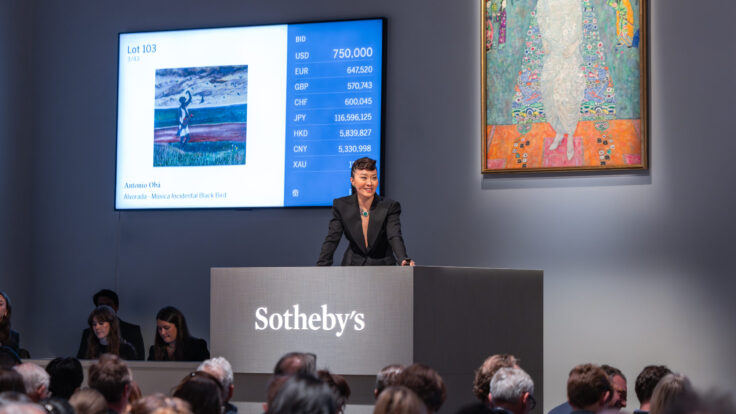
- Christie’s Old Masters sale sees solid bidding: Alongside the Metsys, Christie’s sold the once-stolen Longleat estate Titian for just under $22.5 million, a record for the artist and a victory for a work that had condition concerns. A Frans Hals portrait made a solid $7.3 million selling price. One of the first portraits of Queen Elizabeth I, attributed to George Gower, sold for more than $1.15 million, which was more than triple the estimate without fees. A portrait of a married couple by Gabriel Zehender was estimated at £100,000, but sold for slightly more than £350,000. An image of Saint Jerome by Pieter Coecke van Aelst was estimated at £150,000 but made £680,000.
|
| And now let’s do a little dreaming about vacation… |
 |
| Art’s Endless Summer |
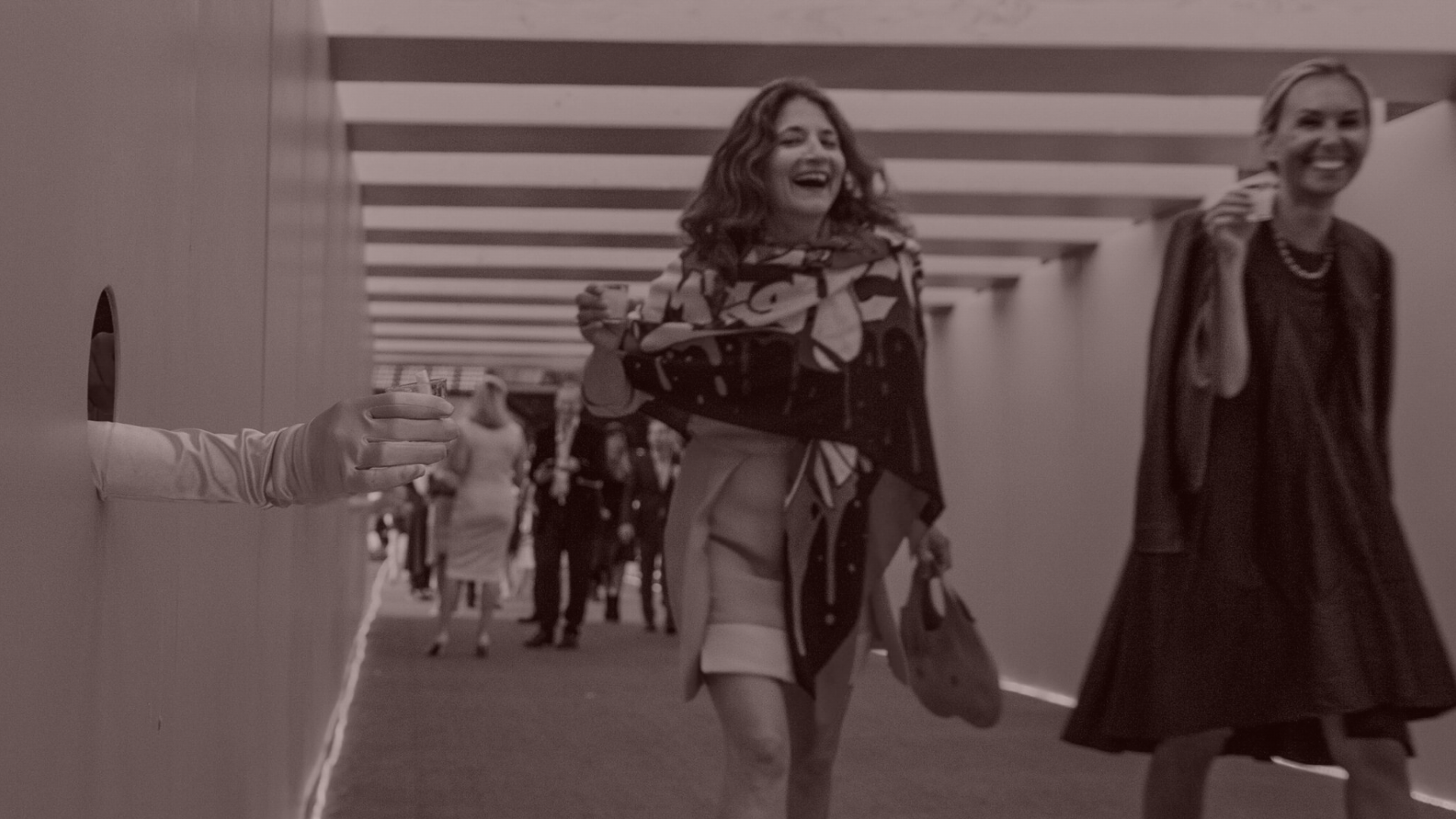
| In an incestuous business where your friends are your clients and your clients think you’re their friend, the art world has figured out how to blend the intra-season travel schedule with the reality that the hustle never ends. |
|
|
|
| The art world has a different summer schedule than the rest of the world. Instead of taking August off, like they do in France and much of Western Europe, the art world holiday calendar is dictated by the global selling calendar—where trading is crammed into a few months in the fall, coming straight out of the gate in early September in New York or Seoul. This year, there will also be sales in Hong Kong, where advisors are going to have to be on their game, too.
That means holidays begin early, with some advisors and dealers combining their Basel and London working trips into a Venice detour to catch the Biennale before drifting off the map in July. Selling art is a high-touch business, where it isn’t uncommon to see auction house personnel, dealers, or advisors as houseguests of their best clients, or accompanying them on their boats or adventure trips. |
|
A MESSAGE FROM OUR SPONSOR
|
|
|
The 100% electric BMW i7 is all luxury, all of the time. Learn more at BMWUSA.com.
|
|
|
| For years, the art world decamped to the Greek Islands in the summer—the result of a desire to get away, but perhaps not too far away. After all, collector Dakis Joannou held an annual event on Hydras where he would ferry guests out on his boat, which sports a razzle-dazzle paint job created by Jeff Koons. For many attendees, the summer jaunt was as much work as going to an office.
The same thing happens in the Hamptons, where art world folks who cannot switch off are subtly trying to get some business done in the background. Or, if your collectors are from the West Coast, Texas, and other places that are not New York or Palm Beach, a lot of the off-the-clock action can be found in Aspen. In recent years, especially during the height of the pandemic, galleries and auction houses have created pop-ups in these havens, which means more personnel need to be on hand to cultivate relationships and sell. Even if you’re not needed on site all summer, the focal point of the season is the annual fundraiser for the Aspen Art Museum, called ArtCrush, which honors artists and, of course, holds an auction each year. If you couldn’t get an Emmi Whitehorse after the Venice Biennale, there’s one direct from Garth Greenan Gallery in this year’s online auction.
The problem with being a card-carrying member of the art world is that your work is also your hobby, which means that even if you’re smart enough to take some personal time, your itinerary may still have a strong art theme. I got in touch with Quincy Kresler, a former auction house business director and art advisor who now runs her own London-based travel consultancy, to discuss the new trends in the intra-season holiday-working-holiday period. Understandably, white-glove travelers want everything—“There is a wellness resort for every emotional frequency you can think of,” as she put it—but they’re also expanding the map in interesting ways. |
|
|
| Last summer, I noticed that a gallery director had rented a house in Puglia as a home base for three generations of her family. The villa, Amazigh, had been recently built by an art advisor turned Covid-era sculptor named Nini Bonavoglia, who grew up in the area. That same July, I noticed the owner of a recently opened private museum was also setting up camp with his family in the same town, Ostuni. Once a hardscrabble afterthought in Italy, Puglia has become one of the destinations—along with Croatia and Sardinia—where Quincy said that people from the art world and other creative industries are renting homes.
For those who don’t want to stay put for too long, Quincy suggested thinking about going somewhere unexpected and combining an art fix with other more conventional attractions. The southwest of the United States is home to some important examples of land art, like Nancy Holt’s Sun Tunnels and Robert Smithson’s Spiral Jetty in Utah, Michael Heizer’s City in Nevada, and even James Turrell’s Roden Crater near Flagstaff in Arizona. These extraordinary examples of land art can be added to an itinerary that includes the great national parks and monuments of the same region, like Arches, Zion, and the Grand Canyon. And, of course, there’s a variety of nearby destinations, like Santa Fe, that are art- and craft-focused. |
|
|
| The point of trips like these is to experience art outside of the usual context of a museum or a gallery setting. (“Not everything is the international art market,” Quincy told me, “and that’s okay.”) Experiential art is a trend that can be seen in things like the age-old but increasingly popular rise of hotels that combine hospitality with art on the grounds. La Colombe d’Or, in Provence, was famous first as a hotel friendly to artists. Then it became a destination for the artworks that artists had given to the Roux family. Their grandson sold a Miró given to the hoteliers for nearly $23 million last October. One can see more of Miró’s work a 15-minute walk away at the Fondation Maeght, the legacy of dealer Aimé Maeght, who represented Miró, Giacometti, Calder, Matisse, and others.
On the other side of Provence, near Aix, is Villa La Coste, a hotel and sculpture park situated on the grounds of the Chateau La Coste’s vineyards. Popular among art world denizens, the hotel grounds have a number of pavilions designed by architects like Tadao Ando, Frank Gehry, Oscar Niemeyer, Jean Nouvel, Renzo Piano, and Richard Rogers. The grounds are dotted with sculptures by Louise Bourgeois, Richard Serra, Tracey Emin, Alexander Calder, Franz West, Ai Weiwei, and Lee Ufan.
Tadao Ando designed a similar setup combining art and escape in western Japan on the island of Naoshima, just off the coast near Okayama. (You may have seen pictures of the Yayoi Kusama pumpkin that sits on the edge of a pier.) It was damaged during a typhoon in 2021, but has since been restored. It’s not far from the Benesse House hotel also designed by Ando. With the Yen at a historic low, a lot of people are taking trips to Japan. Naoshima, with its beaches and a clutch of museums, is a good way to fit a Contemporary art stop into the tour.
The success of these outdoor art spaces hasn’t been lost on Iwan and Manuela Wirth. They’ve been building a hospitality empire, first by expanding their gallery to a farm in Somerset, and then to a space in Menorca. After that came a hotel in Scotland and their acquisition of the Groucho Club in 2022, which became part of their Antfarm hospitality business. Next year, the Groucho, an artists’ and writers’ hangout in London, will open a branch at Bretton Hall, near Leeds, on the grounds of the Yorkshire Sculpture Park.
For art people who want to get away from art but still want to enjoy a vacation focused on culture, Kresler suggests planning a trip around one of the many music or literary festivals in Europe. These events can be family oriented, in secondary cities or rural locations, and offer the frazzled art dealer, advisor, or curator a way to recharge their cultural batteries without necessarily having to talk shop.
Finally, if you haven’t made plans yet, don’t panic. The new trend in travel is last-minute. A lot of vacations to the Yucatan “got scuppered” late last week because of Hurricane Beryl. The bright side to staying spontaneous is that travelers can pivot to events like Formula 1 races, Wimbledon, or a Taylor Swift concert. Art or culture is however you define it. |
|
|
|
| FOUR STORIES WE’RE TALKING ABOUT |
 |
|
 |
|
 |
|
 |
| Shari Saga Cont’d |
| Breaking down the rebooted Ellison/Paramount deal. |
| WILLIAM D. COHAN |
|
|
|
|
|
 |
|
|
|
Need help? Review our FAQs
page or contact
us for assistance. For brand partnerships, email ads@puck.news.
|
|
You received this email because you signed up to receive emails from Puck, or as part of your Puck account associated with . To stop receiving this newsletter and/or manage all your email preferences, click here.
|
|
Puck is published by Heat Media LLC. 227 W 17th St New York, NY 10011.
|
|
|
|