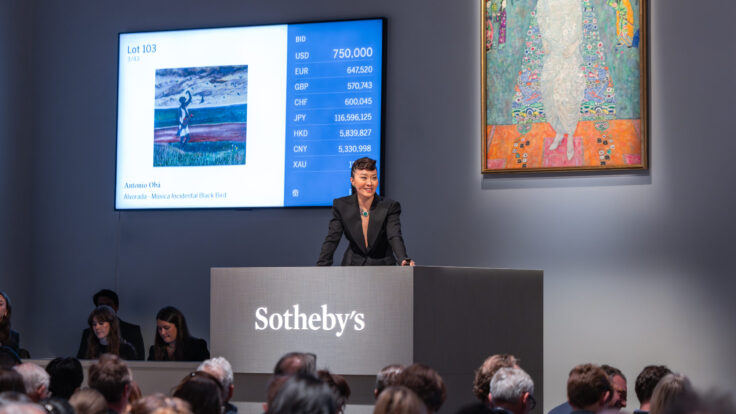
Welcome back to Wall Power. I’m Marion Maneker, writing to you in
between a long paddleboard on the becalmed morning waters of Long Island Sound and an afternoon lazily reading by the pool.
I recently discovered that Balzac had written a companion to Cousine Bette, his masterpiece about a spiteful and envious poor relation. Cousin Pons is the mirror image, a story of an innocent poor relation ill-used by his wealthy and aristocratic extended family. Turns out that Pons, an epicurean musician and aesthete, has an
extraordinary collection of fine pictures and other objects of art that turn out to be worth a fortune. Schemes ensue.
In today’s issue, Julie previews the Pebble Beach car auctions, which lie at the center of a weeklong vintage car extravaganza known as Monterey Car Week. But first, she looks at the work of Ming Fay. |
|
|
A MESSAGE FROM OUR SPONSOR |
The first steps towards a masterpiece starts with a dream. The all-electric BMW i7 – the
evolution of brilliance. Learn more at BMWUSA.com |
|
|

| Julie Brener Davich
|
|
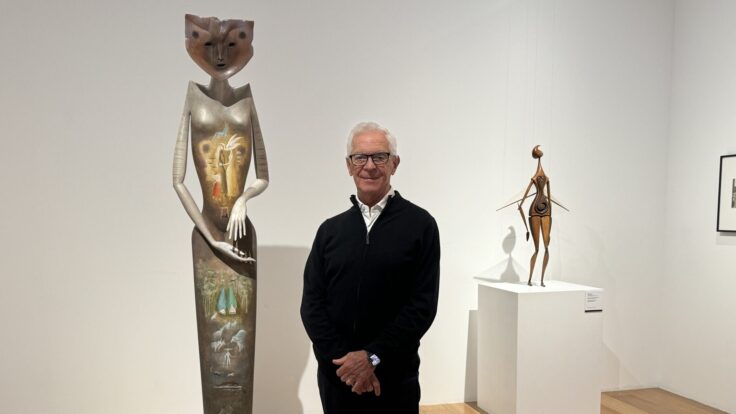
- Ming Fay’s garden
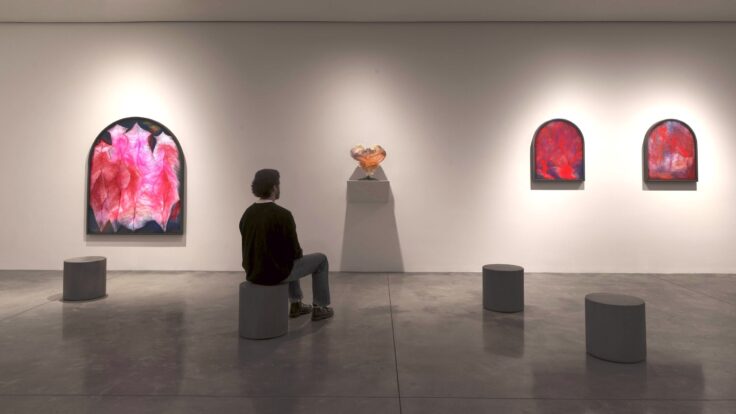
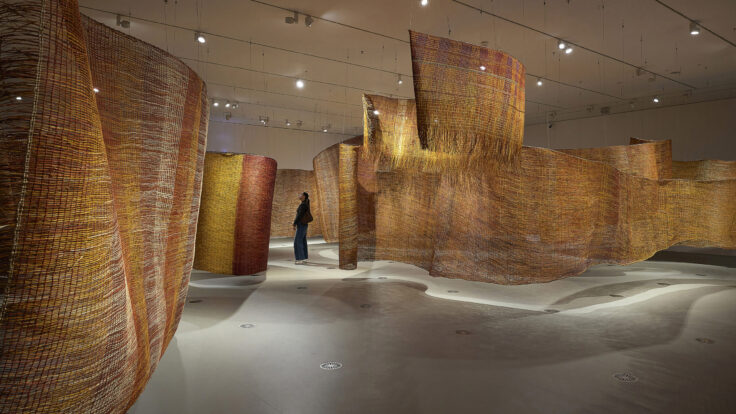
of earthly delights: Ming Fay, the late, China-born sculptor, is experiencing a resurgence this summer. There’s an 80-work survey of the artist’s surreal, botanical sculptures currently on view at the Isabella Stewart Gardner Museum, in Boston, and another 40 works for sale by Kurimanzutto as part of their contribution to The Campus—the experimental collective gallery space in Hudson, New York—priced between $8,000 and $50,000. Next month, the Chinese contemporary art gallery Alisan Fine
Arts is mounting a solo exhibition of Fay’s work, their first with the artist in New York, comprising about 30 works, including ceramics, mixed media, and bronze sculptures, along with rare paintings and sketches, ranging from $10,000 to $50,000. Also in September, the nonprofit Storefront for Art and Architecture is re-creating a pair of his public sculptures at the Armory Show.
As is often the case, interest in Fay’s work has picked up since his
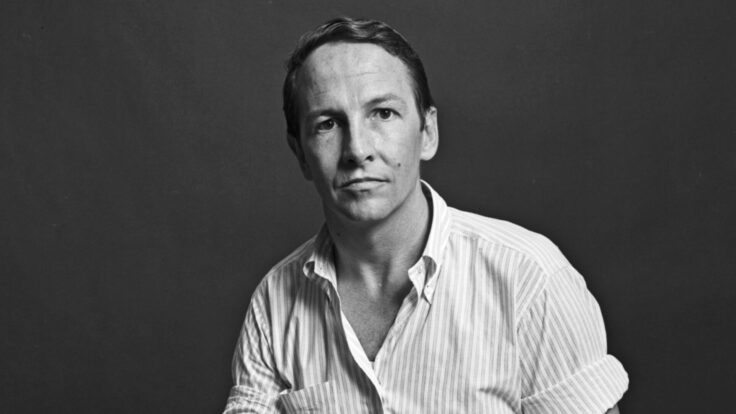
death this past February, at age 82, and the galleries are trying to grow his primary market in the States. Born in Shanghai in 1943, Fay moved to the Midwest for art school, then to New York in the 1970s, where he became part of the downtown arts scene, creating monumental works and adorning the walls of the subway at Delancey Street, among other public commissions. Working
in bronze, clay, or painted papier-mâché over a steel frame, he constructed oversize organic forms like fruits, vegetables, wishbones, shells, and seedpods. He also drew inspiration from Chinese folklore, like his 4-foot-tall bronze pears, a symbol for prosperity.
Fay’s son, Parker, manages his studio and now his legacy (there is no estate). Fay’s work has no real auction history to speak of, save for a few sales in Hong Kong in the early 2010s that maxed out at $24,000.
But Alisan Fine Arts has been pumping up his market in Hong Kong lately, and in 2022 created an installation of his sculptures at Art Basel Hong Kong. Fay was less well-known among American collectors until the following year, when the Storefront for Art and Architecture invited him to participate in a benefit art sale, hosted at Kurimanzutto, which “sparked off a lot of interest,” the nonprofit’s director, José Esparza Chong Cuy, told me. (Storefront’s relationship with Fay
dates back to 1990, when they hosted the opening reception for his Bell Sprouts public sculptures, which they are resurfacing for the Armory Show.)
Unfortunately Fay did not live to see his fairytale garden at the Gardner, which he spent two years working on with curator Gabrielle Niu. “In my work I strive to demonstrate the wonder of even the humblest natural forms,” he once said, “lending the viewer a new appreciation of the ordinary.”
|
|
|
And now, on to the main event… |
|
|
Several of the world’s most collectible cars are coming up for auction
this week in Monterey, including onetime owner Larry Ellison’s McLaren, estimated at $23 million, a 1961 Ferrari Spider (also at least $20 million), and a rare yellow Ferrari F50 once owned by Ralph Lauren. |
|
|
This weekend marked the start of Monterey Car Week—the annual “Super Bowl on
steroids” for car collectors, as a market insider described it to me. In addition to sales by all the major car auctioneers on Friday and Saturday, there are classic car shows, elite racing events, brand activations, and plenty of velvet ropes—including at the exclusive Casa Ferrari. The week concludes next Sunday with the Concours d’Elegance historic car show, on the 18th hole of the Pebble Beach golf course, where collector cars compete for the top prize.
Like other collectible
categories, the car market is down from its Covid peak in 2021, but the market insider told me that it has been generally resilient. In total, the three top auction houses—RM Sotheby’s, Christie’s Gooding, and Broad Arrow—are expecting to make about $467 million this week, not including the two lots being offered privately by RM Sotheby’s through its Sealed platform, which are expected to bring an additional $30 million. That would be a significant increase over last year, when the same three
houses sold about $340 million worth of cars, with the top lot making $17 million. |
|
|
A MESSAGE FROM OUR SPONSOR |
The first steps towards a masterpiece starts with a dream. The all-electric BMW i7 – the
evolution of brilliance. Learn more at BMWUSA.com |
|
|
The market is undergoing a huge generational shift, which is evident in both last
year’s low-performing older models and this year’s selection. “In the car world, you buy your childhood dream,” the market insider said. For buyers in their 40s and 50s, that means Italian supercars from the 1980s and 1990s—a subcategory that is on a tear. The classic example is the Porsche 993 Turbo, which were going for about $250,000 five years ago and can now sell for more than $1 million.
Meanwhile, the market for cars from the 1950s and 1960s has softened, as we saw last year in
Monterey, except for the very best examples. “There’s always money in people’s pockets for something truly special,” the market insider continued. To wit: Earlier this year, RM Sotheby’s sold a rare 1954 Mercedes-Benz W 196 R Stromlinienwagen race car for €51.2 million ($53.1 million), the highest price paid for a car at
auction in 2025, and the second-highest price ever paid for a car at auction. (For what it’s worth, the highest price paid for an artwork at auction this year was $47.6 million, for the Mondrian from the Riggio collection at Christie’s New York.)
While the most expensive cars tend to be European, the world’s top 100 car collectors are overwhelmingly American (58 percent), according to the Classic Car Trust. They are also primarily
Boomers (53 percent), followed by collectors in their 80s and 90s (30 percent). There are a handful of female car collectors, like Anne Brockinton Lee, and auction houses and manufacturers have begun doing outreach to women, like hosting events targeted to couples. But it’s mostly an older male affair, as you might expect. Perhaps unsurprisingly, too, Ferrari is the most coveted brand among the world’s top 100 collectors, with some trying to acquire all of the “Big Five”
Ferraris released between 1984 and 2013—the F40 and F50, as well as the 288 GTO, Enzo, and LaFerrari. |
This week in Monterey, RM Sotheby’s is offering 160 cars in its live auctions, estimated
to bring $162.7 million, with an average lot value of around $1 million. (Last year they offered 204 lots, with 87 percent of them selling for $161.2 million.) Their most expensive live offerings this year are a red 1993 Ferrari F40 LM by Michelotto, estimated to bring $8.5 million, and a yellow 1995 Ferrari
F50, once owned by Ralph Lauren and expected to make $6.5 million. The estimate is already higher than the current $5.5 million auction record for an F50, set just last year in Monterey, also by RM Sotheby’s—and the bidding hasn’t even started.
RM Sotheby’s is also showing two cars in Monterey that are being offered through its
Sealed online platform, which utilizes ranked bidding to drive competition (no pun intended), but never reveals the final price—an appealing option for buyers who value discretion, as more collectors do these days. Last year’s Sealed lot was a 1990 Porsche 911 Targa, estimated to bring $1 million. Both of this year’s lots have much higher values. One is a 1997 McLaren F1, known as
“The Silicon F1” because it’s never left the Bay Area, expected to bring more than $23 million. It was originally owned by Larry Ellison, who is rumored to have acquired it for just $1 million, though the current seller, its third owner, is anonymous.
The other Sealed lot is a 1985 Ferrari
288 GTO—the rarest of the Big Five—with less than 1,000 miles on the odometer. RM didn’t publish the estimate, but a source told me it’s around $7 million. The press release for the GTO makes a big deal of cryptocurrency being accepted as a form of payment—an indicator of the type of buyer they are anticipating. “There’s been a ton of wealth created by tech
and crypto,” the market insider told me. Like Birkins, Patek Philippes, and JAR jewels, these types of limited-edition luxury cars are only accessible on the primary market to a select few clients, who often have to wait years to receive them. (I heard about an older collector who died while waiting to receive two of his cars.) So, for most buyers, the secondary market is the only way to get their hands on one. |
|
|
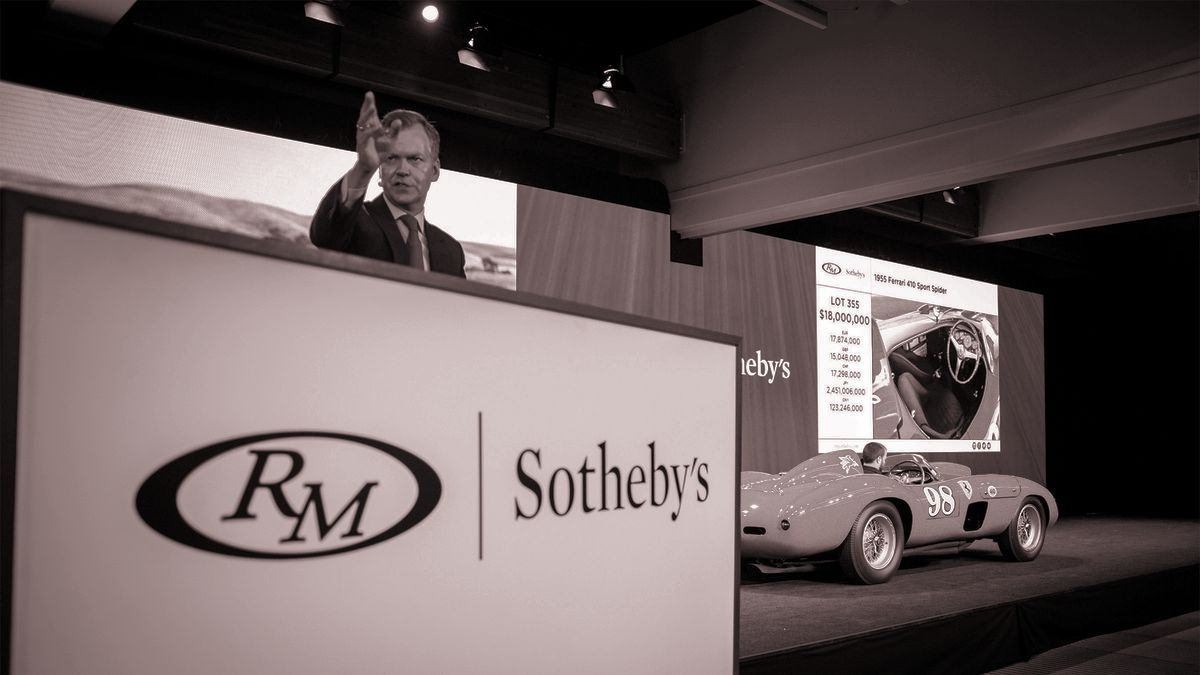
It’s been a decade since Sotheby’s bought into RM, which usually notches the highest
auction total in Monterey. It was a prescient move by then C.E.O. Bill Ruprecht to expand the house’s offerings in a major luxury collectibles category. It also gave Sotheby’s a big head start in the car market over Christie’s, which didn’t have a car department between 2007, when Bonhams hired away most of their specialists, and its 2024 acquisition of Gooding & Company for an undisclosed sum. That’s an extra decade of client data and cross-marketing (there’s often a car parked
on the first floor at York Avenue during luxury and fine art sale previews). A couple years ago, Sotheby’s also launched a collectible cars lending business through its Financial Services arm, which now comprises more than 10 percent of its portfolio. |
This week marks Gooding & Company’s big U.S. debut under their new Gooding Christie’s
branding. The house is expected to have a strong showing at Pebble Beach Parc du Concours, with 182 cars estimated to bring $169.1 million, and an average lot value of about $924,000—more volume than RM Sotheby’s, but at slightly lower price points. (Last year they sold 151 lots for $109 million at an average of $722,000 per lot.)
The auction house’s most anticipated lot this year is a 1961 Ferrari 250 GT SWB California
Spider Competizione—one of only two alloy-bodied, competition SWB California Spiders. Expected to bring in excess of $20 million, it has been in many prestigious car collections, but hasn’t been on the market since 1999. Gooding Christie’s is also offering a robust selection of 1950s and 1960s Ferraris, led by a 1957 250 GT LWB
prototype, estimated at $7.5 million, and a 400 Superamerica Series I Cabriolet, estimated at $5.5 million. For those who prefer supercars over the classics, there’s a 1990 Ferrari
F40 estimated at $3.5 million.
Of the fine art auction houses in the car business, Bonhams was once king, but its stature has waned in the past decade. The house’s new leadership is looking to build it back up again, according to a source familiar with their plans. This week they’re offering 98 cars expected to bring at least $44.2 million in their “Quail Auction” at Quail
Lodge in Carmel, with an average lot value of about $451,000. The sale is led by a $7 million 2020 Bugatti Divo.
At the Monterey Jet Center, Broad Arrow is offering 170 lots estimated to bring $91 million at an average lot value of $535,000, led by a 2005
Maserati MC12 Stradale estimated at $4.8 million. Last year, Broad Arrow sold 157 lots and made $71.5 million, with the top price of $7 million for a 1997 Porsche 911 GT1 Rennversion. And then there are
the Mecum Auctions, at Monterey’s Del Monte Golf Course, which offer a much larger selection—this year there are 389 cars—but at lower price points. Last year, their sale totaled $54 million, with 11 vehicles selling for more than $1 million, and a 1969 Ford GT40 Lightweight taking the top spot at $7.9 million. As for this year, overall, the market insider
told me, “Monterey is expected to be solid.” |
Thanks, Julie. More on Tuesday,
M |
|
|
The ultimate fashion industry bible, offering incisive reportage on all aspects of the business and its biggest
players. Anchored by preeminent fashion journalist Lauren Sherman, Line Sheet also features veteran reporter Rachel Strugatz, who delivers unparalleled intel on what’s happening in the beauty industry, and Sarah Shapiro, a longtime retail strategist who writes about e-commerce, brick-and-mortar, D.T.C., and more. |
|
|
Finally, a media podcast about what’s actually happening in the media—not the oversanitized,
legal-and-standards-approved version you read online. Join Dylan Byers, Puck’s veteran media reporter, as he sits down with TV personalities, moguls, pundits, and industry executives for raw, honest, sometimes salacious conversations about the business of media and its biggest egos. New episodes publish every Tuesday and Friday. |
|
|
Need help? Review our FAQ page or contact us for assistance. For brand partnerships, email ads@puck.news. You received this email because you signed up to receive emails from Puck, or as part of your Puck account associated with {{customer.email}}. To stop receiving this newsletter and/or manage all your email preferences, click here. |
Puck is published by Heat Media LLC. 107 Greenwich St, New York, NY 10006
|
|
|
|