|
Welcome back to the Inner Circle of Wall Power. I’m Marion Maneker. Let’s keep it down so the others won’t hear us.
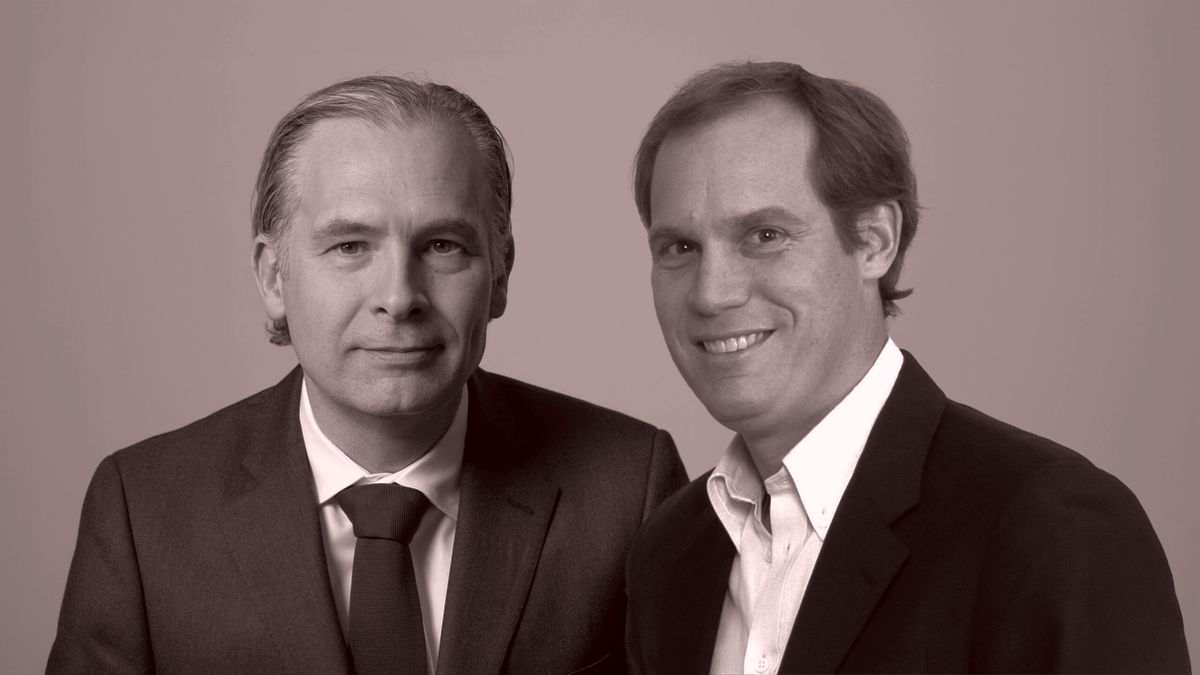
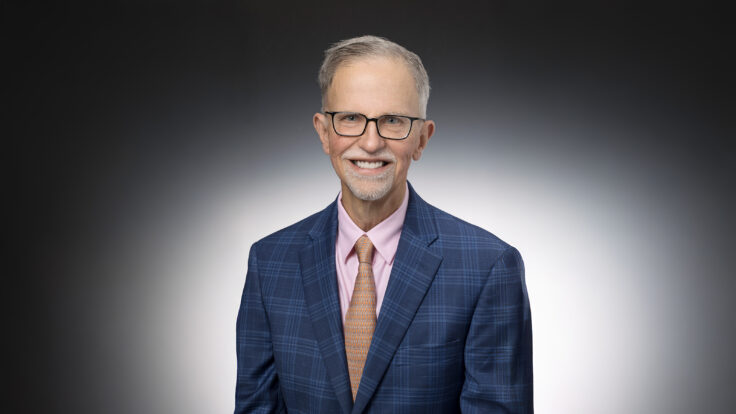
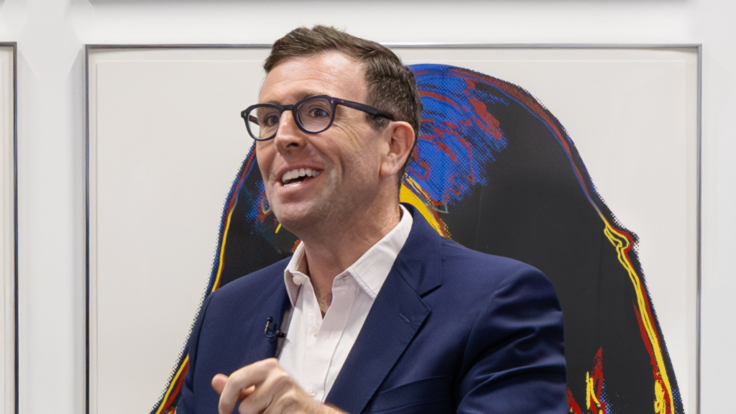
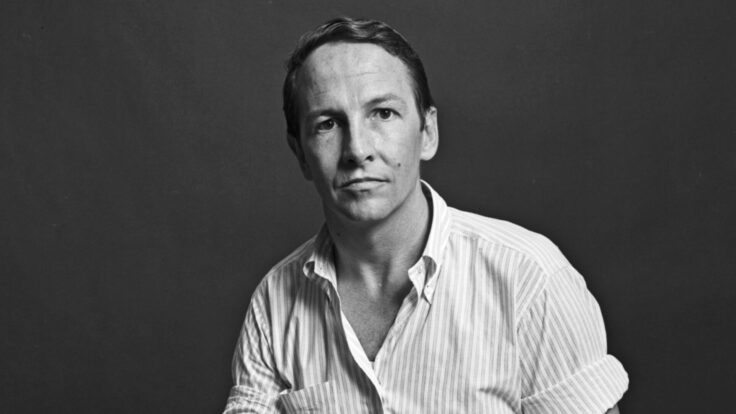
For tonight, I spoke to Nicholas Acquavella and Jean-Paul Engelen, soon to be working together at Acquavella gallery, about how their respective trajectories crossed. I’ll have the full interview below the fold.
But first…
|
- Phillips Hong Kong sale = HK$79 million ($10 million): Phillips’ main spring Hong Kong sale—a combined evening and day sale—made $10 million yesterday. The top lot was a George Condo painting from 2020 that sold for $1.8 million, a price below the primary market. Other top prices paid went to artists with deep markets in Asia, such as Wu Guanzhong, Zao Wou-Ki, Li Chen, Yayoi Kusama, Izumi Kato, Jia Aili, and Javier Calleja. Hernan Bas and Rashid Johnson also had sales among the top 10 lots.
- Strauss & Co. South African modern & contemporary evening sale = $3.5 million: Led by a new auction record of $1.8 million for Vladimir Tretchikoff’s Lady from the Orient, from 1955, South Africa’s Strauss & Co. was able to sell 57 percent of the lots offered in its evening sale of modern and contemporary art, which also included works by William Kentridge, J.H. Pierneef, and Gerard Sekoto.
|
|
|
|
A MESSAGE FROM OUR SPONSOR
|
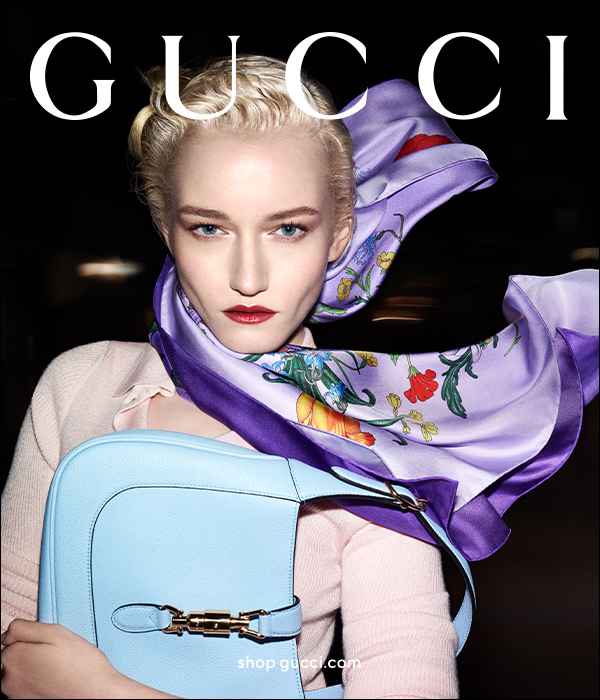
A new campaign starring Julia Garner celebrates the House’s storied silk scarves and their enduring legacy within the House’s design codes.
DISCOVER MORE
|
|
|
- Michael Macaulay joins the Fine Art Group, Citron elevated to C.E.O.: The Fine Art Group announced yesterday that Ken Citron would be promoted to chief executive officer when founder Philip Hoffman becomes chairman of the company. The release says Citron will continue to work with “350 family offices in 28 countries, advising on $20 billion in assets annually.” (Did ChatGPT write that release? Does anyone understand how one would advise on an asset annually?) In addition to Citron’s elevation from chief operating officer, former Sotheby’s contemporary art specialist and auctioneer Michael Macaulay has joined as executive vice president and head of the European art division.
- Sarah Jones named head of live arts at the Met: Sarah Jones, the current head of live programming at Gagosian, will be headed to the Met in August, where she will oversee the presentation of works of “performance, including music, music movement, sound, and related hybrids and site-specific commissions,” as the release puts it, as the museum’s head of live arts.
|
|
|
|
As Engelen leaves Phillips and heads over to the Acquavella gallery in July, I checked in with him and Nick Acquavella about the century-old gallery, the rise of private dealers in the current market, and the “terrifying concept,” in Nick’s words, that “no one needs what we sell.”
|
|
|
|
Last week, Jean-Paul Engelen announced that he would be leaving his position as president of the Americas at Phillips, a company he joined 10 years ago and helped scale to a billion dollars in sales. In July, he will be joining Acquavella gallery—one of the oldest art galleries still in business in America. His return to the private market seemed to me a good opportunity to learn more about Acquavella, and how dealers are operating these days.
So I got Jean-Paul and Nicholas Acquavella, a third-generation art dealer who works alongside his father and two siblings, on Zoom to discuss the move. The conversation has been lightly edited for clarity. Quick disclosure: One of the junior Wallpowers works at Acquavella gallery. She and I do not discuss the substance of her work there, for obvious reasons. But you should know that, and now you do.
|
|
Marion Maneker: Nick, can you give us a brief introduction to Acquavella?
Nick Acquavella: It’s always been a family business, originally started by my grandfather. He was born and raised in Naples, and came over to the United States in the early 1900s. He realized early on that he could buy art in Italy and sell it for a little bit more over here. The gallery incorporated in 1921, and our original location was on 57th Street. My father, who was an only child, graduated from college in 1959. He started working at the gallery in 1960.
The joke in our family is that he told my grandfather he’d work at a gallery till he figured out what he wanted to do. And he’s still here, going strong. He had three children—myself; my brother, Alexander; my sister, Eleanor. My entire professional career has been working at the gallery. I started working here in July of 2000, and I probably met J.P. a year or two later. We’ve stayed very close. If you follow our business, we don’t make these kinds of moves very often. There are people here who started working at the gallery when I was 2 years old. I’m 47 now. It’s a little bit like the Hotel California—when we get the right people, we don’t want them to leave.
|
|
|
|
A MESSAGE FROM OUR SPONSOR
|
A new campaign starring Julia Garner celebrates the House’s storied silk scarves and their enduring legacy within the House’s design codes.
DISCOVER MORE
|
|
|
|
Your grandfather sold Old Master paintings, but you don’t sell that work anymore.
Acquavella: For the last 60-plus years, we’ve focused primarily on impressionism and post-impressionism; and then into the 20th century, modern postwar American; and depending on how you define contemporary, we’ve focused on that as well. We did work with some living artists in the 1980s for a while, but it was never really a primary focus of the gallery.
What really started piquing our interest in the primary market was when my father started his relationship with Lucian Freud, which was in the early 1990s. After that, with my brother, my sister, and me working here, we increased our primary program—but it’s never been on the scale with other galleries that operate at a very high level. We’re just as likely to deal with a Monet painting as we are a Basquiat drawing or a Jeff Koons sculpture, or a Braque. If you really break it down, we’re just trying to deal with the best-quality things of the last 150 years.
Your father also made a famous deal to buy the contents of Pierre Matisse’s gallery…
Acquavella: In 1990, Pierre Matisse passed away. He was Henri Matisse’s son, but also an important gallerist in New York. He was the American representation for many prominent European artists. And when he died, he had done no estate planning, and his widow had a real tax issue. At that time, my father was very aware of what was happening in the finance world, and he said, Why don’t we try to buy this whole collection? We didn’t have the money to do it ourselves, so we partnered with Sotheby’s. Long story short, it’s still a deal that we profit from together. We still have inventory from that deal.
|
Straight Outta Maastricht
|
|
Jean-Paul, how did you arrive here?
Jean-Paul Engelen: I’m from a small town [in the Netherlands] called Maastricht, which has a good art fair that was co-founded by my godfather. So I got a view of the art world early on. I did one year at Sotheby’s in Amsterdam, and then 16 years at Christie’s in London and New York. I left Christie’s in 2011 to join Sheikha Al-Mayassa as the head of content of public art and exhibitions for the Qatar Museums Authority.
When the kids were getting into their teenage years, we decided that it was time to leave Doha and give it a try in New York again. Ed Dolman asked me to join Phillips, to help make that a bigger company. And that’s been the last 10 years for me—that included the move to 432 Park, and bringing it to a billion dollars in sales. I still believe there’s very much a need for a Phillips-type business in our industry.
How is it dealing with clients when you’re a private dealer—and how does that process work?
Acquavella: We’ve always very much valued the reputation we have. And I think part of that reputation is that we tend to be pretty discreet in what we do. I’m very proud of our success, but we don’t necessarily need to lead with that. And I think that gets into the difference between the private side and the auction side of the business.
[The auction business] is an extremely necessary part of the art world. But there are many circumstances where people prefer to work privately, and I think there are many circumstances where the best results can be achieved privately—for both the buyer and seller. The difference when people leave the auction world and come into the private world, is that you, [not the auction house], are the catalyst. On the private side, you have to create the interest; you have to reach out to your clients; you have to keep those
relationships going.
You’ve stayed fairly small. You’ve lived through this whole period where everyone else has gotten much bigger, and as a family enterprise, you’ve chosen to operate from a New York base, rather than opening offices around the world, as others have.
Acquavella: We’ve certainly thought about it at different times over the past 20 years. During Covid, we did open an outpost in Palm Beach, and we’ve kept that because it’s worked very well for us. But this is a business with the goal to make the bottom line very successful. We felt we’re giving ourselves the best opportunity to do that by keeping things like cost always at the top of our mind. We certainly don’t skimp on things, but we also don’t do stuff just for the sake of doing it.
|
|
|
|
Jean-Paul, I’m curious for your take on where buyers are going, and what people are gravitating toward in the market these days.
Engelen: At this stage, I think we’re left with collectors who are really enjoying living [with] and collecting art, and people who came in this because they like art, and not because it’s a lottery ticket. So we’ve seen less, and we’ve seen the auctions being smaller. At the same time, if you look at it globally, we’ve seen the margins constantly come under pressure—and the auction houses being as cannibalistic as always, having to do more things in order to feed the beast that became so big. I think that’s the real weakness of the auction business today.
I keep hearing from people that big collections are not necessarily going to go to auction in the future, and that the private market is where things are going to be. How much of that are you seeing, and how much of that is an attraction for clients to come work with you?
Acquavella: I would love for that to be the case, [but] I don’t know if it’s going to just turn on a dime. There are certain estates that are just better served being at auction. People in this generation who own these great works are probably more informed of that transfer to the next generation, so there’s more opportunities to approach people. There are going to be circumstances where you have collections in which a certain portion of them might be donated to an institution, another portion might be going to an auction house, and then maybe one or two very important things could be done privately. There are already examples of this happening. There are some big galleries that we admire tremendously and work very closely with. We just use a different model, and it fits us best.
Art isn’t something that you go out and buy; almost always, there’s someone who sells it to you.
Acquavella: It’s a terrifying concept, but no one needs what we sell. We literally sell something that, in the most basic form, is supposed to just give people enjoyment. And yet, I never worry about whether people are going to continue buying art. I just worry about whether people are going to continue to buy the kind of art that we deal in, and how they’re going to buy it. And even with all the advances in technology and A.I. and everything—in some ways, I think it might make what we do even more important.
What do you mean when you say how people buy it?
Acquavella: There’s been times when we’ve wondered if everything will shift online. That didn’t really happen, but what did happen is that people now make their decisions based on how it looks [on the phone]. Technology has become a tool to help sell art; it’s not the only way to sell it.
Presentation has become so important. People like Alfred Taubman brought a retail mindset into the business, and changed the sales and previews into the kind of spectacle they’ve become. So we might not always be the tip of the spear, but we certainly pay attention to those things. I mean, my father is on Instagram every day, like the rest of us, looking at things, because it’s a source to find information about our business.
With so much art out there that needs to move in the next few years, a lot of it will sell privately. That’s probably the best way to find the right buyer.
Acquavella: That’s one of the reasons we’re so excited for J.P. to join us—he’s another person who can help us source art, sell art, deal with clients, help with exhibitions, help with artists—and he’s someone that we’re very close to already and trust. There are great people out there in the art world, but it’s very hard to find people who check all those boxes.
|
|
Several of you have asked for my reaction to the news that Andrew Wolff has acquired control of both Artnet and Artsy. I have some thoughts, but I want to wait to speak to Wolff about his plans. My initial response has been to focus on the addressable market.
Artsy and Artnet are complementary businesses, but from the outside, their audiences don’t appear to be very different. As I’ve pointed out a number of times recently, there’s a growing demand for lower-value, but still expensive, works of art. Orienting these two existing businesses toward that demand and discovery won’t be an easy lift. Nevertheless, Wolff is a successful investor with a solid track record. This will be interesting to watch.
See you on Friday,
M
|
|
|
|
The ultimate fashion industry bible, offering incisive reportage on all aspects of the business and its biggest players. Anchored by preeminent fashion journalist Lauren Sherman, Line Sheet also features veteran reporter Rachel Strugatz, who delivers unparalleled intel on what’s happening in the beauty industry, and Sarah Shapiro, a longtime retail strategist who writes about e-commerce, brick-and-mortar, D.T.C., and more.
|
|
|
|
Finally, a media podcast about what’s actually happening in the media—not the oversanitized, legal-and-standards-approved version you read online. Join Dylan Byers, Puck’s veteran media reporter, as he sits down with TV personalities, moguls, pundits, and industry executives for raw, honest, sometimes salacious conversations about the business of media and its biggest egos. New episodes publish every Tuesday and Friday.
|
|
|
Need help? Review our FAQ page or contact us for assistance. For brand partnerships, email ads@puck.news.
You received this email because you signed up to receive emails from Puck, or as part of your Puck account associated with . To stop receiving this newsletter and/or manage all your email preferences, click here.
|
|
Puck is published by Heat Media LLC. 107 Greenwich St, New York, NY 10006
|
|
|
|