Welcome back to Wall Power. I’m Marion Maneker.
Adam
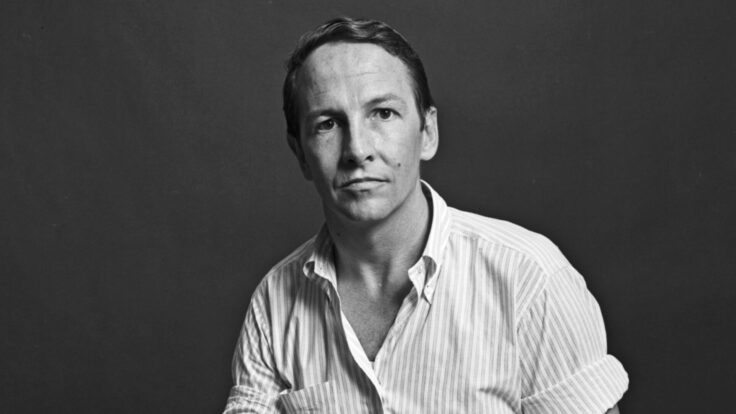
Pendleton’s art is a small bright spot in today’s dull market. He’s got new shows at Pace in Berlin and Hirshhorn in Washington, and MoMA just bought the massive installation he made for the museum in 2021. I’ll get into all of that below the fold.
Before we move on, though, don’t forget that Puck turned 4 yesterday. That’s four years of bringing our readers inside the conversation in Hollywood, Wall Street, Washington, A.I., fashion, media, the business of sports—and, of course,
the art world. If you are thinking about upgrading to the Inner Circle, now is a great time, because we’re offering 20 percent off there. Just email Fritz@puck.news to claim your spot.
Now let’s get started… |
-
Frazetta fetches $13.5M: On Friday, Heritage set a record for a Frank Frazetta painting at $13.5 million. Known as Man Ape, the painting was made in 1966 to illustrate a scene from a story by Robert E. Howard, who created the character
of Conan the Barbarian for Weird Tales in 1932. The image was used on the cover of the reissued Conan in 1967. In the release celebrating the sale, Heritage’s Todd Hignite said, “Frazetta didn’t just illustrate Conan—he transformed him into an icon.”
- Women of the Gund: The Gund museum at Kenyon College was established just 14 years ago with a gift from the noted collector Graham Gund; its permanent
collection of 500 works was all acquired in the last decade. Late last week, the museum announced a gift of 72 works, mostly by female artists, from David Horvitz and Francie Bishop Good, who also donated an additional $1 million to support the collection. The 72 works include Sophie Calle’s Untitled, from 1983; Vija Celmins’s Untitled (Ocean), from 1972; Ann Hamilton’s Green-Barred
Woodpecker, from 2021; Julie Mehretu’s Rogue Ascension, from 2002; Lorna Simpson’s Untitled (melancholy dame/carmen jones), 2001, from 2001; and Mickalene Thomas’s Remember Me, from 2006. Along with work by Romare Bearden, Faith Ringgold, Jacob Lawrence, and Alison Saar, the donation will bring the proportion of female artists represented at The
Gund to 46 percent.
- Fall Hockney sales in London: Phillips is holding its fourth dedicated David Hockney multiples sale on September 18, with 38 lots being offered during its evening and day editions sales in London. According to Robert Kennan, who runs editions in Europe, the house saw “an extraordinary
sell-through rate of 98 percent across our past three [Hockney] sales, 65 world auction records achieved, and nearly a third of buyers under the age of 40.” The sale also comes after the Fondation Louis Vuitton’s massive retrospective of Hockney’s work in Paris earlier this year.
|
|
|
A MESSAGE FROM OUR SPONSOR |
Greatness isn't achieved in an instant. It's tested until there is no question — only performance. |
|
|
-
It’s a Longo moment: Pace opened Robert Longo: The Weight of Hope last week, showcasing the politically and socially engaged images the artist made over the last 11 years. The bulk of the show was just displayed at the Milwaukee Art Museum as Robert Longo: The Acceleration of History, and Pace’s exhibition opens on the heels of
a European retrospective at the Louisiana Museum. “As artists, we’re reporters,” Longo remarked in an interview for the Danish museum. “Our job is to report what it’s like to be alive now. We’re one of the few professions left in the world that has the opportunity to try to tell the truth. I feel a moral imperative to preserve the images of our shared dystopic present with the hope
that something will one day change.”
Using images of protests, civil unrest, and war inspired by photojournalism and pictures found on the internet, Longo creates massive hyperrealistic charcoal drawings mounted on honeycombed aluminum. The heavy wood frames give the images additional gravitas and drama. The Pace show consists of three films, 33 studies the artist used to conceptualize and finalize the images before scaling them up into the final works, and 26 of the large-format
drawings. “It takes a really long time to make them,” Longo said at the press preview, more muttering to himself than addressing a question. “It’s fucking hard.”
|
|
|
The youngish artist and critical darling is seeing no end to the demand for his
theoretically informed, process-driven work, which carries a message about the struggles of Black people in America and the world. That’s quite an achievement in this American cultural moment. |
|
|
It’s been an extraordinary period for Adam Pendleton, a youngish Black artist
whose theoretically informed and critically praised art would seem to be out of step with our revanchist times. But there’s apparently no end to the demand for his work. Last November, he achieved a record $1 million at Sotheby’s for a work originally estimated at only $150,000. During the May sales, Untitled (We Are Not) from 2020
sold at Phillips for a little more than half a million dollars, his third-highest public price. Speaking in his 25th Street office earlier this summer, Marc Glimcher told me that he “couldn’t get a bid in” on a rare work by Pendleton to come up at auction. “I’ve never not sold out a show of Pendleton’s work.”
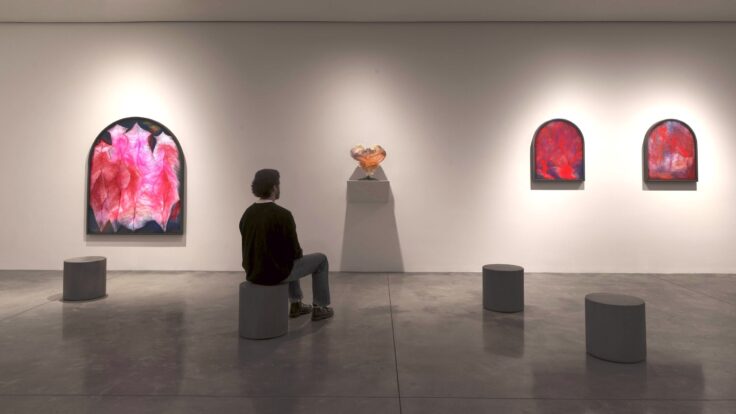
Last week, Pace Gallery opened a capsule show of
Pendleton’s work, titled spray light layer emerge, at its relatively new space in Berlin, Die Tankstelle. The show consists of three paintings and a selection of drawings, all abstract works that do not immediately betray their meaning as politically and socially engaged works of art. As Glimcher explained to me, the artist’s process-heavy work involves a lot of trial and error through many steps in different media. “More than half end up in the trash,” he said with no little sense of
resignation at the lost sales. “That’s not cheap. Any money he makes goes back into making art.” The loss rate also means Pendleton doesn’t produce much: An earlier profile estimated the artist only makes about 12 canvases a year. Glimcher says he doesn’t have any work in inventory—hence the bid at auction.
Further complicating the matter, Pendleton is an artist that museum curators love. Just before the Phillips auction in May, MoMA announced that it had bought all 35 works from a
mammoth 2021 multistory installation that Pendleton made for the museum. One writer described the installation as a museum within the museum, presenting the artist’s own radically different view of the “modernist canon.” |
|
|
A MESSAGE FROM OUR SPONSOR |
Greatness isn't achieved in an instant. It's tested until there is no question — only performance. |
|
|
You can easily see how institutional demand and strong support from collectors—Laurene
Powell Jobs, Michael Ovitz, Venus Williams, and Steve Cohen are all names that pop up in the press—create the conditions for high prices. But the final piece of the demand puzzle also came earlier this year when the Hirshhorn Museum in Washington, D.C. opened Adam Pendleton: Love, Queen for an extended
run through all of 2026. |
Pendleton first came to the attention of many collectors and curators at Performa in 2007, when he
created a performance piece called “The Revival” that combined a gospel choir with spoken poetry and quotations. Although his other work sometimes involves complex installations combining his paintings and films with structures, his paintings are mostly concerned with process. He makes images on paper, often using words and abstract marks, sometimes combining them into other
images, and then photographs them to make screen prints on large canvases. In that sense, his work fits neatly into a steady pattern of process-driven abstract art over the last two decades. Think of any number of artists, from Christopher Wool and Mark Bradford to Glenn Ligon and Jack Whitten, and Pendleton’s work won’t seem remote or foreign.
More than for any other artist, though, interest in Pendleton’s work seems to
be driven by the experience of meeting him and engaging with his sometimes gnostic ideas, as captured in the notion of Black Dada. The phrase comes from a 1964 poem or song and performance piece by Amiri Baraka, titled Black Dada Nihilismus, which has remained fairly impervious to clear interpretation. But in the broadest terms, the idea is to engage with the history of Black people in American culture, politically and socially as well as aesthetically, often around
abstraction in art. Still, even though Pendleton has published a Black Dada reader and has been widely quoted defining the term as “a way to talk about the future while talking about the past,” no two people seem to understand that the same way.
In some ways, frustration over the term’s ambiguity is what led to the Hirshhorn show. Evelyn Hankins, the show’s chief curator, explained to me that too much of the conversation around Pendleton seemed to dwell on his
ideas—when she wanted to really look at the paintings and how they were made. “The Black Dada paintings are so compelling to critics that they’ve somehow missed how amazing the paintings are,” she said. In other words, she wanted to get the art, which she describes as “framed by rules but not rule-bound,” back into the center of the Pendleton conversation.
Of course, with Pendleton, a show isn’t as simple as the artist delivering paintings and collaborating on where they’re hung.
Like Frank Lloyd Wright’s Guggenheim Museum, the Hirshhorn gallery is a round structure, this one designed by modernist architect Gordon Bunshaft. One quirk of the building is that interior galleries narrow as you wander through them. Pendleton at first wanted to create more scaffolding for the show, like he did at MoMA. But gradually he came to understand that the Hirshhorn building would squeeze viewers closer and closer to his work. Or, as Hankins put it, the
paintings “create bodily and emotional intimacy in the space.” |
|
|
Hankins said she told Pendleton, “Adam, you’re never going to beat Gordon Bunshaft, he’s always
going to win.” Rather, she said, he had to learn to dance with Bunshaft, which led him to pare down the show to focus on painting and abstraction. |
The
Politics of Collecting
|
I saw the Hirshhorn show over the summer. Many of the works were visually striking. But I’ll admit
that although I had read much of the extensive press coverage of Pendleton, especially since 2018—when the artist’s secondary market started stirring at the same time the art world was latching on to Black artists in a sustained way—I had trouble connecting to the work.
So I spoke to Philadelphia collector Michael Forman, who has collected Pendleton’s work in depth after buying it fairly early on from Pace, which arranged for Forman to visit the artist in
his studio. “His intellect, his curiosity, his insight, his wisdom made us love the work more,” Forman told me by phone last week from a business trip in Asia. This is a common refrain from people who’ve met or worked with Pendleton: He has plenty of ideas, but collectors may be even more drawn to the artist himself. Forman said that the paintings are beautiful at the same time that they carry a message about the struggles of Black people in the United States and the world. When I noted that’s a
less-than-popular subject in America’s current political climate, Forman responded, “I don’t know that collectors collect purely on their politics.”
I think that’s important to remember as we go through this new phase of the culture wars. Pendleton seems to have proved that strong work and challenging, maybe even abstruse, ideas that are not easily lampooned can withstand some of the onslaught. Or, as Pace’s Glimcher put it to me when we spoke earlier this summer, “the guy is having a
moment.” |
I want to quickly clean up a few things from my Friday newsletter about Elaine
Wynn’s estate. First, the executors of the estate are solely her daughters Kevyn and Gillian, one of the daughters informed me via email. (Neither Andrew Pascal nor Bobby Kotick were required to serve as executors of the estate.)
I appreciate those of you who tried to educate me on what a real tax advantageous strategy would have looked like around the donation of the Francis Bacon triptych to
LACMA. But the point was only to recognize that the estate was fulfilling Wynn’s wishes.
The other point I was trying to make was that the painting was not likely to have a buyer above $142 million right now. Though I’d be happy to hear arguments for the other side.
That should do it for today. Hope you enjoyed your weekend.
M |
|
|
The ultimate fashion industry bible, offering incisive reportage on all aspects of the business and its biggest
players. Anchored by preeminent fashion journalist Lauren Sherman, Line Sheet also features veteran reporter Rachel Strugatz, who delivers unparalleled intel on what’s happening in the beauty industry, and Sarah Shapiro, a longtime retail strategist who writes about e-commerce, brick-and-mortar, D.T.C., and more. |
|
|
Finally, a media podcast about what’s actually happening in the media—not the oversanitized,
legal-and-standards-approved version you read online. Join Dylan Byers, Puck’s veteran media reporter, as he sits down with TV personalities, moguls, pundits, and industry executives for raw, honest, sometimes salacious conversations about the business of media and its biggest egos. New episodes publish every Tuesday and Friday. |
|
|
Need help? Review our FAQ page or contact us for assistance. For brand partnerships, email ads@puck.news. You received this email because you signed up to receive emails from Puck, or as part of your Puck account associated with {{customer.email}}. To stop receiving this newsletter and/or manage all your email preferences, click here. |
Puck is published by Heat Media LLC. 107 Greenwich St, New York, NY 10006
|
|
|
|