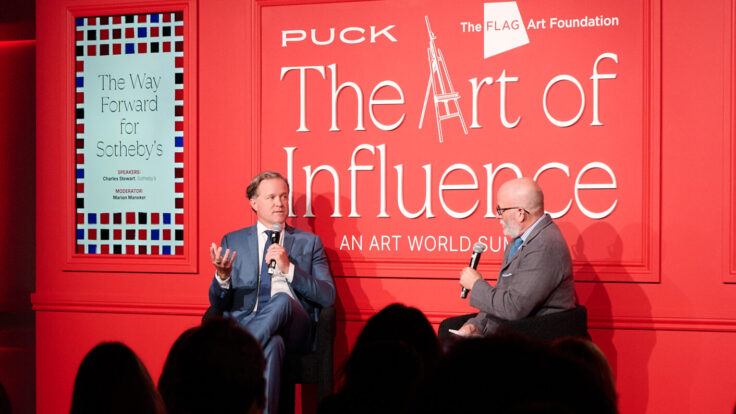
Welcome to Wall Power, your regular update on the inner workings of the art world. I’m Marion Maneker.
Tonight, we have a few things in store for you. Julie Davich went back to Jack Shainman’s, but this time to his new, Tribeca-adjacent location for the monumental Nick Cave show that debuted Friday night to over 2,000 art lovers and artists, including Hank Willis Thomas, Marilyn Minter, and Renee Cox. And I’ve got an expansion on the data-driven analysis I shared Wednesday with Inner Circle members (you can upgrade here).
Let’s get started…
|
- Phillips’ year-end sales total: Phillips announced sales of $843 million for 2024, with $721 million in auction sales and $122 million in private sales. For those keeping score, Phillips auction sales declined 14 percent year over year, from $840 million in 2023. The house didn’t release a number for private sales for 2023, but in 2022 and 2021, Phillips recorded $250 million and $208 million in private sales, respectively. So, whether that numberdeclined further in 2023 or not, it looks like there’s been a reset at the auction house, which now seems to be employing that channel to bring in new customers and bolster its strong performance in design and editions sales.
Another strong metric for Phillips was the 86 percent sell-through rate, which is above the number reported by its larger rivals. Phillips’ sell-through has risen in recent years as industry leaders focus on instilling confidence in buyers that the items they purchase—especially in the relatively new categories, like design and luxury items—will retain value. Average sell-through rates in design and editions sales, for instance, came in above 90 percent in 2023 and 2024, according to the auction house. Interestingly, 70 percent of the lots at Phillips were sold online.Meanwhile, 31 percent of the buyers at auction were new to Phillips, on par with Christie’s and Sotheby’s. In private sales, however, that figure was more than double—some 77 percent. This data point offers a clue to the reset in Phillips’ private sales numbers, which are down in value but seem to be increasing in number. The house appears to be shifting strategies toward e-commerce and editions—like its Dropshop program, which attracted 50 percent new buyers, and whose customers are 40 percent Millennials and Gen Zers.
|
|
Now here’s Julie’s latest dispatch from the gallery scene…
|
|
|
 |
Julie Davich |
|
Gallery Hopping with Julie:
Nick Cave at Jack Shainman
|
|
When Jack Shainman was looking for a new space in Manhattan to accommodate monumental works of art, he landed at the former New York Life Insurance Company building at 46 Lafayette Street. (His P.R. people call it Tribeca, but I think “Tribeca East” would be more accurate.) Jean-Georges Vongerichten’s group had originally nabbed the former beaux-arts banking hall, with its soaring 29-foot ceiling, but luckily for Shainman, the restaurateur backed out at the onset of the pandemic, giving the art dealer an ideal venue for showcasing the colossal ambitions of some of his artists.
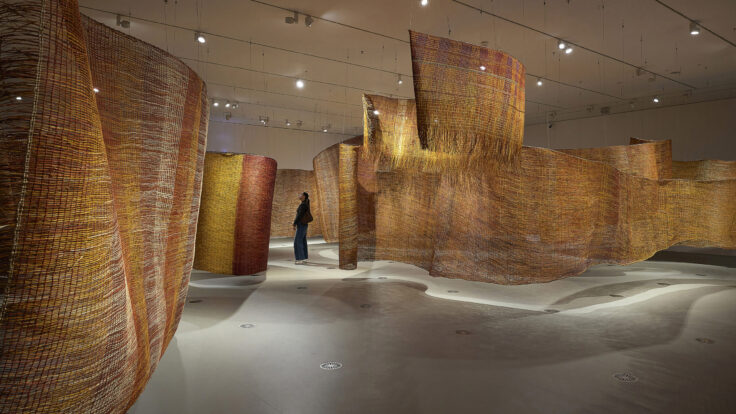
The first show in the space, which will be up for three months, is Nick Cave: Amalgams and Graphts. (That’s not a typo.) The centerpiece is a 26-foot-tall, 7,000-pound bronze figure, one of the three amalgams, this one modeled on the Chicago-based artist’s own body. Instead of a head, there is an elaborate canopy of branches, birds and flowers. Given its scale and complexity, it’s understandable that the sculpture took two years to complete. The final version will be produced in an edition of eight, with the first already sold to the Frederik Meijer Gardens & Sculpture Park in Grand Rapids.
There are few collectors for monumental works, making them the ultimate flex. Until this show, buyers who wanted more domestic-sized examples of Cave’s work had to acquire one of his soundsuits, a series of elaborate, 8-foot-tall costumes produced over 30-plus years and constructed from a variety of textiles and notions. The deeply crafted soundsuits made Cave’s reputation, but they’re hardly the kind of thing one can easily hang on a wall. This show debuts a new body of work, the graphts—wall installations collaged from vintage metal serving trays, vintage tole (a type of enamel or lacquered tinplate) flowers, and needlepoint. Even though Cave fabricated many different textiles in many different ways for the soundsuits, he and his studio assistants had to master needlepoint in about three months.
Textiles are important to Cave’s art. He is a fashion professor at the School of the Art Institute of Chicago and—attention Line Sheet—told me he yearns to do a fashion collaboration. He said he’d love to either create a capsule collection with Schiaparelli or scarves for Hermès. I think they’d be wise to take him up on it.
|
|
|
|
And now for the main event…
|
|
|
|
After perusing endless 2024 sales data, I’m optimistic about the art market, especially because so much of the growth is at the lower end; in collectibles; and in the uppermost tier, where the impact of the private market cannot be captured by data alone.
|
|
|
The auction numbers for 2024—which were down again, as you know—can be interpreted in several ways, most of them forlorn. I know we all draw our own conclusions from the same set of facts, especially the shift of high-value sales to the private market. I offered some insights of my own—based on proprietary auction data from analytics firm ARTDAI—for Inner Circle members on Wednesday. (Sign up here, if you haven’t already.) Today, I’m offering some related, higher-level observations, that don’t require wading through the data at a granular level.
On the top line, ARTDAI’s auction numbers reinforced what we all know: that sales have continued to decline. But less discussed in most 2024 postmortems has been the higher volume of lots sold, which suggests there’s a strong appetite for art—just at a lower price point, as we’ve seen in other data sets that I’ve shared with you. Also, the internal dynamics of the art market are healing, as estimates return to more attractive levels for buyers. In short, the art market got ahead of itself in 2022, and it takes time to reverse trends. In any event, it appears that we are close to the point of re-establishing conditions for growth, but the future doesn’t always resemble the past.
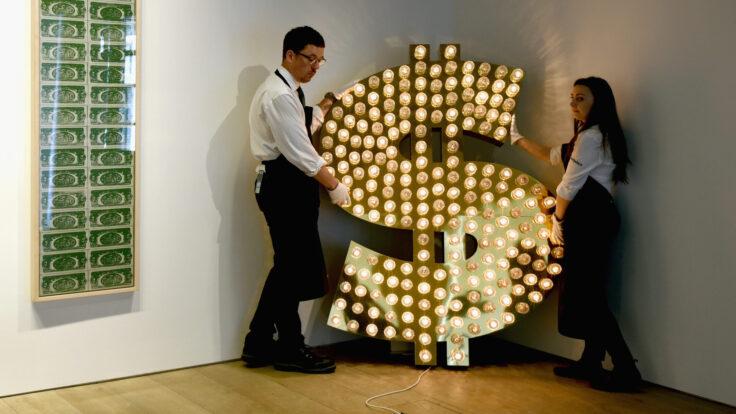
Phillips’ recently issued 2024 report—$843 million in topline sales, with $122 in private sales, and a growing business in the objects that attract younger demographics—provides yet more evidence of growth and the arrival of new buyers at the bottom of the art market. Heritage’s explosive numbers (sales have more than doubled during the past four years) also demonstrate that the market for cultural property, from sports and Hollywood memorabilia to million-dollar comic books, is strong and rising.
The Times recently tried its best to capture some of the essence of this trend. “Could selling memories, instead of art,” the paper of record wondered, “be the future of the auction business?” That comment was meant to be a mic drop moment acknowledging the continuing importance of experiences and luxury items at the auction houses even as sales continued to drop. According to the Times, 33 percent of Sotheby’s sales were luxury items, which probably includes Concierge real estate sales and classic cars, two categories that Christie’s isn’t really in (yet). Meanwhile, 16 percent of Christie’s sales comprised traditional luxury goods, like jewelry, but also a smattering of other items like handbags.
In good times, the Times laments that the auction houses commodify art. In bad times, it complains that they aren’t selling enough—and too many luxury items. And yet, I’m pretty sure that for the majority of their nearly three centuries in business, the auction houses have sold, if not memories, then mementos of lives and cultures, for good and for ill. In that sense, Birkin bags are no different from illuminated manuscripts as artifacts of status from remote and distant societies we don’t fully understand.
Phillips has a strong watch business, but its best avenue toward growth is in design and editions, which happen to be strong categories for entry-level (as well as higher-end) buyers. That’s good for them because their balance sheet hinders the company from competing for the biggest estates—especially when the greatest weakness in the auction market is in sales for the most valuable property. Here’s just one example from the ARTDAI data: While the number of lots sold above $5 million fell the most from 1H22 to 2H24, the number of lots sold under $500,000 actually rose from 1H24 to 2H24. Strategically, this ought to be good for places like Phillips, Bonhams, and Freeman’s-Hindman, which can build a constituency at this price point while they figure out how to improve the margins on selling cultural property, the broadest definition that covers everything auction houses sell these days.
|
|
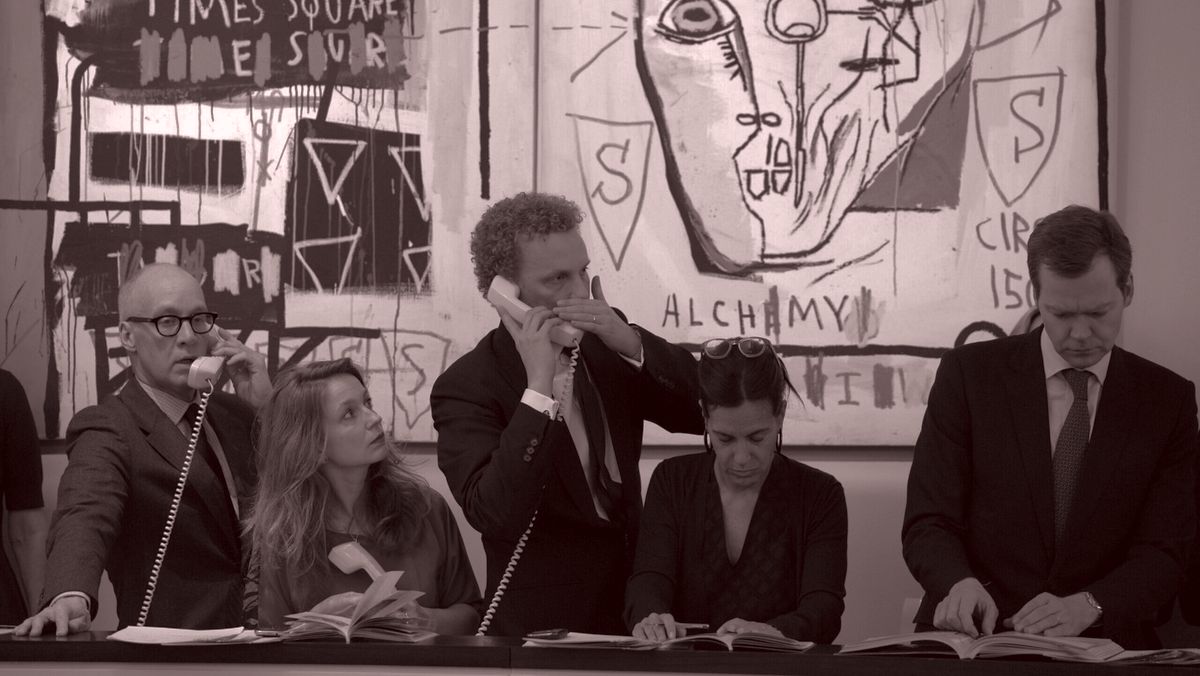
Overall, it’s true that auctions are down, but private deals seems to be taking place at an impressive clip right now. Christie’s told us in their year-end report that they had sold $1.5 billion worth of art privately, one of their best years for private sales ever. On Friday, I mentioned the $130 million-plus sale of Valentino’s prized Basquiat, a prime example of the big deals excluded from the data sets that we tend to rely on to evaluate the market writ large.
And there’s lots more. Late last week, I spoke to a person who was working on a $20 million private deal—this was mentioned casually, in passing. The week before, I spoke to someone who believes the private market has legs beyond this transition period because so many new buyers have entered the market in recent years, and because sellers, including estates, have begun to see the advantages of selling privately.
Why are we in a phase of the market that favors private sales? There are many benefits having to do with flexibility and discretion. But the main reason is that the overall price level for the highest-value art has not changed much in recent years. Twenty years ago, the contemporary art market began to take off. Now it dominates the art world, galleries, the market, and museums. A decade ago, the market peaked. For the most part, no one needs a recent auction price to convince a buyer that a work of art is valuable. Equally, sellers are somewhat anchored to prices they saw on the auction block in the heyday of 2013-15. It’s not that prices haven’t changed since 2015; they go up and down, for sure. But they haven’t changed in register. Really crazy auction prices still fall below $200 million, with the exception of that $450 million Leonardo.
If you can sell a rare Magritte for $121 million at auction or an exceptional Basquiat for over $130 million privately, there’s a dozen good reasons to go the private route because everyone knows top prices are possible, even plausible in some cases, either way. The same is true of works at every price point up and down the scale. We’ve seen how large abstract paintings by Gerhard Richter still trade publicly at roughly the same level as they did when they were leading the market a dozen years ago. This may be the key point of the last five years of the market. The post-pandemic surge, especially the huge headlines for the $900 million Macklowe sale and $1.6 billion Paul Allen sale, seemed to suggest that we were going to see another step up in the inexorable rise in prices. Over the last two years, we learned that the broader market wasn’t going to blindly follow those extraordinary collections into the price stratosphere. Instead, we got a standoff between sellers and buyers.
Until we see the numbers of highly traded works move to a substantially elevated level, it’s easy for buyers and sellers to come to a fair price on the private market without the need for price discovery, which is the primary function of the public marketplace. So, just because the higher end of the auction market is quiet doesn’t mean the art market itself is dying, even if the data sometimes suggests otherwise.
|
In my last Inner Circle email, I explained how the composition of sales has varied during the past 10 years, with a focus on the post-pandemic era. Pre-pandemic, both the volume and value of lots sold above, within, and below estimates had a reasonably consistent pattern. For the number of lots, the breakdown was, roughly: low 40 percent sold above estimate, mid-30 percent within estimate, and low 20 percent below estimate. In 1H21, those numbers blew out to 51 percent above estimate, 30 percent within, and only 19 percent below. Over the next five half-year segments, the proportions narrowed to 35 percent above, 35 percent within, and nearly 30 percent below. Since that time, and consistently over the past year, the spread has begun to turn back toward pre-pandemic levels, though the number of lots sold below estimate remains historically high and is a sign that consignors are still not in line with the new reality.
For the value of the lots, the proportions were fairly consistent. Until 2H21, the value of works sold within and above estimate were both around the 40 percent of the total value. The value of lots sold below the estimate ranged from the low teens to a peak of 20 percent. In 2H21, the percentage of value sold above estimate blew up to 52 percent, while the value within estimates was consistent at 37 percent, and the value below estimate dropped to under 11 percent.
In 2H23 we saw these numbers reach their greatest divergence: The percentage of value sold above estimate reached its nadir for the 10-year period, at 33 percent. And the value of work sold at compromise prices below estimate rose to nearly 21 percent. Since then, that number has come down to a more historically consistent 17 percent over the past two semesters. And the percentage of value sold above estimates has also risen over the year to a more normal range above 38 percent.
It has taken longer than most had hoped, but the market seems to be finally working out the distortions, especially around estimate levels, created by the pandemic boom. That’s my reason for being optimistic about the art market.
I’ll start looking for a lighter topic for Tuesday,
M
|
|
|
|
Puck founding partner Matt Belloni takes you inside the business of Hollywood, using exclusive reporting and insight to explain the backstories on everything from Marvel movies to the streaming wars.
|
|
|
|
The ultimate fashion industry bible, offering incisive reportage on all aspects of the business and its biggest players. Anchored by preeminent fashion journalist Lauren Sherman, Line Sheet also features veteran reporter Rachel Strugatz, who delivers unparalleled intel on what’s happening in the beauty industry, and Sarah Shapiro, a longtime retail strategist who writes about e-commerce, brick-and-mortar, D.T.C., and more.
|
|
|
Need help? Review our FAQ page or contact us for assistance. For brand partnerships, email ads@puck.news.
You received this email because you signed up to receive emails from Puck, or as part of your Puck account associated with . To stop receiving this newsletter and/or manage all your email preferences, click here.
|
|
Puck is published by Heat Media LLC. 107 Greenwich St, New York, NY 10006
|
|
|
|