Welcome back to Wall Power. I’m Marion Maneker.
There’s been
some interesting action in the market for Asian works of art during the last week or so in New York and Hong Kong. Julie Davich has the details, as well as the latest sales of Les Lalanne in London.
Let’s get started… |
|
|
A MESSAGE FROM OUR SPONSOR |
|
|

| Julie Brener Davich
|
|
- 947 bottles of
Bordeaux on the wall…: On Friday just before noon, Zachys kicked off its auction of Jacqueline de Rothschild Piatigorsky’s collection of 228 lots (comprising 947 bottles) of rare vintage Bordeaux. The wine flowed, of course, notwithstanding the early hour, with attendees bringing their own bottles to share and the Zachys team offering pours from
champagne to merlot alongside courses of tuna tartare ravigote, Florentine-style filet mignon, and Comté cheese with gooseberry jam.
Altogether, the sale, which featured a selection of historic vintages from Château Lafite Rothschild, brought in $11.3 million against an estimate of $2.6 million. That’s far more than the firm’s previous Lafite-direct sale in 2019, when 691 lots made $7.9 million. It also outdid Sotheby’s Lafite-direct sale in Hong Kong in 2010, during the peak of the
Bordeaux market, when 284 lots made $8.4 million.
I sat at a table between a collector, bidding for himself, and an advisor, bidding on behalf of clients. Early in the sale, they each managed to secure a magnum of Château Latour 1900 for $57,500 and $55,000, respectively, against an estimate of $22,000. They both felt more and more like they had secured a good deal as the auction wore on and the bidding became more frenzied—some bidders didn’t even bother to set down their paddles as the
increments flew upward. I asked the collector if he was deterred by the 15 percent tariff to bring the wine into the U.S. He shrugged, explaining, “I’ll go to Europe to drink it.”
The top-selling lot was a magnum of 1870 Lafite that went for $387,500, more than seven times its estimate of $50,000. The closest auction comparison is a bottle that sold at Sotheby’s 2010 Lafite auction for about $168,000. A double magnum of 1878 Lafite made $312,500 against an estimate of $26,000. “This is
insane,” the advisor said aloud at one point to no one in particular.
I remarked to the collector, who is also active in the fine art market, that this was so much more fun than a typical evening sale at Sotheby’s or Christie’s—Zachys auction felt more like attending the Golden Globes, where guests share a meal (and endless Moët), than the Oscars of the evening sales. He responded, “Yeah, but everyone would rather win an Oscar.” - Les
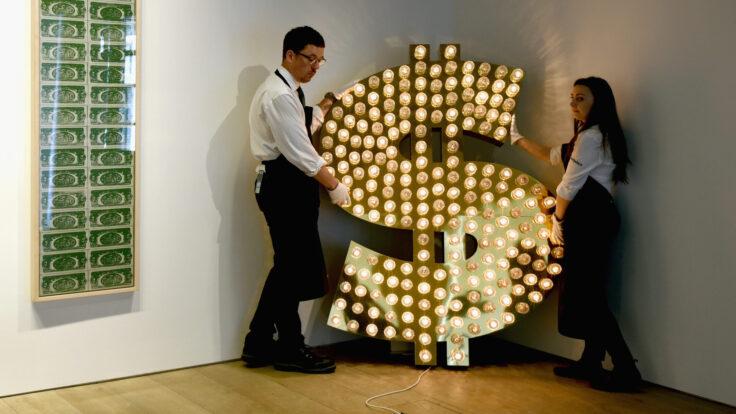
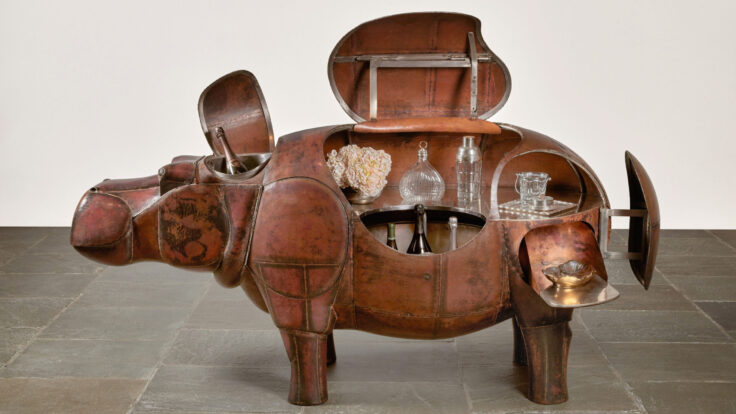
Lalanne redux: Sometimes the line between design and art is more like a semi-permeable membrane: The design objects from the Pauline Karpidas collection are technically design because they are functional objects, but as one-off variations created for and with Karpidas, they could be considered more like art. In Sotheby’s evening sale of her collection, nine works by Les Lalanne achieved a combined £13.6 million ($18.3 million), more than seven
times their unrealistically low estimate of £1.9 million ($2.6 million)—the latest accomplishment of the soaring Les Lalanne marketplace. This result was even more remarkable against estimate than the 30 Lalanne pieces in the Hydra sale in Paris in 2023, which sold for €26.1 million, about 3.4 times their estimate.
The top price was achieved by a Claude Lalanne mirror with a wall light, from 1995, which sold for £3.6 million against an estimate of just £350,000.
Three more mirrors in the day sale sold for a combined £2.1 million against an estimate of £560,000. A unique Choupatte, a tabletop version of the record-setting sculpture from the Hydra sale, sold for £1.9 million against an estimate of £300,000. In the day sale, the 23 custom pieces of jewelry and handbags that Claude made for Pauline achieved £509,905 against an estimate of £67,500. The top prices for François-Xavier were set by three console tables, estimated at
£180,000 each, that sold for between £1.7 million and £2 million.
Of course, the design offering wasn’t all Lalanne. A Berceau low table by Diego Giacometti that last sold at auction at Doyle in 2012 for $175,000 made £508,000. The 33 pieces by Mattia Bonetti (some in collaboration with Elizabeth Garouste) and the 11 pieces by André Dubreuil all sold for multiples of their estimates, but not at runaway
prices like in the Hydra sale. “We are really pushing the integration of art and design, based on patterns of collecting today,” Sotheby’s global head of design, Jodi Pollack, told me ahead of the sale.
|
|
|
Now let’s get to the main event… |
|
|
Sales at Christie’s, Sotheby’s, and Bonhams had mixed results for
Chinese ceramics and furniture that underscore the changing patterns in international trade. |
|
|
Last week’s Christie’s and Sotheby’s Asian art sales were led by three important
troves of Chinese works that reflected the collecting history in the category and demonstrated the importance of provenance in the current market. The works themselves also told another story about this complicated genre. There are still plenty of collectors who chase trophy works to suit their tastes, but they are paying much closer attention to chain of ownership, as are the auction houses when filling and pricing their sales. And these discerning buyers have very clear demands that
must be met before shelling out the big bucks—or even medium bucks.
Christie’s, for instance, sold pieces from the collection of Thomas R. Vaughan—who helmed a New York–based mining company, expanded his operations overseas to places like New Guinea and Indonesia, and amassed a portfolio of delicate Chinese ceramics, with most pieces smaller than four inches. But Vaughan died nearly 50 years ago, and the provenance on all 48 objects in the catalogue states simply, “Thomas
R. Vaughan (1908-1979) Collection, New York, and thence by descent within the family.” That murkiness likely gave some buyers pause. |
|
|
A MESSAGE FROM OUR SPONSOR |
|
|
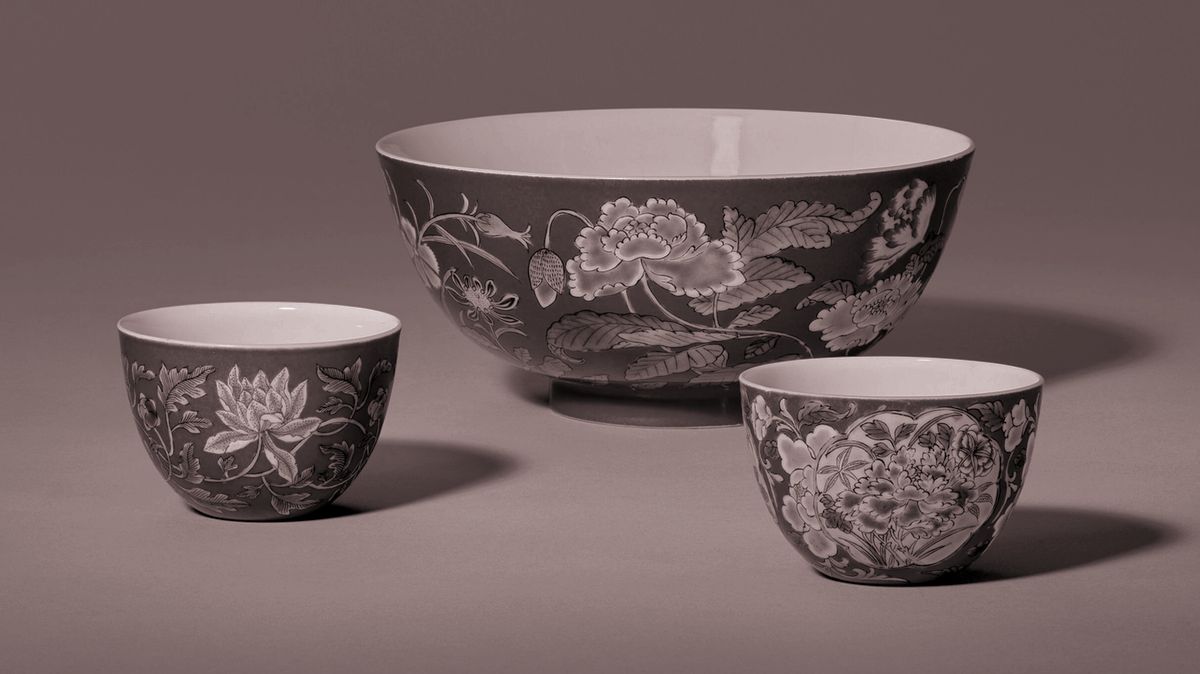
Altogether the collection made $7.5 million, led by a rare ruby-ground Falangcai
“Indian Lotus” wine cup from the Yongzheng period (1723-1735) that sold for $1.6 million. That seems like a remarkable sum for a 2 ½-inch-high cup—except, it’s not. Christie’s cited in the catalogue a less desirable ruby-ground Falangcai “Prunus” cup
from the same period, but from a known collection, that sold in 2016 at Sotheby’s Hong Kong for more than three times as much.
On the other side of the coin, provenance was hugely important to Christie’s offering of a dozen pieces of 16th and 17th century huanghuali and zitan furniture in the same sale. The collection fell under the anonymous property title “Shanruoshui Xuan: Property from an American Collection,” but art world insiders suggest it likely belonged to the late
Fidelity Investments C.E.O. Edward “Ned” Johnson III, who used his billions to amass vast holdings of Asian works of art, buying much of it from Hong Kong in the 1990s. (Christie’s did not immediately respond to a request for comment.) In any case, 10 of the 12 pieces sold, totaling $10.9 million against an estimate of $3.8 million. A 10-foot-long trestle-leg table sold for $2.3 million against an estimate of $800,000, and an extremely rare waistless rectangular table sold for $914,400 against an estimate of $200,000. A rare 6-foot-long corner-leg table sold for $3.4 million, more than
10 times its estimate of $300,000. There will likely be a lot more from this collection in coming seasons. |
The current international trade in treasures from China’s imperial past took flight in
1976, after Mao’s death. The opening up of the country allowed foreigners—often from America and Britain, but also Taiwan and Japan—to swoop in and begin amassing collections. Demand escalated in the ’90s, as privatization and economic reforms produced a generation of wealthy Chinese nationals, who flocked into the market seeking to repatriate their cultural heritage. Naturally, this trend accelerated as travel restrictions subsequently eased and mainland Chinese began attending auctions
abroad.
Alas, the good times for the dealers and auction houses ended around 2015, independent specialist and auctioneer Lark Mason told me. President Xi Jinping clamped down on the practice of bribing officials with luxury goods, Mason said, and ultimately also on conspicuous displays of wealth. The Chinese collecting class’s impact on the international market seemed material, if anecdotal—there are no independent art data companies issuing reports on
this category, and, at least in recent years, Christie’s and Sotheby’s haven’t consistently shared a total for Asian art in their annual results.
But the houses have provided occasional snapshots that gesture at Mason’s point. In 2015, the year Christie’s sold dealer Robert Ellsworth’s collection for $132 million, they reported $734.2 million in sales in the category. In 2022, the total dropped by 46 percent, to just $397 million. Sotheby’s hasn’t reported
an annual sale total for Asian art since 2016, when it was $665.8 million. |
The complexities of this market were also on display last week in Hong Kong: Sotheby’s
sold 182 pieces from the widely published and exhibited Ise Collection of Chinese ceramics, featuring ceramics from the Song dynasty (960-1279), which are known for their monochromatic glazes and subtle forms. The collection was formed in the 1990s–2010s by 96-year-old egg magnate Hikonobu Ise, a Japanese collector who was sadly
forced to sell off his collection to settle his company’s debts. (He already sold off some of his art at Sotheby’s two
years ago under the property title “Artistic Reverie: Property from a Distinguished Private Collection, Japan,” including a $30.8 million Monet and a $15.6 million Chagall.) |
|
|
The ceramics collection, which Sotheby’s had guaranteed, brought in a total of $46
million. The top lot was a rare guan lobed dish from the Southern Song dynasty (“guan” refers to the kiln where it was fired), which more than doubled its estimate to make $7.2 million after a battle between three bidders.
Ise acquired some of the items at auction in
recent years, which gives us useful market case studies. A Longquan celadon “kinuta” vase from the Southern Song dynasty that he purchased nine years ago for about $605,000 sold for only about $440,000, and a Junyao blue-glazed tripod
incense burner from the Northern Song–Jin dynasty that he bought eight years ago for $368,000 sold for only $228,000. In comparison, a rare “beishoku” guan
vase from the Southern Song dynasty (“beishoku” refers to its rice color) that he bought in 2015 for just $1.7 million doubled in price this time around, after it appeared on the cover of a book about the collection.
Bonhams, for its part, had a similarly mixed sale
this week. The top lot of their Fine Chinese Art sale was a blue and white “boys” jar and cover from the Jiajing period that had once been in the collections of both J.M. Hu and T.T. Tsui. It last sold at auction at Christie’s Hong Kong in
the frothy days of 2007, when it made $3.9 million. This week, it made half that. On the flip side, an olive-green-glazed vase and cover from the Northern Qi dynasty that last sold at Bonhams in 2017 for £150,000 ($198,000) doubled that this time around.
Indeed, this market, more than many, has countless outside forces weighing on it, as the complex matrix of results amply demonstrated. As Mason told me, “When I first started [at Sotheby’s in the late 1970s], we were gentlemen in England
discussing the quality of the blue on the cup; now we are like James Bond figuring out international intrigue.” |
Thanks, Julie. That will do for today. I hope you were able to enjoy this beautiful
autumn weekend.
M |
|
|
The ultimate fashion industry bible, offering incisive reportage on all aspects of the business and its biggest
players. Anchored by preeminent fashion journalist Lauren Sherman, Line Sheet also features veteran reporter Rachel Strugatz, who delivers unparalleled intel on what’s happening in the beauty industry, and Sarah Shapiro, a longtime retail strategist who writes about e-commerce, brick-and-mortar, D.T.C., and more. |
|
|
Finally, a media podcast about what’s actually happening in the media—not the oversanitized,
legal-and-standards-approved version you read online. Join Dylan Byers, Puck’s veteran media reporter, as he sits down with TV personalities, moguls, pundits, and industry executives for raw, honest, sometimes salacious conversations about the business of media and its biggest egos. New episodes publish every Tuesday and Friday. |
|
|
Need help? Review our FAQ page or contact us for assistance. For brand partnerships, email ads@puck.news. You received this email because you signed up to receive emails from Puck, or as part of your Puck account associated with {{customer.email}}. To stop receiving this newsletter and/or manage all your email preferences, click here. |
Puck is published by Heat Media LLC. 107 Greenwich St, New York, NY 10006
|
|
|
|