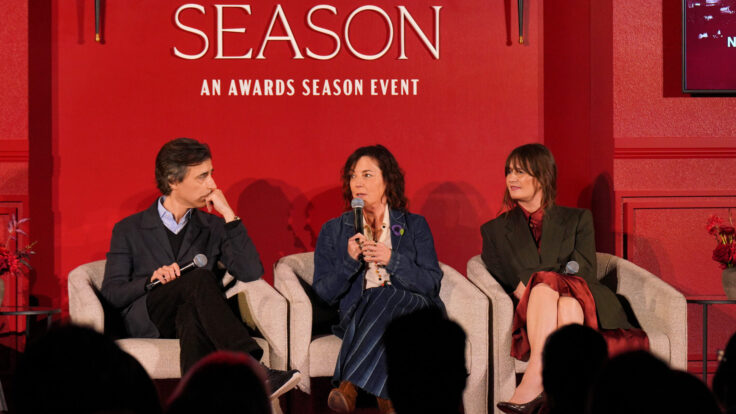
Candid reflections from a trio of the year’s most highly touted actors—Zoe Saldaña, Peter Sarsgaard, and Jeremy Strong—about their extraordinary performances and characters.
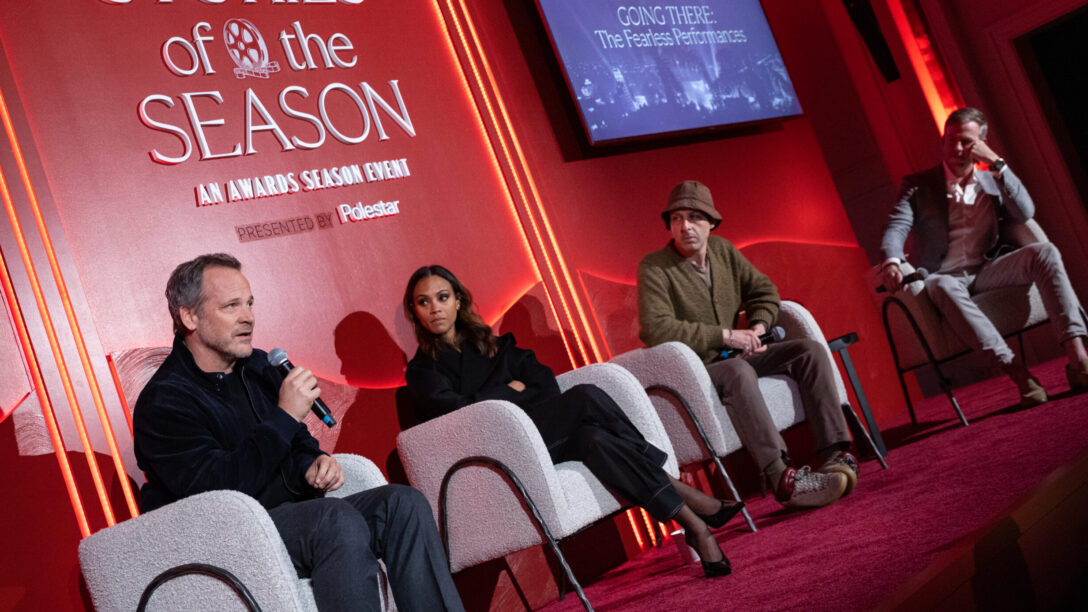
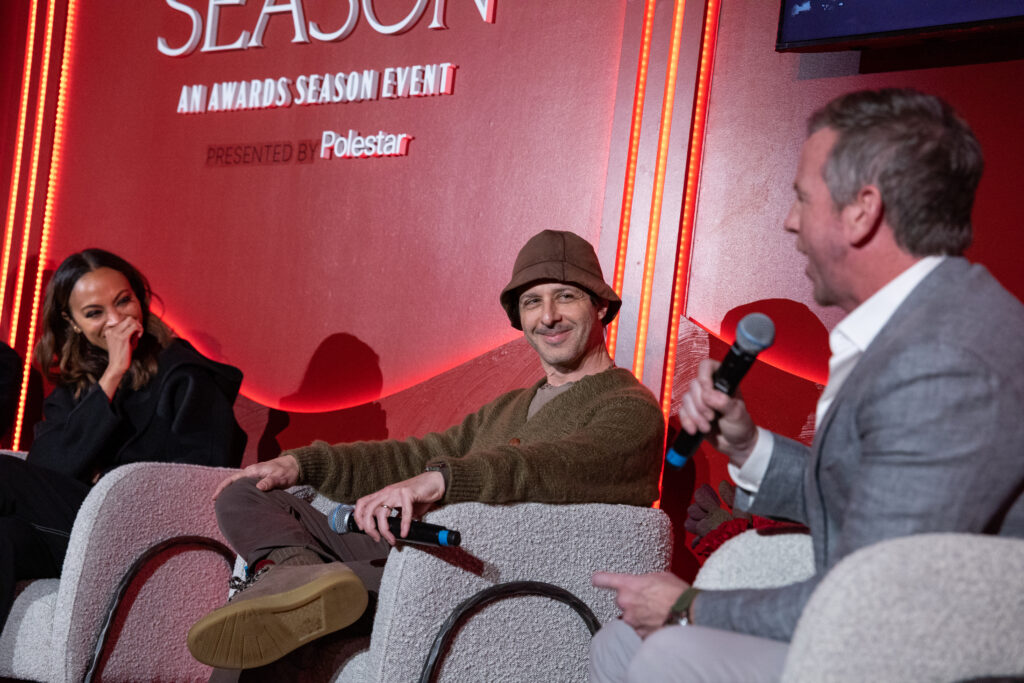
Peter Sarsgaard, Zoe Saldaña, and Jeremy Strong on stage with Puck’s Peter Hamby.
Photo: Puck
In the third of four panel discussions from Puck’s inaugural Stories of the Season event in Los Angeles, Peter Hamby took center stage for a candid conversation with three of the year’s most buzzed-about actors: Zoe Saldaña (Emilia Pérez), Peter Sarsgaard (September 5), and Jeremy Strong (The Apprentice).
In front of a packed audience of Hollywood awards season insiders, the trio discussed the political psychology of their characters, the cultural context of their films, and how they brought it all together on the screen. This event was presented in partnership with Polestar, along with supporting sponsors Mayer Brown, Wondery, and HBO and Max. The following has been lightly edited for length and clarity.
Peter Hamby: Jeremy, let’s start with you, because your film and performance are not only relevant, they’re extremely timely given recent events. A lot has been made over the years of Roy Cohn’s three rules for Donald Trump, which are: attack, attack, attack; admit nothing, deny everything; and claim victory, never admit defeat… How much of Roy Cohn do you see in Donald Trump?
Jeremy Strong: I think the influence that Cohn had over Trump is incalculable—his ideology, his kind of destructive nihilism. I think so much of what’s happening in this current moment originates in Roy. It’s not an accident that Kai Bird’s next opus is about Roy Cohn; that’s how central this man is to this historical moment. [Cohn] also said, “Hate is a powerful weapon. I bring out the worst in my enemies, and that’s how I get them to destroy themselves.” His vitriol, his denialism of reality—in a way, he’s the progenitor of fake news. Trump, Alex Jones, and all these people who think of truth as malleable… I think a lot of that started with Roy. I think his influence is outsized, insidious, and far-reaching.
Zoe, your film, Emilia Pérez, is mesmerizing. It moves between so many genres, moods, and emotions. When you were approached about this project, what was your reaction? How did you make sense of it, being that it’s so different?
Zoe Saldaña: Working with Jacques Audiard was on my bucket list—he was among the top three directors that I submitted to my team in the last five years. My agents called me, and it was hard for them to describe the film, but everything sounded great until they told me I would be playing a Mexican lawyer. Right now, we’re living in an era where we’re highly aware of getting things right and not appropriating, but this story lived everywhere and nowhere at the same time. So there was a blank space to reinvent some of the background of these characters. We had a conversation about how, if Rita looked like me, we were going to understand that Rita is Mexican… and we came to a wonderful agreement. The rest was just trying to find a way to actually make it.
Photo: Puck
Peter, I love your film September 5 for a lot of reasons. For people who don’t know, it basically traces how ABC and ABC Sports covered the Black September attacks in Munich during the 1972 Olympics. It just all felt so accurate. Doing this film, what did you learn about broadcast journalism—and did you sour on it, in a way?
Peter Sarsgaard: One of the things I kept asking myself when we were doing this was, What real value is there in the type of journalism we have now, which is 24/7, and they get shit wrong because they haven’t taken a breath to deal with it? And I’m not talking about a five-second delay, I’m talking about 24 hours. We can all wait a second to get it right. So that was one of the questions I was really wrestling with the whole time.
When I saw the footage of some of the guys’ reaction to this event—the sobriety, the sense of civic duty—I think that’s something to aspire to at this moment in journalism. Obviously, the internet has completely fucked up the whole thing. We can’t even agree on the simple series of events for a story. And that’s why I think some of the events in the movie have become incredibly relevant in the last year.
Jeremy, you played Cohn with some complexity, especially later in his life. You described him as venal, but in hindsight, would you say he’s a bad guy?
Strong: He’s so multifaceted. He did bad things, and he was responsible for a great deal of harm. We live in such a hyper-polarized time where we either lionize people or we demonize people, and Cohn kind of refused to be a part of that. He was embraced by everyone when he was alive. Yes, he was a bad guy—but he also had tenderness in him. He was a deeply damaged person, with a cleft in his spirit, and he had to destroy a part of his own nature. You couldn’t be an openly gay person and have any kind of life in the world, let alone be a lawyer. So he had to stamp out and eradicate that part of himself, which led to a kind of self-hatred that got sublimated in all kinds of terrible ways.
Zoe—three incredible performances by three incredible women. Talk about your co-stars, how you played off each other, and maybe inspired one another?
Saldaña: What I loved about these characters is that none of these characters are making good decisions, but Jacques is challenging each of us to live through their journey and find humanity. When it came to the dynamic that each of us had in our respective characters, I really believe that was Jacques giving us the freedom to sort of channel these characters and utilize parts of our lives. All of these women in the film go through their form of transition, so Emilia Pérez really challenges you to find humanity in these unredeemable people.
Didn't get an email? Check your spam folder and confirm the spelling of your email, and try again. If you continue to have trouble, reach out to fritz@puck.news.
Didn't get an email? Check your spam folder and confirm the spelling of your email, and try again. If you continue to have trouble, reach out to fritz@puck.news.
Member Exclusive
Get access to this story
Create a free account to preview Puck’s full offering, including exclusive articles, private emails from authors, and more.