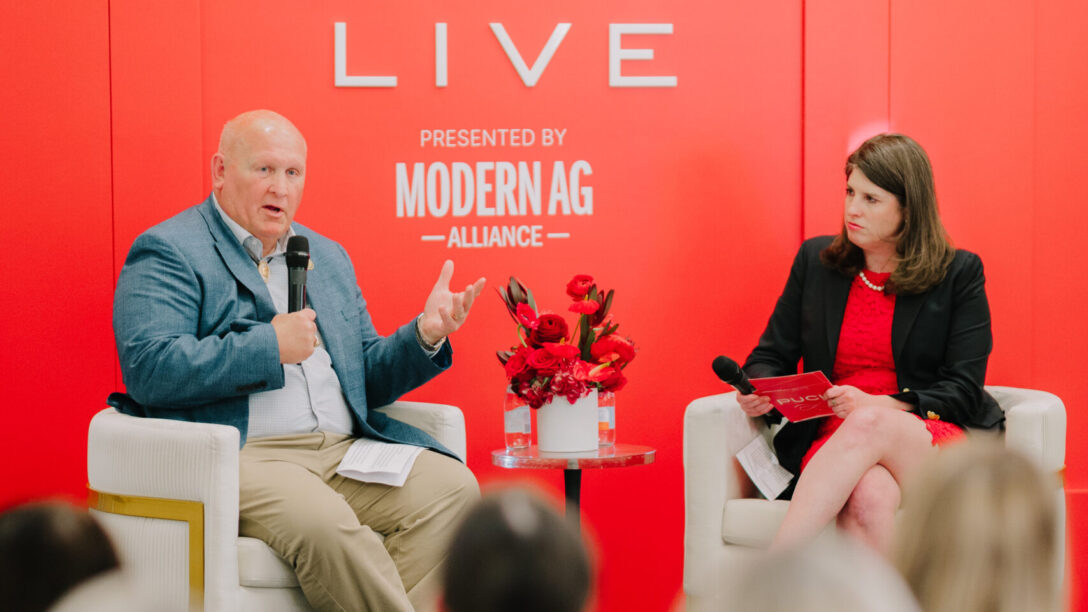
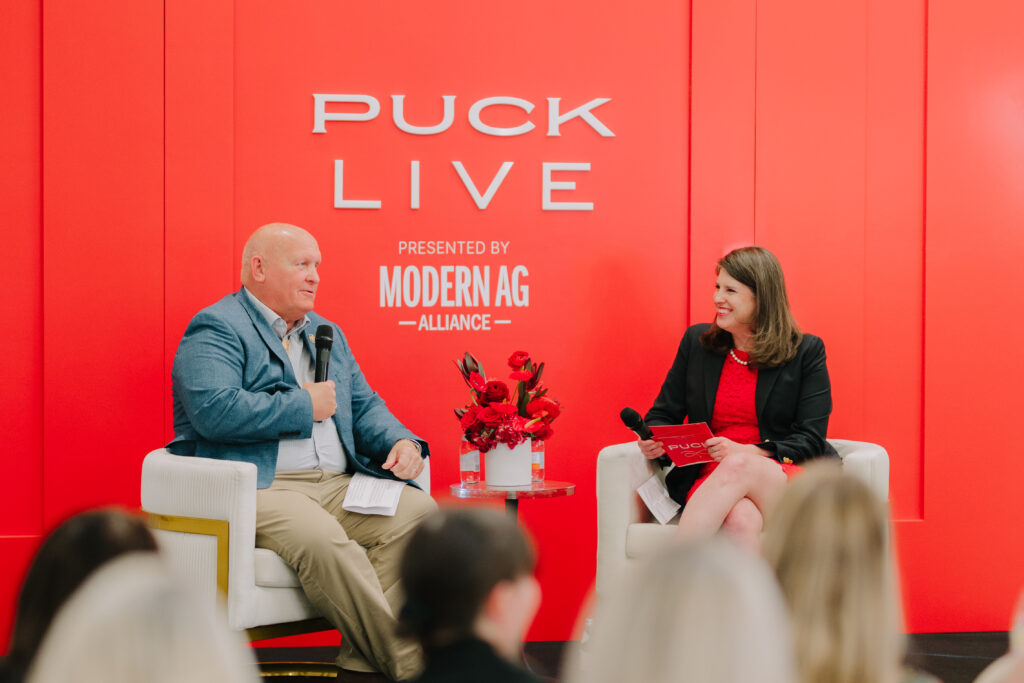
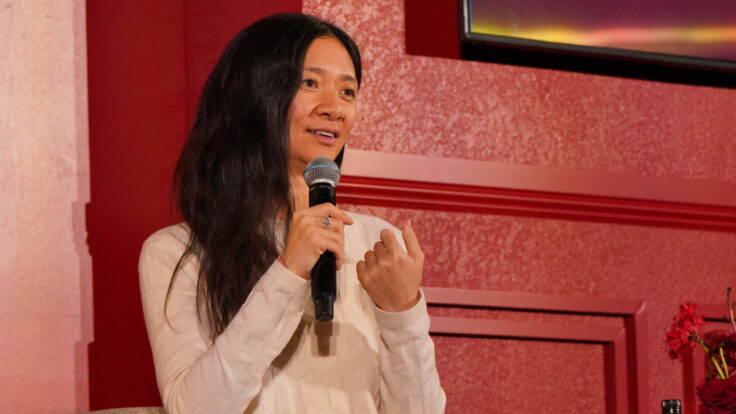
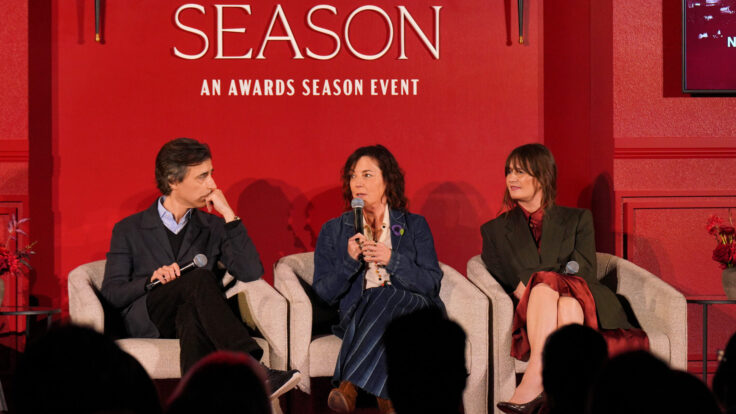
A candid conversation with House Agriculture chairman Glenn “GT” Thompson, presented by Modern Ag Alliance, on the politics of SNAP, the controversy over pesticides, what he’s calling the “One Big, Beautiful Farm Bill 1.0,” and much more.
Thompson reflected on the state of the Farm Bill, the politics of SNAP, the controversy over pesticides, the virtues of Republican committee term limits, and the shifting political terrain of Pennsylvania—a state he insists is trending red.
All Photos: Demetric Blyther/Courtesy of Puck
For House Agriculture chairman Glenn “GT” Thompson, the summer recess was anything but relaxing. The Pennsylvania Republican spent his time traveling across his district and the country, touting what he calls the “One Big, Beautiful Farm Bill 1.0,” while fielding concerns from farmers about trade, tariffs, and the future of federal nutrition programs. Along the way, Thompson cast himself as both a steward of traditional agricultural interests and a loyal foot soldier for Trump 2.0, praising the administration’s early moves on trade and regulatory policy.
In a recent conversation at the Pendry Hotel in D.C., presented by Modern Ag Alliance, Puck’s Washington correspondent Abby Livingston connected with Thompson for a lively chat, in which he reflected on the state of the Farm Bill, the politics of SNAP, the controversy over pesticides, the virtues of Republican committee term limits, and the shifting political terrain of Pennsylvania—a state he insists is trending red. This conversation has been edited for brevity and clarity.
Abby Livingston: It was a pretty explosive and exhausting recess for everyone. What was it like to be out in the field? What are you hearing on the ground, and what kind of feedback are you getting on this Congress?
GT Thompson: It’s been intense in a very positive way. I split my time serving my district and traveling across the nation—talking with farmers, with processors—and it’s been great. They’re very appreciative of what we put into what I call the “One Big, Beautiful Farm Bill 1.0.” It really is the greatest investment in putting the “farm” back in the Farm Bill. But at the same time, our farmers are still struggling. Farming is a business, and it’s as simple as supply and demand. And, of course, we also have some uncertainty with trade.
I’m really proud of the $10 billion that we did last December. Folks said we couldn’t do that, but we delivered. Eighty percent of the Farm Bill is now law, with some of the greatest investments we’ve ever had. But there’s more to be done. It’s not that the remaining 20 percent wasn’t important; it just didn’t qualify for reconciliation. There are still really important reauthorizations that need to be done.
What does the uncertainty around trade and tariffs mean for the farmers you’re hearing from?
It impacts certainty, and certainty is important no matter what your business is—especially farming. I’m very impressed with the Trump 47 administration. You can tell they had four years of dress rehearsal, and I appreciate the confidence they had in forming the America First Policy Institute. They hit the ground running, even before Inauguration Day. The trade creates uncertainty, but what the administration has accomplished in eight months is pretty remarkable.
Do you worry that the cuts to SNAP could destabilize the structure of the Farm Bill?
There were no cuts to SNAP. That was political speak. We could have—and it would have been justified—but we were forward-thinking. We didn’t want any future administration to be able to arbitrarily increase benefits without following the rules, or arbitrarily cut them. What we did was incentivize to lower the error rate.
One of the criticisms is, because we required the states to have some skin in the game, that the states were going to cut benefits. I don’t know any governor or state legislature running for election that’s going to cut benefits. I think they’re going to do a root cause analysis and figure out what they’re screwing up, and get their error rate under 6 percent, because it’s a zero-cost share under 6 percent.
MAHA Politics
There’s disappointment in the White House’s MAHA report on children’s health in that it didn’t do more to reduce pesticides. What are you hearing from farmers and agricultural interest groups about this controversy, and does this merit congressional involvement?
There will be congressional involvement. The Farm Bill is where we set policy. We need to be able to feed not just the nation, but also a good part of the world. When you look at the nutritional assistance that we do in foreign aid and trade, that requires productivity and yield—and you need the chemical tools. The Environmental Protection Agency has an army of scientists to systematically review and approve the use of these chemicals. I just want to make sure that, whatever comes out, all parts of the government understand that my definition of American agriculture is science, technology, and innovation. And we have the scientists to back that up.
One thing I’ve noticed over the years of House G.O.P. politics is how much everybody loves the party’s rule of a six-year term limit for leading most committees. Meanwhile, the heart of the Democrats’ generational crisis is their lack of term limits in the same job. What do you think about these two different approaches?
I think our approach is better for keeping it fresh. I’ve had a lot of friends that were Democratic members and left after a couple terms because they saw no future. And I think that impacts the political bench. Republicans are in a better place for political leadership because you need a forum in which somebody can achieve those leadership skills, and develop and demonstrate those skills.
Pennsylvania is such a critical state in politics. What does it feel like as you’ve been out during recess? What’s the political temperature?
There’s no such thing as an off-year election. This is an important year in Pennsylvania: We’re electing two statewide judge positions, and I think anybody with a pulse has observed what the judicial branch has done, intervening in the legislative domain. Hopefully a lot of people aren’t looking past this election. Next, we have a governor up for reelection. I think Pennsylvania is the only split legislature in the nation at this point, where the state Senate is fairly solidly Republican and the state House is Democrat.
When I first ran, there were a million and a half more Democrats than Republicans. Today, that number is just a little bit over 53,000. That’s quite a change politically, and that trend seems like it keeps going in the Republican direction. Part of that is Trump, who I think had such an appeal with working people. The only statewide position in the 2024 election that didn’t get over 50 percent was for the U.S. Senate, with Dave McCormick—but he got enough to win. Every other statewide Republican running got over 50 percent, so the way the numbers are trending is interesting.
Didn't get an email? Check your spam folder and confirm the spelling of your email, and try again. If you continue to have trouble, reach out to fritz@puck.news.
Didn't get an email? Check your spam folder and confirm the spelling of your email, and try again. If you continue to have trouble, reach out to fritz@puck.news.
Member Exclusive
Get access to this story
Create a free account to preview Puck’s full offering, including exclusive articles, private emails from authors, and more.