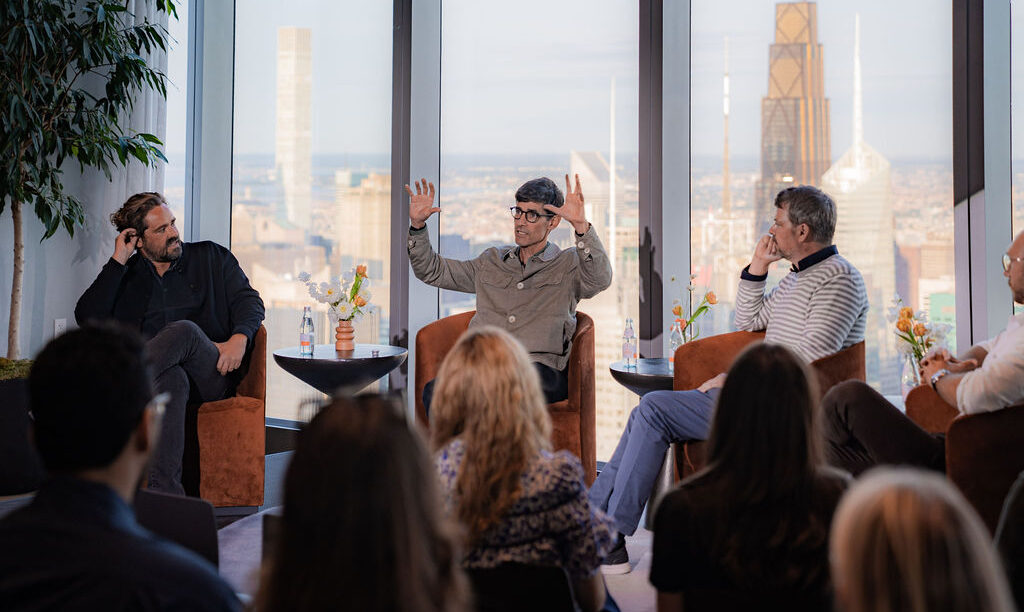
A wide-ranging and deeply candid conversation on the transformative role that artificial intelligence will play in the media landscape in the years to come—and how media executives will protect their kingdoms.
Will media home pages vanish as a result of A.I.’s aggregation abilities? Can NBC News’s moat of video content ward off the algorithm? And will star commentators like Dave Portnoy and Pat McAfee remain essential in an age of synthetic influencers?
Photo: Courtesy of Puck
Artificial intelligence has become an omnipresent and occasionally absurd force reshaping our world, changing everything from the way we shop to how wars are fought, and, increasingly, how journalism is produced and consumed. The questions are dizzying and existential: Will media home pages vanish as a result of A.I.’s aggregation abilities? Can NBC News’s moat of video content ward off the algorithm? And will star commentators like Dave Portnoy and Pat McAfee remain essential in an age of synthetic influencers?
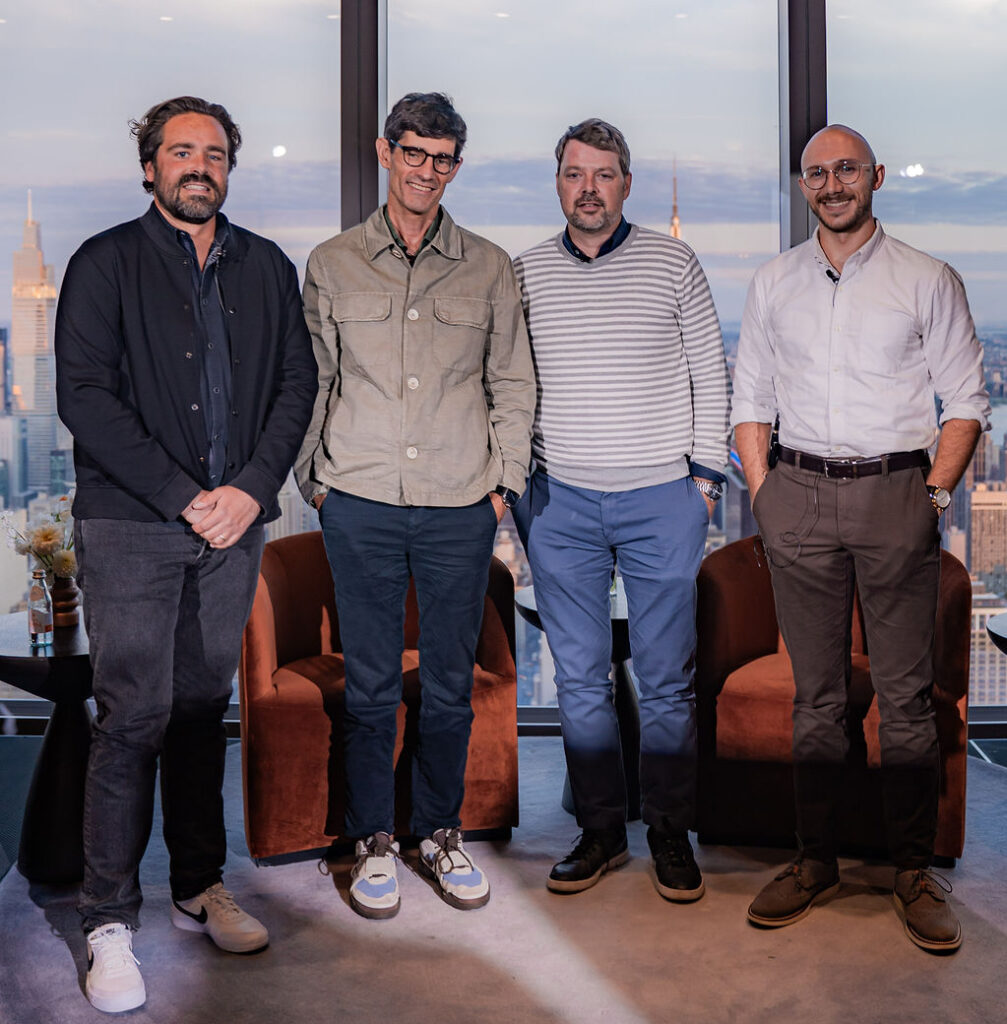
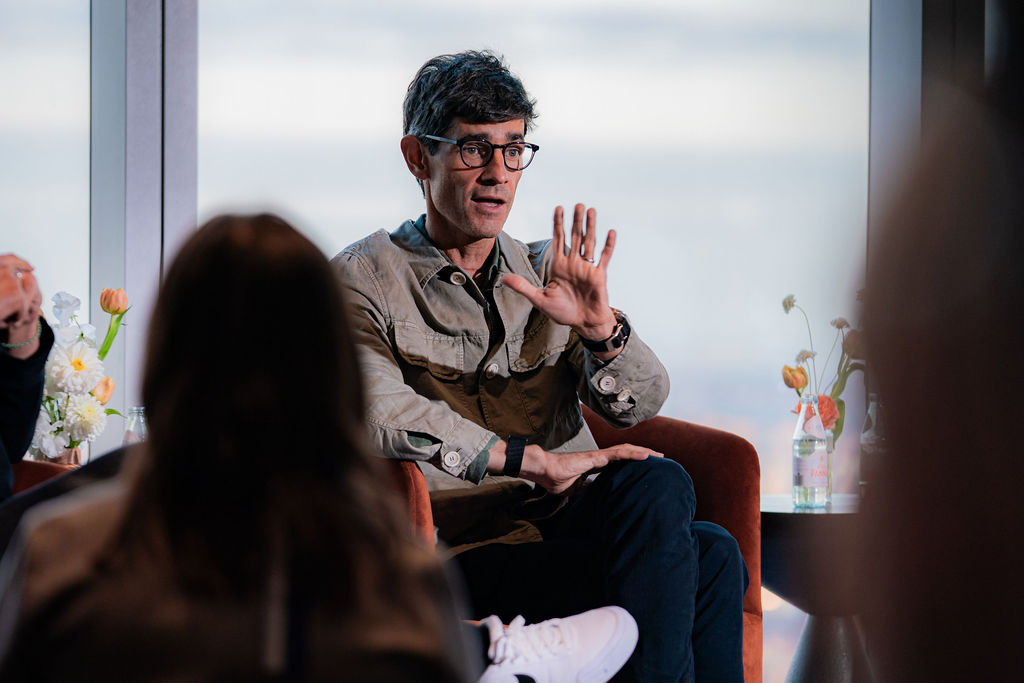
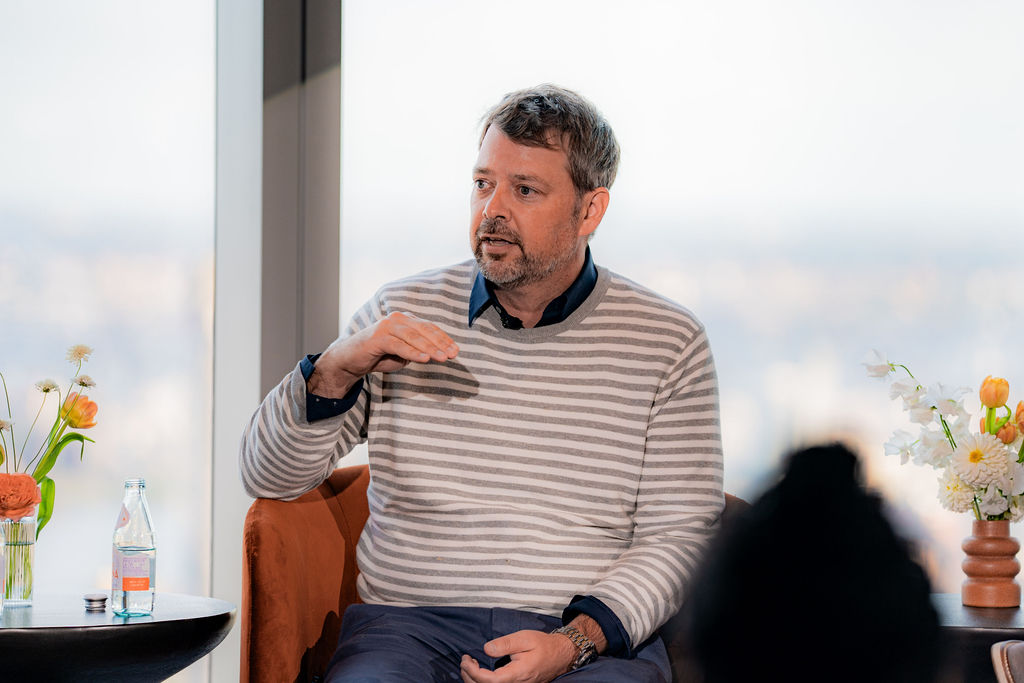
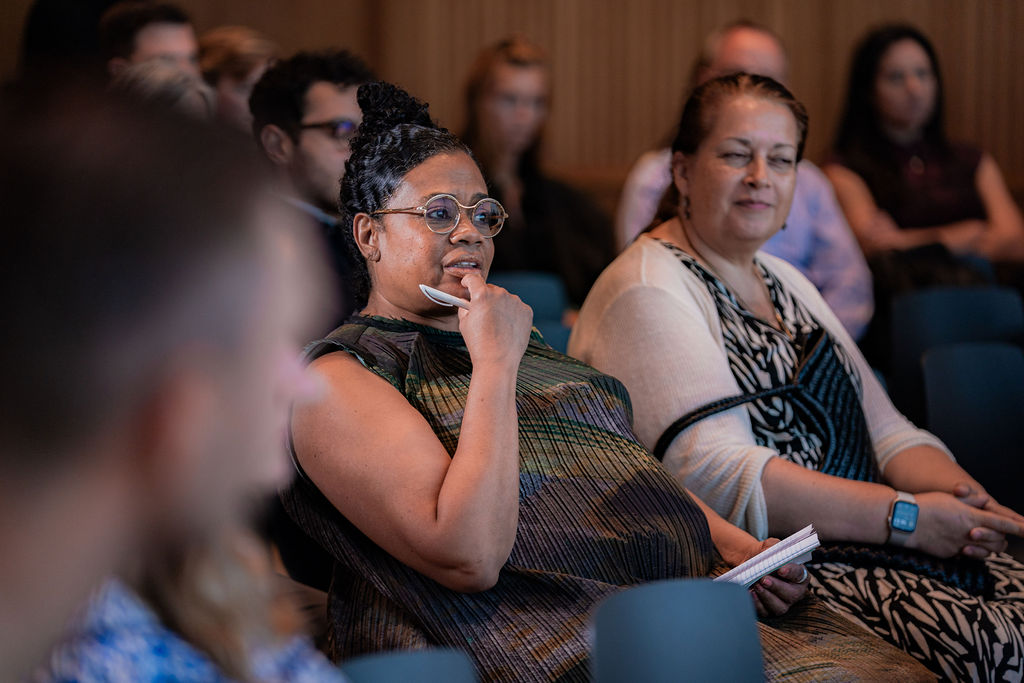
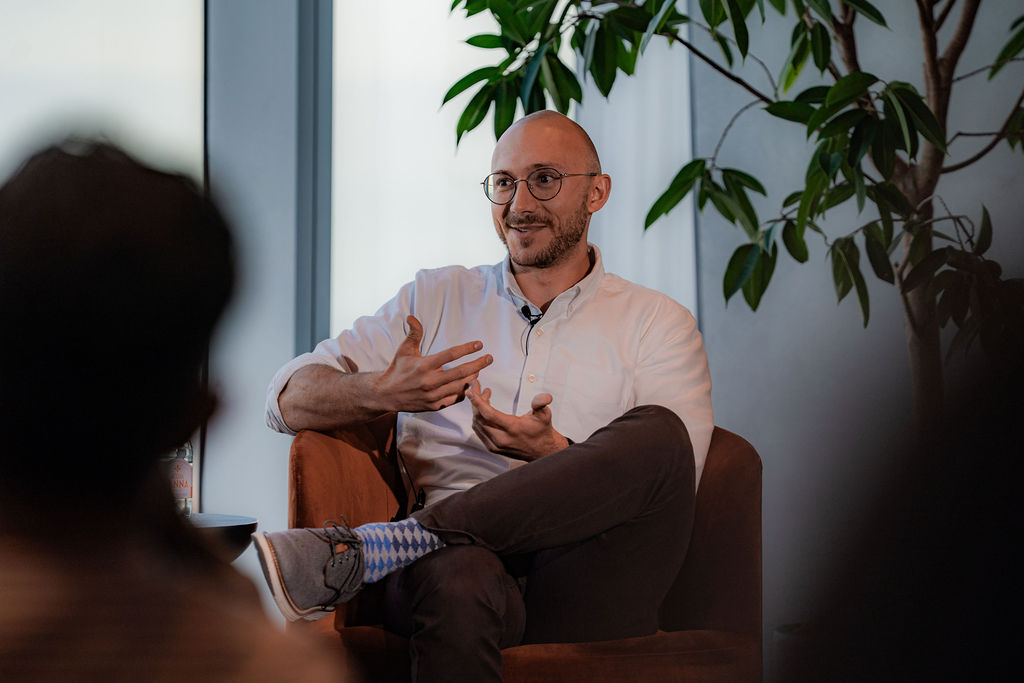
To explore these questions and more, Puck’s ace media reporter, Dylan Byers, hosted a rollicking panel, in partnership with Tishman Speyer, at The Spiral in New York City. He was joined onstage by The Atlantic C.E.O. Nick Thompson, NBCUniversal News Group chief digital officer Chris Berend, and Puck’s A.I. expert, Ian Krietzberg.As always, what follows has been slightly edited for clarity and brevity.
Dylan Byers: Nick, you were on The Grill Room a few months back, and we were talking about the influence of A.I. in the media. You said something to the effect of, I worry about a day when TheAtlantic.comdoesn’t exist. Can you expand on that concern, and what you think is the future of a consumer’s engagement with digital media?
Nick Thompson: The fear that TheAtlantic.com won’t exist would be a long-term fear. Obviously, search is going away, and Google no longer sends you to websites. One of my central projects is to see if, working with other partners, I can figure out ways that the future of search still drives readers to publishers. Assuming that doesn’t work and search goes away, suddenly it becomes much harder for people to find TheAtlantic.com. It also becomes much easier for individuals to create fake news websites, and then the internet is a total mess and impossible to navigate. That’s the bad scenario.
So here’s what you say if you have a job like mine: A) How do we hold on to as much search traffic as possible? B) How do we get involved in answer engine optimization as much as possible to get as much traffic from them? C) How do you build direct relationships with your readers that exist outside of these channels—how do you build up your newsletter audience? What are you doing in your live events? What other ways can you reach people directly?
Next, you look at how people will consume news. In a world where there is no TheAtlantic.com, we’re still sending information out to agents, to aggregators. We’re still publishing stories inside Apple News; we’re publishing stories inside of Particle; we’re publishing stories inside other aggregators that have yet to be built. Then my job becomes identifying which aggregators will win, and identifying the terms with which we can partner with them.
Implicit in that idea is that we will arrive at a point where all of the news destinations, TheAtlantic.com or NBCNews.com, won’t really matter because you’re effectively just feeding the chatbots. Chris, do you think that’s the future we’re headed to? And do you think that’s what consumers want from news and information companies?
Chris Berend: I share Nick’s Armageddon fear scenario. Part of these jobs is articulating the absolute worst-case scenario, and then figuring out how to avoid it. Particularly with news, we’ve gone through some of these types of events before. Essentially what happened was, we were trying to optimize ourselves for these third parties and gatekeepers. And I think we, collectively as an industry, learned a really hard truth: At the end of the day, they’re in it for them, and they’re not in it for you.
I’m not convinced consumers actually want the world that a lot of the A.I. companies are portraying, which is a fully agentic universe where you just have a companion and never go to any website. And the experiments that we’ve done in very small, calculated ways, for whatever they’re worth, indicate that what [consumers are] looking for, in particular around product experiences and content experiences, is some sort of human element.
If you assume that we are headed toward that future where people don’t really need to go to your website, what can NBC News, or TheAtlantic, or TheNew York Times, or anyone else do in order to feed the A.I. engine?
Berend: This is essentially the central product exercise that we now have to be obsessed with. I think if you’re in a position of topical authority, like The Atlantic, you have an advantage in this. And I think if you’re in a broader category like we are, we have a lot of advantages. And we’re video-first, which is also a big advantage in a lot of ways. I think the same thing is true [for everybody] though, which is, the end consumer needs to feel something when they visit you, so it makes them want to visit you again. It could be the compilation of things you give them, or it could be a particular columnist—just something that cannot be easily copied or repeated. I think that feeling is forcing a product rigor on all of us that I think is probably overdue, to an extent.
Nick, do you feel, with the work your team produces at The Atlantic, that you guys have something distinctive enough to separate itself from commodity news?
Thompson: Yes, absolutely. That’s the whole point of The Atlantic. And with respect to A.I., the things that The Atlantic is good at are the things that A.I. is bad at. We send our reporters out there and they make phone calls. We write with style, and with individuals and voices you trust. We write long stories, so we have a moat, and a moat is good. But a moat is useful against an army—what we don’t know is whether A.I. will be an army or a flying dragon, in which case your moat doesn’t do you any good. If A.I. continues to progress at the rate it’s progressing right now, and there’s some kind of an asymptote, our moat works really well, and we’ll continue to do what we’re doing for a long, long time.
Aggregation Fears & The Human Element
Ian, what’s your sense of how the Sam Altmans of the world, who are racing to create and own this future, think about the media industry, and the news industry specifically?
Ian Krietzberg: The point about the flying dragon is a great one. The idea that improvement will continue to happen at the rate it’s happening, or that it will become exponential, or that we will reach a point of self-improvement are ideas that aren’t founded in any sort of evidence. There’s a massive lack of clarity around what improvement even means.
In terms of the weird relationship that’s blossomed between OpenAI and the tech A.I. players in the media industry, it’s bounded by a mixture of licensing deals and lawsuits. Litigation is expensive, and losing litigation could be company-ending. I think the A.I. industry looks at the media partly as a threat through litigation, and partly as a fuel source. The core thing that makes A.I. anything is the data—and in the media space, there’s a gold mine.
My concern is that even the exclusive stuff—the great reporting and reporters at The Atlantic, the great investigative work at NBC News, the stuff that I do, which is all behind a paywall—will get aggregated to people who have licensing deals, and therefore no one is really protected.
Berend: For us, our core competency is actually connecting with an audience over video, with talent that they like. The stories that we talk about and report on, on the Today show or Nightly News or any number of our streaming products, are a lot of the same stories you’re going to read about elsewhere. But the core of our business is built upon this companionship, and that you trust us and see us. If I were in a commodity text business, I would be even further down toward the Armageddon scenario. A.I. may come for video, but I also think A.I. video, from a consumer experience, has an ick factor to it. All of us are already seeing the fake crap out there, and it’s so obvious as to be offensive. We think maybe video will be a moat, but I don’t think any of us really know.
The more powerful and influential A.I. becomes, the more people are going to gravitate toward not just trusted brands and individuals, but the people they actually like and the brands they can build a lifestyle around. And we see the way The New York Times has really become a sort of lifestyle services business sustaining a news operation, more than a news business. Are we consoling ourselves a little bit too much when we think that way, Ian?
Krietzberg: To me, the questions of Will the internet go away and Will websites go away are more of a people question: Do people not want to engage with websites? Do people not want to check out their favorite sports people on social media and see what other people are talking about? We live in a human society where people are very interested in other people. I think that’s the core thing. Where it all goes is just a big question mark. But I don’t think the answer to where it goes has to do with what the A.I. companies are building or what they’re able to achieve.
As an industry and as consumers, we’ve been dealing with this same problem for a long time. With social media and the aggregators driving how people consume news, we found that it’s exhausting for people. We have started to see an attraction to individual personalities and the rise of this creator economy, and the power of non-journalistic people who now have hundreds of millions of subscribers, regardless of whether an L.L.M. can create a facsimile of what that is.
Didn't get an email? Check your spam folder and confirm the spelling of your email, and try again. If you continue to have trouble, reach out to fritz@puck.news.
Didn't get an email? Check your spam folder and confirm the spelling of your email, and try again. If you continue to have trouble, reach out to fritz@puck.news.
Member Exclusive
Get access to this story
Create a free account to preview Puck’s full offering, including exclusive articles, private emails from authors, and more.