
Join Puck to listen to this article
The pay TV business has always favored the biggest distributors. Traditionally, the companies with the most subscribers negotiate the best rates for channels, while smaller entities with less leverage are usually forced to pay top dollar for the right to carry a media company’s channels and content. Even Google, with its $3 trillion market cap, couldn’t change this ossified system. When the company launched YouTube TV in 2017, Google found itself at the bottom of the distribution barrel.
But as cord-cutters shed traditional distributors, YouTube TV slowly started gaining a significant subscriber base, and the $2 billion a year it paid for NFL Sunday Ticket also proved worthwhile in this regard. YouTube TV now has around 10 million subscribers, making it the third-largest distributor in the land, and on pace to become the kahuna in short order. More recently, YouTube hired Justin Connolly away from Disney as its global head of sports and media—a jersey switch widely perceived to advantage the company in future negotiations with legacy mediacos, many of whom are balancing the managed decline of their linear businesses while trying to grow their streamers. That’s a ton of leverage.
YouTube’s clout is currently on full view. In August, just as college football was starting, YouTube TV negotiated a new deal with Fox to avoid a blackout. YouTube paid more, of course. But Fox also gave in to some of the distributor’s streaming demands. And then there’s the concurrent negotiation with NBCUniversal, which resulted in a deal this afternoon, following a short-term extension that was worked out earlier this week.
In many ways, the NBC deal looks like every other carriage deal that’s been made during the past several decades. YouTube TV will pay to carry all of NBCUniversal’s networks—from the broadcast network to Oxygen True Crime. But, of course, the whole fuss was about Peacock. This was an important aspect of the deal for NBC, as it was able to keep its bundle of linear channels intact, including the NBC Sports–branded regional sports networks and the channels being spun off as part of Versant.
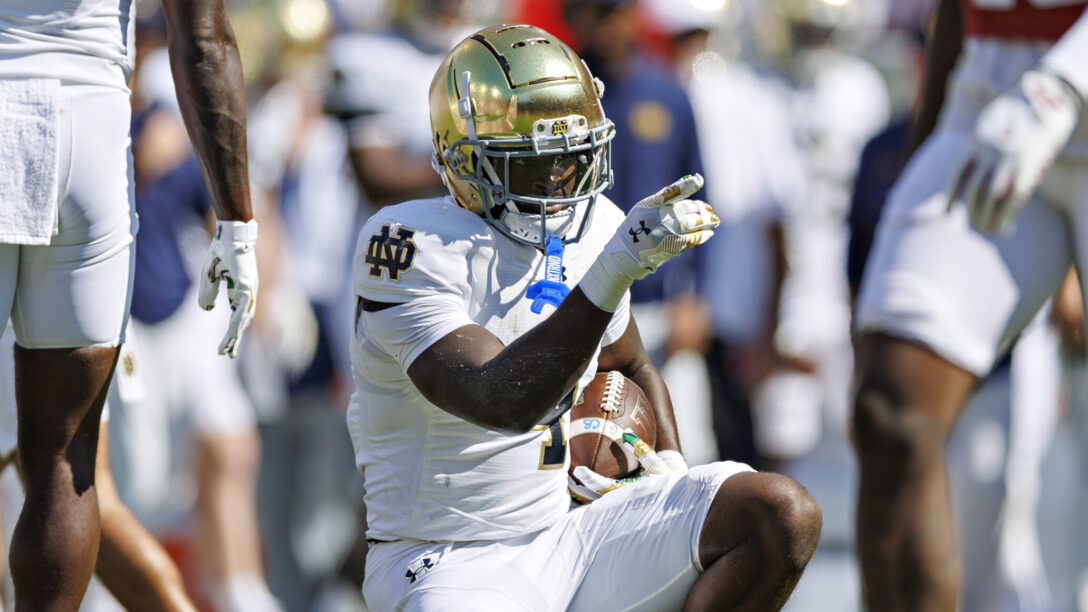
YouTube executives, with their newfound leverage, don’t want their customers to leave their platform to access a partner’s (often underpriced) streaming service. Naturally, they want to ingest the streaming product, thereby trading their scale and discoverability for some very valuable data. Obviously, these negotiations get sticky in the fall because, despite all its clout, YouTube TV doesn’t want to lose what NBC brings to the table—the NFL, Big Ten, and Notre Dame football, among many other sports assets.
In the end, YouTube TV won a sort of Goldilocks deal. The business was able to convince NBC to allow it to ingest most of its sports programming—in a way. This fall, YouTube TV will launch NBC Sports Network, which will feature sports exclusive to Peacock. (There’s a carve-out for NFL games that remain exclusive to Peacock.) Sources did not divulge how much YouTube TV is paying for NBC Sports Network, but NBC, obviously, was compensated well for it. Importantly, though, NBC will control all of Peacock’s streaming data—a point that mediacos have described as a third rail of negotiations. After all, the pay TV subscribers who would be watching NBC Sports Network skew older than streaming users. All other Peacock programming, including news and entertainment programming, will not be ingested into YouTube TV.
What did YouTube TV get out of the deal? It now has access to Peacock sports programming within the YouTube TV environment, and its deals for NBC, Bravo, and Peacock have different lengths than its deals for the Versant channels and the R.S.N.s—which seemingly sets up another battle when those deals come due.
In the next couple of weeks, YouTube will be back at the table with Disney. The big question centers on whether ESPN will allow some of its direct-to-consumer sports programming to be ingested into YouTube TV, too. Obviously Bob Iger and Jimmy Pitaro won’t prefer that option—they just launched a streaming service that they don’t want sports fans to ever leave. But it’s increasingly obvious that the monoculture that executives like Iger grew up in has been replaced by a far more balkanized reality—and YouTube and YouTube TV, alas, have positioned themselves as the platform most able to serve those consumption habits. Ingestion, in some form, is likely going to be the way of the future. So much so that we ought to find a better term for it.