
Join Puck to listen to this article
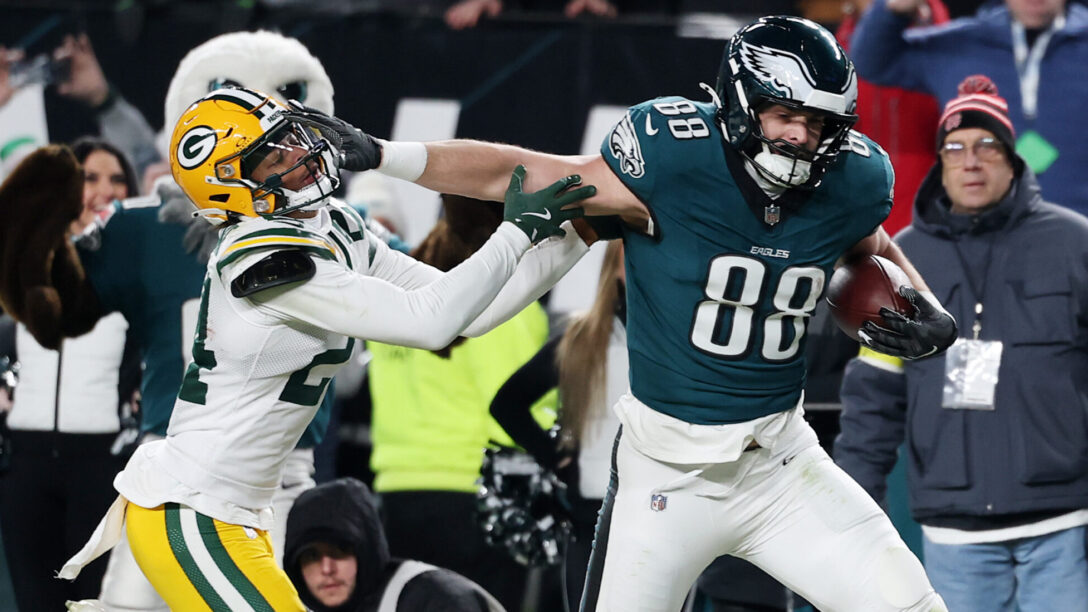
The good news is that Disney and YouTube are talking—and will remain talking—right up until this evening’s Eagles–Packers Monday Night Football game from wintry Lambeau Field. They’ve already been talking for some time. The two sides remained in contact as ABC carried fourth-ranked Alabama’s win over LSU and ESPN broadcast Wake Forest’s upset of erstwhile CFP contender Virginia. And yet, there’s been no indication that they’re any closer to a deal. On Sunday, Morgan Stanley research analyst Ben Swinburne wrote that Disney is losing $30 million in revenue a week.
As I’ve been reporting for the past month, the sticking point between the two parties isn’t ingestion or some other newfangled beef of the late-stage streaming wars—it’s simply old-fashioned pricing. I’m told that ESPN has agreed to give YouTube TV the same rate as the three biggest distributors in the business—Comcast, Charter, and DirecTV—which have negotiated the lowest rates: a figure believed to be a little more than $10 per subscriber per month.
The trouble is that YouTube TV is pacing to crack their ranks. Thanks to its extraordinary growth trajectory, which is all but assured by its $3.5 trillion parentco, YouTube TV wants a better rate than other distributors. And that, of course, would be a bridge too far to ESPN. Since its origins, the cable video business has been beholden to most favored nation clauses, which assure bigger distributors like Comcast that they’re getting the best rate. If ESPN were to give in to YouTube TV’s demand, the M.F.N. clauses would likely kick in, and chairman Jimmy Pitaro would presumably have to offer the same rate to Comcast, DirecTV, and Charter. (And if they don’t have M.F.N. clauses, they’ll likely have new affiliate sales executives.) I’m told that Disney views this sort of capitulation as a major concession.
On some levels, this dispute has become a real inflection point in the industry. In the old days, networks like ESPN held all the cards—distributors never wanted to let a sports network go dark, particularly during football season, which would cause fans to cancel their subscriptions en masse. But YouTube has weathered one Monday Night Football game with the Cowboys. Tonight’s Eagles–Packers game presents a second marquee matchup. (Disney C.E.O. Bob Iger had a chance to make his argument when he joined Peyton and Eli on ESPN2’s ManningCast, but he didn’t address YouTube TV at all.) Then the Cowboys are back on Monday Night Football next week.
These are the types of games that would historically force distributors to buckle. But the endurance of this negotiation merely proves the enormity of YouTube’s leverage. In fact, the question isn’t really how long YouTube TV can hold out, but the precise opposite: how long Disney can afford to sit on its hands. “You have the best-in-class tech platform with a young and growing audience,” LightShed’s Rich Greenfield told me today. “This is by far the biggest industry success story in the v.M.V.P.D. world. How long can Disney be dark on this?”
Meanwhile, another key date looms for ESPN’s parentco before next week’s Cowboys–Raiders Monday night game: Disney’s fourth-quarter call with analysts. “I can’t imagine Disney going into earnings on Thursday without a deal,” Greenfield told me. “This is such a big part of ESPN’s revenues and profits. I just can’t fathom getting on the earnings call and being dark still.”