
Join Puck to listen to this article
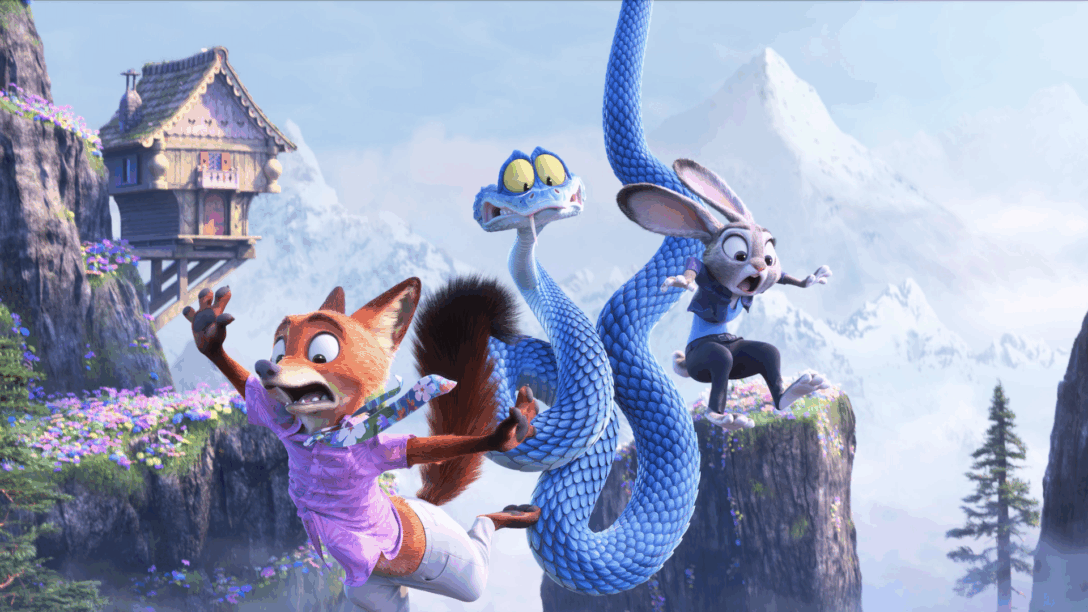
The big question after Zootopia 2 grossed nearly $560 million globally over the long Thanksgiving weekend wasn’t: How did a sequel to a 9-year-old Disney toon net the fourth-largest worldwide opening ever? (It landed behind only Spider-Man: No Way Home at $600 million in 2021, Avengers: Infinity War at $641 million in 2018, and Avengers: Endgame with $1.2 billion in 2019, positioning it as the year’s most successful U.S. movie so far.) Instead, it was: Why did the breakout gross come not in North America, which delivered a strong but earthbound $158 million over the five days, but in China, where it made $272 million over that same timeframe?
That’s a massive sum by the subdued expectations of 2020s Hollywood tentpoles, and sky-high even by the standards of the 2010s boom times. (The last two Mission: Impossible films earned less globally than their 2010s predecessors, partly due to far lower earnings in China.) In fact, Zootopia 2 was China’s second-largest Hollywood debut ever, behind only Avengers: Endgame’s $330.5 million Wednesday-Sunday gross in 2019, and the seventh-largest opening in the country, period. If it performs well in its second weekend, it will likely pass Fate of the Furious ($393 million in 2017) to become the second-highest-grossing Hollywood export behind (again) Avengers: Endgame’s $632 million.
Beyond rave reviews and strong word of mouth for the animated allegory, the Zootopia 2 numbers also owed to the massive existing fandom for the first film, which remains only the second original movie, alongside Avatar, to top $1 billion globally. Yes, City of Zootopia has been popular in Shanghai Disneyland since it opened just under two years ago. But that is because of the ongoing popularity of its source material. The first Zootopia debuted to just $24 million in 2016 but legged out a $235 million total. Until the first Ne Zha, in 2019, it was the all-time top-earning animated film in China.
Why do the Zootopia films do so well in China? Some observers have suggested that its narrative—the story of Judy Hopps leaving her small town and finding success in the big city—resonated with generations of Chinese moviegoers amid a rapidly expanding and urbanizing economy. That certainly makes sense. (Concurrently, I can’t imagine authorities being too upset about a hit that trades in such aspirations while not also grappling with the grimmer, more challenging consequences of economic migration.)
Beyond that specific appeal, Zootopia was as well-reviewed and well-received in China as everywhere else. It earned $341 million in North America, ranking among the very biggest Disney and/or Pixar original toons. So in this case, Zootopia 2 was a much-regarded follow-up to a beloved original smash that played like a breakout sequel. Think Pitch Perfect 2 and Austin Powers: The Spy Who Shagged Me earning more than their predecessors in North America over their respective opening weekends. And in examples with higher overall earnings, Shrek 2 exploded out of the gate in 2004 with a near-record $128 million Wednesday-Sunday debut on the way to a towering $441 million in North America alone. So maybe it’s less about what succeeds in China in 2025 than what worked for China in 2015, and the fact that Zootopia 2 is a pretty standard breakout sequel—one whose total ticket comps benefited from nine years of inflation, exchange rate changes, and increased theatrical capacity.
Global Hits?
Most of the Hollywood movies that have truly broken out in China have come from top-tier franchises that also succeeded everywhere else—The Avengers, The Fast Saga, Jurassic World, etcetera. While Hollywood chased the Chinese box office in the 2010s, partially to make up for declining DVD revenue, the strategy was mostly about padding already excellent global grosses of successful worldwide hits. After all, Hollywood films usually accounted for only 25 percent of weekly ticket sales in China, as opposed to 50 percent or so in most other territories.
Even the MCU rarely needed China—Captain America: Civil War would have still grossed $965 million in 2015 without a penny of its $190 million from China. And franchises that overindexed in China, like Transformers and The Fast Saga, began to struggle as their sequels and prequels increasingly relied on the territory. In 2014, Transformers: Age of Extinction didn’t need its exceptional $322 million Chinese take, out of $1.105 billion, to qualify as a success. Cut to 2017, and Transformers: The Last Knight earned $228 million in China. That was not enough amid a $605 million global cume to offset declines in nearly every other marketplace. Legendary and Warner Bros.’ MonsterVerse made sure that Godzilla x Kong, in 2024, was cheap enough that it didn’t have to equal the $188 million Chinese totals for Godzilla vs. Kong in 2021.
Then there were the films whose success in China led Hollywood to think that they were global hits. In most cases, those movies either didn’t merit a sequel (Warcraft, xXx: Return of Xander Cage) or spawned one that underwhelmed in China (Terminator: Dark Fate, X-Men: Dark Phoenix). The others were essentially momentary mirages. Just because Alien: Romulus earned $110 million in China doesn’t mean Predator: Badlands would do likewise—it stands at just $14 million so far.
After all, exports that worked in China in the 2010s were usually culturally specific (Black Panther earned more there than the Guardians of the Galaxy movies), aggressively weird (Venom), or unapologetically over-the-top (Aquaman). The same decade also saw the emergence of homegrown Chinese tentpoles, some of which were weirder (The Mermaid) or goofier (Monster Hunt) than others (Wolf Warrior II). It stood to reason that Chinese audiences showing up for a foreign film would want something that wasn’t a Tinseltown variation of what otherwise might be available locally, or comparatively vanilla all-quadrant biggies. Then and now, Zootopia fits the bill.
Adding to its appeal, Zootopia was an original film for younger Chinese moviegoers. It wasn’t a decades-later Star Wars or another attempt to convince Chinese audiences to love American superheroes. To the extent that it’s pulling far higher grosses than the (still successful) Despicable Me and Minions flicks, this is the first Zootopia sequel, not the fifth or sixth.
The Avatar Impact
Zootopia 2’s strong performance in China is both good and (kinda-sorta) bad news for the upcoming Avatar: Fire and Ash. The original Avatar grossed $201 million in China in 2009. And in 2022, Avatar: The Way of Water earned $255 million—below what might have been expected given that Fast sequels and Avengers films regularly topped $350 million. How will the third Avatar perform?
James Cameron’s latest Pandora passion play benefits from Zootopia 2’s big bow in a few ways. First, nearly every Chinese moviegoer who saw Zootopia 2 this weekend caught the Avatar 3 trailer. Also, it took some of the pressure off Fire and Ash, which now doesn’t have to perform like a Q4 theatrical savior on the Disney P&L.
Even if both Zootopia 2 and Avatar: Fire and Ash surpass Avengers: Endgame and Fate of the Furious in unadjusted Chinese box office revenue, they’ll remain exceptions to the rule. Since 2021, the majority of once-aspirational Hollywood tentpole franchises have declined (Jurassic World), tanked (Ant-Man and the Wasp: Quantumania), or not played at all (Black Adam). Frankly, Hollywood should have always viewed the Middle Kingdom as found money—a message it should remember this week.