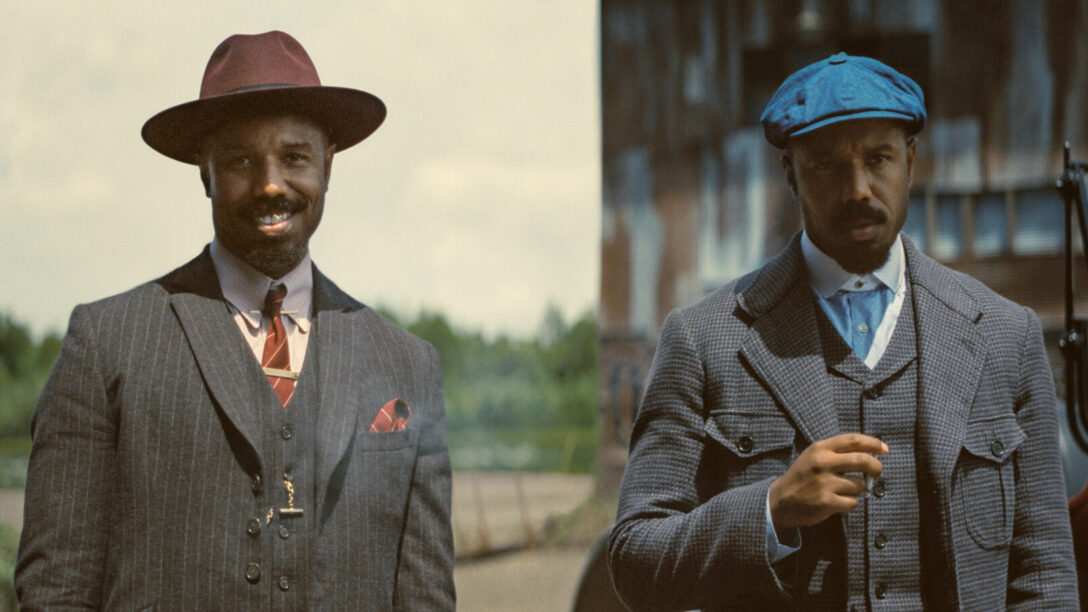

Last month, a lunch companion noted that there was a big movie coming out soon that was entirely financed by a major studio, but whose copyright would eventually revert to the filmmakers. Yeah, I responded: Sinners. I had already written about that arrangement last year. And, as everyone knows, the movie has since generated outsize attention over its reversion after 25 years to writer-director Ryan Coogler, a deal that Warner Bros. film chiefs Mike De Luca and Pam Abdy have been forced to defend in the media.
No, my lunch companion responded. He was talking about 28 Years Later, the zombie apocalypse threequel that Sony Pictures will release in June from director Danny Boyle. Sony is paying to produce, market, and release the movie but will eventually not own it—and nobody’s clutching their pearls about that arrangement.
28 Years Later is very different from Sinners, an original horror movie that ended up costing more than $100 million and has become a big hit in the U.S. But both were auction situations. In early 2024, there were eight or nine studios and streamers jockeying for the mid-budget follow-up to 28 Days Later (2002) and 28 Weeks Later (2007), which modernized the zombie genre and launched actor Cillian Murphy. Sony’s Tom Rothman won the project—funny enough, Warners was the other final bidder—by offering to make two films, the first with a $75 million budget, with a third planned in success. And crucially, Sony honored the rights-reversion arrangement that producers Boyle, Andrew Macdonald, and Alex Garland had on the first film, which was independently financed in the U.K. and sold to Fox Searchlight with a limited license. 28 Days Later grossed $84 million on a budget of less than $10 million, then traveled through the Fox home video corridors, and eventually reverted to the library of Macdonald’s DNA Films, which allowed the filmmakers to package together and shop the new project—and get themselves a great deal. Fittingly, Peter Rice, the Fox Searchlight executive who bought the original 28 Days Later, is now a producer on the new films. Rice helped fully extricate the property from Disney, Searchlight’s current owner, which held first-look rights on sequels. Rothman was at Fox back in the day, too, and his 30-year relationship with the filmmakers helped get the deal done when other suitors offered more money.
Anyway, this kind of ownership situation is not news to anyone in the independent film world. The indie model often includes a limited license or a reversion of copyright to the producers after a certain time period, or once the studio crosses a specific revenue threshold—especially if those producers paid for the movie, but sometimes even if they don’t.
It’s a negotiation point. Some filmmakers want ownership—Jim Jarmusch, for instance, is famous for asking for it—and the limited license was an element of the Miramax and Weinstein Co. business in the 1990s and 2000s. That’s why ownership of the Quentin Tarantino movies has been reverting back to him—and why Tarantino was able to achieve the same reversion from Sony, first on Django Unchained (Sony had international rights), and then on Once Upon a Time… in Hollywood. Sony didn’t suddenly decide to give ownership to Tarantino; he’d had it since after Pulp Fiction, and Sony essentially stepped in for Weinstein after Harvey imploded. It was precedent.
That’s how Sony approached 28 Years Later. It’s unusual that the studio would be footing the bill for the film and giving up ownership, but it was also unusual that a sequel to a known horror title, with an Oscar-winning director attached, would be coming up for auction. Desperate for I.P. projects, Sony was happy to trade ownership for a title that could compete in the summer blockbuster corridor now. Rothman may have balked at the Sinners deal, but this one was a no-brainer for him. (Sony declined to comment.)
Reversion Therapy
But 28 Days Later is a unique situation. There’s not a lot of clamoring for multiple sequels to most low-budget indie movies from 23 years ago. (Interestingly, Napoleon Dynamite, another Fox Searchlight hit from that era, is about to revert, I’m told. I could see interest in a sequel there, especially now that director Jared Hess is hot again off A Minecraft Movie.) For most filmmakers, eventual ownership isn’t that alluring, especially if the alternative is an extremely lucrative profit participation. That’s why filmmakers with the highest leverage—Jim Cameron, Steven Spielberg, Chris Nolan—haven’t gone the ownership route. They’re content being rich.
“It’s actually a pain in the ass,” John Sloss, the deal lawyer and producer, told me last week. Relicensing the movie to a distributor… gathering all the materials after all those years… figuring out which participants to pay—who needs that? It’s so much of a hassle that Sloss started a business last year, Cinetic Library Services, to help filmmakers (often his own clients) exploit titles that come up for relicense. “We are a logical partner,” he said. “We take over the role of the distributor and can help package the film or relicense it.” Cinetic gets a fee—typically 20 percent or so—and essentially becomes a mini-studio for the movie.
The bigger distributors also do this, of course. Tarantino, for instance, has Lionsgate as his rent-a-studio on everything from Jackie Brown to The Hateful Eight. When Kill Bill Vols. I & II came up for relicense, Tarantino put those at Lionsgate, too. The studio pimps out the films to various platforms, collects revenue, pays participants, and takes a fee before Quentin gets his money as the owner. I’m betting Q.T. also gets a decent discount if he wants to do a midnight double-feature of Death Proof and Inglourious Basterds at the New Beverly or Vista theaters, which he owns.
Sinners 2050
All of which leads to the key question for Sinners: What, exactly, is the value of the film to Coogler after 25 years? That’s actually kinda answerable, or at least there’s a cottage industry of library managers and film-ownership gurus trying to figure it out.
I dove into that world a bit over the past couple weeks, and the short answer is, it’s an inexact science. The value of certain films takes off for reasons both obvious, like if a filmmaker’s early work—say, Nolan’s Memento—gains notoriety due to his later success. Or for reasons inexplicable—White Chicks, the 2004 Wayans brothers comedy, is apparently a huge revenue machine on home video. Maybe Gen Zers are watching because they can’t believe that movie got made. For Coogler and Sinners, it’s all about gaming out the cash that the title should be expected to throw off after having been squeezed until 2050 by the Warner Bros. machine.
You first look for comps. That’s a little tough for a genre mashup like Sinners. But, of course, theatrical box office is a particularly meaningful guide. The film will likely top out between $330 million and $350 million worldwide, per Warner Bros., about 75 percent of which will be domestic revenue. So, you look for similar performers. Then the genre: Sinners is horror, and it’s R-rated, which means it’s harder to edit for TV and won’t be sold to certain platforms or countries, limiting potential buyers. But it’s also an auteur-driven movie, from a 38-year-old filmmaker whose catalogue will likely become more valuable as he makes more films, just as occurred with the mid-career Tarantino films. Oscars attention for Sinners would help build later value, too.
Given all those factors, and assuming the film library distribution business remains relatively steady and lucrative, a good source in that world estimates Sinners will generate about $1 million a year for Coogler when he takes over in 2050. That’s from all sources, and after he pays a distribution fee to whoever handles the film for him (usually about 15 percent to 20 percent), plus another 5 percent in distribution expenses. This could be a specialized company, like Sloss’s, or it could be a relicense to Warner Bros.—or whatever the studio is called in 2050. UniWarnerChick-fil-A Studios United??
Further, I’m told Warners has reserved a right of first refusal to distribute Sinners once Coogler owns it. So if whoever’s running UniWarnerChick-fil-A still thinks there is blood to be sucked from this vampire movie, it can choose to stay in business with Coogler—on reasonable terms, of course. Other studios sometimes reserve a piece of the profits on the movie once ownership flips, effectively reversing the typical studio-talent relationship.
Because remember, Coogler—or whoever he hires—would still need to pay out any backend owed to participants on the film, including star-producer Michael B. Jordan, who maintains a piece of the project. Coogler would be the “studio,” subject to an audit of the money coming in. Which brings up the amusing possibility that someday Jordan’s children could sue the heirs of his longtime collaborator over so-called “Hollywood accounting.”
Terminal Value
Sinners won’t generate $1 million a year forever, of course. That’s why those who assess films try to ascertain the “terminal value” of a title. It’s a complicated calculation involving a “decay” rate that is used to determine the correct multiple, and I won’t get too into the weeds. But if Coogler ever wanted to sell Sinners outright (or borrow against it), there’s a formula to figure out what it’s worth, as well as a way to back it up to the “present day” value of the film. That’s obviously much less than what he’d be able to make from it in 25 years, assuming all goes right.
So-called “derivative rights” aren’t included in this calculus, either, which is important because those opportunities—sequels, prequels, TV and other spinoffs—can sometimes open up new revenue streams while also making the original title more valuable. In its deal to make 28 Years Later, for instance, Sony bought sequel rights and paid extra for distribution rights to 28 Days Later and 28 Weeks Later, which will give the studio a more compelling package of elevated zombie films to license to Netflix or others. And assuming the sequels aren’t terrible, every time a new 28 movie comes out, it boosts the library value of the others. A win-win.
That’s why one top source described derivative rights as the single biggest benefit of negotiating for copyright ownership on a hit movie. Remember, back in the ’70s, 20th Century Fox financed and released Star Wars, maybe the biggest original hit in the history of the film business. But George Lucas famously convinced the studio to give him sequel rights, which is where most of the Lucasfilm value accrued. If Fox keeps Star Wars and everything that comes after it for the next 40 years, there’s a chance that Fox ends up buying Disney in 2019, not the other way around.
Is Sinners akin to Star Wars? With respect, hell no. The point is, the value of a successful film title over its full lifetime is both calculable and completely unknowable. The 28 Days Later guys probably never envisioned a time, two decades later, where they’d be able to extract nine figures for sequels in a multi-studio bidding war. And Coogler, while setting up himself and his kids for a nice annuity from a passion project that’s all about the complex relationship between art, commerce, and ownership of Black culture, might someday find additional value far beyond the expected paychecks.