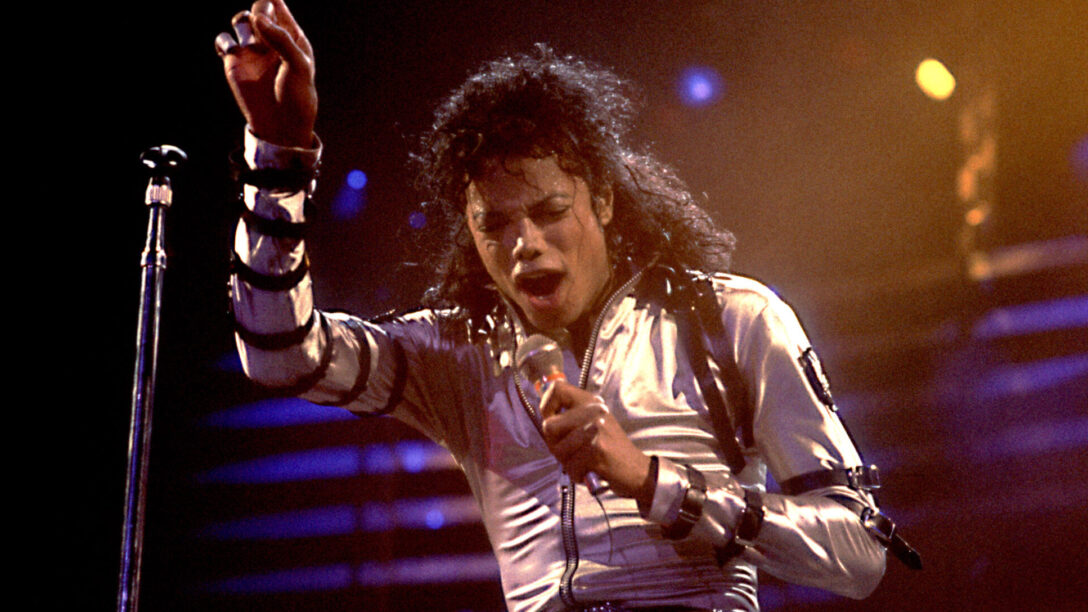

Lately, producer Graham King has been chatting with Skydance’s David Ellison about an intriguing potential opportunity—taking over international distribution of Michael. Lionsgate is handling the U.S. release of the controversial and twice-delayed Michael Jackson movie—or movies, depending on what happens during the next few weeks of a wild and fairly unprecedented scramble—while Universal is set to distribute in foreign territories, where the project will likely earn the majority of its box office.
But either or both studios can opt out if Michael becomes something materially different from the $150 million musical biopic they agreed to help make and distribute. Lionsgate, freshly separated from Starz and seeking its own sale, desperately needs potential tentpoles like the M.J. movie—even with the headaches it has entailed for film chair Adam Fogelson. But Universal is substantially less thirsty, especially with a packed 2026 release slate that includes three animated franchises and big movies from Chris Nolan, Jordan Peele, and Steven Spielberg.
So Team Ellison, if they gain control of Paramount—Trump-willing, of course—and if the deal terms make sense, want to put themselves in the right spot to step in for Universal. (A Skydance rep declined to comment.) And if not Paramount, maybe Warner Bros. or Amazon, which is building its international distribution group and already has a pay TV output deal with Lionsgate. And if no studio bites, Lionsgate could even distribute Michael worldwide itself, using a network similar to its foreign partners on the John Wick and Hunger Games movies.
Why does this matter? Scheduling aside, why wouldn’t Universal want this high-profile and potentially very lucrative movie? After all, Jackson is still a massive music star overseas, and his legacy outside the U.S. is far less tarnished by the allegations of pedophilia and the court cases that dogged him during the last third of his life. But the problem—as I first mentioned back in January, when I broke the extraordinary news that the film’s entire third act had to be rewritten and re-shot due to the overlooked terms of a settlement between the Jackson estate and a child-abuse accuser—is that nobody seems to have any idea what the heck the Michael movie is actually going to be now.
Certainly not Donna Langley and Jimmy Horowitz, the Universal studio chief and top dealmaker, who signed on with the understanding that this would be one movie, and it would be released in 2025. The screenplay by John Logan celebrated Jackson’s life and music, but it also addressed the allegations against him, painting a fuller picture of the star—even if, as I revealed when I read a near-final draft last year, the script went to great lengths to paint Jackson as a victim of nefarious parents willing to leverage false accusations for a payout.
But now? Lionsgate C.E.O. Jon Feltheimer confirmed last week what we all knew months ago: The movie isn’t hitting its October 3 release date, which was already pushed from April due to the required reshoots. The revised third act is written, and director Antoine Fuqua has set three weeks of additional photography starting next week in and around Los Angeles. Yet the specific Jackson accuser in the original script—Jordan Chandler, whose claims of molestation at Neverland Ranch generated a massive settlement that also prevented his case from ever being dramatized in exactly the way Michael originally ended—has now been scrubbed. It’s not clear how Logan ends the movie, but Universal still has not seen the revised script and has been shown only about 20 minutes of footage. (A studio rep declined to comment, as did King’s publicist Katie Schroeder, who initially asked me for detailed questions and then disappeared.)
Meanwhile, King is pushing hard to split the project into two movies. I’m told there’s about an hour and 45 minutes of performances alone starring Jaafar Jackson, Jackson’s nephew, and King thinks the footage and M.J.’s life story is sufficiently cinematic to justify a two-part big-screen, global event. King also believes that he left money on the table by not Wicked-ifying his $900 million-grossing Queen biopic, Bohemian Rhapsody, into two installments back in 2018. (That movie suffered a similarly troubled production. Remember when director Bryan Singer was fired for “erratic behavior” with only a few weeks left in production?) Plus, the Jackson estate is on the hook to cover most of the additional costs, including the shooting that would be required for a second movie, though the exact split is still up for negotiation, I’m told. The estate, an influential partner in this project (co-executor John Branca is a character in the film), originally warranted that the Logan script was legally sound—even though it most definitely was not.
To that end, the Michael cast and crew, including stars Colman Domingo, Nia Long, and Miles Teller, are in talks to potentially return to L.A. for a few weeks in July to shoot additional footage that would be used in the second movie. That’s assuming Logan can finish the script by then and everyone signs off. There are currently no deals for any talent for a second movie. And King, Fuqua, and Logan have yet to present their vision of the two-film split to either Fogelson at Lionsgate or Langley at Universal. If I’m those studio execs, I’d of course be a bit nervous about the Horizon problem: namely, if the first Michael movie doesn’t work, the second becomes a total wipeout. With the estate paying for most of this, it’s almost certainly worth the risk for Fogelson. But for Langley?
What’s especially dangerous here is that the first movie will be shooting its all-important new third act while its writer attempts to finish a script for a second movie that can be seamlessly blended into a coherent two-film narrative with enough big musical moments in both halves and two satisfying endings—all in the span of a tight six-to-eight-week window. Not easy. But reassembling the busy cast months later also wouldn’t be easy.
Maybe the first movie ends with Jackson splitting with the Jackson 5 and his abusive father after the famous 1984 performance at Dodger Stadium. Maybe it ends with the Pepsi commercial fire that same year that led to Jackson’s lifelong struggle with painkillers. That’s all being worked out now, on the fly, with Universal waiting to hear the plan and decide thumbs up or thumbs down. If I’m betting, I’d put a little money on King getting his wish and Michael becoming two movies, and Universal eventually staying on board—with a few financial or release date concessions for its troubles. But either way, the machinations behind the scenes on this movie are fast becoming some of the most interesting in recent history.