In this candid conversation, the Senate candidate and Minnesota Democratic representative discusses the bipartisan Clarity Act, the crypto-related questions facing the White House, the administration’s quixotic rural agenda, and much more.
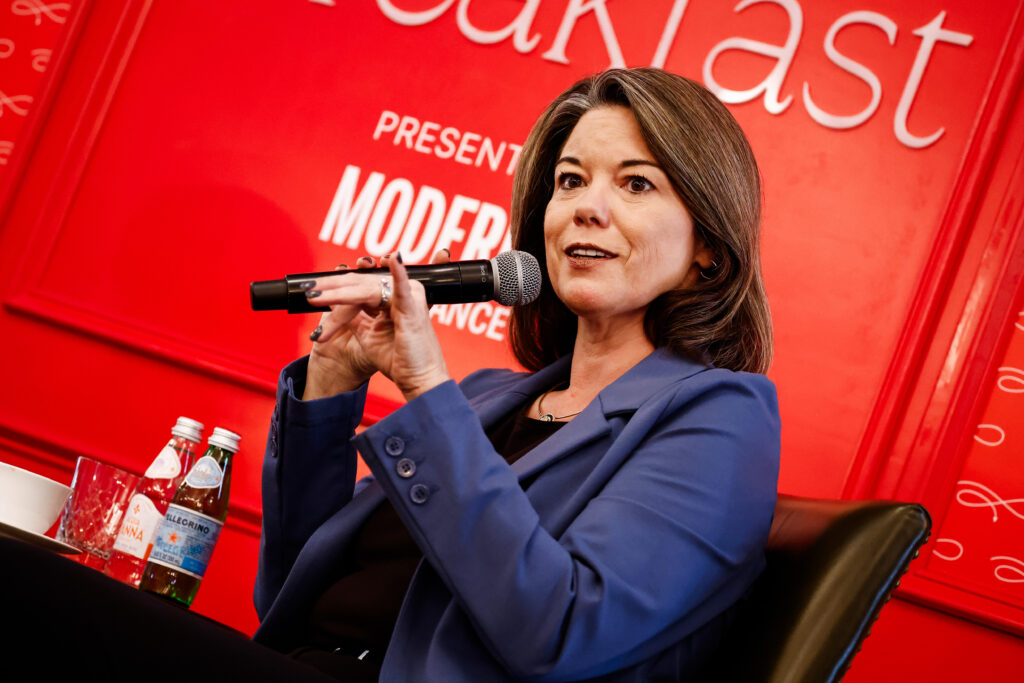
Craig is a ranking member on the House Agriculture Committee and candidate for Minnesota’s open Senate seat.
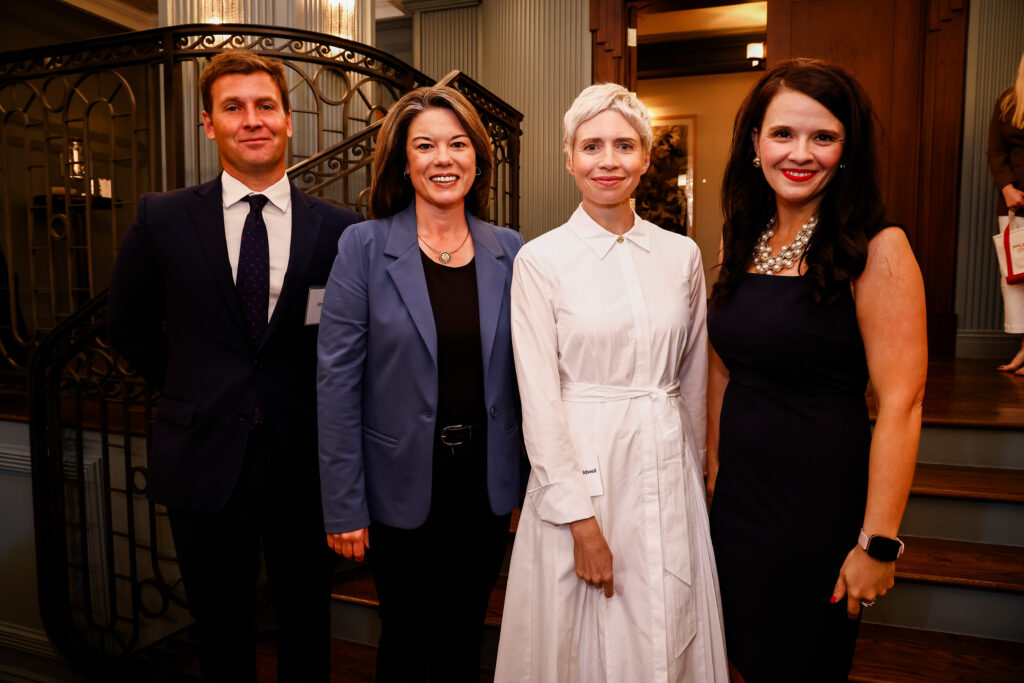
Photo: Paul Morigi/Getty Images for Puck
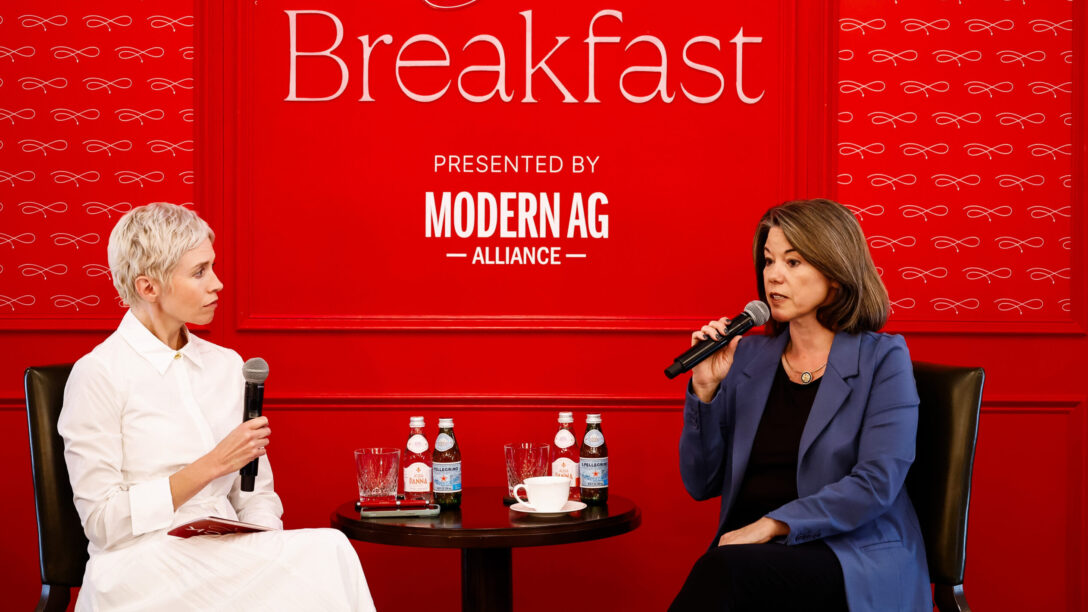
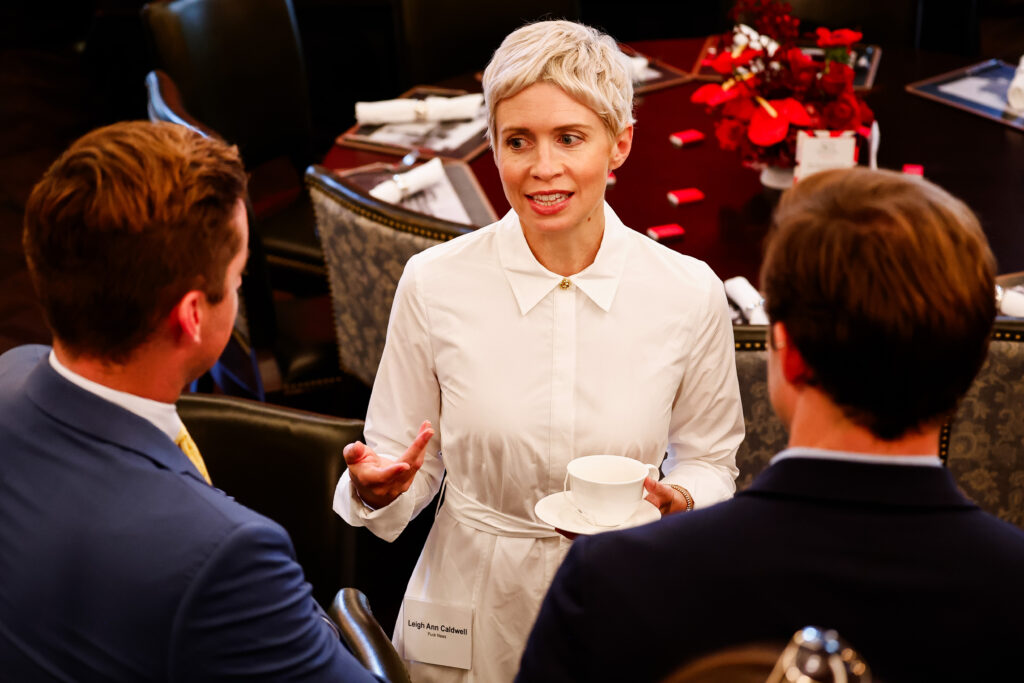
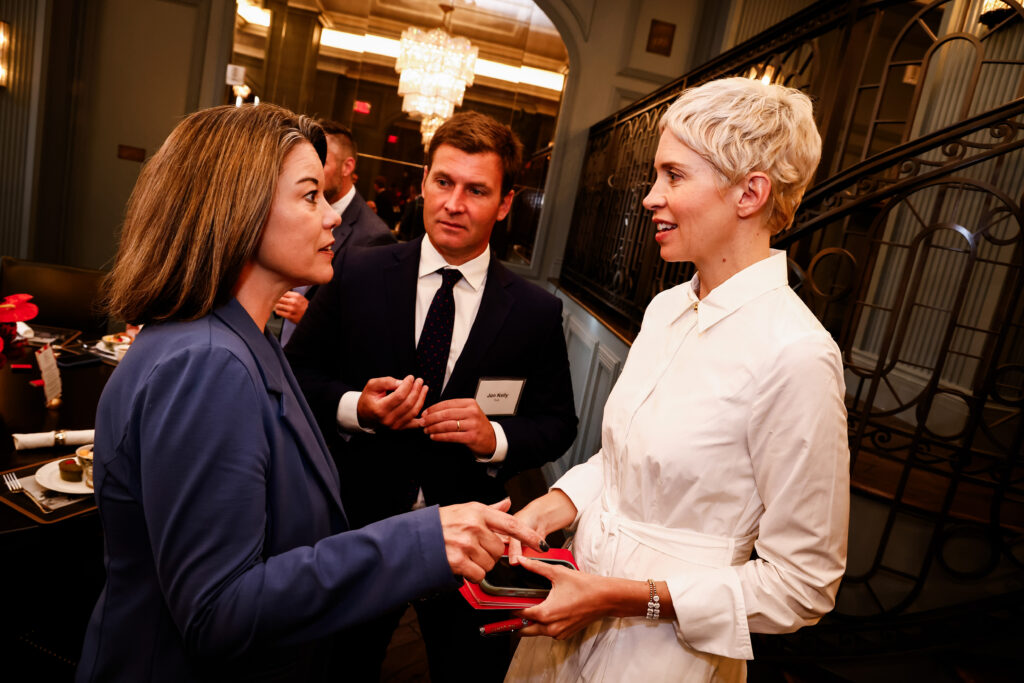
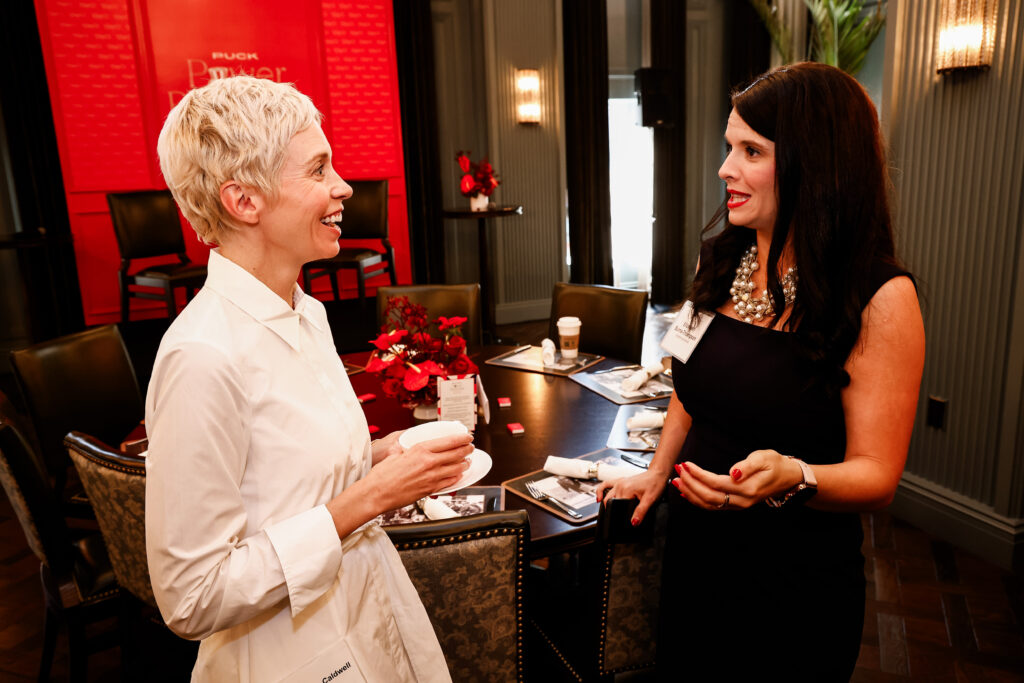
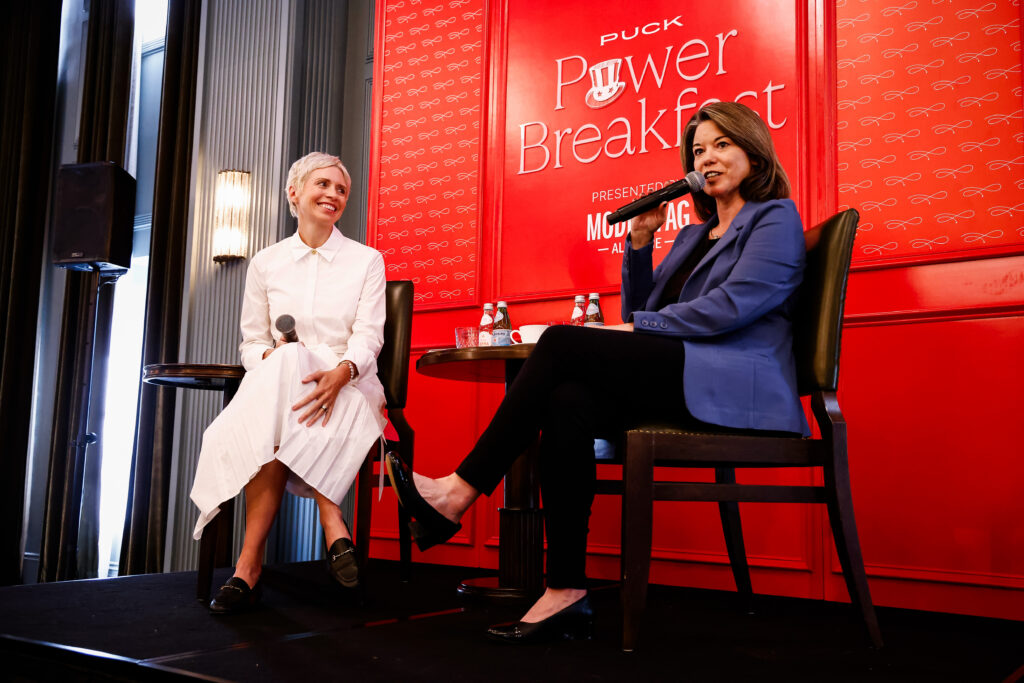
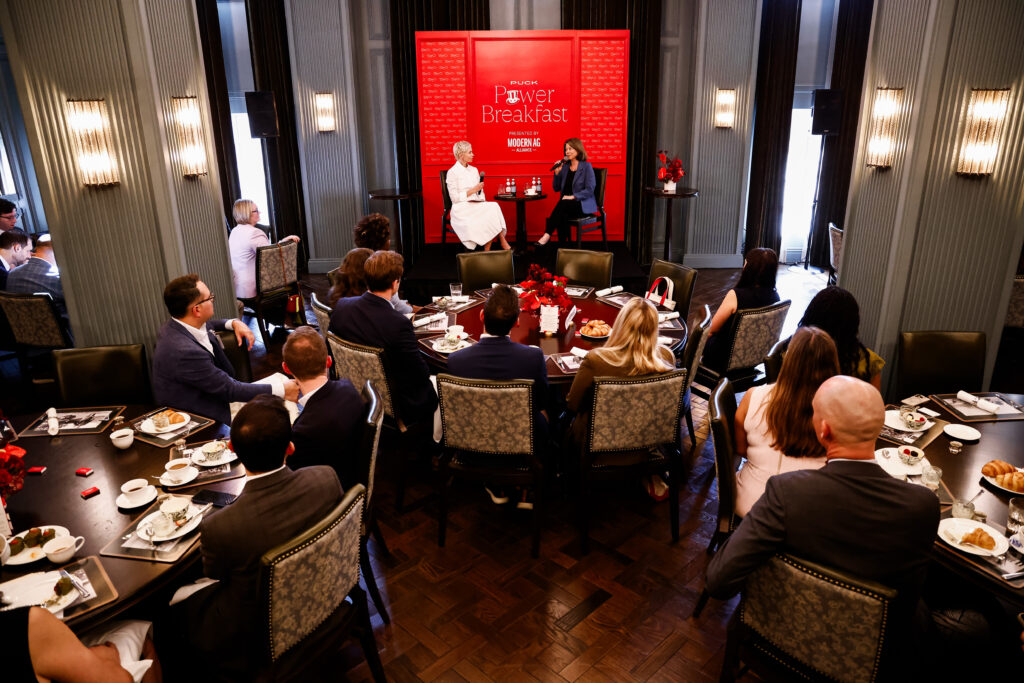
On Wednesday, for the third iteration of Puck’s Power Breakfast, hosted at Ned’s Club in D.C. and presented in partnership with Modern Ag Alliance, I spoke with Democratic Minnesota Rep. Angie Craig about her role in two of Washington’s highest-stakes policy battles: the effort to regulate the cryptocurrency industry, and the fractured push to pass a new Farm Bill.
Craig, of course, is a ranking member on the House Agriculture Committee and candidate for Minnesota’s open Senate seat. In our wide-ranging conversation, she discussed the bipartisan Clarity Act (which passed the House this week, but must still pass the Senate), the myriad crypto-related questions facing the White House, and why the administration’s rural agenda seems to be alienating the farmers it claims to support. Craig also spoke about her new political group, Majority Democrats, and her push to reimagine the party’s strategy, messaging, and leadership.
Our conversation has been lightly edited for clarity and brevity.
Crypto Clarity
Leigh Ann Caldwell: You have jurisdiction over a lot of this crypto legislation, and one of those bills is the Clarity Act. There’s been a years-long fight over how to regulate crypto, and they kind of figured it out in Clarity. Can you explain what crypto assets are under the Commodity Futures Trading Commission?
Angie Craig: At the end of the day, we have 44 million Americans using digital assets with no regulation. So the main point of this regulation is to define what is regulated by the C.F.T.C. and what falls under the S.E.C. My committee worked on a bipartisan basis to create these definitions. The C.F.T.C. chair, [Rostin] Behnam, testified before the Senate earlier this week that this is going to protect consumers and provide a pathway.
Photo: Paul Morigi/Getty Images for Puck
Photo: Paul Morigi/Getty Images for Puck
Photo: Paul Morigi/Getty Images for Puck
Photo: Paul Morigi/Getty Images for Puck
There are a lot of Democrats who did not vote for this bill, in part because of the president and his family profiting from crypto. He’s made $600 million from crypto since he entered office. How do you move forward on this with such conflict-of-interest challenges?
Obviously, he should’ve put his business interests into a blind trust. We know he’s influencing many sectors. The family business is also dabbling in the mobile phone industry. Should Congress not regulate telecoms anymore just because we have the most corrupt president in American history at the helm? My belief is that, at minimum, his family should be brought into a regulatory structure with oversight.
At the end of the day, there will be disclosure requirements. There will be auditing requirements by the C.F.T.C. if they have a C.F.T.C.-listed memecoin or other elements. I believe if we focus solely on the president and his corruption, then we’re letting down the 44 million Americans who are participating in this market. And it’s only growing. At this point, you can walk into a gas station anywhere in this country and buy Bitcoin. So if we continue to ignore this industry, it’s going to get away from us.
What about the Democrats, including Financial Services Ranking Member Maxine Waters, who say these are industry-backed bills that will give crypto companies free rein?
Well, there are no rules today, and the industry is growing like crazy. The market is forming without any government regulation. I respect my colleague greatly, but I respectfully disagree with that position. Once we set the rules of the road, that becomes a baseline—it doesn’t mean we can’t continue to improve them. This industry is operating with absolutely no rules. That is what you saw with FTX. The “segregation of assets” issue in this sector is critical, and this bill makes clear that those companies have to provide for it. I believe—and the data bears this out—that FTX could have almost entirely avoided those losses if the Clarity Act had been in place. That doesn’t mean we don’t need to move forward strongly with anti-corruption laws against the president—because we sure as hell do. But it applies across all sectors, not just digital assets.
A “Frayed” Coalition
You’re also responsible for the Farm Bill. In their One Big Beautiful Bill, Republicans took out a lot of the Farm Bill and passed parts of it there, including nearly $70 billion for farm security programs and cutting nearly $200 billion from nutrition assistance programs. Can the remaining parts of the Farm Bill pass this year?
The $67 billion in investment in reconciliation is widely supported on a bipartisan basis by Democrats, but it should have been done in a five-year, 12-title Farm Bill. Republicans have busted up the coalition that always found a way to get a Farm Bill across the finish line. Can you imagine a situation where Democrats, in reconciliation, decided to cut $168 billion out of crop insurance or reference price titles? Do you think Republicans wouldn’t be a little bit pissed off? So I think we need some time.
Photo: Paul Morigi/Getty Images for Puck
Photo: Paul Morigi/Getty Images for Puck
Photo: Paul Morigi/Getty Images for Puck
Photo: Paul Morigi/Getty Images for Puck
I’ve been clear from the start that if Republicans cut the nutrition title of the Farm Bill—which we consider them having done—it’s going to be impossible to get 100 to 150 Democrats to vote for the skinny Farm Bill that [Ag Committee Chair] GT [Thompson] is talking about. I like GT a lot, and I think if it were up to him, things would not be going this way. But we have Republican leadership in the White House that doesn’t seem to appreciate the coalition that’s been built over the years. And that sets a tough precedent.
I’m going to sit down with GT after the August recess. We’re going to talk about the bill, and I’m going to be talking with my members on the committee to see where they are. No one on this committee wants to see rural America fail. No one on this committee wants to see the elements that were left out of reconciliation funding fail. If you tie this to what Republicans are doing through reconciliation more broadly—$1 trillion in Medicaid cuts, the SNAP cuts—this administration is really attacking rural America. They just don’t know it yet. Before I’m done, they’re going to know exactly what’s happening, howit’s happening, and why. The coalition is frayed, to put it candidly.
And to clarify, the coalition is frayed because the part of the Farm Bill that Democrats have supported so much is the Nutrition Assistance Program.
That’s how we got Democrats to sign on to the Farm Bill. But remember, Republicans haven’t had the votes to pass a Farm Bill on their own. Last session, Republicans cut $27 billion from SNAP in their bill, and all but four Democrats on the committee voted against it, and it never came to the House floor. If Republicans had the votes, they would have done it. The Freedom Caucus doesn’t like crop insurance. They don’t like the, quote-unquote, subsidies to farmers. So they have a Freedom Caucus problem without us.
What are you hearing from your farmers? What are they most worried about?
It’s the [Make America Healthy Again] movement, absolutely. It’s the lack of focus on science, which is interesting because the tariffs are killing my bean and corn producers right now. They’re losing their markets in China, they’re worried about Mexico. But what they’re most worried about is Robert Kennedy and the lack of science being used by H.H.S. It’s truly extraordinary.
What does he have to do with farmers?
I’m someone who says science has got to guide the farming practices in our country. But [for H.H.S.] to come up with a report that clearly wasn’t well documented or scientific—and, frankly, to let the influencers with non-scientific ideas rule this conversation—has farmers worried. They also feel misled and lied to at times. This administration has not been very good at sticking to its word to farmers. They keep saying, We love you, we’re gonna help you. Then they pass across-the-board tariffs that take farmers’ markets away; they cut SNAP by $186 billion, which is actually $25 billion in direct income to farmers; they cut USAID, which is another $5 billion in direct income to farmers. Farmers are starting to lose confidence in this administration, and they’re starting to speak out, which is unusual.
All That Matters…
Of course, you are running for Senate in the open seat in Minnesota. You also just launched Majority Democrats, a political group to help elect Democrats of all stripes. You tend to be a more centrist-style Democrat. Is moderation the path forward for the party?
I think the only way forward for this party is as a “big tent” party. So the answer to that question is yes and no. We’ve got to make room for people to represent their constituents. And if we truly believe this administration is an existential threat to democracy and this country, then as Democrats, we need to be focused on winning damn elections. We’ve got to make room for the “Blue Dog” Democrat. We’ve got to make room for the people and policies that can win in swing districts if we’re ever going to make Hakeem Jeffries the Speaker of the House.
Photo: Paul Morigi/Getty Images for Puck
I’m really anti-status quo. I’m done with a Democratic Party that wants people to stand in line for 40 years to be the head of committees. A lot of us feel that way. That is not where the American people are, and that’s one of the reasons why Donald Trump is our president. If we want to win again, we’ll have to step out of the establishment ideas and come up with new ones. That’s what Majority Democrats is about. We have 32 Democrats from across the country who are going to try to come together with bold new ideas for the party. And if they’re good, maybe they’ll take hold in the broader party.
Is the A.O.C.–Zohran Mamdani wing of the party problematic?
What’s interesting about Mamdani is that what he did in Manhattan, from a policy perspective, may not work everywhere—but he focused intensely on the affordability crisis, and on shaking up the Democratic Party. Those two things can apply to every wing of the party. In Majority Democrats, we’re focusing on which elements of Democratic values can win anywhere.
When Republicans successfully brand all Democrats as one wing of the party, it’s going to be hard to win battleground elections. So we’re having internal conversations with our progressive colleagues about where the common ground is. If we’re branding the Democratic Party as just one element, and not a big tent, we’re going to be the party of the permanent minority. And that doesn’t work for me. All that matters is winning.
Didn't get an email? Check your spam folder and confirm the spelling of your email, and try again. If you continue to have trouble, reach out to fritz@puck.news.
Didn't get an email? Check your spam folder and confirm the spelling of your email, and try again. If you continue to have trouble, reach out to fritz@puck.news.
Member Exclusive
Get access to this story
Create a free account to preview Puck’s full offering, including exclusive articles, private emails from authors, and more.