Polls Over Partisanship: What the Data Really Says About ’24
An incisive conversation with leading lobbyists and researchers surrounding the priorities, concerns, and often-overlooked electoral impact of women voters over the age of 50.
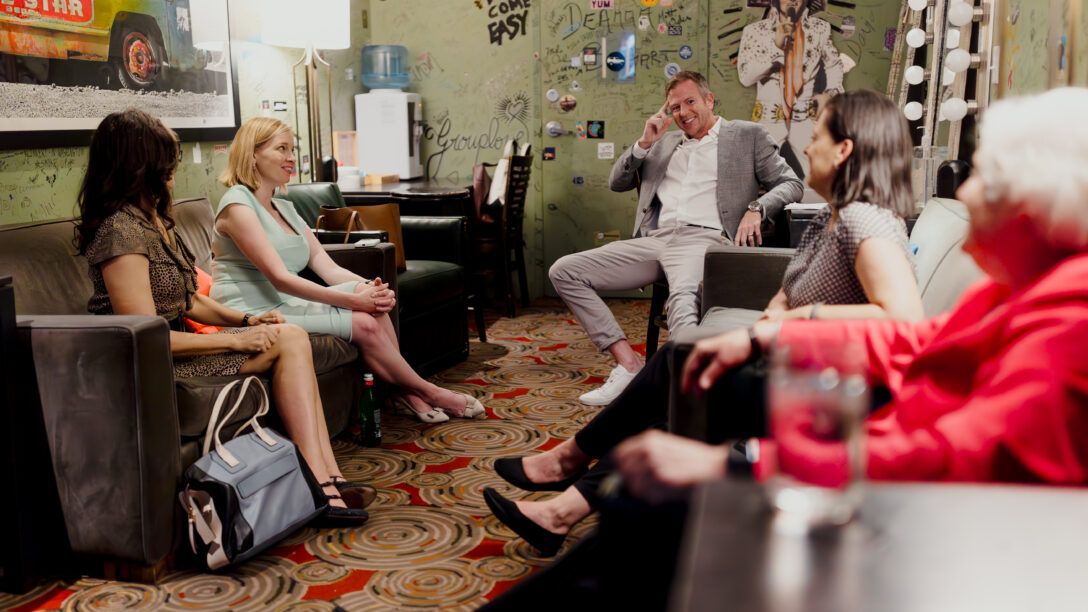
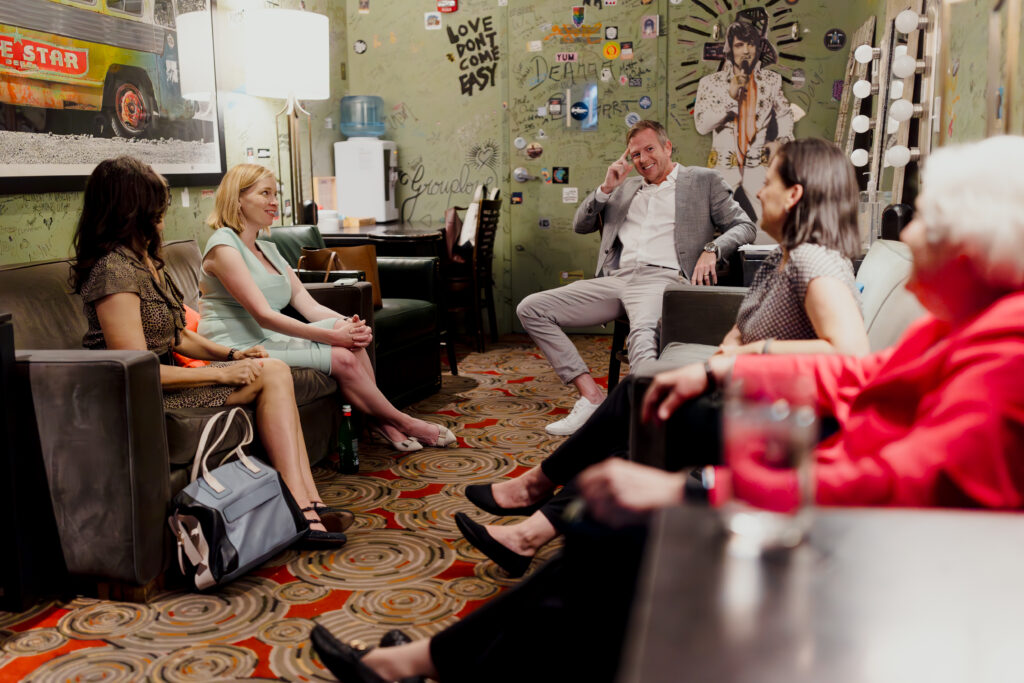
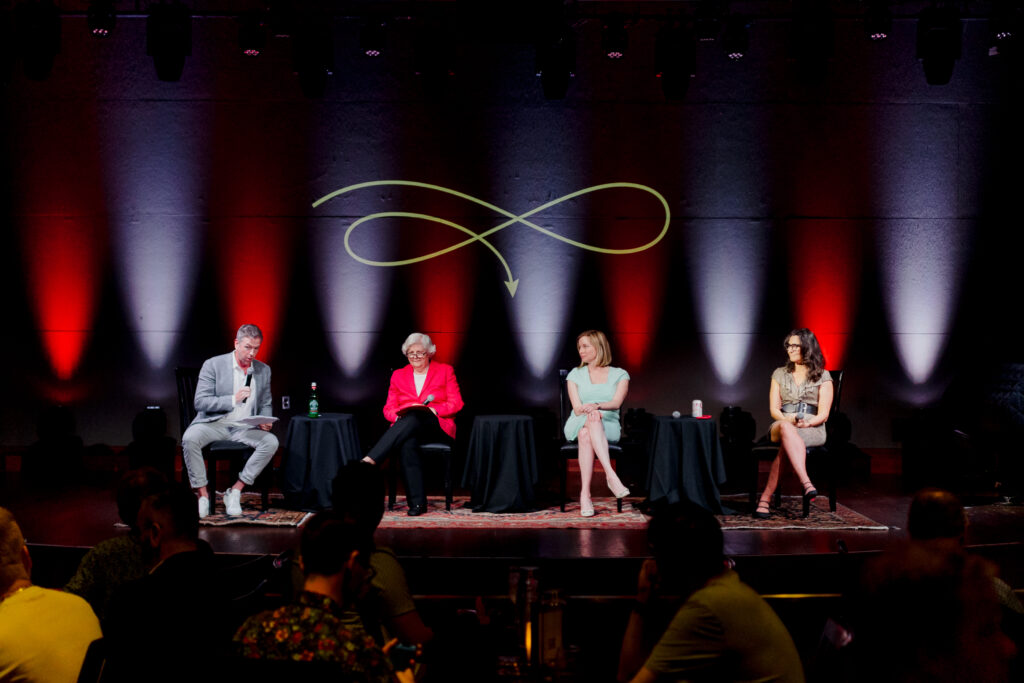
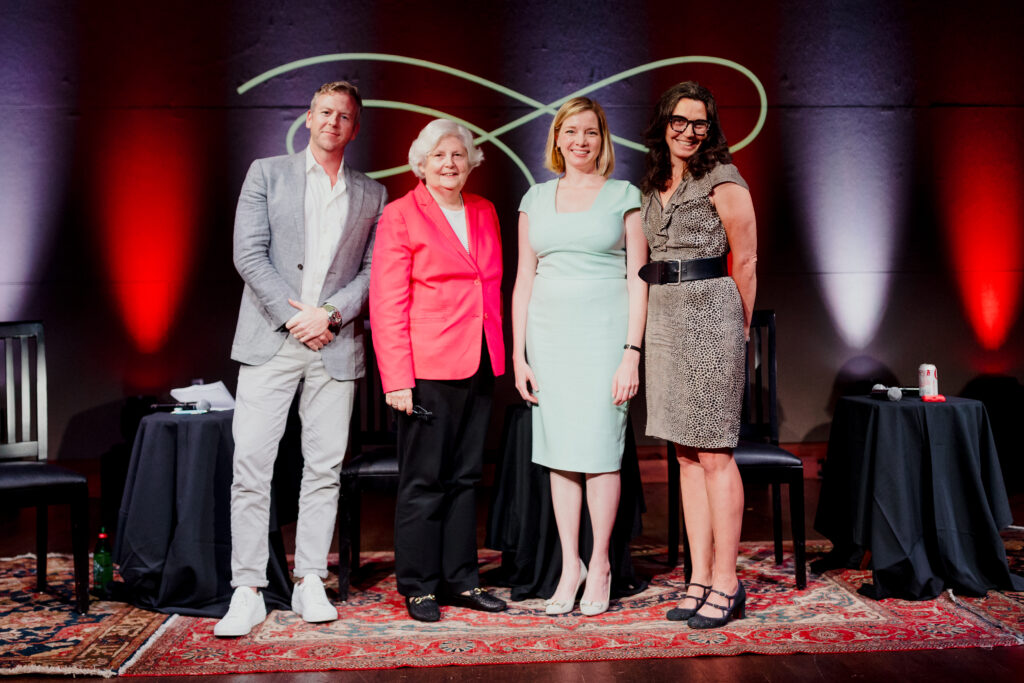
Last week, in front of a packed house in Washington, D.C., Puck’s senior political correspondent Peter Hamby moderated an exclusive panel dissecting the latest research and polling conducted by the AARP, GBAO, and Echelon Insights, focusing on the priorities and electoral impact of women voters over the age of 50. The panel was part of the AARP’s ongoing “She’s the Difference” series, and examined the political influence of this critical yet often-overlooked demographic, which represents the largest cohort of swing voters in the nation.
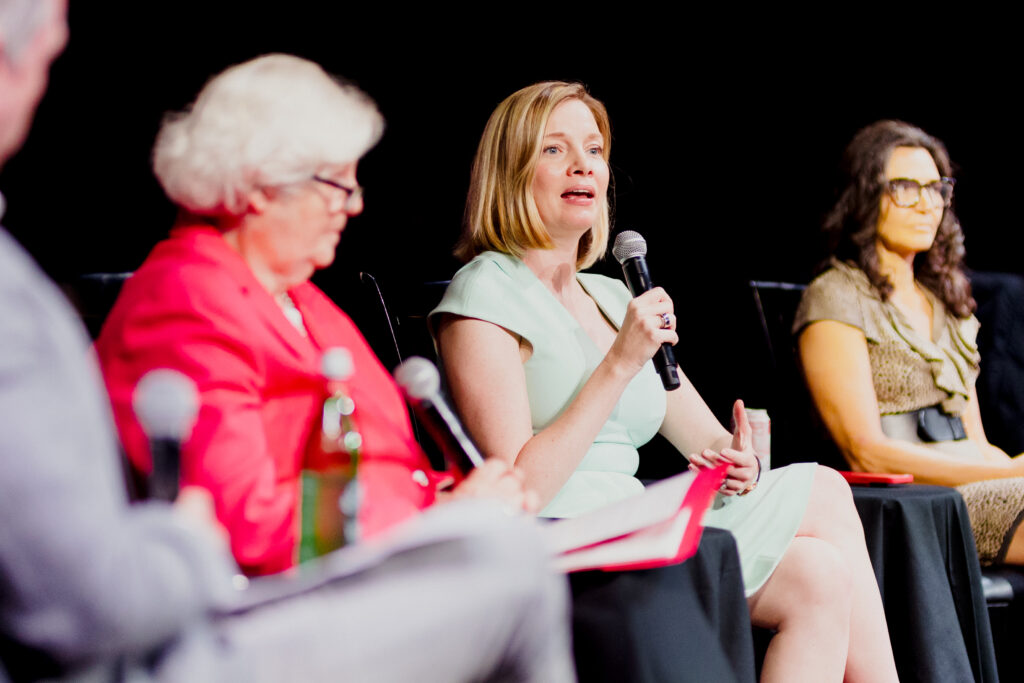
Peter was joined onstage by Nancy LeaMond, the AARP’s executive vice president and one of the top lobbyists in the country; Kristen Soltis Anderson, a foundering partner at Echelon Insights and a frequent on-air contributor to CNN; and Margie Omero, a principal at the Democratic polling firm GBAO. During their wide-ranging conversation, which has been edited for length and clarity, they discussed why the 50-plus demo is a perennial wild card in national elections, what the research shows about their concerns and needs, the various ways that campaigns might connect with these voters, and much more.
Peter Hamby: Gen Z has been getting a lot of attention in this election, and rightfully so. But one reason I’m interested in this panel, in particular, is that women over 50—and voters over 50—generally don’t feel like they have a place in the mainstream media conversation. And yet, in this research, you describe women voters over 50 as the wild card of the 2024 election. Can you talk about why?
Nancy LeaMond: Well, it’s obvious why AARP is focused on voters over the age of 50. But if you think about older women voters over the age of 50, there are 63 million of them. They’re 25 percent of the voting-age population, and they punch above their weight. They’re 27 percent of registered voters, and in any election, they’re typically 30 to 35 percent of the vote.
If you ask them how they’re going to vote, it’s pretty evenly divided, with 50- to 64-year-olds skewing a little bit more Republican, and 65-plus a little bit more Democrat. We did some polling in July 2022, and then right in November, and we found a couple things. One was that women voters told us they had not made up their minds yet, which is unusual for older voters, who usually make up their minds early in the cycle. And when we looked at the data from July and right after the election, the biggest swing was among older women from Republican to Democrat, by about 14 points. You all wrote about “the red wave,” and it turned out, in part because of women, it was kind of the red trickle.
For Margie and Kristen, going through this research, it seems like the presidential horse race is pretty evenly divided. Why do you guys think this demo is a wild card?
Kristen Soltis Anderson: I think of this demo as a wild card because there are a couple of varieties of voter who are undecided. Of course, there’s somebody who is undecided because they’re just not that tuned in, but that’s not what we’re talking about here. Then there are those who are undecided because they’re cross-pressured, or because they feel that the parties and the candidates are not listening to them and not taking into consideration what they need. And that’s much more of what we hear from women 50-plus—that they are paying quite a bit of attention and are really hungry for leadership that is going to address the challenges that they’re facing. And yet, they oftentimes they are invisible.
They are also a wild card because they are so up for grabs. They are very ideologically diverse. You talked about Gen Z—it’s easy, if incorrect, to stereotype young voters; but it’s important to realize that [older voters] also defy easy stereotyping. And that, to me, is what makes them such an interesting wild card electorally.
What do you think, Margie?
Margie Omero: Well, I had the great pleasure of turning 50 while the polling was happening. And I had an experience where I was at a campaign retreat, and it had a lot of people that were like, “We’re going to do a cahoot about how well you know Gen Z.” A cahoot, for anyone who doesn’t know, is basically an online quiz. I was like, “I’m going to crush this. I have a 12-year-old. I know who SabrinaCarpenter is, I know who she’s dating, I know who Charli XCX is.” But I was at the bottom—so far behind.
In many ways, this mirrored what we heard in focus groups. We did about a dozen focus groups with women over 50 from different walks of life. We heard women say, “I walk down the street, I feel invisible. The issues that I care about, nobody talks about.” This was the case whether they were Republican or Democratic, or white women or women of color. They felt like their issues, their needs, their life, their struggles, were just not reflected in the culture or in what political leaders were talking about.
Obviously, people 50 and up includes those with young children, and it includes people who are caregiving for their spouse or who need care themselves. It includes a whole range of life experiences, but they still have this universal feeling of, “Who is actually paying attention to what I’m going through?”
The economy is the top issue for young people, in particular. It’s prices, it’s rent, it’s interest rates preventing them from holding credit card debt or buying a car. But different generations have different economic pressures, and the number one thing that I took away was that 70 percent of the people in this poll felt like the country is on the wrong track, and don’t think the economy is getting better. What are the specific economic pressures that women over 50 feel compared to other generations?
Nancy: They feel that they’re not keeping up economically. I think women at the age of 50 start to think not only about the day-to-day economy, which we all think about, but also they think in terms of their retirement. I always tell folks that, particularly for the 65-plus, but also for 50-year-olds, people start to think about Social Security and Medicare as an economic issue. And the reason for that is that around 50 percent of women over the age of 50 are single, divorced, or widowed. So they’re alone. They feel economic pressures; they’ve saved on average $43,000 for retirement. Imagine $43,000 for retirement around age 50!
They know that 50 percent of them are going to live almost entirely on their Social Security check. Any guess what the average Social Security check is for a 50-year-old woman when she retires? It’s about $16,000 a year. So imagine living on $16,000 a year. So all of this is on the horizon, along with the day-to-day prices.
One of the clusters in the five subgroups you surveyed was called “Rubber Bands,” which basically means voters who feel stretched thin. Can you guys walk through the different subgroups you came up with, and explain the differences for me?
Kristen: To back it up just for a moment, we wanted to ask questions that were not just the typical questions you hear in a political survey—How do you feel about immigration? What’s your top issue? Who do you trust more to handle the issue of healthcare? We asked all those things, but we also wanted to ask questions about, How often do you get to see your family? How satisfied do you feel in life? How often do you go over to someone else’s house and play board games? Those kinds of questions offer a picture of these women that has a little more texture to it.
So we did a cluster analysis, where we basically said, “Take a look at these different variables and tell us what sorts of groupings come together.” The “Rubber Bands” was one of the younger groups. They are a group of voters who are stretched very thin because they are often caring for their own children as well as their own parents. They’re feeling economically stressed but not despondent. We think of this group as particularly open to hearing from politicians that are going to address these immediate cost-of-living type issues.
I feel like the “Instagrammas” group was maybe a little bit more right-leaning, but they weren’t our most right leaning. But “Instagrammas,” and I apologize for the goofy name—it essentially means they’re very engaged on social media and spend a lot of time with their grandkids—were the group that traveled the most and that went out to happy hour the most. My dad lives in The Villages, and he’s obviously not an “Instagramma,” but not so far off. For them, retirement is not something that’s far away, it’s happening now, but they’re also very engaged with their grandchildren.
One thing that I loved about this research was that it blew up some of the stereotypes that older voters only care about older-voter issues. We found concern about things like the environment. And with “Instagrammas,” I think you find that they were both more upbeat about life, slightly center-right, less engaged in political news, but very much on social media.
Margie: You talked about the folks who feel economically stressed. There was someone who notably said, “I feel like I was waiting for this TV version of retirement.” I asked them, “Well, what’s the TV version of retirement?” And they said, “You’re driving around with a convertible, and the top’s down, and you have the roof off and your hair is flowing and you’re with your husband and you’re retired.” So there was this vision of what retirement would look like, and they didn’t really feel that they had gotten there.
Kristen: It was just a reminder that sometimes we think of these things like, “Oh, economic challenges,” as separate from social and cultural and emotional challenges. But really, these things are all connected, and we saw that pop out in the data.
The Pitch
So you found in your research that 84 percent of women over the age of 50 believe elected officials should do more to support unpaid caregivers, providing care for older family members who need assistance to live independently in homes and communities. When you get to 50, you worry about your kids but also expenses related to those above you. So what specific policy concerns would that translate to? If you’re Biden or Trump, or you’re a member of Congress—Jacky Rosen or Bob Casey or Dave McCormick—what’s the pitch?
Nancy: Well, one pitch is that, depending on which poll you look at, between 24 to 35 percent of older voters are family caregivers. We’re doing our part to raise visibility. We’re asking every candidate for federal office where he or she stands on Social Security and family caregiving. It’s interesting, we started work on family caregivers about 10 or 11 years ago, and over this period we’ve passed probably a thousand pieces of legislation related to respite care, telehealth, home health services, a whole range of things people need to support their loved ones and people they’re caring for.
We hadn’t made very much progress at the federal level, but we’re pleased that over the last year or so we’ve made headway. We were able to have an executive order come out of this administration directing the Center for Medicare and Medicaid services to recognize family caregivers. They’ve done a number of things, and we have legislation now pending on the Hill. What’s also interesting is that it’s bipartisan. Sponsors are growing because you almost can’t go into a meeting anywhere and say, “Are you a family caregiver?” without hearing a personal story.
For my pollster friends, here’s a hypothetical. Say you’re advising a candidate. I’ll start with you, Kristen. Say you’re advising a Republican. They see these five clusters and you say, “Forget about two of them, you’re not going to get them…” Who should you focus on, and what is your pitch?
Kristen: So I think that Republicans, if I were telling them to go for three of the clusters: The “Traditional” was our oldest cluster—they go to church a lot, and they are much more Republican-leaning. I would say, “Make sure that you speak to that audience so that they understand that you are with them, but they are already ideologically in your camp.”
For the “Instagrammas,” I would say that you need to speak to them and have a message that is optimistic, and talks about what you’re going to do not just for them, but for the next generation. And that they are gettable, they are ideologically not too far from where you are.
And then I would say the “Rubber Bands.” For a long time, people have said, “The fabled suburban mom is the key swing voter.” Well, this is kind of that fabled suburban mom. It’s just with that added context that they’ve got all these different pressures pulling on them. And so for them, really the economic pitch is going to be extremely important to make.
Margie, in one of our prep calls, you mentioned you were trying to get away from the idea of the soccer mom as a demo. What are you looking at in these clusters for a Democrat?
Margie: Well, I guess it depends if you’re looking at base turnout or persuasion, which are both things that campaigns should be looking at. Are you trying to make sure your base is performing the way it’s performed in the past? So the focus could very well be the economically stressed, or it could be the “Rubber Bands.” Those are folks who might be surprised to hear that there’s distance between the two parties on some of these issues. It’s important to make your message heard, but that requires a lot more communication with some of these groups that are paying a little bit less attention to the news.
What we did a focus group with caregivers specifically—and it was really one of the more moving focus groups I’d ever done in 25 years of doing this—there was this one woman was caring for her mom, but her mom had died a couple days before the group, and it was the first time she really talked about it. She just started to break down. Everybody in the group was trying to find different resources for her. And it was striking how these women in real time could tell us how this is a very isolating experience, and they don’t feel connected. It’s not the same as when you have a baby and everybody celebrates and participates in your baby caregiving—there isn’t the same kind of community celebration and excitement for people who are caring for an aging parent or an aging spouse.
That has an impact on the caregivers, and so they’re putting together this system for themselves individually, and that has an impact on their economic ability. It has an impact on their mental health, and maybe there isn’t a policy to fix all these things, but you can at least make them feel like they are heard.
Scatter Plots
I’m not going to ask about the presidential horse race or the debate news, but what details and color were you able to suss out about the presidential race from your research? Obviously, it’s conventional wisdom that Joe Biden is doing a little bit better with older voters. What did you pick up that jumped out at you—or is it just too much of a diverse group to even talk about it without dividing it into subgroups?
Kristen: I think that the big thing that stuck out to me was that it was less about the individual candidates. Obviously, we had some participants that had very strong views one way or the other. And we did a focus group of Republican-leaning women, a focus group of Democratic-leaning women, etcetera. But there was this feeling that all of our leaders are focused on the wrong things. “They’re yelling at each other and nobody is actually giving us solutions to the things that we care about.” You might hear that from any focus group of any type of voter, but it was really acute from these women. And it wasn’t just that they hadn’t paid attention. They were like, “No, we are news consumers. We’re paying attention, and we feel like we are not hearing what we need to hear to feel confidence in our leadership.” That to me informs the malaise that I think has been cast over this entire presidential horse race.
Margie: One thing that we did in these groups, which I like to do, is to ask people at the end, if you could give the candidates for office a truth serum, what would you ask them? And what’s interesting is that very frequently people will say, as they did in these groups, “I want to know why they’re running for office. I want to know what motivates them.”
It’s not about what’s their policy about x, y, and z, or about what their background is. That’s interesting to think about, whether it’s a presidential race or any other race, that this is one way that people evaluate a candidate, and whether that leads you to think one candidate would have an advantage or not.
What about Hispanic, AAPI, and Black voters? Have any of you noticed any differences between those voters over 50 versus under 50? What jumped out at you about their economic concerns or their political opinions?
Kristen: So in terms of those clusters, the cluster that was the most racially and ethnically diverse was also the one that had the most economic stress. What that tells me about the coming political cycle is that it’s one piece of a much larger puzzle. We’ve been hearing headlines about Republicans suddenly feeling like they have more of an opportunity with working-class voters, and working-class voters of color in particular.
And so if I was advising a candidate who wanted to lean into that dynamic, it’s actually those voters who feel that the current economy is not working for them. So even though there’s the narrative that, “Hey, the economy is supposedly booming and everybody’s doing great.” Well, there are lots of people who aren’t feeling it. And so I think Republicans view that as a group to speak to and say, “Hey, we have a better economic message.” That’s why I think it’s not as much of a surprise when we see other polls that show Republicans trying to piece together a coalition that, frankly, isn’t just old white guys.
Margie: Something that we hear across all the work that we do, particularly with voters of color, and not just younger voters, are concerns about housing and student loans. Those two come up pretty regularly, and neither are going to be in the top one or two things that get covered every day, but they come up all the time and have for several years. It’s not just a 25-year-old issue. It’s something that a lot of voters care about.
And also the price of housing—especially in a lot of growing markets, and a variety of parts of the county—there’s the worry that housing prices are getting too far ahead of where wages are. That’s something I would point to as a concern for voters of color in particular across different age groups.
At the same time, how do you balance that with this concern that we hear with voters of color specifically—but with lots of other groups, too—that the political dialogue has become so toxic and divisive that it’s made some groups feel unsafe, or not welcome in their work environment or in their communities? A lot of that has to do with some of the dialogues that have happened over the last few years in terms of race and identity.
I will also say that in the focus groups that we did for AARP, we heard a lot of similarity across all the groups, whether they were Republican, Democratic, independent, Black, white, AAPI… Everybody felt ignored and invisible, not spoken to. That was pretty universal.
Last thing I want to ask is a question about the dudes. What’s the biggest difference between women over 50 and men over 50?
Kristen: One of the big differences that we found was that men over 50 are a little more ideologically homogenous. Not totally, they don’t all think the same thing. But as part of this project, we did a type of analysis that we love doing at my company, where we asked people about 10 questions on various economic issues and then 10 questions on social and cultural issues. And there’s a conservative and a progressive response to each question. We say, “Even if neither of these is exactly your view, which one is closer to your view?” And we can plot people out on a quadrant, on a Cartesian plane, where you’ve got the libertarians in one corner, the populists in one corner, the hardcore conservatives in one, and the progressives in another.
You find that young women tend to be pretty progressive. You find that older men tend to cluster a little more in that conservative to conservative-populist bucket. But for women 50 plus, it was hard to pin them down. You look at the chart and those dots were all over the place. And to me, that is something that makes them a little bit different, and really underscores why they, in particular, are such an interesting wild card.
Nancy: I would add that women feel invisible, but they won’t be invisible in November. The other thing I would say on family caregiving, even though 60 percent of family caregivers in the country are women, when we do any of our polling and we ask about the challenges of family caregiving, you don’t get much of a difference between men and women. Anybody who is in that unpaid workforce of family caregiving is very much feeling the strain, feeling the emotional strain, and feeling the financial strain. And we think that is one of the issues that cuts across everyone. We’re focused today on older women, but we worry a lot about older men and what their concerns are.
Didn't get an email? Check your spam folder and confirm the spelling of your email, and try again. If you continue to have trouble, reach out to fritz@puck.news.
Didn't get an email? Check your spam folder and confirm the spelling of your email, and try again. If you continue to have trouble, reach out to fritz@puck.news.
Member Exclusive
Get access to this story
Create a free account to preview Puck’s full offering, including exclusive articles, private emails from authors, and more.