 |
|
Hello, and welcome back to The Best & The Brightest, Tuesday foreign policy edition. Before we get to the meat of things—Volodymyr Zelensky’s visit to the Hill later this week—three things…
First, my piece this week is, in part, about American Ukraine fatigue and whether it really exists. But, in listening to Joe Biden’s speech at U.N.G.A., I was struck by how little he spoke about Ukraine this year. Last year’s speech was almost all Ukraine, but this year, it merited a couple mentions in a 20-minute address that was mostly about development. It was, it seemed, a quiet acquiescence to the Ukraine fatigue not in America, but in the so-called Global South, which has its own issues and whose wars and tragedies don’t garner nearly the same amount of attention or aid.
That fatigue and resentment has let China and Russia push their own line, spreading China’s Belt and Road Initiative and selling Russian gas—and making it that much harder for the Biden administration to get the Global South’s support. Zelensky reformatted his message this year, too. He spoke far more about the weaponization of food and grain prices, for instance, than about the U.N. charter. The Global South, it seems, has made itself quite clear.
Second, I wanted to bring your attention to the descent into war in Nagorno-Karabakh, a region long caught in a violent feud between Armenia and Azerbaijan. The region, which is mostly populated by ethnic Armenians but was drawn by Soviet mapmakers inside the Azeri S.S.R., was the subject of a bloody war when the Soviet Union collapsed. (You can read a good, quick primer here.) There was heavy fighting again in 2020 that ended only when Russia mediated a truce that was seen as heavily favoring Azerbaijan. This year, Azerbaijan has been able to blockade Nagorno-Karabakh thanks to the uselessness—or complicity—of Russian peacekeepers and push the region toward famine.
As some observers, including the former chief prosecutor of the International Criminal Court, warned that a new Armenian genocide was in the offing, Yerevan turned away from Moscow—and toward Washington. Last week, the Armenian P.M. said the country just couldn’t count on Russia’s protection anymore, and Armenia and the U.S. began a joint military exercise (ending tomorrow). This despite Armenia being party to the Collective Security Treaty Organization, a Moscow-led security organization spanning several post-Soviet states.
Which is why, as the bullets started flying and the body count rose today, Margarita Simonyan, the head of the Kremlin media holding that owns RT (formerly Russia Today) and an ethnic Armenian herself, wrote on Telegram mocking the Armenian prime minister (who demanded that Russian peacekeepers do their job), asking sarcastically why NATO wasn’t coming to his rescue. Russia is signaling, it seems, that Yerevan is on its own. Will the U.S., which has sent various high-profile delegations there in recent months, help?
Third but not least, I wanted to draw your attention to an excellent new book, The Four Tests: What It Will Take to Keep America Strong and Good, out today from Simon & Schuster. It’s by my friend Dan Baer, the No. 2 at Carnegie and Obama’s ambassador to the O.S.C.E.—which is one reason why I ordered a copy already. The other is that Dan is a truly original and creative mind when it comes to problems of American foreign policy, and this book does not disappoint. Dan makes the argument that America needs to invest in a more just society at home in order to be more convincing with policy abroad. (It’s a point that reminds me of how the White House agreed to pursue civil rights reform in the 1960s in part because of the Cold War and the ideological struggle the U.S. claimed it was pursuing against the U.S.S.R.). Dan likes to joke that the book is a cross between Elizabeth Warren and Ronald Reagan, but really, it’s more of a national security argument for a second Biden term—from a person who is very plugged in to the first.
And with that, let’s get to Zelensky’s visit to Washington. But first, a Capitol Hill update from Abby Livingston…
|
| Shutdown Déjà Vu & McCarthy’s Margin |
|
| As the all-but-certain Great Shutdown of 2023 bears down on Capitol Hill, some Republicans staffers are looking to the 2013 shutdown for guidance on how to handle the weeks ahead. But instead of wisdom, all they’re discovering is more reason to worry. This one will be “way, way worse,” a former House Republican leadership chief of staff told me.
On the surface, there’s plenty of similarities, including the tripartite power dynamic between a Republican House and Democratic Senate and White House. But increasingly, Republican pragmatists are expressing fear that the coming weeks (or months?) will be far more miserable than the meltdown of ten years ago. This is why, based on a handful of interviews with past and current Republican Hill staffers:
- The rebels are disorganized and don’t agree on their demands: In 2013, a singular figure (Ted Cruz) led a rebellion of House acolytes (who would someday evolve into the Freedom Caucus) with a singular demand (repealing Obamacare). Back then, the Freedom Caucus was a smaller, more informal group that derived its power from its cohesion. Now, leadership is dealing with a cascading assemblage of players whose demands reflect an evolving conservative grab bag: cutting spending, harsher immigration and border policies, impeaching the president, halting Ukraine funding, etcetera. Meanwhile, there are also a growing number of sidebar spats within the Freedom Caucus. Indeed, there’s a feeling that some of the rebels are practically brainstorming demands on the fly. Small political wildfires are flaring up all over the Capitol, making each one harder to contain.
- Kevin McCarthy is in the crosshairs: In 2013, Cruz was the star of the House Republican fight, despite being in the Senate, and John Boehner quietly cut deals in the background. Today, every discussion among the political class revolves around whether McCarthy can pull another rabbit out of a hat and how far he will go to hold onto his gavel. “Boehner was absolutely in a similar pickle, but the thing is John Boehner would open the government and lose his job and be fine with it,” that former Republican leadership chief told me.
- Republicans knew that the 2013 shutdown would end: Most Republicans in 2013 had a pretty good sense that the shutdown would end around Oct. 17, a deadline to raise the debt ceiling (an issue that was intertwined in that year’s shutdown demands). And they were right: The government reopened on Oct. 16. There appears to be no leverage of that scale now that could force that kind of cooperation.
- McCarthy doesn’t have the margins: Boehner wrangled a 17ish-seat Republican majority, while McCarthy can only lose a handful of Republicans—and that number is fluid, thanks to a resignation, various illnesses and the inevitable, unforeseen personal issues that can keep members from votes.
|
 |
| Mr. Zelensky Goes to Washington |
| The Ukrainian leader returns to pitch Congress just as the political mood turns chilly, and a near-universal supposition takes hold that voters are “getting tired” of aiding his defense. Supporters and allies say they need a plan to change the narrative… But maybe this isn’t it. |
|
|
|
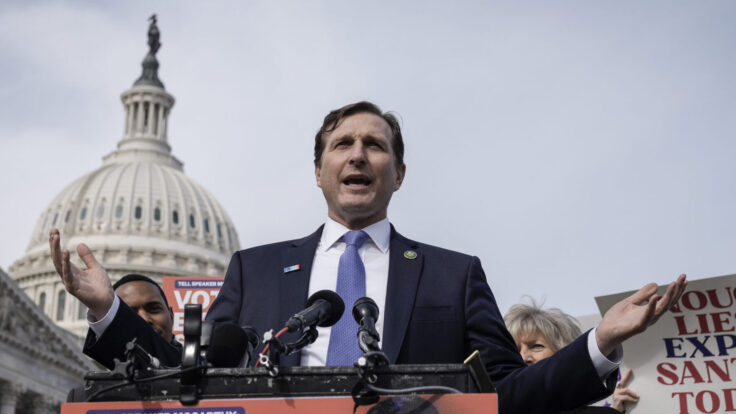
| After delivering an impassioned speech at the U.N. General Assembly, Ukraine’s Volodymyr Zelensky heads to Washington this week, just as the city ties itself in knots ahead of an increasingly likely government shutdown. During his last visit, in December, Zelensky delivered a moving address before a joint session of Congress. This time, there will be no prime-time tear-jerkers, just closed-door meetings on the House and Senate sides, and a few more down the street, at the White House, as well as with Lloyd Austin and Chairman Mark Milley. (Ukrainian first lady Olena Zelenska will speak at Georgetown on Thursday afternoon.)
It is on the Hill, though, that Zelensky will run face-first into the increasingly grim politics of getting more U.S. funding for Ukraine. The conventional wisdom in Washington is that Americans are growing weary of spending more and more money on what is, essentially, Ukraine’s war of independence, but the polling paints a more complex picture. Last month, a CNN poll suggested that a majority of Americans do not want Congress to authorize more aid and about half said the U.S. was doing too much.
But, as one commentator pointed out, that majority was slim (54 percent), and half of Americans did support both more congressionally authorized funding and doing more to support Ukraine. Earlier this month, a CBS poll showed even stronger support: More than two-thirds wanted to keep sending “aid and supplies” to Ukraine, and over half wanted to send weapons. About a quarter even wanted to send U.S. troops to Ukraine, a remarkable sentiment given that the war has been grinding on for more than 18 months and that the U.S. has just gotten out of two endless wars.
The poll did show, however, that support for Ukraine has decreased dramatically—but mostly among Republicans. G.O.P. support for sending more aid has also fallen, though Republicans are still 50-50 on that question.
Other polls have borne this out, but you wouldn’t know it from the conversation in Washington, where there is now a near-universal supposition that, although support for Ukraine remains a broadly bipartisan, mainstream position on the Hill, Americans—all Americans—are “getting tired” of allocating money for Ukraine. In part, that’s because of the House Freedom Caucus, a band of Trumpists on the far-right end of the House who continue to insist, with each White House request for money, that Ukraine not receive a “blank check.”
This, it occurs to me, is not the right term. A blank check is, quite literally, blank, with no sum. Each of these appropriations requests have a very specific sum, as is the sum the U.S. has already allotted to Ukraine: $113 billion in military and non-military spending. It is a large check, to be sure, but not a blank one.
Not that it matters. As in other matters of policy, this band of hard-right, MAGA congresspeople—which makes up only about 10 percent of the House—have the rest of the chamber by the throat. |
|
|
| At 10 a.m. on Thursday, Zelensky will address a meeting of senators, called by the Senate leadership. Both majority leader Chuck Schumer and minority leader Mitch McConnell are steadfast in their support for Ukraine, especially McConnell, whom colleagues describe as ascribing to a fundamentally Reaganite foreign policy. When I asked one senior Senate Democratic staffer what the meeting with Zelensky will look like, they said, “My assumption is he’ll talk, and then senators will ask questions, which means they’ll make speeches.”
But on the House side? As of Tuesday afternoon, it was clear that House Speaker Kevin McCarthy would meet with Zelensky (though he couched it as a meeting in which he would grill the Ukrainian president about “plans for victory”), but that was about it. Nothing had been announced, no one had gotten any invitations. Representatives from Ukraine as well as other NATO members have been making the rounds to lobby for Ukraine on the Hill since the war started, and their efforts seem to have been redoubled since Republicans took back the House last fall.
But now, as the intra-Republican battle threatens to shut down the government and as Republican hardliners posture about how uncompromising they are, it is unclear that Ukrainians could even get meetings with them. “If I were the Ukrainians, I’d meet with the most skeptical Republicans,” said one senior Senate aide. “But they’re not doing a lot of individual meetings because I don’t think they’d meet with them. I don’t think Marjorie Taylor-Greene would meet with them. They’re so dug in, there isn’t really anything that could change their minds, so why even spend your time?”
They have a point. If some House Freedom Caucus members refused to attend Zelensky’s December address while others, like Matt Gaetz and Lauren Boebert, ostentatiously spent the time scrolling through their phones and not applauding, the tension is even worse now. The government needs funding, the Pentagon needs funding, and the White House has sent over a request for $24 billion more in aid for Ukraine—and did so in a matter-of-fact way that annoyed many on both sides of the aisle. The hardliners of the Freedom Caucus are avowedly against passing anything that doesn’t include steep spending cuts, defunding “the Left’s cancerous woke policies in the Pentagon,” and—that phrase again—a “blank check” for Ukraine.
When I asked one senior G.O.P. House aide familiar with these conversations what “blank check” really meant—the White House is, after all, requesting a very precise amount—they said “I don’t believe there’s a lot of appetite for any more funding. There are, like, six things that would need to happen before any more funding is passed, including accountability.” And given that the H.F.C. didn’t budge even when McCarthy threw them a big, red steak in the form of a Biden impeachment inquiry, it’s hard to imagine they’ll budge on this, either.
Zelensky’s visit, which is clearly aimed at encouraging Congress to keep the money spigot open, is quite galling to these members. “The shared sentiment among real conservatives, particularly House Freedom Caucus conservatives, is that the timing is incredibly audacious,” said one aide to a Freedom Caucus member. “Like, read the room.” They went on: “Obviously, he’s coming to pressure Congress to get more aid. We’re trying to take a stand to rein in spending, and you have someone who we’ve already given over $100 billion to and he’s coming to ask for more to escalate a war we have nothing to do with and the national debt just hit $33 trillion—now is not the time.” |
|
|
| And yet, perhaps because the tale of the Ukraine-weary America is widely exaggerated, and because support for Ukraine is one of the few truly bipartisan issues on the Hill, most people I talk to are sanguine about this latest aid package passing, by hook or by crook—or post-government shutdown.
“There will come a point where the Senate and the White House are pushing for Ukraine aid and McCarthy will have to rely on Democratic votes to get government funding across the finish line,” one senior G.O.P. Senate aide predicted. “Everyone has known that, it’s been the status quo for months. Everything beyond that is academic.” So far, McCarthy has been trying to pass these funding measures with Republican-only votes, but it’s become quite apparent that it’s not a tenable strategy. “He cannot pass a republican only C.R. or appropriations bill,” the aide explained. “The Democrats will be able to dictate this because McCarthy needs Dem votes and Ukraine aid is the price to keep the government open. We’ve known this for months. The question is when Kevin McCarthy decides to bite the bullet.”
“I think in the end, very few people in the Freedom Caucus really understand the significance of Ukraine, nor do they really care,” said Alina Polyakova, who runs the Center for European Policy Analysis in Washington. “They want to hold this issue hostage to get what they want.” And, though the hard-right of the G.O.P.—and let’s be honest, the talking heads—have put the specter of American weariness in the Washington hive mind, the Ukrainians themselves are waking up to this reality, Polyakova said, having recently returned from a trip to Kyiv. “What’s the Ukrainian plan to address declining support, not just in the U.S. but in other countries? Zelensky. That’s the plan. He’s the best communicator out there.”
That said, I asked several people why Zelensky coming at a time like this matters at all. If anything, opinions on Ukraine are pretty set in Congress. Members either support arming Kyiv to help it achieve victory—or they don’t. But people on the Hill say the meetings with Zelensky are, nonetheless, important. Perhaps, as one senator on the Senate Foreign Relations Committee told me, Zelensky “takes nothing for granted.”
Others think it’s more about giving House members and senators cover when they vote the way they were always going to vote. “I suspect the White House welcomes it because Zelensky is a powerful advocate,” says Dan Baer, of Carnegie. “He will put it eloquently and he will speak from a position that is neither Democratic nor Republican, and make the case that this isn’t charity. He gives senators cover that they’re not doing it because they support Joe Biden, but because they’re supporting a leader like Winston Churchill whose country is the victim of Russian aggression. It’s also separating it from the budget morass. Like, we can keep fighting about that, but we can agree that this is important.”
“People want to walk out of the meeting and be able to say we got a direct update from the Ukrainians, they’re taking corruption seriously, etcetera,” the senior Democratic aide explained. “And if Zelensky’s smart, he’d also say thank you. I think he had to be reminded that he had to say thank you last time.”
There are also people in the Biden administration—and close to it—who are glad Zelensky is coming, in part so that he can see what they deal with in trying to get Ukraine the things it clamors for. The sooner the Ukrainian leadership understands that the political reality in Washington is getting more and more hazardous to them by the day, these people say, the better. |
|
|
| That’s all from me for this week, friends. I’ll see you back here next Tuesday. Until then, good night, tomorrow will be worse.
Julia |
|
|
|
| FOUR STORIES WE’RE TALKING ABOUT |
 |
| Iger’s Buyers |
| Notes on the Disney fire sale and LVMH succession. |
| WILLIAM D. COHAN |
|
 |
| The Hunter Manhunt |
| Biden insider Michael LaRosa dishes on the ’24 messaging wars and more. |
| TARA PALMERI |
|
 |
| Elon’s Star Power |
| On Musk’s technological interventions in Ukraine and the limits of the public good. |
| BARATUNDE THURSTON |
|
 |
| Drew’s Blues |
| How the Drew Barrymore saga perfectly encapsulates the studio-streamers’ dilemma. |
| MATTHEW BELLONI |
|
|
|

|
 |
|
|
|
Need help? Review our FAQs
page or contact
us for assistance. For brand partnerships, email ads@puck.news.
|
|
You received this email because you signed up to receive emails from Puck, or as part of your Puck account associated with . To stop receiving this newsletter and/or manage all your email preferences, click here.
|
|
Puck is published by Heat Media LLC. 227 W 17th St New York, NY 10011.
|
|
|
|